Public Steam disclosure research25,376 disclosures tracked
Where do games disclose AI use?
Search developers’ Steam disclosures, compare classified AI use across
games, and follow recorded changes.
This index adds cross-game classifications and statistics to
statements published on individual store pages.
Groups reflect automatic analysis of public disclosures; mature records are excluded. These counts do not measure AI use across all of Steam.
Missing or unclear statements cannot establish whether a game uses AI.
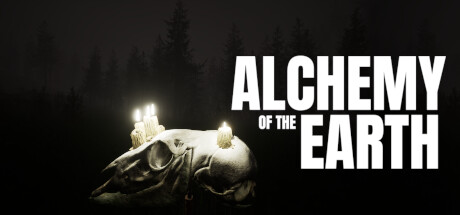
Alchemy of the Earth contains limited generative AI, for things like item icons, audio, and interface backgrounds. No generative AI was used in the creation of any 3D assets, music, writing, or environment/level design.
All the graphics in the game were created with AI, so backgrounds, portraits and inventory objects are all part of it. Text and music are done in the traditional way.
We used generative AI tools to create code, concept art, pixel art sprites, background environments, and store page graphics. All AI-generated content was reviewed and edited by our team. No AI content is generated during gameplay.
The game's intro video and ingame backgrounds were first created with 3D renders and then styled using Stable Diffusion. However, no images were created from scratch with ai. The resulting visuals were then cleaned up and refined using PixageFX and a pixel art editor. Additionally, a large portion of the character voiceovers were done using 'murf.ai' except 'Mike Jack'.
The game is developed solo, and during Early Access I’ve occasionally used AI-generated placeholders — some of which I actually quite like. These are temporary and will likely be replaced over time.
AI-generated content has been used and then edited by our team for certain parts of the in-game voices, music, and graphics.
This content is included in:
・Some parts of the background signboard textures
・Some parts of the Records images
・Some parts of the InfoCast videos
・Some parts of the voices and music
Use of AI for Artistic Elements:
In Z Ops: Deadzone, we use artificial intelligence to generate certain artistic assets, including characters, environments, and icons. AI allows us to explore a wide variety of visual styles and create graphical elements more efficiently. Each AI-generated asset is carefully refined to ensure it aligns with the overall art direction of the game and integrates seamlessly into the game’s universe. This approach helps speed up the creative process while maintaining a consistent and immersive quality.
The game uses generative AI to generate store page images for the game, as well as Steam community assets and marketing materials and parts of the game UI
AI, employed for the purpose of narrative refinement, intricately weaves the storyline into a captivating tapestry while preserving the fundamental essence envisioned by the developer. It is imperative to acknowledge that every narrative and enigma originates from the creative prowess of the developer, whose ingenuity shapes tales grounded in actuality.Only the steam page art are generated with AI.
AI tools were used in the production process of some graphical assets. In these cases AI is mainly used as a middleman to add detail between first drafts and final product.
AI was used to assist with minor code segments and some dialogue lines.
There was AI image generation used for creating bases for some environment textures, those bases were heavily modified by hand to fit the game from the original texture spit out by AI.
Some object textures are AI generated to apparently look AI generated as a commentary, distorted and non human (dreamtexture plugin for Blender with prompts like "AI looking alien food" and such.
Pictures of faces have been generated with this-person-does-not-exist.com to look like conventionnaly beautiful but generic portraits, again foreshadowing the idea what a person looks like, from an AI, algorithmically driven system.
A tiny number of in-world 2D assets (poster designs and paintings) were created with limited AI assistance and refined by a graphic designer. All 3D art, characters, music, voice work, writing, design, VFX, and SFX were made entirely by humans, meaning over 99.99% of the game was crafted by real people.
Storepage descriptions frst draftwas were AI generated. Some concept work and refs for 'arts' were AI generated, used ChatGPT to help with grammar as well.
The game uses generative AI to generate store page images for the game, as well as Steam community assets and marketing materials and parts of the game UI
Store page image assets (excluding screenshots and videos) has been generated with AI as the game will need to be further developed to get final assets but will fit the themes as presented.
To create a unique art style, I employed various technical methods during development, including the use of AI-generated tools to assist in producing some of the materials.
These tools significantly streamlined my workflow as a solo developer, allowing me to focus more on core gameplay and detailed refinement. This approach ultimately delivers a richer and more immersive post-apocalyptic world for players. All content has been carefully curated, refined, and integrated to ensure it aligns with the game’s overall quality and artistic vision, while also complying with applicable copyright regulations.
Alchemy of the Earth contains limited generative AI, for things like item icons, audio, and interface backgrounds. No generative AI was used in the creation of any 3D assets, music, writing, or environment/level design.
All the graphics in the game were created with AI, so backgrounds, portraits and inventory objects are all part of it. Text and music are done in the traditional way.
We used generative AI tools to create code, concept art, pixel art sprites, background environments, and store page graphics. All AI-generated content was reviewed and edited by our team. No AI content is generated during gameplay.
The game's intro video and ingame backgrounds were first created with 3D renders and then styled using Stable Diffusion. However, no images were created from scratch with ai. The resulting visuals were then cleaned up and refined using PixageFX and a pixel art editor. Additionally, a large portion of the character voiceovers were done using 'murf.ai' except 'Mike Jack'.
The game is developed solo, and during Early Access I’ve occasionally used AI-generated placeholders — some of which I actually quite like. These are temporary and will likely be replaced over time.
AI-generated content has been used and then edited by our team for certain parts of the in-game voices, music, and graphics.
This content is included in:
・Some parts of the background signboard textures
・Some parts of the Records images
・Some parts of the InfoCast videos
・Some parts of the voices and music
Use of AI for Artistic Elements:
In Z Ops: Deadzone, we use artificial intelligence to generate certain artistic assets, including characters, environments, and icons. AI allows us to explore a wide variety of visual styles and create graphical elements more efficiently. Each AI-generated asset is carefully refined to ensure it aligns with the overall art direction of the game and integrates seamlessly into the game’s universe. This approach helps speed up the creative process while maintaining a consistent and immersive quality.
The game uses generative AI to generate store page images for the game, as well as Steam community assets and marketing materials and parts of the game UI
AI, employed for the purpose of narrative refinement, intricately weaves the storyline into a captivating tapestry while preserving the fundamental essence envisioned by the developer. It is imperative to acknowledge that every narrative and enigma originates from the creative prowess of the developer, whose ingenuity shapes tales grounded in actuality.Only the steam page art are generated with AI.
AI tools were used in the production process of some graphical assets. In these cases AI is mainly used as a middleman to add detail between first drafts and final product.
AI was used to assist with minor code segments and some dialogue lines.
There was AI image generation used for creating bases for some environment textures, those bases were heavily modified by hand to fit the game from the original texture spit out by AI.
Some object textures are AI generated to apparently look AI generated as a commentary, distorted and non human (dreamtexture plugin for Blender with prompts like "AI looking alien food" and such.
Pictures of faces have been generated with this-person-does-not-exist.com to look like conventionnaly beautiful but generic portraits, again foreshadowing the idea what a person looks like, from an AI, algorithmically driven system.
A tiny number of in-world 2D assets (poster designs and paintings) were created with limited AI assistance and refined by a graphic designer. All 3D art, characters, music, voice work, writing, design, VFX, and SFX were made entirely by humans, meaning over 99.99% of the game was crafted by real people.
Storepage descriptions frst draftwas were AI generated. Some concept work and refs for 'arts' were AI generated, used ChatGPT to help with grammar as well.
The game uses generative AI to generate store page images for the game, as well as Steam community assets and marketing materials and parts of the game UI
Store page image assets (excluding screenshots and videos) has been generated with AI as the game will need to be further developed to get final assets but will fit the themes as presented.
To create a unique art style, I employed various technical methods during development, including the use of AI-generated tools to assist in producing some of the materials.
These tools significantly streamlined my workflow as a solo developer, allowing me to focus more on core gameplay and detailed refinement. This approach ultimately delivers a richer and more immersive post-apocalyptic world for players. All content has been carefully curated, refined, and integrated to ensure it aligns with the game’s overall quality and artistic vision, while also complying with applicable copyright regulations.