Public Steam disclosure research27,951 disclosures tracked
Where do games disclose AI use?
Search developers’ Steam disclosures, compare classified AI use across
games, and follow recorded changes.
This index adds cross-game classifications and statistics to
statements published on individual store pages.
Groups reflect automatic analysis of public disclosures; mature records are excluded. These counts do not measure AI use across all of Steam.
Missing or unclear statements cannot establish whether a game uses AI.
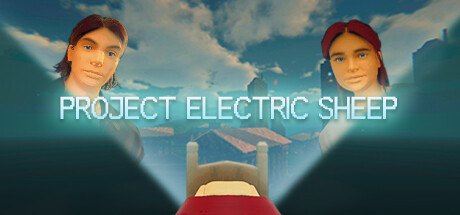
Project Electric Sheep uses generative AI to create character conversations inspired by your dream prompts, as well as to tailor dream worlds to your chosen topics. Below is some more information about which generative AI services we're using in PES, and how:
1. We use ChatGPT to generate NPC dialogue when dream worlds are created and when you reply to an NPC. We use AWS to generate voices for our NPCs.
2. We also use ChatGPT to write in-game world building details, such as graffiti and advertisements, as well as to create the dream description that displays on the dream loading screen.
3. We use DALL·E 2 to paint in-game murals inspired by your dream prompt.
4. Lastly, during the dream generation phase, we use ChatGPT to make creative decisions about world design based on the given dream prompt.
UPDATE: over 90% of the AI-generated content was removed!
Some of the 2D art and music in The Classrooms were originally created with the help of AI tools, not as a replacement for artists, but to get the uncanny, slightly "off" look of AI-generated content. This was intentional, as it reflects the kind of strange content the Superstructure itself would make.
Our goal has always been to evoke that uneasy and almost-familiar feeling. To build on this while moving away from AI, we are now trying approaches like fan art contests to gradually replace this content, while still preserving this unique aesthetic.
For video and music production, we plan to collaborate with real people, though budget and scheduling mean this will take time.
1. We used ChatGPT-4 to make some custom javascript plugins.
2. Used ChatGPT-4/DALL-E3 to generate some of the faces of NPC's, also some icons for the system menu.
- We use AI as a supportive tool for localization
- The voice for the "Spaceship Robot Assistant" was synthesized and processed by Sound Designers
- Visual drafts for some of the secondary, smaller props were generated and reworked by Artists
Description of the Game’s Use of AI
Our game does not use generative AI to create gameplay behavior or influence player decisions. All narrative content, character behavior, dialogue, level design, and artistic direction are hand-crafted by the developer.
We only use AI in limited, non-gameplay ways, such as:
Development assistance (e.g., debugging or improving scripts).
Optional asset prototyping (concept sketches used as early references before creating final assets).
No AI systems interact with the player during gameplay, and no player data is used to train AI models.
The in-game guidance, character responses, and story progression are fully authored, not generated dynamically by AI.
AI-assisted coding tools have been used to help develop code for game updates. No AI-generated artwork, audio, music, or other creative content has been used.
In order to improve game performance, some parts of the code use mathematical formulas generated with the help of AI.
AI was used to enhance several backgrounds and images that were originally hand-drawn and then used as reference material.