Public Steam disclosure research25,380 disclosures tracked
Where do games disclose AI use?
Search developers’ Steam disclosures, compare classified AI use across
games, and follow recorded changes.
This index adds cross-game classifications and statistics to
statements published on individual store pages.
Groups reflect automatic analysis of public disclosures; mature records are excluded. These counts do not measure AI use across all of Steam.
Missing or unclear statements cannot establish whether a game uses AI.
After I personally finalized the design phase, some art assets were first rendered using generative AI tools, and I then manually refined and detailed them.
Similarly, certain background music pieces were developed with the help of generative AI tools.
Should you have any concerns about these methods, please feel free to experience the game according to your own preferences. Thank you for your understanding and consideration.
As a solo developer, I used artificial intelligence tools to generate the card artwork and the game's music. All other aspects, including the game design, programming, and mechanics, are entirely human-created.
To improve efficiency during the prototyping stage, the current demo version of our project temporarily uses AI-generated assets as placeholders for some background elements.
We want to be clear that in the final version of the game, these placeholder assets will be entirely removed. All graphics will be replaced with 100% original artwork created by our in-house artists. This is our firm commitment to ensuring a unique and high-quality experience for all players.
We used generative AI (Leonardo AI) during the development process solely to generate some of the game’s artwork. These images are static and were created before release. The game does not include any runtime generative AI features, and no new AI-generated content is created during gameplay. All AI-generated assets are licensed for commercial use.
The entire game is coded by hand without any AI.
Midjourney is used for card art. The game is a solo side-project, and this was to one thing I could not do myself.
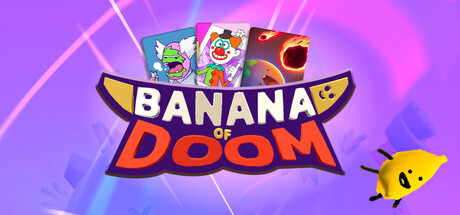
In Banana of Doom, AI takes the cards you play, pits them against each other, and generates funny, creative text reasons for the outcome then reveals them to the player
The store page materials, game main interface background image, loading interface background image, and card artwork are all generated by artificial intelligence
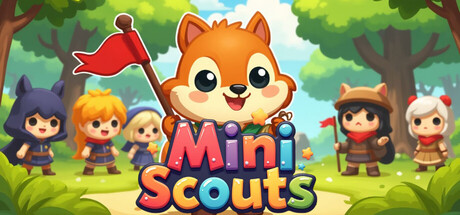
Mini Scouts uses generative AI tools to create certain visual assets, including hero sprites, backgrounds, and select promotional images for the store page. All AI-generated content is pre-rendered, reviewed, and edited by a human being before inclusion in the game or marketing materials.
Now, we know that AI art cannot and should not compete with human art. Hence, we'd love to bring aboard interested human artists so we can replace our gen-AI assets with assets made with love by human beings!❤️
In the game, AI technology was used to assist in generating the majority of the art and audio assets, specifically the UI, character illustrations, background illustrations, and background music. To achieve the desired visual effect, I will manually make secondary modifications to the generated assets after they are produced.
I am fully aware that AI-generated work cannot compare to the creations of outstanding artists and musicians, and I completely understand any attitude you may hold toward AI. If you are still willing to give this game a try, I would like to explain:
I apologize that, as an independent developer, from a financial standpoint, it has become difficult for me to afford a large amount of art and music content. However, this does not mean I will treat this work lightly. I have already conducted multiple rounds of optimization and replacement for the game's art and music, and this work will continue. I will bring my sincerity and dedication, within the limits of my ability, to gradually pursue results that are more satisfying to everyone.
Because this game was developed and produced by an individual with limited energy, some icons and story texts were generated with the assistance of AI and were manually screened and polished to improve the overall game quality and player experience.
AI-Generated Content Disclosure
I am a solo developer with no programming background. Before using AI, I spent three months following YouTube tutorials, deleted everything and restarted three times, and typed every line of code myself until the foundation of this game clicked.
From there, I used AI — primarily Claude — as a teacher and debugging partner across 7,000+ conversations over 16 months to learn GDScript and build every system in the game. The first line in my prompts is always "Stop being a yes sayer and always be brutal and honest."
Here is exactly what AI was and wasn't used for:
Code: I spent my first three months writing every line of code by hand. As the project grew, AI became a development partner — drafting code from my descriptions, which I then reviewed, debugged, and integrated. AI taught me programming concepts and helped me solve problems. Every design decision and system architecture is mine.
Art: AI-generated with extensive human direction and manual editing. Some pieces required 15 pages of descriptions. I often assemble final art from multiple elements — finding references, combining parts, and making hands-on edits until it matches my vision.
Animation: The first 14 enemies and 2 bosses were animated by me personally in DragonBones. For newer content, I'm exploring AI-generated animations and working to make them feel personal and consistent with the game's style — you can see examples with the later bosses. Some of these I'm still not satisfied with and will redo, which is just part of the process.
Music: I produced 350+ tracks using AI music tools and curated the best for the game. All creative direction — mood, style, placement — is mine.
Writing: All card text, lore, descriptions, and UI text are written by me. AI occasionally helps with polish.
Game Design: Every mechanic, card interaction, and balance decision comes from a lifetime of gaming — hundreds of board games, decades of Magic: The Gathering, a career at Blizzard Entertainment, and more consoles than most people can count. AI does not design games. That part is entirely human.
EDIT1: I felt the need to mention that I got diagnosed with ADHD last year, at the age of 47. The reason I could never learn coding in a traditional way is my attention span. If I am not interested it is super hard, and if I am interested it is super awesome. I get excited when I can talk and describe how I want my game to feel and function. The AI converts that to code, and together we've created a way for me to follow my dream and make a game that I want to play. I have thought to myself many times during development that I wish I knew how to make this myself, and I wish I was able to just learn and do things like most people. But here we are.
"EDIT2: I updated the Code section to be more precise. I only wrote code entirely by hand for the first three months. After that, AI and I worked together — I designed and described what I needed in detail, AI drafted it, and I reviewed, debugged, and integrated everything."
This game utilizes AI technology for coding. This has led to a dramatic improvement in coding, which is a difficult task for the creators, leading to increased efficiency.
Artwork is created manually by the development team.
Bone-Bound uses generative AI tools for some pre-rendered artwork and music as part of a solo-development production pipeline. Final assets are manually selected, edited, redrawn, filtered, revised, and curated to fit the game's design, visual style, and tone.
All card abilities, creature mechanics, balance, progression, rules, and gameplay systems are designed by the developer. No AI-generated content is created during gameplay.
Code: Generate basic functionality code, less than 1% of the total lines of code.
Images: Generate images for reference or initial drafts, less than 5% of the total image assets.
Text: Generate text for reference, initial drafts, or polishing, less than 5% of the total text volume.
We use AI to generate 2D concept art for reference for some icons and 3D models, AI was also used to generate concept art for some of the store page's illustrations such as the header and capsules.
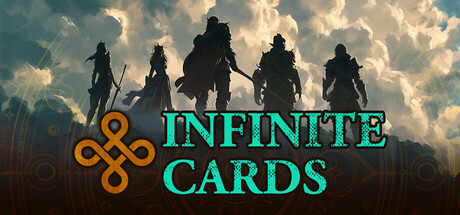
As a solo developer, I use AI tools solely for creative support. Some visual assets in Infinite Cards were created with the help of AI-assisted tools. All generated content was carefully selected and edited to meet the visual style and quality standards of the game.
Most of the art assets, including character illustrations were created using commercially licensed AI platforms. Additionally, AI-assisted refinement was applied to some portions of the textual content.
Localization is conducted either through AI translation followed by human review.
Additionally, due to the nature of the scenario, Generative AI is utilized only for illustrations within the work that are explicitly labeled as 'Created by Generative AI.' (Generative AI was not used for general scenes, character illustrations, BGM, or other creative assets.)
After I personally finalized the design phase, some art assets were first rendered using generative AI tools, and I then manually refined and detailed them.
Similarly, certain background music pieces were developed with the help of generative AI tools.
Should you have any concerns about these methods, please feel free to experience the game according to your own preferences. Thank you for your understanding and consideration.
As a solo developer, I used artificial intelligence tools to generate the card artwork and the game's music. All other aspects, including the game design, programming, and mechanics, are entirely human-created.
To improve efficiency during the prototyping stage, the current demo version of our project temporarily uses AI-generated assets as placeholders for some background elements.
We want to be clear that in the final version of the game, these placeholder assets will be entirely removed. All graphics will be replaced with 100% original artwork created by our in-house artists. This is our firm commitment to ensuring a unique and high-quality experience for all players.
We used generative AI (Leonardo AI) during the development process solely to generate some of the game’s artwork. These images are static and were created before release. The game does not include any runtime generative AI features, and no new AI-generated content is created during gameplay. All AI-generated assets are licensed for commercial use.
The entire game is coded by hand without any AI.
Midjourney is used for card art. The game is a solo side-project, and this was to one thing I could not do myself.
In Banana of Doom, AI takes the cards you play, pits them against each other, and generates funny, creative text reasons for the outcome then reveals them to the player
The store page materials, game main interface background image, loading interface background image, and card artwork are all generated by artificial intelligence
Mini Scouts uses generative AI tools to create certain visual assets, including hero sprites, backgrounds, and select promotional images for the store page. All AI-generated content is pre-rendered, reviewed, and edited by a human being before inclusion in the game or marketing materials.
Now, we know that AI art cannot and should not compete with human art. Hence, we'd love to bring aboard interested human artists so we can replace our gen-AI assets with assets made with love by human beings!❤️
In the game, AI technology was used to assist in generating the majority of the art and audio assets, specifically the UI, character illustrations, background illustrations, and background music. To achieve the desired visual effect, I will manually make secondary modifications to the generated assets after they are produced.
I am fully aware that AI-generated work cannot compare to the creations of outstanding artists and musicians, and I completely understand any attitude you may hold toward AI. If you are still willing to give this game a try, I would like to explain:
I apologize that, as an independent developer, from a financial standpoint, it has become difficult for me to afford a large amount of art and music content. However, this does not mean I will treat this work lightly. I have already conducted multiple rounds of optimization and replacement for the game's art and music, and this work will continue. I will bring my sincerity and dedication, within the limits of my ability, to gradually pursue results that are more satisfying to everyone.
Because this game was developed and produced by an individual with limited energy, some icons and story texts were generated with the assistance of AI and were manually screened and polished to improve the overall game quality and player experience.
AI-Generated Content Disclosure
I am a solo developer with no programming background. Before using AI, I spent three months following YouTube tutorials, deleted everything and restarted three times, and typed every line of code myself until the foundation of this game clicked.
From there, I used AI — primarily Claude — as a teacher and debugging partner across 7,000+ conversations over 16 months to learn GDScript and build every system in the game. The first line in my prompts is always "Stop being a yes sayer and always be brutal and honest."
Here is exactly what AI was and wasn't used for:
Code: I spent my first three months writing every line of code by hand. As the project grew, AI became a development partner — drafting code from my descriptions, which I then reviewed, debugged, and integrated. AI taught me programming concepts and helped me solve problems. Every design decision and system architecture is mine.
Art: AI-generated with extensive human direction and manual editing. Some pieces required 15 pages of descriptions. I often assemble final art from multiple elements — finding references, combining parts, and making hands-on edits until it matches my vision.
Animation: The first 14 enemies and 2 bosses were animated by me personally in DragonBones. For newer content, I'm exploring AI-generated animations and working to make them feel personal and consistent with the game's style — you can see examples with the later bosses. Some of these I'm still not satisfied with and will redo, which is just part of the process.
Music: I produced 350+ tracks using AI music tools and curated the best for the game. All creative direction — mood, style, placement — is mine.
Writing: All card text, lore, descriptions, and UI text are written by me. AI occasionally helps with polish.
Game Design: Every mechanic, card interaction, and balance decision comes from a lifetime of gaming — hundreds of board games, decades of Magic: The Gathering, a career at Blizzard Entertainment, and more consoles than most people can count. AI does not design games. That part is entirely human.
EDIT1: I felt the need to mention that I got diagnosed with ADHD last year, at the age of 47. The reason I could never learn coding in a traditional way is my attention span. If I am not interested it is super hard, and if I am interested it is super awesome. I get excited when I can talk and describe how I want my game to feel and function. The AI converts that to code, and together we've created a way for me to follow my dream and make a game that I want to play. I have thought to myself many times during development that I wish I knew how to make this myself, and I wish I was able to just learn and do things like most people. But here we are.
"EDIT2: I updated the Code section to be more precise. I only wrote code entirely by hand for the first three months. After that, AI and I worked together — I designed and described what I needed in detail, AI drafted it, and I reviewed, debugged, and integrated everything."
This game utilizes AI technology for coding. This has led to a dramatic improvement in coding, which is a difficult task for the creators, leading to increased efficiency.
Artwork is created manually by the development team.
Bone-Bound uses generative AI tools for some pre-rendered artwork and music as part of a solo-development production pipeline. Final assets are manually selected, edited, redrawn, filtered, revised, and curated to fit the game's design, visual style, and tone.
All card abilities, creature mechanics, balance, progression, rules, and gameplay systems are designed by the developer. No AI-generated content is created during gameplay.
Code: Generate basic functionality code, less than 1% of the total lines of code.
Images: Generate images for reference or initial drafts, less than 5% of the total image assets.
Text: Generate text for reference, initial drafts, or polishing, less than 5% of the total text volume.
We use AI to generate 2D concept art for reference for some icons and 3D models, AI was also used to generate concept art for some of the store page's illustrations such as the header and capsules.
As a solo developer, I use AI tools solely for creative support. Some visual assets in Infinite Cards were created with the help of AI-assisted tools. All generated content was carefully selected and edited to meet the visual style and quality standards of the game.
Most of the art assets, including character illustrations were created using commercially licensed AI platforms. Additionally, AI-assisted refinement was applied to some portions of the textual content.
Localization is conducted either through AI translation followed by human review.
Additionally, due to the nature of the scenario, Generative AI is utilized only for illustrations within the work that are explicitly labeled as 'Created by Generative AI.' (Generative AI was not used for general scenes, character illustrations, BGM, or other creative assets.)