Public Steam disclosure research25,394 disclosures tracked
Where do games disclose AI use?
Search developers’ Steam disclosures, compare classified AI use across
games, and follow recorded changes.
This index adds cross-game classifications and statistics to
statements published on individual store pages.
Groups reflect automatic analysis of public disclosures; mature records are excluded. These counts do not measure AI use across all of Steam.
Missing or unclear statements cannot establish whether a game uses AI.
Some small props and interface icons in this game began as AI-generated meshes and textures (text-to-3D / image-to-3D), which were then reworked by hand, retopologised, re-scaled, colour-graded and assembled before shipping. All other art comes from licensed asset packs and hand kitbashing. Nothing is generated live: no AI runs during play, and no player input is sent to an AI service.
During development of this game, generative AI was used for the creation of some sound effects and background music, localization.
Generative AI was not used in the creation of the game's artwork or story.
Generative AI tools were used during development to assist with the localization of some in-game text and the creation of certain visual assets. All AI-assisted content was reviewed and edited by the developer before being included in the game.
We used generative AI tools during development to help create pre-rendered assets: part of the visual art (environments, buildings, characters and interface elements), the music, and store page artwork. All AI-generated content was reviewed, edited and assembled by us. Generative AI is not used at runtime — the game generates no AI content while you play.
AI-generated content is used in the following areas of this game:
- Icons: Some card icon artwork was AI-assisted.
- Localization: All translated text was generated using AI.
- Game balance: Adjustments were guided by AI-based simulation.
- Help / guide / character text: Generated with AI, then edited by the developer.
- Story text: AI was used during early drafting, but nearly all of it has been rewritten by the developer.
Some of this game's assets were made with the help of generative AI tools and then edited by hand: the in-game notebook UI sprites, a few background props and set-dressing models, some texture work, and the English localization, which was drafted from our Korean original and reviewed by us.
The original Korean writing, the characters, the level design, and all gameplay systems were made without generative AI. Nothing is generated while you play.
Some of this game's content was created with the assistance of generative AI tools, always under human direction and review. Portions of the painted environment artwork and the store/marketing artwork began as AI-generated images that were then curated, edited, and integrated by hand. The music was generated with a licensed AI music tool, then curated and edited. Nothing is generated by AI while you play — everything you see and hear ships as fixed, human-reviewed content.
Generative AI tools were used. All AI-assisted content was reviewed by the developer, with some assets further edited and refined.No AI content is generated during gameplay.
Generative AI was used to translate (localize) the original Korean text into other languages. The original text was written by the development team, and the AI translations were reviewed before use.
AI (WAN 2.2) was used to help generate idle animation frames from 100% original, human-made art. All animations were reviewed and curated by the developer before being included in the game.
The game is primarily developed using Houdini, VEX and Godot. Generative AI assists with concept/reference artwork, initial 3D asset generation, and programming. Assets are further processed, optimized, rigged and animated in Houdini before integration into the game.
During development we used generative AI tools to create the some of this game's assets. This includes 2D art and audios. All AI-generated assets were produced during development, reviewed by us, and ship as fixed files in the build. Some were hand-edited, recoloured, composited or retimed afterwards. Game code, design, writing and dialogue are authored by us.
Explanation about the game development process:
In the early concept design and creative ideation stage of this game, we did use AI technology as an auxiliary tool to help us explore and validate various artistic styles and creative directions more quickly. These AI-generated reference materials provided us with initial inspiration.
However, the core creative concepts, story writing, character design, and all artistic assets presented in the final game were personally conceived and carefully crafted by our creative team. Each game element underwent repeated human optimization and fine-tuning to ensure the best gaming experience.
AI was only used as an auxiliary tool, and the final game content presented is the result of human creation. We have always adhered to human creation as the main driver, committed to bringing players a unique and meticulously polished gaming experience.
There is no AI-generated art or audio anywhere in this game. Every sprite, animation and character design is hand-drawn by me. The game has no audio at all, and the music in the trailer is my own work too. Nothing is generated while the game runs, and it never connects to an AI service.
AI was used to help with text, in three places.
The store page description and short description, in all 11 languages.
Translating the interface labels into the 10 languages other than English. There are only 24 strings in the whole game and no prose of any kind: 11 are labels like "Clear all" and "Cancel", and the other 13 are bird names, which are the real common names of each species, looked up per language rather than made up.
Some of our Steam community and marketing posts.
Chinese (both) I checked myself, and Japanese was checked at N2. Korean, Spanish, Russian, Brazilian Portuguese and German have not been checked by a native speaker.
Some of the game's 2D artwork, including character, enemy and boss sprites, item icons, and backgrounds, was created using generative AI tools. All such assets were individually reviewed, selected, polished and integrated by the development team.
Generative AI tools were used during development to assist with the creation of some visual and audio assets. All AI-assisted content was substantially edited by the developers and paid artists.
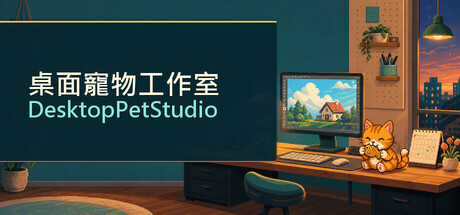
The application includes a small set of pre-generated pixel-art example assets, including default cat character poses, icons, and promotional visuals. They were created with generative AI assistance during development and curated as static demonstration content shipped with the application.
The product does not generate AI content at runtime and does not embed, call, or operate a generative AI model or service. Its AI Material Assistant only provides editable prompt templates and links to third-party services outside the application. Players may import their own images, GIFs, audio, and Workshop content.
The pixel art in this game was created with an AI image generation tool (Pixellab).
Generated art is never used as-is: the style, proportions and palette standards are set by a human,
every sprite is reviewed by eye, and anything off-standard is rejected and redone. Grounding,
animation continuity and color consistency are likewise human-checked before adoption.
Game design, balance and specification decisions are made by a human. AI-assisted tools are also
used in the development process.
Nothing is generated by AI at runtime (pre-generated content only).
Generative AI Disclosure: During the development of Farm Idle, generative AI tools were utilized to assist with creating and conceptualizing some 2D UI icons, menu graphics, and localized text. All generated assets were reviewed, cleaned, edited, and integrated by the development team to fit the game's pixel-art aesthetic. No AI content is generated in real-time while playing the game.
Generative AI was used selectively as a development tool to assist with some textures and selected 3D assets. All assets were reviewed, refined where needed, and integrated by the developer. The game does not use live-generated AI content.
Generative AI was used to create and/or assist with some promotional and marketing materials for the game, including store capsule artwork, cover images, and other store page visuals. Generative AI was not used to generate gameplay content or content during gameplay.
I developed this game entirely on my own, handling all the game design, hand-drawn artwork, and music composition myself.
Only the translations/localizations were generated by AI.
The store page was translated into 30 languages using AI, from text written by the developer. Store and library images were assembled from artwork the developer made by hand. The game itself contains no AI-generated content, and nothing is generated by AI while you play.
Some visual assets and music used in this game were created with the assistance of generative AI. All AI-generated content was reviewed, if needed edited, and curated by the developer before being included in the game.
Some placeholder assets in the current build (terrain textures and sound effects) were AI-generated and are being replaced with human-made and procedural versions. All models, writing, characters, and design are human-made.
To make One More Chop more accessible to players around the world, AI-assisted tools were used as part of the localization process for supported languages. Their use is limited to translation and localization support, helping us make the game available to players across a wider range of languages and regions.
Generative AI tools were used to assist with programming during development and to support the creation of some of the game's music. All AI-assisted content was reviewed and integrated by the developer.
This game makes extensive use of generative AI in the creation of most game assets, including 3D modeling, voice, sound, video, images, textures, scenario and narrative writing, and translation/localization. As a result, various content and assets included in the game may be generated or assisted using generative AI.
HaddyForge utilizes PixelLab AI as part of our development workflow to assist with the prototyping and production of select pixel-art sprites, character concepts, and animation frames.
AI-assisted output is primarily used as a starting point for development and is not typically considered game-ready in its initial form. Assets are reviewed, refined, edited, and iterated upon by the developer using PixelLab, Aseprite, and our broader pixel-art workflow until they meet the visual, animation, and technical requirements of the game.
As an independent studio combining pixel-art creation and software development, HaddyForge uses AI-assisted tools to accelerate experimentation and prototyping while maintaining direct creative control over the final assets included in the game.
AI-assisted development tools have also been used during software development to help review and iterate on game systems, identify potential bugs, improve testing, and increase development efficiency. All resulting game systems and implementations are reviewed, tested, and integrated by the developer before release.
Some small props and interface icons in this game began as AI-generated meshes and textures (text-to-3D / image-to-3D), which were then reworked by hand, retopologised, re-scaled, colour-graded and assembled before shipping. All other art comes from licensed asset packs and hand kitbashing. Nothing is generated live: no AI runs during play, and no player input is sent to an AI service.
During development of this game, generative AI was used for the creation of some sound effects and background music, localization.
Generative AI was not used in the creation of the game's artwork or story.
Generative AI tools were used during development to assist with the localization of some in-game text and the creation of certain visual assets. All AI-assisted content was reviewed and edited by the developer before being included in the game.
We used generative AI tools during development to help create pre-rendered assets: part of the visual art (environments, buildings, characters and interface elements), the music, and store page artwork. All AI-generated content was reviewed, edited and assembled by us. Generative AI is not used at runtime — the game generates no AI content while you play.
AI-generated content is used in the following areas of this game:
- Icons: Some card icon artwork was AI-assisted.
- Localization: All translated text was generated using AI.
- Game balance: Adjustments were guided by AI-based simulation.
- Help / guide / character text: Generated with AI, then edited by the developer.
- Story text: AI was used during early drafting, but nearly all of it has been rewritten by the developer.
Some of this game's assets were made with the help of generative AI tools and then edited by hand: the in-game notebook UI sprites, a few background props and set-dressing models, some texture work, and the English localization, which was drafted from our Korean original and reviewed by us.
The original Korean writing, the characters, the level design, and all gameplay systems were made without generative AI. Nothing is generated while you play.
Some of this game's content was created with the assistance of generative AI tools, always under human direction and review. Portions of the painted environment artwork and the store/marketing artwork began as AI-generated images that were then curated, edited, and integrated by hand. The music was generated with a licensed AI music tool, then curated and edited. Nothing is generated by AI while you play — everything you see and hear ships as fixed, human-reviewed content.
Generative AI tools were used. All AI-assisted content was reviewed by the developer, with some assets further edited and refined.No AI content is generated during gameplay.
Generative AI was used to translate (localize) the original Korean text into other languages. The original text was written by the development team, and the AI translations were reviewed before use.
AI (WAN 2.2) was used to help generate idle animation frames from 100% original, human-made art. All animations were reviewed and curated by the developer before being included in the game.
The game is primarily developed using Houdini, VEX and Godot. Generative AI assists with concept/reference artwork, initial 3D asset generation, and programming. Assets are further processed, optimized, rigged and animated in Houdini before integration into the game.
During development we used generative AI tools to create the some of this game's assets. This includes 2D art and audios. All AI-generated assets were produced during development, reviewed by us, and ship as fixed files in the build. Some were hand-edited, recoloured, composited or retimed afterwards. Game code, design, writing and dialogue are authored by us.
Explanation about the game development process:
In the early concept design and creative ideation stage of this game, we did use AI technology as an auxiliary tool to help us explore and validate various artistic styles and creative directions more quickly. These AI-generated reference materials provided us with initial inspiration.
However, the core creative concepts, story writing, character design, and all artistic assets presented in the final game were personally conceived and carefully crafted by our creative team. Each game element underwent repeated human optimization and fine-tuning to ensure the best gaming experience.
AI was only used as an auxiliary tool, and the final game content presented is the result of human creation. We have always adhered to human creation as the main driver, committed to bringing players a unique and meticulously polished gaming experience.
There is no AI-generated art or audio anywhere in this game. Every sprite, animation and character design is hand-drawn by me. The game has no audio at all, and the music in the trailer is my own work too. Nothing is generated while the game runs, and it never connects to an AI service.
AI was used to help with text, in three places.
The store page description and short description, in all 11 languages.
Translating the interface labels into the 10 languages other than English. There are only 24 strings in the whole game and no prose of any kind: 11 are labels like "Clear all" and "Cancel", and the other 13 are bird names, which are the real common names of each species, looked up per language rather than made up.
Some of our Steam community and marketing posts.
Chinese (both) I checked myself, and Japanese was checked at N2. Korean, Spanish, Russian, Brazilian Portuguese and German have not been checked by a native speaker.
Some of the game's 2D artwork, including character, enemy and boss sprites, item icons, and backgrounds, was created using generative AI tools. All such assets were individually reviewed, selected, polished and integrated by the development team.
Generative AI tools were used during development to assist with the creation of some visual and audio assets. All AI-assisted content was substantially edited by the developers and paid artists.
The application includes a small set of pre-generated pixel-art example assets, including default cat character poses, icons, and promotional visuals. They were created with generative AI assistance during development and curated as static demonstration content shipped with the application.
The product does not generate AI content at runtime and does not embed, call, or operate a generative AI model or service. Its AI Material Assistant only provides editable prompt templates and links to third-party services outside the application. Players may import their own images, GIFs, audio, and Workshop content.
The pixel art in this game was created with an AI image generation tool (Pixellab).
Generated art is never used as-is: the style, proportions and palette standards are set by a human,
every sprite is reviewed by eye, and anything off-standard is rejected and redone. Grounding,
animation continuity and color consistency are likewise human-checked before adoption.
Game design, balance and specification decisions are made by a human. AI-assisted tools are also
used in the development process.
Nothing is generated by AI at runtime (pre-generated content only).
Generative AI Disclosure: During the development of Farm Idle, generative AI tools were utilized to assist with creating and conceptualizing some 2D UI icons, menu graphics, and localized text. All generated assets were reviewed, cleaned, edited, and integrated by the development team to fit the game's pixel-art aesthetic. No AI content is generated in real-time while playing the game.
Generative AI was used selectively as a development tool to assist with some textures and selected 3D assets. All assets were reviewed, refined where needed, and integrated by the developer. The game does not use live-generated AI content.
Generative AI was used to create and/or assist with some promotional and marketing materials for the game, including store capsule artwork, cover images, and other store page visuals. Generative AI was not used to generate gameplay content or content during gameplay.
I developed this game entirely on my own, handling all the game design, hand-drawn artwork, and music composition myself.
Only the translations/localizations were generated by AI.
The store page was translated into 30 languages using AI, from text written by the developer. Store and library images were assembled from artwork the developer made by hand. The game itself contains no AI-generated content, and nothing is generated by AI while you play.
Some visual assets and music used in this game were created with the assistance of generative AI. All AI-generated content was reviewed, if needed edited, and curated by the developer before being included in the game.
Some placeholder assets in the current build (terrain textures and sound effects) were AI-generated and are being replaced with human-made and procedural versions. All models, writing, characters, and design are human-made.
To make One More Chop more accessible to players around the world, AI-assisted tools were used as part of the localization process for supported languages. Their use is limited to translation and localization support, helping us make the game available to players across a wider range of languages and regions.
Generative AI tools were used to assist with programming during development and to support the creation of some of the game's music. All AI-assisted content was reviewed and integrated by the developer.
This game makes extensive use of generative AI in the creation of most game assets, including 3D modeling, voice, sound, video, images, textures, scenario and narrative writing, and translation/localization. As a result, various content and assets included in the game may be generated or assisted using generative AI.
HaddyForge utilizes PixelLab AI as part of our development workflow to assist with the prototyping and production of select pixel-art sprites, character concepts, and animation frames.
AI-assisted output is primarily used as a starting point for development and is not typically considered game-ready in its initial form. Assets are reviewed, refined, edited, and iterated upon by the developer using PixelLab, Aseprite, and our broader pixel-art workflow until they meet the visual, animation, and technical requirements of the game.
As an independent studio combining pixel-art creation and software development, HaddyForge uses AI-assisted tools to accelerate experimentation and prototyping while maintaining direct creative control over the final assets included in the game.
AI-assisted development tools have also been used during software development to help review and iterate on game systems, identify potential bugs, improve testing, and increase development efficiency. All resulting game systems and implementations are reviewed, tested, and integrated by the developer before release.