Public Steam disclosure research25,991 disclosures tracked
Where do games disclose AI use?
Search developers’ Steam disclosures, compare classified AI use across
games, and follow recorded changes.
This index adds cross-game classifications and statistics to
statements published on individual store pages.
Groups reflect automatic analysis of public disclosures; mature records are excluded. These counts do not measure AI use across all of Steam.
Missing or unclear statements cannot establish whether a game uses AI.
This game makes extensive use of generative artificial intelligence tools during development from concepting, writing support, assets prototyping, animation and sound design. All AI-assisted content is curated, modified, refined, and integrated by the developer to ensure artistic cohesion, gameplay integrity, and thematic consistency.
The final gameplay experience is not dynamically generated by AI at runtime. The game does not use generative AI to create player-specific content during live play, and no player data is used to train AI systems.
Generative AI tools were used as creative and production accelerators within a human-directed development process.
The vast majority of assets in this game were created from scratch by our team, including hand-crafted models, textures, animations, environments, and gameplay systems. However, to support our creative process and speed up certain production stages, we used generative AI tools for a limited portion of the assets. This includes some 2D/3D art elements (via AI art models), a selection of animation sequences, and certain text inscriptions or UI elements. All AI-generated content was carefully reviewed, edited, and integrated by our team to ensure quality, consistency, and compliance with our vision. No live AI generation occurs during gameplay. We remain committed to delivering a polished, human-directed experience.
Generative AI is used to create base materials for certain image assets, including character portraits, enemies, and UI. These generated images are not used as-is; they undergo manual processing such as retouching or animation before being implemented into the game.
This game uses AI-assisted tools in the following areas of development:
Localization: Some translations were assisted or reviewed using AI language tools.
Sound Effects: Some SFX were generated or prototyped using AI audio tools.
No in-game visuals are using AI except the main menu art as of now. Promotional materials may still have AI generated content.
All AI-assisted content was reviewed, curated, and approved by the development team. No AI content is generated at runtime.
During the period from Early Access to Launch this title may use AI for voice in quest dialog as placeholders, prior to launch all AI elements shall be removed should they have existed and replaced.
Certain early-stage visual or audio assets were created using generative AI tools as part of the development workflow. All such content has been manually edited and integrated by the developer. The game does not generate AI content during gameplay.
As a solo developer, I use AI selectively to support my workflow, not to replace creativity. For example, AI may be used to assist in generating or processing certain audio elements, which are then manually edited and curated before being included in the game. No 3D assets are AI-generated. AI is used purely as a tool to enhance development, and I aim to be transparent about its use.
Generative AI was used during development to help create some game artwork, store page text, translations, capsule images, and marketing materials. All final materials were reviewed, edited, and approved by the developer. No AI-generated content is created during gameplay, and the game does not connect to external AI services while running.
Generative AI was used to create several environmental textures (such as stone and ground textures), some ui elements (such as buttons and icons), Capsule and Library images in Steam. All AI-generated content was manually reviewed and refined by the developer to ensure quality and compliance.
The vast majority of the art and audio assets was manually crafted, planned and designed. Some textures, particle systems and shaders have been generated with the assistance of artificial intelligence.
Some visible in-game assets, including but not limited to cutscenes, characters, environments, and UI elements, were created or visually enhanced with the help of AI, including generation based on white model references.
Some store page assets were also created or visually enhanced with the help of AI, including generation based on white model references.
Some music and sound effects were generated with the help of AI.
Some localized language content was translated with the help of AI.
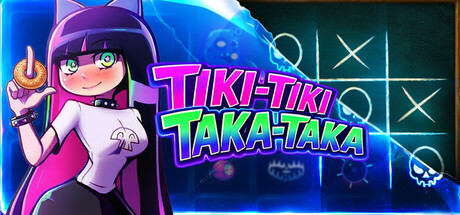
This game currently includes a few 2D Image AI-generated assets (those include 5 of the slot machine's icons, 7 character portraits displayed on the main hallway, the main menu background image & current thumbnail) used as placeholders during the Early Access phase. These assets are scheduled to be replaced with original, non-AI artwork in a future content update. No AI tools are used for live, runtime content generation.
This game uses AI to assist in generating [art assets/localized text/voice dubbing]. All AI-generated content has been manually reviewed and modified to ensure compliance with regulations and the game's world setting.
We are a small studio with only six people actively involved in development. For teams like ours, generative AI is a supportive tool that helps us realize a creative vision that would otherwise be completely out of reach within our budget.
Here is exactly how we utilized generative AI in our game:
• We used generative AI during the prototyping and concept art phases. Every AI-generated image was manually modified, iterated upon, and finalized by our artist.
• The sea shanties in the game feature AI-generated vocals and music, but the lyrics are original and written by our team.
• Certain voice-over (VO) lines were generated using AI.
Generative AI was used to create certain 2D background assets within the game world. This includes some family group photographs used as props, visuals shown on in-game television screens, and decorative wall posters. These AI-generated elements are static environmental assets only and were not used for in-game cinematics, character models, or animations.
I'm building this game on my own, with generative AI tools as finishing and scaling assistants on top of my own creative foundations.
3D mech and monster meshes started as my own concept sketches; Meshy AI generated the base 3D models from those sketches, which I then refined
and animated myself in Blender.
Character voices began as dialogue I wrote and the tone I set — some are my own voice recordings, and for others I used ElevenLabs to alter the voices so they fit each character.
Music tracks each started from vocal melody references I recorded; Lyria (through Gemini) developed those references into the final orchestrated tracks.
Cinematic video sequences were generated by Veo3 from my prompts and storyboards, then fully edited by me in DaVinci Resolve.
I review every AI output before it ships in the game, and I hold commercial-use rights to all generated content per each service's paid-subscription terms.
Artificial Intelligence tools were utilized during the foundational (base) creation stage for the game's visual assets. All generated outputs were then manually refined, re-processed, and enhanced by our artists through hours of dedicated Photoshop-Photopea work to ensure they align perfectly with the game's unique and original art style. We have utilized AI merely as a 'brush' guided by an artist’s touch; therefore, the resulting visuals should be evaluated as successful illustrations driven by human craftsmanship rather than simple AI-generated products.
All visual assets (sprites, terrain, UI, capsule art) were AI-generated and then manually edited in GIMP. Game design, direction, and integration were done entirely by the solo developer.
This game was developed by a solo developer with the assistance of generative AI tools during production.
AI tools such as ChatGPT were used as a development aid for Unreal Engine guidance, technical explanations, spell-checking, and drafting some in-game text and UI messaging. ChatGPT was also used to generate some placeholder images and audio assets during early development.
Some 3D models and textures were created using AI-assisted tools such as Tripo3D.ai. These assets may be refined, replaced, or improved over time as the project evolves and budget allows.
All gameplay systems, mechanics, design decisions, Blueprint scripting, and overall game implementation were created and assembled by the developer. No AI system autonomously generated gameplay code or core systems.
Additional assets were purchased through the Unreal Engine Fab Marketplace where noted.
AI tools were used strictly as production assistants to support solo development.
Generative AI tools were utilized during the development process to assist with code optimization and text refinement. All core gameplay mechanics, logic, and final assets were manually reviewed, implemented, and fine-tuned by the developer to ensure quality and originality. This game does not include any real-time AI generation or dynamic AI-driven interactions during gameplay.
This game uses generative AI tools during development to assist with certain artwork, localization, and written content.
All AI-assisted content has been reviewed, edited, and integrated by the developer to ensure originality, quality, and compliance with applicable rights.
Game artwork (sprites for items, enemies, characters, and UI elements) was generated using Stable Diffusion
(DreamShaper model) running locally. Sound effects and music were generated using Meta AudioCraft (AudioGen/MusicGen)
running locally. Non-English translations were generated using local LLMs (Ollama) and manually reviewed. No external AI
services are used during gameplay. All AI-generated content was produced offline during development.
Generative AI (LLMs and Image Generation AI) was used in the following development processes:
Translation & Text: AI was used to assist in writing store descriptions and translating in-game text into multiple languages (English, Chinese, etc.).
Graphics: Steam store assets (Capsule images) and Achievement icons were generated using AI.
Generative AI tools were used to assist in the creation of some in-game textures and visual assets. All AI-assisted content was reviewed and modified by the developer.
This project incorporates the use of artificial intelligence tools to assist in development. AI was used to help generate portions of the C# codebase, streamlining implementation and problem-solving, as well as to create some textures used within the game. All AI-generated content was reviewed, adapted, and integrated to fit the overall design and functionality of the project
Some trivia questions were generated with the assistance of AI tools. However, all questions and answers have been manually reviewed, edited, and fact-checked by me before being included.
All art is hand drawn by the developer.
All creative direction, original writing, and final dialogue are by the developer.
AI tools were used during the writing process as an editorial partner reviewing drafts for continuity, character voice consistency, and story structure.
English (recommended wording)
We used generative AI in a limited way during the development of this app and its store presence.
Store / community assets (store page presentation): We used generative AI tools to create or edit some promotional graphics used on the store page (e.g., capsule images, key art, banners). All final assets were reviewed and edited by the developer before publishing.
Audio (background music): Some in-game background music (BGM) was created with the assistance of generative-AI-based tools. The final audio was reviewed and edited (and where applicable mixed/mastered) by the developer before being included in the game.
Gameplay / features: The game does not include features that generate content for players in real time (e.g., AI chat or player-prompted content generation). The use of AI is limited to asset creation support during development.
This game makes extensive use of generative artificial intelligence tools during development from concepting, writing support, assets prototyping, animation and sound design. All AI-assisted content is curated, modified, refined, and integrated by the developer to ensure artistic cohesion, gameplay integrity, and thematic consistency.
The final gameplay experience is not dynamically generated by AI at runtime. The game does not use generative AI to create player-specific content during live play, and no player data is used to train AI systems.
Generative AI tools were used as creative and production accelerators within a human-directed development process.
The vast majority of assets in this game were created from scratch by our team, including hand-crafted models, textures, animations, environments, and gameplay systems. However, to support our creative process and speed up certain production stages, we used generative AI tools for a limited portion of the assets. This includes some 2D/3D art elements (via AI art models), a selection of animation sequences, and certain text inscriptions or UI elements. All AI-generated content was carefully reviewed, edited, and integrated by our team to ensure quality, consistency, and compliance with our vision. No live AI generation occurs during gameplay. We remain committed to delivering a polished, human-directed experience.
Generative AI is used to create base materials for certain image assets, including character portraits, enemies, and UI. These generated images are not used as-is; they undergo manual processing such as retouching or animation before being implemented into the game.
This game uses AI-assisted tools in the following areas of development:
Localization: Some translations were assisted or reviewed using AI language tools.
Sound Effects: Some SFX were generated or prototyped using AI audio tools.
No in-game visuals are using AI except the main menu art as of now. Promotional materials may still have AI generated content.
All AI-assisted content was reviewed, curated, and approved by the development team. No AI content is generated at runtime.
During the period from Early Access to Launch this title may use AI for voice in quest dialog as placeholders, prior to launch all AI elements shall be removed should they have existed and replaced.
Certain early-stage visual or audio assets were created using generative AI tools as part of the development workflow. All such content has been manually edited and integrated by the developer. The game does not generate AI content during gameplay.
As a solo developer, I use AI selectively to support my workflow, not to replace creativity. For example, AI may be used to assist in generating or processing certain audio elements, which are then manually edited and curated before being included in the game. No 3D assets are AI-generated. AI is used purely as a tool to enhance development, and I aim to be transparent about its use.
Generative AI was used during development to help create some game artwork, store page text, translations, capsule images, and marketing materials. All final materials were reviewed, edited, and approved by the developer. No AI-generated content is created during gameplay, and the game does not connect to external AI services while running.
Generative AI was used to create several environmental textures (such as stone and ground textures), some ui elements (such as buttons and icons), Capsule and Library images in Steam. All AI-generated content was manually reviewed and refined by the developer to ensure quality and compliance.
The vast majority of the art and audio assets was manually crafted, planned and designed. Some textures, particle systems and shaders have been generated with the assistance of artificial intelligence.
Some visible in-game assets, including but not limited to cutscenes, characters, environments, and UI elements, were created or visually enhanced with the help of AI, including generation based on white model references.
Some store page assets were also created or visually enhanced with the help of AI, including generation based on white model references.
Some music and sound effects were generated with the help of AI.
Some localized language content was translated with the help of AI.
This game currently includes a few 2D Image AI-generated assets (those include 5 of the slot machine's icons, 7 character portraits displayed on the main hallway, the main menu background image & current thumbnail) used as placeholders during the Early Access phase. These assets are scheduled to be replaced with original, non-AI artwork in a future content update. No AI tools are used for live, runtime content generation.
This game uses AI to assist in generating [art assets/localized text/voice dubbing]. All AI-generated content has been manually reviewed and modified to ensure compliance with regulations and the game's world setting.
We are a small studio with only six people actively involved in development. For teams like ours, generative AI is a supportive tool that helps us realize a creative vision that would otherwise be completely out of reach within our budget.
Here is exactly how we utilized generative AI in our game:
• We used generative AI during the prototyping and concept art phases. Every AI-generated image was manually modified, iterated upon, and finalized by our artist.
• The sea shanties in the game feature AI-generated vocals and music, but the lyrics are original and written by our team.
• Certain voice-over (VO) lines were generated using AI.
Generative AI was used to create certain 2D background assets within the game world. This includes some family group photographs used as props, visuals shown on in-game television screens, and decorative wall posters. These AI-generated elements are static environmental assets only and were not used for in-game cinematics, character models, or animations.
I'm building this game on my own, with generative AI tools as finishing and scaling assistants on top of my own creative foundations.
3D mech and monster meshes started as my own concept sketches; Meshy AI generated the base 3D models from those sketches, which I then refined
and animated myself in Blender.
Character voices began as dialogue I wrote and the tone I set — some are my own voice recordings, and for others I used ElevenLabs to alter the voices so they fit each character.
Music tracks each started from vocal melody references I recorded; Lyria (through Gemini) developed those references into the final orchestrated tracks.
Cinematic video sequences were generated by Veo3 from my prompts and storyboards, then fully edited by me in DaVinci Resolve.
I review every AI output before it ships in the game, and I hold commercial-use rights to all generated content per each service's paid-subscription terms.
Artificial Intelligence tools were utilized during the foundational (base) creation stage for the game's visual assets. All generated outputs were then manually refined, re-processed, and enhanced by our artists through hours of dedicated Photoshop-Photopea work to ensure they align perfectly with the game's unique and original art style. We have utilized AI merely as a 'brush' guided by an artist’s touch; therefore, the resulting visuals should be evaluated as successful illustrations driven by human craftsmanship rather than simple AI-generated products.
All visual assets (sprites, terrain, UI, capsule art) were AI-generated and then manually edited in GIMP. Game design, direction, and integration were done entirely by the solo developer.
This game was developed by a solo developer with the assistance of generative AI tools during production.
AI tools such as ChatGPT were used as a development aid for Unreal Engine guidance, technical explanations, spell-checking, and drafting some in-game text and UI messaging. ChatGPT was also used to generate some placeholder images and audio assets during early development.
Some 3D models and textures were created using AI-assisted tools such as Tripo3D.ai. These assets may be refined, replaced, or improved over time as the project evolves and budget allows.
All gameplay systems, mechanics, design decisions, Blueprint scripting, and overall game implementation were created and assembled by the developer. No AI system autonomously generated gameplay code or core systems.
Additional assets were purchased through the Unreal Engine Fab Marketplace where noted.
AI tools were used strictly as production assistants to support solo development.
Generative AI tools were utilized during the development process to assist with code optimization and text refinement. All core gameplay mechanics, logic, and final assets were manually reviewed, implemented, and fine-tuned by the developer to ensure quality and originality. This game does not include any real-time AI generation or dynamic AI-driven interactions during gameplay.
This game uses generative AI tools during development to assist with certain artwork, localization, and written content.
All AI-assisted content has been reviewed, edited, and integrated by the developer to ensure originality, quality, and compliance with applicable rights.
Game artwork (sprites for items, enemies, characters, and UI elements) was generated using Stable Diffusion
(DreamShaper model) running locally. Sound effects and music were generated using Meta AudioCraft (AudioGen/MusicGen)
running locally. Non-English translations were generated using local LLMs (Ollama) and manually reviewed. No external AI
services are used during gameplay. All AI-generated content was produced offline during development.
Generative AI (LLMs and Image Generation AI) was used in the following development processes:
Translation & Text: AI was used to assist in writing store descriptions and translating in-game text into multiple languages (English, Chinese, etc.).
Graphics: Steam store assets (Capsule images) and Achievement icons were generated using AI.
Generative AI tools were used to assist in the creation of some in-game textures and visual assets. All AI-assisted content was reviewed and modified by the developer.
This project incorporates the use of artificial intelligence tools to assist in development. AI was used to help generate portions of the C# codebase, streamlining implementation and problem-solving, as well as to create some textures used within the game. All AI-generated content was reviewed, adapted, and integrated to fit the overall design and functionality of the project
Some trivia questions were generated with the assistance of AI tools. However, all questions and answers have been manually reviewed, edited, and fact-checked by me before being included.
All art is hand drawn by the developer.
All creative direction, original writing, and final dialogue are by the developer.
AI tools were used during the writing process as an editorial partner reviewing drafts for continuity, character voice consistency, and story structure.
English (recommended wording)
We used generative AI in a limited way during the development of this app and its store presence.
Store / community assets (store page presentation): We used generative AI tools to create or edit some promotional graphics used on the store page (e.g., capsule images, key art, banners). All final assets were reviewed and edited by the developer before publishing.
Audio (background music): Some in-game background music (BGM) was created with the assistance of generative-AI-based tools. The final audio was reviewed and edited (and where applicable mixed/mastered) by the developer before being included in the game.
Gameplay / features: The game does not include features that generate content for players in real time (e.g., AI chat or player-prompted content generation). The use of AI is limited to asset creation support during development.