Public Steam disclosure research25,376 disclosures tracked
Where do games disclose AI use?
Search developers’ Steam disclosures, compare classified AI use across
games, and follow recorded changes.
This index adds cross-game classifications and statistics to
statements published on individual store pages.
Groups reflect automatic analysis of public disclosures; mature records are excluded. These counts do not measure AI use across all of Steam.
Missing or unclear statements cannot establish whether a game uses AI.
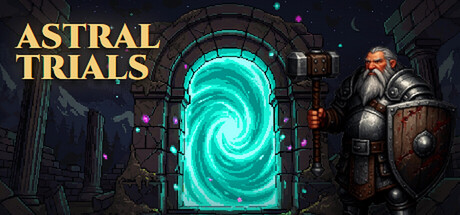
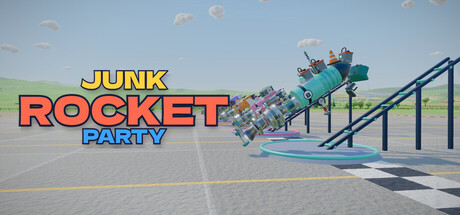
The Steam store page artwork (capsule, header, hero, logo and icon images) was created with the help of a generative AI image tool, using our own prompts and art direction. This artwork is used on the store page only and is not part of the game itself. Screenshots and trailer footage are real in-engine captures. The game itself contains no AI-generated art, audio, voice or text, and it does not use generative AI while you play.
The game's artwork, audio and other assets are not AI-generated. The game engine is written from scratch over the course of 8 months in C++ and Simple DirectMedia Layer 2; in which Codex assistance was used for programming. No content is generated by AI during gameplay. No AI service is used during gameplay. All AI actions in the game are classic decision tree based intelligence made.
This game uses generative AI tools to assist in creating some content: pixel-art visuals (character, enemy, and card artwork, icons, and backgrounds) via PixelLab, and sound effects via ElevenLabs. All AI-assisted content was reviewed and curated by the developer before being included in the game.
Generative AI tools were used during development to assist with the creation of game content. All final content was reviewed and refined by the development team.
Some in-game icons and background music, as well as all character voice lines, were created using generative AI during development. The game does not generate AI content during gameplay.
The music, most sound effects and a few sprites and icons were made with AI assistance and reviewed by the team. Store graphics were assembled with AI assistance from the team's own artwork. No AI generates content while you play.
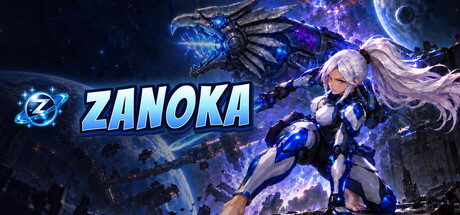
ZANOKA is made by a solo developer. All of its art began as hand-made drawings, sketches and pixel art, including concept art by artist Malaika Raheel. AI-assisted tools were used for polishing, frame interpolation and translation.
AI tools assisted with localization, store-page text, and preparation of promotional artwork. This content is prepared in advance. The game does not use AI to generate content during gameplay or connect to external AI services.
Generative AI was used during development to create the galaxy illustration displayed in the game’s galaxy-map interface and menus, as well as promotional artwork used for Steam capsule and library images. Trailer production uses AI-generated music and selected transition sound effects. These materials are generated during development, rather than during gameplay. The game does not offer player-facing live AI content generation.
AI tools were used under the developer’s creative direction to assist with implementation, interface text, localization, documentation, procedural visuals, and selected promotional artwork, including the manual’s cover. No generative AI runs during gameplay.
AI tools assisted with game development, particularly multiplayer systems, and with the creation of in-game artwork, animations, and music as well as store and marketing visuals, including the logo.
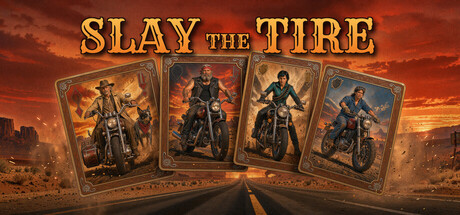
Slay the Tire combines original human authorship with generative AI tools. I designed and wrote the game, its locations, and gameplay. AI assisted with visual assets, including card art, textures, 3D models, scenery, and marketing artwork, as well as audio production and store text. The soundtrack began as music I composed and performed on instruments, then used Suno for styling, orchestration, and production. All content is prepared during development; no AI content is generated during gameplay.
The 32 illustrations, the soundtrack and the sound effects in A to Zen were created with generative AI tools from the developer's own prompts, then selected, checked and edited by hand. The in-game texts, the store translations and parts of the game code were also made with AI assistance and reviewed and tested by the developer. Game design, puzzle mechanics and the chapter concept are the developer's own work. Nothing is generated while you play, and the game does not connect to any AI service.
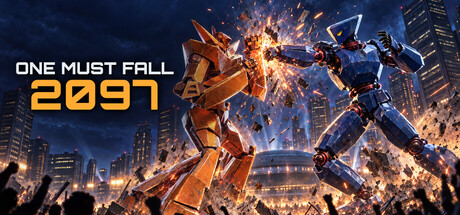
The remake's 3D robots, arenas and animation were produced with AI-assisted generation tools (image-to-3D and image generation) from the original game's designs, then authored, repaired and reviewed by hand in Blender and Unreal. The menu art shown in HD is AI-remastered from the original game's pictures, and the store page artwork was AI-generated from renders of our in-game robots. All AI content is pre-made during development; nothing is generated while you play. The music and sound effects are the original recordings, remastered without AI.
Generative AI was used to assist with some pre-generated 2D artwork. All AI-assisted assets were selected, edited and integrated by the developer. No generative AI is used during gameplay.
Some in-game artwork (sprites, icons and illustrations), sound effects, music and localized text were created with the help of generative AI tools, then edited, curated and reviewed by the developer. No content is generated by AI during gameplay.
This game did use generative AI during its development. This was more of a fun side project while working on the main project (Ducki's Descent, which doesn't use AI), tinkering around with AI since my fiancé likes this genre of games, so since it uses AI its free.
Generative AI tools were used during development to assist in creating and refining some of the game's visual assets and artwork. These assets were subsequently selected, edited, adapted, and integrated into the game by the developer. No generative AI is used during gameplay, and the game does not generate content dynamically for players.
Generative AI tools were used during development to create some artwork, 3D assets, music, sound effects and localization text. These assets are prepared before release. The game does not generate AI content during play or connect to external AI services.
Some content in this game was created with the help of generative AI tools during development: sound effects, the English translation, some 3D assets and parts of the store page text. All of it was reviewed and edited by the developer. The game does not generate any content with AI while you play.
Some artwork associated with Rocket's Way was created using generative AI tools. This content is pre-generated and does not generate new content during gameplay.
Everything you see and hear in this game - the graphics, the sound effects, the music and the built-in tracks - is produced by our own hand-written generators: drawn and synthesised in code. No generative AI is involved in any of it, and nothing is generated by an AI while the game is running. The computer drivers race on ordinary, hand-written driving logic, not on an AI model.
Generative AI was used during development, as an assistant for code and for text: in writing the program code and those generators, in the menu and interface text, in the names of the computer drivers, and in the translation between German and English. Every line of it was reviewed and reworked before it went into the game.
The images and the video on this store page are captured from the running game.
The 3D character models and their textures in this game were created using a generative AI tool (Tripo AI), based on original images prepared by the developer. ChatGPT / DALL·E were also used to create UI icons, background art (sky and grass), and some textures. All generated results were reviewed and adjusted by the developer before being included in the game. The game does not generate any AI content at runtime.
AI was used as an interface and scripting assistant for industry standard tools such as Reaper, Godot, Blender, Aseprite, and Deepl for enhancing the quality and consistency of the game content and building systems I otherwise would not have the capacity to design and implement as solo developer.
Where possible, artists are and will continue to be supported via use of their paid or free assets. For this game, the most money spent was on Quaternius source level packages.
Notable exception to this is the UI, which was generated using RetroDiffusion with a python pipeline built in house for consistent design around UI elements using color normalization and targeting from a theme palette, which is then imported and tweaked in Godot.
Generative AI tools were used during development to assist with some artwork, text and localization, and English announcer voice clips created using text-to-speech. This content is prepared in advance and used as fixed assets in the game or on its Steam store page. No AI-generated content is created during gameplay.
AI was used to assist with text translation into Italian, Portuguese, Chinese, Japanese, Korean, Norwegian, Swedish and German. The translations are used in the store page and in-game.
No other content in this game uses AI.
Some character illustrations and 3D character models were created with the assistance of generative AI during development. The generated assets were manually edited, refined, and integrated into the game's final content by the developer. No generative AI is used to create new content in real time during gameplay.
AI tools were used in a limited capacity for a few prop images such as the photographs in the main house, and translation of some Javanese writings. All AI-assisted content was carefully reviewed and approved by humans to ensure it was appropriate and respectful, the final product is a reflection of our own cultural identity and creativity.
AI-assisted translation tools were used for some parts of the game's localization.
We are committed to improving translation quality and welcome feedback on any inaccuracies or unnatural phrasing you may encounter.
This game utilizes generative AI tools to assist in the production of select art, sound, and music assets. However, no raw AI content is used. Every single AI-generated asset has been extensively modified, remade, and personalized by hand to fit the game's specific creative vision.
The key art used for the store capsules and the title screen background was generated with image models run locally and then hand-edited. The Spanish, Portuguese (Brazil), German and Simplified Chinese translations and drafts of the store page text were produced with the help of an AI assistant. Everything you see during gameplay (the beetle, the tree, its surfaces and all animation) is drawn procedurally in code. Sound effects are CC0 recordings; no AI-generated voice or music is used, and no generative AI runs while you play.
This game was developed with extensive use of generative AI (Anthropic's Claude and OpenAI's GPT). The game code, the 3D models (generated by AI-written scripts), procedurally generated visuals, synthesized sound effects and music (produced by AI-written synthesis code), in-game text and translations, and the store page text and trailer were all created with AI assistance. No AI content is generated while the game is running, and the game does not connect to any external AI service.
Some game assets were made with AI generation tools during development and then edited by us: the talent icons, the digger crew sprites, the sound effects and the music. Store descriptions were drafted with AI assistance and reviewed by the developer. Nothing is generated by AI while you play.
Some of the background music, the in-game translations and parts of the store text were created with the help of generative AI tools, then reviewed and edited by the developer.
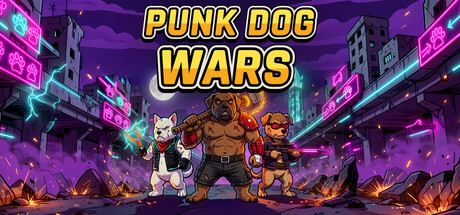
Punk Dog Wars uses AI-assisted tools during development. Character, effect and environment art, the music, and the announcer and dog voices were generated with AI models and then selected, composited and edited by our team. The store art was made the same way. No content is generated while you play.
The Steam store page artwork (capsule, header, hero, logo and icon images) was created with the help of a generative AI image tool, using our own prompts and art direction. This artwork is used on the store page only and is not part of the game itself. Screenshots and trailer footage are real in-engine captures. The game itself contains no AI-generated art, audio, voice or text, and it does not use generative AI while you play.
The game's artwork, audio and other assets are not AI-generated. The game engine is written from scratch over the course of 8 months in C++ and Simple DirectMedia Layer 2; in which Codex assistance was used for programming. No content is generated by AI during gameplay. No AI service is used during gameplay. All AI actions in the game are classic decision tree based intelligence made.
This game uses generative AI tools to assist in creating some content: pixel-art visuals (character, enemy, and card artwork, icons, and backgrounds) via PixelLab, and sound effects via ElevenLabs. All AI-assisted content was reviewed and curated by the developer before being included in the game.
Generative AI tools were used during development to assist with the creation of game content. All final content was reviewed and refined by the development team.
Some in-game icons and background music, as well as all character voice lines, were created using generative AI during development. The game does not generate AI content during gameplay.
The music, most sound effects and a few sprites and icons were made with AI assistance and reviewed by the team. Store graphics were assembled with AI assistance from the team's own artwork. No AI generates content while you play.
ZANOKA is made by a solo developer. All of its art began as hand-made drawings, sketches and pixel art, including concept art by artist Malaika Raheel. AI-assisted tools were used for polishing, frame interpolation and translation.
AI tools assisted with localization, store-page text, and preparation of promotional artwork. This content is prepared in advance. The game does not use AI to generate content during gameplay or connect to external AI services.
Generative AI was used during development to create the galaxy illustration displayed in the game’s galaxy-map interface and menus, as well as promotional artwork used for Steam capsule and library images. Trailer production uses AI-generated music and selected transition sound effects. These materials are generated during development, rather than during gameplay. The game does not offer player-facing live AI content generation.
AI tools were used under the developer’s creative direction to assist with implementation, interface text, localization, documentation, procedural visuals, and selected promotional artwork, including the manual’s cover. No generative AI runs during gameplay.
AI tools assisted with game development, particularly multiplayer systems, and with the creation of in-game artwork, animations, and music as well as store and marketing visuals, including the logo.
Slay the Tire combines original human authorship with generative AI tools. I designed and wrote the game, its locations, and gameplay. AI assisted with visual assets, including card art, textures, 3D models, scenery, and marketing artwork, as well as audio production and store text. The soundtrack began as music I composed and performed on instruments, then used Suno for styling, orchestration, and production. All content is prepared during development; no AI content is generated during gameplay.
The 32 illustrations, the soundtrack and the sound effects in A to Zen were created with generative AI tools from the developer's own prompts, then selected, checked and edited by hand. The in-game texts, the store translations and parts of the game code were also made with AI assistance and reviewed and tested by the developer. Game design, puzzle mechanics and the chapter concept are the developer's own work. Nothing is generated while you play, and the game does not connect to any AI service.
The remake's 3D robots, arenas and animation were produced with AI-assisted generation tools (image-to-3D and image generation) from the original game's designs, then authored, repaired and reviewed by hand in Blender and Unreal. The menu art shown in HD is AI-remastered from the original game's pictures, and the store page artwork was AI-generated from renders of our in-game robots. All AI content is pre-made during development; nothing is generated while you play. The music and sound effects are the original recordings, remastered without AI.
Generative AI was used to assist with some pre-generated 2D artwork. All AI-assisted assets were selected, edited and integrated by the developer. No generative AI is used during gameplay.
Some in-game artwork (sprites, icons and illustrations), sound effects, music and localized text were created with the help of generative AI tools, then edited, curated and reviewed by the developer. No content is generated by AI during gameplay.
This game did use generative AI during its development. This was more of a fun side project while working on the main project (Ducki's Descent, which doesn't use AI), tinkering around with AI since my fiancé likes this genre of games, so since it uses AI its free.
Generative AI tools were used during development to assist in creating and refining some of the game's visual assets and artwork. These assets were subsequently selected, edited, adapted, and integrated into the game by the developer. No generative AI is used during gameplay, and the game does not generate content dynamically for players.
Generative AI tools were used during development to create some artwork, 3D assets, music, sound effects and localization text. These assets are prepared before release. The game does not generate AI content during play or connect to external AI services.
Some content in this game was created with the help of generative AI tools during development: sound effects, the English translation, some 3D assets and parts of the store page text. All of it was reviewed and edited by the developer. The game does not generate any content with AI while you play.
Some artwork associated with Rocket's Way was created using generative AI tools. This content is pre-generated and does not generate new content during gameplay.
Everything you see and hear in this game - the graphics, the sound effects, the music and the built-in tracks - is produced by our own hand-written generators: drawn and synthesised in code. No generative AI is involved in any of it, and nothing is generated by an AI while the game is running. The computer drivers race on ordinary, hand-written driving logic, not on an AI model.
Generative AI was used during development, as an assistant for code and for text: in writing the program code and those generators, in the menu and interface text, in the names of the computer drivers, and in the translation between German and English. Every line of it was reviewed and reworked before it went into the game.
The images and the video on this store page are captured from the running game.
The 3D character models and their textures in this game were created using a generative AI tool (Tripo AI), based on original images prepared by the developer. ChatGPT / DALL·E were also used to create UI icons, background art (sky and grass), and some textures. All generated results were reviewed and adjusted by the developer before being included in the game. The game does not generate any AI content at runtime.
AI was used as an interface and scripting assistant for industry standard tools such as Reaper, Godot, Blender, Aseprite, and Deepl for enhancing the quality and consistency of the game content and building systems I otherwise would not have the capacity to design and implement as solo developer.
Where possible, artists are and will continue to be supported via use of their paid or free assets. For this game, the most money spent was on Quaternius source level packages.
Notable exception to this is the UI, which was generated using RetroDiffusion with a python pipeline built in house for consistent design around UI elements using color normalization and targeting from a theme palette, which is then imported and tweaked in Godot.
Generative AI tools were used during development to assist with some artwork, text and localization, and English announcer voice clips created using text-to-speech. This content is prepared in advance and used as fixed assets in the game or on its Steam store page. No AI-generated content is created during gameplay.
AI was used to assist with text translation into Italian, Portuguese, Chinese, Japanese, Korean, Norwegian, Swedish and German. The translations are used in the store page and in-game.
No other content in this game uses AI.
Some character illustrations and 3D character models were created with the assistance of generative AI during development. The generated assets were manually edited, refined, and integrated into the game's final content by the developer. No generative AI is used to create new content in real time during gameplay.
AI tools were used in a limited capacity for a few prop images such as the photographs in the main house, and translation of some Javanese writings. All AI-assisted content was carefully reviewed and approved by humans to ensure it was appropriate and respectful, the final product is a reflection of our own cultural identity and creativity.
AI-assisted translation tools were used for some parts of the game's localization.
We are committed to improving translation quality and welcome feedback on any inaccuracies or unnatural phrasing you may encounter.
This game utilizes generative AI tools to assist in the production of select art, sound, and music assets. However, no raw AI content is used. Every single AI-generated asset has been extensively modified, remade, and personalized by hand to fit the game's specific creative vision.
The key art used for the store capsules and the title screen background was generated with image models run locally and then hand-edited. The Spanish, Portuguese (Brazil), German and Simplified Chinese translations and drafts of the store page text were produced with the help of an AI assistant. Everything you see during gameplay (the beetle, the tree, its surfaces and all animation) is drawn procedurally in code. Sound effects are CC0 recordings; no AI-generated voice or music is used, and no generative AI runs while you play.
This game was developed with extensive use of generative AI (Anthropic's Claude and OpenAI's GPT). The game code, the 3D models (generated by AI-written scripts), procedurally generated visuals, synthesized sound effects and music (produced by AI-written synthesis code), in-game text and translations, and the store page text and trailer were all created with AI assistance. No AI content is generated while the game is running, and the game does not connect to any external AI service.
Some game assets were made with AI generation tools during development and then edited by us: the talent icons, the digger crew sprites, the sound effects and the music. Store descriptions were drafted with AI assistance and reviewed by the developer. Nothing is generated by AI while you play.
Some of the background music, the in-game translations and parts of the store text were created with the help of generative AI tools, then reviewed and edited by the developer.
Punk Dog Wars uses AI-assisted tools during development. Character, effect and environment art, the music, and the announcer and dog voices were generated with AI models and then selected, composited and edited by our team. The store art was made the same way. No content is generated while you play.