Public Steam disclosure research27,951 disclosures tracked
Where do games disclose AI use?
Search developers’ Steam disclosures, compare classified AI use across
games, and follow recorded changes.
This index adds cross-game classifications and statistics to
statements published on individual store pages.
Groups reflect automatic analysis of public disclosures; mature records are excluded. These counts do not measure AI use across all of Steam.
Missing or unclear statements cannot establish whether a game uses AI.
The game uses a pre-generated application icon, and AI tools assisted with some player-facing text and localization work. The content is reviewed before release. The game does not call generative AI services during gameplay.
Some of the game's content was created with the help of AI tools during development. Most 3D models and textures (the shop, products, props, buildings and street scenery) were generated by scripts written with AI assistance. Sound effects and ambience were synthesized by scripts written with AI assistance. Game text and store text were written or edited with AI assistance and reviewed by the developer. The monster characters and their animations come from CC0 asset packs by Quaternius (not AI-generated). The game does not generate any content with AI while it is running.
Daycare Simulator uses locally run (no data centers) generative AI tools, primarily through ComfyUI, for development of e.g. selected UI elements and 3D mesh creation. These tools are run on the developer’s own hardware rather than through cloud-based services. AI-generated assets are reviewed and edited before being included in the game.
Generative AI was used for some Steam store and marketing materials only (section banners and draft store copy). These assets were reviewed and edited before publishing.
No generative AI is used in the shipped game at runtime. In-game 3D furniture, environments, and gameplay content are created with traditional art and development tools (purchased/licensed assets and original work). AI-assisted coding tools were used during development; they are not used to generate player-facing game content.
Pre-generated AI content: most of the 2D pixel art (the cat companion with its outfits and in-between animation frames, fortune-game icons, tarot cards, items and backgrounds) was first generated with AI image tools (PixelLab and an image-generation model), then retouched by our designer, who redraws, recolors and cleans up the pixels by hand. The background music tracks were generated with an AI music model (ACE-Step) and selected and edited by our developer. The fortune logic and game rules were designed by the developer; fonts are used under their own licenses (mostly SIL OFL). AI was used only during development, to help make the art and music. The finished game simply contains those files. While you play, no AI runs inside the game, nothing new is generated, and the game never connects to an AI service or sends your data to one.
Nuclear Kitty Games is a human-led studio whose team brings 15 years of professional game-development experience. We use AI and large language models (LLMs) to support development and content creation, improve our workflows and speed up iteration. Our developers direct the design and development of every game, and review and integrate the final content. We are game makers and players who care about the games we create.
Some content included in this game and its promotional materials was created with generative AI assistance. The game does not generate AI content or connect to AI services during play.
Generative AI tools may be used to assist with text localization/translation and to support sound effects or background audio production during development. No AI-generated visual assets, 3D models, or artwork are used in the final build of the game.
We direct and review everything in Beadroom ourselves. Some of the 3D models, the starting drawings for the bead patterns, the neighbours' portraits and the music were made with the help of AI tools, following our direction. Every model was then cleaned up and adjusted in Blender, and every pattern was converted to real bead colours, picked and corrected one by one. Dialogue and translations were written with AI assistance under our direction. The screenshots and the gameplay trailer are real game footage. The cover illustration and the cinematic trailer were made with AI help. Nothing is generated with AI while you play, and the game never connects to an AI service. Every bead is placed by you.
Parts of Tinselwood were made with generative AI during development: its music and sound effects, its interface icons, and parts of its code. Every building, set piece, and townsperson was built by the game's own in-house code-based procedural generation. All of it was reviewed and reworked by hand, and nothing is generated while you play.
This game did use generative AI during its development. This was more of a fun side project while working on the main project (Ducki's Descent, which doesn't use AI), tinkering around with AI since my fiancé likes this genre of games, so since it uses AI its free.
The game's sprites, characters and building artwork were created with generative AI image tools, and the background music tracks were created with generative AI audio tools. All assets were selected and integrated into the game by the developer. Gameplay, design and sound effects were made without generative AI. The game does not generate any AI content during play and does not connect to any AI services.
The store page description was drafted with help from an AI writing assistant and reviewed by the developer. The game includes AI-generated voice audio made with Kokoro TTS from developer-written scripts, including waiting-room broadcasts, public-address announcements, and story voices. The game does not generate new content with AI during play; staff and patient behavior uses authored, rule-based simulation systems. No game art or text is AI-generated.
Generative AI tools were used during development to assist with drafting and refining portions of the game's store-page copy, localization, and player-facing text. All AI-assisted content was reviewed, edited, and approved by the developer. The game does not generate AI content during gameplay and does not connect to external AI services.
AI tools were used during development to create some sound effects and voice audio, and to assist with store-page text. These assets and text are prepared in advance.
Generative AI was used to help translate the game into 14 languages, to create some of the 2D art such as item icons, and for some of the background music.
Generative AI tools were used during development to create artwork, icons, 3D assets, written content, and trailer narration. This content is reviewed, refined, and integrated under the developer’s creative direction. The game does not generate AI content during gameplay.
Decorative artwork and background shop-window textures in the game, as well as Steam store capsule artwork, library artwork, logos and icons, were generated with AI before release. No AI content is generated during gameplay.
Parts of Howling Woods were made with generative AI during development: its music and sound effects, its interface icons, and parts of its code. Every building, set piece, and townsperson in the game is built by the game's own in-house code-based procedural generation. All of it was reviewed and reworked by hand, and nothing is generated while you play.
The in-game text and the store page text, including the Korean, Japanese and Simplified Chinese translations, were written with the help of AI. Nothing is generated by AI while you play.
Generative AI tools were used to assist in creating selected store and promotional artwork. All such assets were subsequently edited, modified and finalized by a human artist. The game itself does not generate AI content at runtime.
AI models have been used to validate, optimize, rank and test the puzzles and the simulation engine. Soundtrack is procedurally generated music using the same engine that simulates the electronics, powered by the C~ language.
I'm a solo developer and I'm not a 3D modeler. Generative AI is what made Pawper possible at all: the in-game items and the game's icons were created with AI 3D tools, and I assembled the store capsules by hand from those elements. Sound effects and music are mostly licensed or hand-made. Nothing is generated by AI while the game is running.
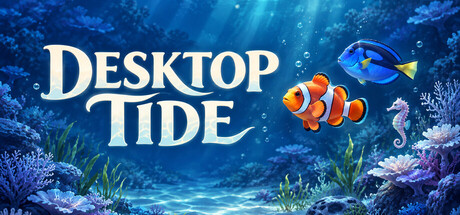
Generative AI was used to assist in creating artwork for marine creatures, plants, decorations, underwater environments, and Steam store and marketing images, as well as portions of descriptive text. This content is pre-generated and included as fixed assets or text. The game does not generate content during play and does not connect to external AI services.
This game contains content created with the assistance of AI tools. AI was used during development to assist with programming, visual assets, and other creative elements. All generated content was reviewed, edited, and integrated by the dev.
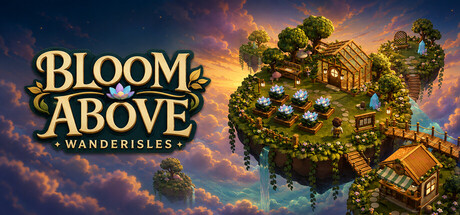
Generative AI was used during development to create interface illustrations, assist with procedural artwork and in-game text, and produce store and library artwork. This includes botanical interface frames, coin and wallet illustrations, and elements of the floating-island world. The game does not generate AI content during play or connect to an external AI service.
We use generative AI across all disciplines of game development most often with heavy amounts of human editing. That involves audio and visual art, our logo, and localization. We use it as a productivity tool so we can achieve a higher level of quality, faster, than we would have been able to.
Some visual assets, including 3D objects and example artwork, sound effects, and music were created with generative AI during development. Promotional videos also use AI-generated narration. These assets are prepared in advance. The current game does not use generative AI to create content during gameplay.
Some visual assets used in the game and/or its promotional materials were created with the assistance of generative AI tools and were reviewed and edited by the developer before use.
Generative AI tools were used during development to assist with some visual assets, including textures, 3D asset creation and store artwork, as well as store text and translations. Assets are reviewed and adapted before integration. VoxelForge does not generate AI content during play and does not connect to an external AI service during play.
Art assets in this game - the fish, environments, UI icons, achievement icons
and store page artwork - were created with the help of generative AI tools.
Every asset was then hand-picked, edited, resized and colour-corrected before
being brought into the game, and all of it was checked against a fixed art
direction and a locked colour palette.
Some of the code was written with AI assistance. All of it was reviewed by the
developer and is covered by automated tests.
The game itself never generates anything while you play, and never connects to
an AI service. Everything you see ships with the build and is the same for
every player.
Some in-game models and music were created with generative AI. Our original cover illustrations and title lettering are handmade; selected store-art adaptations and the app icon used AI tools. Optional chat uses a lightweight AI model running entirely on your computer to answer small everyday questions. You can turn chat off at any time.
Generative AI tools were used as part of the production process to assist in creating and refining some 2D artwork and visual assets. All such content is pre-generated and reviewed before being included in the game. No AI-generated content is created during gameplay.
We are actively working to replace all placeholder AI art before launch. While we aim for a fully human-crafted experience, a few minor assets may still remain at release.
AI tools were also used to assist with localizing the game and store page.
All 3D in-game art was created by human artists or derived from real-world museum photoscans. (See the credits menu for full attributions.)