Public Steam disclosure research27,951 disclosures tracked
Where do games disclose AI use?
Search developers’ Steam disclosures, compare classified AI use across
games, and follow recorded changes.
This index adds cross-game classifications and statistics to
statements published on individual store pages.
Groups reflect automatic analysis of public disclosures; mature records are excluded. These counts do not measure AI use across all of Steam.
Missing or unclear statements cannot establish whether a game uses AI.
AI tools were used to support translations for the game and store page and to develop ideas and initial drafts for selected artwork. All AI-assisted content was reviewed, edited and refined by the developer before use to match the game's style.
Some visual assets such as fictional product packaging, posters, decorative graphics, icons and marketing materials were created with the help of generative AI and then reviewed/edited before being included in the game.
We use generative AI tools to assist with some game audio assets, such as dinosaur sounds and other sound effects, as well as some store page, marketing, and promotional artwork. These assets are reviewed, selected, edited, and integrated by the developer before use. Generative AI is not currently used to create live gameplay content during play.
Mystic Grove uses generative AI in a limited supporting role for certain pre-rendered content, including music and some 2D visual assets such as skill images, spec node images, and related artwork. The core game itself — including gameplay systems, programming, combat, level design, map creation, and overall development — is solely created by the developer. Mystic Grove does not use live-generated AI content during gameplay.
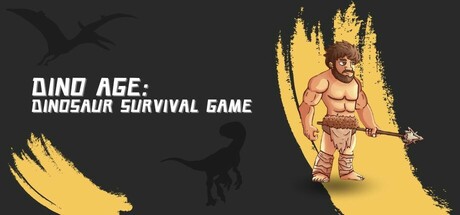
Dino Age is developed by Mark and Jimmy. We shape the world, story and gameplay, and direct how the game looks and feels. During development, we use generative AI to help create and refine some visual assets and draft text. These are reviewed and integrated by us, alongside our work on editing, character rigging, animation, level design and playtesting.
"The Strongest Evolution: EVO Card" utilizes Generative AI not as a shortcut, but as a core "Mutation Engine" to fit the game's biopunk theme.
Visual Assets: The creature mutations, body parts, and UI elements are generated using AI tools. However, they are not raw outputs; every asset has been heavily curated, retouched, and assembled by human developers to ensure a consistent and unique art style.
Concept: The infinite possibilities of evolution in the game mirror the generative nature of AI. We treat AI as the "Mad Scientist" inside the lab, allowing for a volume of biological variations that would be impossible with traditional methods.
Safety: All AI-generated content is manually reviewed to ensure it complies with copyright laws and contains no illegal or offensive material.
We use AI tools as a support system for our small development team to enhance the quality and balance of the game. Specifically:
Balancing & Math: We use AI to help calculate and balance the game ecosystem (drop rates, damage scaling, and economy).
Concepting: AI is used to generate reference images and mood boards to inspire our artists. The final in-game visual assets are hand-crafted or manually refined based on these concepts.
Drafting: AI assists in drafting initial marketing copy and lore structures, which are then finalized by our writers.
Marketing materials, pre-rendered in-game visual effects, textures and materials for characters, props, and environments and translations are partly or completly AI-generated.
Artificial intelligence was used to pre-generate texts about objects (e.g. dinosaurs), assist in building the shop page, and create a few AI-generated images in the game.
Some of the game's visual assets—such as expedition events and rewards—were assisted by AI during creation and carefully refined by human to deliver a rich and engaging adventure experience for players.
AI generated images on some game play UI and some store page images created by DALL-E. all pre rendered.... Big shout out to DALL...the rest of the coding and concept was human generated :)
Generative AI was used to create the logo and marketing materials for the game. Some of the in-game units were also pre-rendered using a generative AI template.
The use of AI for some of the UI in the game
The use of AI to help detect bugs in the code
The use of AI for some of the artwork in the store page
The use of AI for store page descriptions
The use of AI for in game and store page logos/Icons
Some art assets, mainly the store page, have been originally created with the use of image generation AI. Which then have gone through manual editing to apply enhancements and branding such as logos or text. Masking and cleanup have also been applied by hand to remove unwanted elements and/or apply the required dimension changes.
The reason for the usage of image generation AI for art assets are the following:
- Cut the team cost for art commissions. Art is a minimal focus of this game.
- Accurately portray the main artistic vision for the game, which in this case is minimalism. Image generation has helped to reach this goal of art assets reflecting the artistic nuances the game aims for the player to "feel".
This game uses AI-assisted tools during development, including text translation and visual enhancement as part of the artwork creation process.
All in-game content and artworks are reviewed, edited, and finalized by the developer. The game does not use AI to generate or modify content during gameplay.
Some minor polish such as wording refinement and UI icons were assisted using AI tools.
All 3D models, animations, gameplay systems, UI implementation, sound and visual effects, and narrative were created entirely in-house.
I use PhotoShop's generative AI, Replica Studios for some voice acting, and ChatGPT for some quest dialogue. I also use Mid Journey to generate graphics. Most AI generated content is temporary and will be replaced when/if the game ever makes enough money to hire people to replace them.