Public Steam disclosure research25,376 disclosures tracked
Where do games disclose AI use?
Search developers’ Steam disclosures, compare classified AI use across
games, and follow recorded changes.
This index adds cross-game classifications and statistics to
statements published on individual store pages.
Groups reflect automatic analysis of public disclosures; mature records are excluded. These counts do not measure AI use across all of Steam.
Missing or unclear statements cannot establish whether a game uses AI.
All spoken roles were performed by the developer, Morph. Those recordings were then transformed into different character voices and accents using AI voice conversion and further processed with Logic Pro.
During the development of Star Surge, generative AI tools were used to assist in designing certain in-game visuals (such as achievement icons) and promotional materials. AI was utilized as an aid to accelerate the visual production process, and all generated content was adjusted to fit the game's sci-fi theme. The core mechanics and coding of the game were developed entirely by hand.
All video, voice and music content in this game was pre-generated using AI tools under full human direction. The story, characters, dialogue, game design, editing and code are original work by a solo developer. No content is generated while the game is running; players only ever see pre-produced, human-reviewed material.
Generative AI was used to produce the English voice-over for the in-game AI character. This was an intentional creative choice because the character itself is an artificial intelligence. AI also assisted with localization; however, responsibility for the final content rests with a human.
The game uses an AI system developed in-house, allowing Nori to understand and respond to what you say in real time, while remembering the conversations you’ve shared. Generative AI is used exclusively for Nori’s dialogue, voice, and interactive responses.
All artwork, models, music, and narrative text in the game are created by human artists and writers. The game contains no AI-generated artwork.
Dungeon Cooking uses generative AI tools for some of its content, created during development (pre-generated, not generated in real time):
- Part of the creature art: 6 of the game's 18 monsters were made with AI image tools, then edited and integrated by the developer.
- Some in-game dungeon event content was drafted with AI assistance and edited by the developer.
- The announcement trailer was produced using AI tools.
The rest of the game's art comes from licensed asset packs and the developer's own work. All AI-generated content was reviewed and curated by the developer before shipping.
Some UI elements and 2D visual assets were created with the assistance of generative AI tools and then manually edited and refined in Photoshop. All AI-assisted content has been reviewed by the developer to ensure it does not infringe on third-party intellectual property.
This game includes optional local AI features:
Text Generation: A local language model periodically generates in-game short story events based on the player's typing activity.
Image Generation: A local image generation model may probabilistically generate illustrations for the corresponding story when a story event is triggered.
The AI features are purely an advanced option; whether you use them or not does not affect the core gameplay experience.
Lo-Fi with Ruka includes optional live generative AI features. Players may provide their own DeepSeek and StepFun API keys to generate short companion chat replies, personalized study-story chapters, and synthesized voice. These features are disabled without player-provided keys. Prompts, the current focus goal or status, and limited recent non-sensitive study context are sent only to the selected providers. API keys and generated content remain local and are not uploaded to Steam Cloud.
StorySmith uses generative AI to write its stories live as you and your Twitch chat make choices. The AI model runs locally on your machine by default, with an optional bring-your-own-key cloud option — so your playthroughs stay private and no two are ever the same.
Pre-generated generative AI tools were used during development to assist in creating and editing some 2D visual assets, including backgrounds, character images, scene variations, and promotional artwork. AI tools were also used to assist with drafting, editing, and localization of some text. All final content was selected, reviewed, and edited by the developer before inclusion. No generative AI is used during gameplay, and players cannot generate content in the game.
This game uses pre-generated AI only for some decorative static models in scenes, selected UI assets, and promotional artwork, all of which have been manually reviewed by our team. It contains no live-generated AI content; core gameplay and level design are original works of the development team.
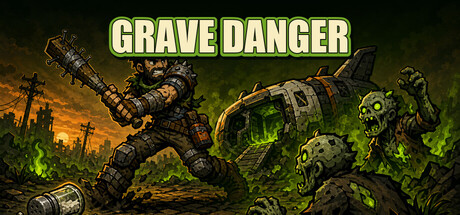
Generative AI tools assisted with portions of the game's code, comedic written content, and certain original visual assets. The game also includes 12 pre-generated instrumental music tracks made with Suno. All AI-assisted material was reviewed, edited, and integrated by the developer. Grave Danger does not generate AI content during gameplay and does not connect to external AI services.
Generative AI tools were used to create selected pre rendered promotional artwork displayed on the Steam Store page and in marketing materials. All such content was reviewed, curated and integrated by the developer. The game does not generate AI content during gameplay.
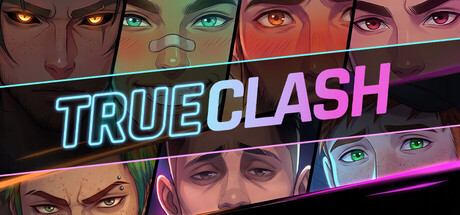
TrueClash uses generative AI as part of its art workflow: character art and backgrounds are initially generated with AI tools, then manually reviewed, edited, and refined by our team in order to maintain the game's consistent visual style.
AI tools were also used to assist with translation and as a development aid for coding.
Some of the licensed music tracks featured in the game may have been created with AI assistance by their respective artists.
We use AI only for English Voiceover. It was trained exclusively on the voices of our Ukrainian voice actors.
We do not use AI for final art or music. Everything in the game is handcrafted by real people. Check game Credits.
Train Trek uses generative AI in two ways.
During development we used AI tools to help make some assets: the user-interface art (HUD and menu icons, menu artwork, frames, button plates, mouse cursors), the instrumental soundtrack, and some sound effects. All of it was chosen, edited and finished by hand before it shipped. The 3D models are built procedurally by our own scripts, and the design, world generation and balancing are authored by hand. Parts of the source code were written with an AI coding assistant, reviewed and tested by the developer.
While you play, the game speaks using a text-to-speech model that ships inside the game and runs entirely on your own computer. It voices tutorial guidance, hints and menu narration instead of pre-recorded audio. It needs no internet connection, sends nothing anywhere, and never records or listens to you. It only reads lines we wrote and shipped with the game - it does not invent dialogue.
Generative AI was used during development to create certain music, assist with localization, and produce some icon assets. All AI-generated content included in the final game was reviewed, edited, and approved by the development team before release.
Run It Back: 90 Days to Race is developed solo. Illustrating the game's scenes, key art, and character art by hand wasn't feasible working alone, so AI image-generation tools are used as part of the art pipeline — some pieces generated directly from text prompts, others produced by restyling real photographic references into the game's illustrated art style. All AI-assisted artwork was selected and curated by the developer. No AI-generated content is created live during gameplay.
THE UNSHARED uses pre-rendered AI-generated assets: the CURATOR's voice (Kokoro-82M TTS) and two UI images (logo and menu background). No AI content is generated during gameplay.
Salt and Soil uses generative AI during gameplay to create some Annual Family Council narrative text and structured choice outcomes based on the current campaign state. Generated council content is constrained by the game’s historical setting, family data, localization rules, and gameplay schema, then validated before it is shown to the player.
The game calls the aforementioned third-party large language model API over the network at runtime. When the player makes a decision, issues an imperial edict, or interacts with ministers in the game, the game assembles the current situation and character settings into a request and sends it to the AI service; the text returned by the service (minister dialogue, memorials to the throne, plot deduction) is presented in the game interface in real time. This process is transparent to the player and requires no player-side configuration, but an internet connection is required throughout.
Penko Vox: Japanese uses local generative AI to power its immersive language learning experience. An integrated Large Language Model (LLM) acts as a native Japanese tutor, generating real-time dialogue based on user input, while a Neural Text-to-Speech (TTS) engine synthesizes high-fidelity Japanese audio for listening practice.
This game uses images created with AI generation tools — including NPC photos and portraits, and some store and promotional artwork. All such content has been reviewed by the developer to ensure it contains no illegal or infringing material.
Generative AI tools were used during the development process to assist in writing code, creating speech, sound effects, and 3D assets. No generative AI is used during actual gameplay.
The game's narration engine is a deterministic template system with zero runtime AI. The template/fragment library it draws from was hand-crafted in English, and then mass-localized during development using a large language model and then human-curated. No AI image generation was used: all art, icons, and store assets are procedurally rasterized from hand-authored primitive op-lists. The game contains no live/runtime AI generation.
Generative AI was used for some marketing visuals, evidence assets, and music. All other content including scripts, character sprites, and game development was created by the developer.
Some sound effects and a small number of textures in this game were created with the assistance of AI tools and refined by hand. Subtitle translations across our nine supported languages were generated using AI from the original English voice acting. Voice acting was performed by real people, with AI tools used only for noise reduction and audio mastering. All AI-generated content was curated and finalized by human creators before being included in the game.
The game includes generative AI in the form of relatively structured conversation (voice and/or text to prompt) in context with the setting and era of the documented sites (caravanserai) you will visit.
Generative AI is used to create sound effects and voice lines. The AI-generated images provide foundational 2D artwork for promotional materials that are heavily stylized and edited. All the AI-generated assets are static, pre-baked and there is no live, real-time interaction with AI during gameplay.
All AI art assets within the game were generated using Adobe Firefly, ensuring full commercial compliance. The prompts used were strictly limited to general artistic styles without imitating any specific copyrighted artists. Furthermore, all generated assets underwent substantial manual refinement, including photo-bashing, manual composition, and layout optimization by the developer.
Generative AI tools were used during development to assist in creating select pre-rendered 2D background environments, UI icons, and character voice-over audio for cutscenes and narration. All AI-generated content was pre-generated and manually reviewed to ensure quality and compliance before being integrated into the game. The game does not generate any AI content live during gameplay.
Generative AI tools are used during development for the creation and refinement of certain visual assets, animations, music, sound effects and voice content.
AI-assisted workflows are also utilized for localization support, historical research, narrative iteration and code review.
All AI-generated material is manually reviewed, edited and integrated into the final game experience by the developer.
Given I am a solo developer, Generative AI tools were utilized as development assistants to optimize workflows.
Also, some of the backgrounds are based on images created with AI, as well as a few items. They were only used as a basis to start from and have been heavily edited manually afterwards to make them fit with the rest of the game's pixel art artstyle.
All spoken roles were performed by the developer, Morph. Those recordings were then transformed into different character voices and accents using AI voice conversion and further processed with Logic Pro.
During the development of Star Surge, generative AI tools were used to assist in designing certain in-game visuals (such as achievement icons) and promotional materials. AI was utilized as an aid to accelerate the visual production process, and all generated content was adjusted to fit the game's sci-fi theme. The core mechanics and coding of the game were developed entirely by hand.
All video, voice and music content in this game was pre-generated using AI tools under full human direction. The story, characters, dialogue, game design, editing and code are original work by a solo developer. No content is generated while the game is running; players only ever see pre-produced, human-reviewed material.
Generative AI was used to produce the English voice-over for the in-game AI character. This was an intentional creative choice because the character itself is an artificial intelligence. AI also assisted with localization; however, responsibility for the final content rests with a human.
The game uses an AI system developed in-house, allowing Nori to understand and respond to what you say in real time, while remembering the conversations you’ve shared. Generative AI is used exclusively for Nori’s dialogue, voice, and interactive responses.
All artwork, models, music, and narrative text in the game are created by human artists and writers. The game contains no AI-generated artwork.
Dungeon Cooking uses generative AI tools for some of its content, created during development (pre-generated, not generated in real time):
- Part of the creature art: 6 of the game's 18 monsters were made with AI image tools, then edited and integrated by the developer.
- Some in-game dungeon event content was drafted with AI assistance and edited by the developer.
- The announcement trailer was produced using AI tools.
The rest of the game's art comes from licensed asset packs and the developer's own work. All AI-generated content was reviewed and curated by the developer before shipping.
Some UI elements and 2D visual assets were created with the assistance of generative AI tools and then manually edited and refined in Photoshop. All AI-assisted content has been reviewed by the developer to ensure it does not infringe on third-party intellectual property.
This game includes optional local AI features:
Text Generation: A local language model periodically generates in-game short story events based on the player's typing activity.
Image Generation: A local image generation model may probabilistically generate illustrations for the corresponding story when a story event is triggered.
The AI features are purely an advanced option; whether you use them or not does not affect the core gameplay experience.
Lo-Fi with Ruka includes optional live generative AI features. Players may provide their own DeepSeek and StepFun API keys to generate short companion chat replies, personalized study-story chapters, and synthesized voice. These features are disabled without player-provided keys. Prompts, the current focus goal or status, and limited recent non-sensitive study context are sent only to the selected providers. API keys and generated content remain local and are not uploaded to Steam Cloud.
StorySmith uses generative AI to write its stories live as you and your Twitch chat make choices. The AI model runs locally on your machine by default, with an optional bring-your-own-key cloud option — so your playthroughs stay private and no two are ever the same.
Pre-generated generative AI tools were used during development to assist in creating and editing some 2D visual assets, including backgrounds, character images, scene variations, and promotional artwork. AI tools were also used to assist with drafting, editing, and localization of some text. All final content was selected, reviewed, and edited by the developer before inclusion. No generative AI is used during gameplay, and players cannot generate content in the game.
This game uses pre-generated AI only for some decorative static models in scenes, selected UI assets, and promotional artwork, all of which have been manually reviewed by our team. It contains no live-generated AI content; core gameplay and level design are original works of the development team.
Generative AI tools assisted with portions of the game's code, comedic written content, and certain original visual assets. The game also includes 12 pre-generated instrumental music tracks made with Suno. All AI-assisted material was reviewed, edited, and integrated by the developer. Grave Danger does not generate AI content during gameplay and does not connect to external AI services.
Generative AI tools were used to create selected pre rendered promotional artwork displayed on the Steam Store page and in marketing materials. All such content was reviewed, curated and integrated by the developer. The game does not generate AI content during gameplay.
TrueClash uses generative AI as part of its art workflow: character art and backgrounds are initially generated with AI tools, then manually reviewed, edited, and refined by our team in order to maintain the game's consistent visual style.
AI tools were also used to assist with translation and as a development aid for coding.
Some of the licensed music tracks featured in the game may have been created with AI assistance by their respective artists.
We use AI only for English Voiceover. It was trained exclusively on the voices of our Ukrainian voice actors.
We do not use AI for final art or music. Everything in the game is handcrafted by real people. Check game Credits.
Train Trek uses generative AI in two ways.
During development we used AI tools to help make some assets: the user-interface art (HUD and menu icons, menu artwork, frames, button plates, mouse cursors), the instrumental soundtrack, and some sound effects. All of it was chosen, edited and finished by hand before it shipped. The 3D models are built procedurally by our own scripts, and the design, world generation and balancing are authored by hand. Parts of the source code were written with an AI coding assistant, reviewed and tested by the developer.
While you play, the game speaks using a text-to-speech model that ships inside the game and runs entirely on your own computer. It voices tutorial guidance, hints and menu narration instead of pre-recorded audio. It needs no internet connection, sends nothing anywhere, and never records or listens to you. It only reads lines we wrote and shipped with the game - it does not invent dialogue.
Generative AI was used during development to create certain music, assist with localization, and produce some icon assets. All AI-generated content included in the final game was reviewed, edited, and approved by the development team before release.
Run It Back: 90 Days to Race is developed solo. Illustrating the game's scenes, key art, and character art by hand wasn't feasible working alone, so AI image-generation tools are used as part of the art pipeline — some pieces generated directly from text prompts, others produced by restyling real photographic references into the game's illustrated art style. All AI-assisted artwork was selected and curated by the developer. No AI-generated content is created live during gameplay.
THE UNSHARED uses pre-rendered AI-generated assets: the CURATOR's voice (Kokoro-82M TTS) and two UI images (logo and menu background). No AI content is generated during gameplay.
Salt and Soil uses generative AI during gameplay to create some Annual Family Council narrative text and structured choice outcomes based on the current campaign state. Generated council content is constrained by the game’s historical setting, family data, localization rules, and gameplay schema, then validated before it is shown to the player.
The game calls the aforementioned third-party large language model API over the network at runtime. When the player makes a decision, issues an imperial edict, or interacts with ministers in the game, the game assembles the current situation and character settings into a request and sends it to the AI service; the text returned by the service (minister dialogue, memorials to the throne, plot deduction) is presented in the game interface in real time. This process is transparent to the player and requires no player-side configuration, but an internet connection is required throughout.
Penko Vox: Japanese uses local generative AI to power its immersive language learning experience. An integrated Large Language Model (LLM) acts as a native Japanese tutor, generating real-time dialogue based on user input, while a Neural Text-to-Speech (TTS) engine synthesizes high-fidelity Japanese audio for listening practice.
This game uses images created with AI generation tools — including NPC photos and portraits, and some store and promotional artwork. All such content has been reviewed by the developer to ensure it contains no illegal or infringing material.
Generative AI tools were used during the development process to assist in writing code, creating speech, sound effects, and 3D assets. No generative AI is used during actual gameplay.
The game's narration engine is a deterministic template system with zero runtime AI. The template/fragment library it draws from was hand-crafted in English, and then mass-localized during development using a large language model and then human-curated. No AI image generation was used: all art, icons, and store assets are procedurally rasterized from hand-authored primitive op-lists. The game contains no live/runtime AI generation.
Generative AI was used for some marketing visuals, evidence assets, and music. All other content including scripts, character sprites, and game development was created by the developer.
Some sound effects and a small number of textures in this game were created with the assistance of AI tools and refined by hand. Subtitle translations across our nine supported languages were generated using AI from the original English voice acting. Voice acting was performed by real people, with AI tools used only for noise reduction and audio mastering. All AI-generated content was curated and finalized by human creators before being included in the game.
The game includes generative AI in the form of relatively structured conversation (voice and/or text to prompt) in context with the setting and era of the documented sites (caravanserai) you will visit.
Generative AI is used to create sound effects and voice lines. The AI-generated images provide foundational 2D artwork for promotional materials that are heavily stylized and edited. All the AI-generated assets are static, pre-baked and there is no live, real-time interaction with AI during gameplay.
All AI art assets within the game were generated using Adobe Firefly, ensuring full commercial compliance. The prompts used were strictly limited to general artistic styles without imitating any specific copyrighted artists. Furthermore, all generated assets underwent substantial manual refinement, including photo-bashing, manual composition, and layout optimization by the developer.
Generative AI tools were used during development to assist in creating select pre-rendered 2D background environments, UI icons, and character voice-over audio for cutscenes and narration. All AI-generated content was pre-generated and manually reviewed to ensure quality and compliance before being integrated into the game. The game does not generate any AI content live during gameplay.
Generative AI tools are used during development for the creation and refinement of certain visual assets, animations, music, sound effects and voice content.
AI-assisted workflows are also utilized for localization support, historical research, narrative iteration and code review.
All AI-generated material is manually reviewed, edited and integrated into the final game experience by the developer.
Given I am a solo developer, Generative AI tools were utilized as development assistants to optimize workflows.
Also, some of the backgrounds are based on images created with AI, as well as a few items. They were only used as a basis to start from and have been heavily edited manually afterwards to make them fit with the rest of the game's pixel art artstyle.