Public Steam disclosure research27,951 disclosures tracked
Where do games disclose AI use?
Search developers’ Steam disclosures, compare classified AI use across
games, and follow recorded changes.
This index adds cross-game classifications and statistics to
statements published on individual store pages.
Groups reflect automatic analysis of public disclosures; mature records are excluded. These counts do not measure AI use across all of Steam.
Missing or unclear statements cannot establish whether a game uses AI.
The game uses AI-assisted tools during development, including code generation, asset creation, music composition, map prototyping, and image generation. These systems are part of the production workflow and do not generate new content during gameplay.
AI for Coding: Development tools assist with scripting, debugging, and generating boilerplate code. All AI-generated code is reviewed and manually refined by the development team.
AI for Visual Assets: Some environmental elements, props, and textures are created or enhanced using AI image-generation tools. These images are always curated, edited, and finalized by artists to ensure consistency with the game’s historical art direction.
AI for Music: Background tracks and ambient layers may be composed with AI tools, then adjusted by human composers to match the tone of the game.
AI for Maps: AI is used to prototype terrain shapes and layout ideas, which are later fully redesigned and polished by level designers.
AI for Image Generation: Certain concept art, reference images, and early-stage visual drafts are produced using AI image-generation systems. These are used only as development references or starting points, not as final in‑game assets.
All AI-generated materials are static, pre-produced, and manually validated.
No AI system creates dynamic content, gameplay outcomes, or real-time images while the player is playing.
The in-game Japanese and Simplified Chinese translations were created with the help of AI tools. AI coding assistants were also used during development. All artwork, from pitches to character designs, was made by hand, and the music was created by the credited artists.
FleetBane was created by a solo developer with assistance from generative AI tools. During development, these tools helped create and refine some visual assets, music, and written game content. All AI-assisted material was reviewed, selected, edited, polished, or substantially reworked by the developer before being integrated into the game. FleetBane does not use generative AI during gameplay and does not send player input or data to any AI service.
AI was used during the development of the game mainly for code optimization and improvements. To a limited extent, AI was also used to create some graphics and to improve the appearance of a small number of interface elements.
This game uses generative AI in parts of its content: the Spanish and Italian translations were produced with AI assistance and are pending a professional human review pass; the game's icon was also created with the help of generative AI tools during development. No content is generated in real time during gameplay — everything was produced during development.
Generative AI tools were used during development to create and refine some pre-generated artwork, icons, audio, text and localization, and marketing imagery. All such content was reviewed and curated by the developer. No AI-generated content is created during gameplay.
Parts of this game were made with the help of generative AI tools:
- 3,928 of the 6,608 character portraits were created with generative AI tools and then selected and retouched by a person. The other 2,404 are historical images from public archives such as Wikimedia Commons, and 276 reuse an existing picture.
- The title-screen key art was created with generative AI.
- The character biographies and historical event texts were written with the assistance of generative AI, based on historical sources, and edited by the developer.
- The English, Japanese and Traditional Chinese translations were produced with the assistance of generative AI.
No content is generated by AI while the game is running.
This product contains pre-generated content created with the assistance of generative AI tools during development. AI-assisted content includes selected 2D artwork, character portraits, unit illustrations, decorative interface imagery, trailer and store artwork, portions of the soundtrack, and some player-facing descriptive or localization text. All AI-assisted content was reviewed and edited by the developer and is fixed before release. The game does not generate text, images, audio, or any other content using generative AI while it is running. Computer-controlled opponents and procedural simulation systems use conventional game logic, not generative AI.
Some pre-generated artwork used in the game and on its Steam store page, including title, introduction, event illustration, and capsule artwork, was created using OpenAI image generation tools. One music track was generated using Google Gemini from a developer-written prompt. All generated assets were reviewed and selected by the developer before release. The game does not generate AI content during gameplay or connect to external AI services.
Bloodlines & Banners is designed, architected, and coded by one person with a passion for older asynchronous strategy games. Generative AI is used as a production tool for volume, with portraits, illustration, music, cinematics, voice, and a share of the in-game prose, at a scale a solo developer could not otherwise afford or commission. It is not used to make creative decisions. The art direction is a single locked style anchor authored by hand and enforced across every asset. The game design, the systems architecture, the historical research, the balance, and every line of the server and client are work our sole designer completed with help from AI. In-game text is a mixed case, and we set that out plainly rather than round it up to “human-written”. We are stating this up front, unprompted, because we would rather a partner evaluate the game knowing exactly what it is than discover it later.
Kingdoms in Ink uses pre-generated AI-assisted content, including decorative map frames, store artwork, and some in-game and store text and translations. These assets and texts are prepared and reviewed during development. The game does not generate AI content during play or connect to external AI services.
This game includes AI-generated content created during development.
Character portraits, illustrations and store artwork were generated with an image model and curated by the developer.
Background music was generated with Google Lyria and contains SynthID watermarking.
Narration and character voice lines were produced with AI text-to-speech.
Translations were produced with AI assistance.
Game code was written with AI coding assistants and reviewed by the developer.
No AI content is generated while you play.
Part of this game's written content was drafted with generative AI tools — some of the in-game text and the English and Japanese localisations — and was then reviewed and edited by the developer. All of it is pre-generated: the game calls no AI model at runtime, nothing is created live by AI while you play, and the computer-controlled opponents are a hand-written, rule-based system. In-game art is original procedural drawing or licensed third-party assets (a third-party icon library under CC BY 3.0); music is licensed from Kevin MacLeod (CC BY 3.0); sound effects are CC0; and the store capsule images are drawn procedurally inside the engine. Full asset credits are shown in the game's "Assets & License" screen.
AstralX uses generative AI only for some 2D illustrative images, primarily certain biome visuals and depictions of some races/species. The game contains well over 1,000 such visual elements, which is why generative AI was used to assist with part of this 2D artwork.
Generative AI is not used for the game's simulation, mathematical calculations, gameplay rules, mechanics, or underlying systems. These elements were designed and developed manually by the developer. 3D content is also not generated using AI.
The music was composed manually and performed by a real pianist. The sound design was likewise created through traditional human production rather than generative AI.
No generative AI is used dynamically during gameplay.
The store page translations and the translations beta branch are made with the help of large language models. If a translation in the game reads wrong, point at the text and press Insert to report it.
The champion artwork, portraits and various visual assets are generated. The generated visuals are a starting point rather than a settled choice, and if the game's funding allows it I intend to have them redone by an artist.
No content is generated by AI while you play, since the match simulation runs on a hand-written decision engine where each player evaluates their situation against authored rules, rather than on a generative model.
Some 3D character models and a few environment assets in this game were created with the help of generative AI tools, then manually edited, rigged and refined by the developer. Some promotional images were also produced with AI assistance. All AI-generated content was reviewed to ensure it does not infringe third-party rights.
Generative AI was used during development to create officer portraits, illustrations, backgrounds and other graphical assets, translations, and background music. This content was generated in advance; no AI content is generated during gameplay.
Generative AI-assisted tools were used in parts of the development process, including selected visual assets, 3D models, music/audio, and promotional materials. These elements are reviewed and integrated by the developer as part of the game's overall creative direction. No generative AI is used to create content live during gameplay.
Shadow Rulers: World Order uses generative AI tools during development to help create certain visual assets, including faction icons for the game's Ruling Families, background and UI elements, and some in-game and promotional artwork. All AI-generated content is reviewed and curated by the developer before being included in the game. No content is generated live during gameplay, and the game does not connect to any external AI service during play.
Modern generative AI tools have been used alongside traditional development tools to assist with creating and modifying some visual and audio assets. This includes tasks such as retexturing assets to improve historical accuracy.
Some art assets, sound effects and texts of this game are produced with the assistance of generative AI. No real‑time AI‑generated content will be created during gameplay.
Generative AI tools were used during the development process to assist in creating pre-rendered visual assets, including character portraits and certain user interface (UI) icons.
All historical data is researched and verified by the developer from published records. Some in-game descriptive text (event descriptions, class histories) and the player's guide were drafted with AI assistance under the developer's editorial control and review. No AI-generated artwork, audio or photographs are used.
Generative AI was used to assist in the creation of character illustrations and some in-game text. All AI-assisted content was reviewed, edited, and integrated by the developer. No generative AI is used during gameplay or at runtime.
AI-assisted tools were used to help create some splash screen visuals and store page promotional artwork. All assets were reviewed and finalized by the developer before being included in the game and store materials.
I’m developing this game alongside my job and family life. So yes, I’ve used AI: without these tools, I probably would never have been able to bring a project of this scale to completion.
I remain the creative lead, the developer, and the person making all the decisions about the game. I see AI as an employee or assistant that helps me on a daily basis: it allows me to work faster, solve certain problems, and accomplish things that would otherwise have taken much more time.
Try the demo and make up your own mind: it’s up to you to decide whether it affects your enjoyment of the game in any way.
Generative AI tools were used during development to enhance and refine certain images which included improving resolution, clarity, colour. No AI-generated content is created during gameplay.
A portion of this game’s art assets were created with AI-assisted design, including some portrait starting points and achievement icons. All AI-generated content was reviewed, adjusted, and polished by artists. Language translations were assisted with AI tools before verification and improvement by translators.
AI assistance was used in the development of this game. Players are strongly advised to play using mainstream free "flash" AI APIs such as Agnes API or Qwen API — simply fill in your API information in the game settings. For the sake of speed, enabling thinking mode is not recommended. This game contains optional generative AI features. In “AI-Enhanced Narrative Mode”, the game calls the third-party LLM API you provide yourself, generating more immersive event text in real time as you play. This mode is entirely optional: even without connecting any API, you can still fully experience all of the built-in, human-written historical content and the core gameplay. The game will not use your gameplay data to train any models. All AI-generated content is controlled by your own API key and quota, and you are responsible for your own usage.
Much of this game's artwork, video, audio, and voice was created during development with the assistance of generative AI tools, then reviewed, edited, and curated by the developer. The game does not use generative AI during gameplay and does not generate content from player input.
Some store page artwork, promotional images, textures, and visual assets were created using generative AI tools and then edited and finalized by the developer. AI-generated content is used only for visual assets and does not generate content during gameplay.
During development, we may use procedural and AI-assisted tools to support content creation. The final product reflects the creative direction, authorship, and expression of the development team.
Generative AI tools were used during development to assist with the creation and refinement of some visual assets, text, localization, and other pre-generated game content. All AI-assisted content included in the game has been reviewed and validated by the developer. The game does not generate AI content during gameplay and does not connect to external AI services.
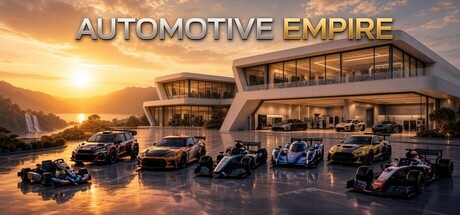
Automotive Empire was developed using AI-assisted tools across multiple disciplines. Visual assets, music, and audio were generated using AI tools. The game's code was developed with AI coding assistance.
Every element — every image, every track, every line of code — was reviewed, selected, refined, and approved by the developer as part of a deliberate creative vision.
The game design, systems, world-building, and writing are entirely human-made.
Automotive Empire is the product of one person's vision, built with the best tools available today.