Public Steam disclosure research27,951 disclosures tracked
Where do games disclose AI use?
Search developers’ Steam disclosures, compare classified AI use across
games, and follow recorded changes.
This index adds cross-game classifications and statistics to
statements published on individual store pages.
Groups reflect automatic analysis of public disclosures; mature records are excluded. These counts do not measure AI use across all of Steam.
Missing or unclear statements cannot establish whether a game uses AI.
Generative AI tools were used during the development of Spellthief: The Borrowed Galaxy to assist in creating and refining certain visual assets, artwork, user interface elements, and promotional materials.
All AI-assisted content was developed under the creative direction of Laneba Studio, with iterative revisions and integration into the game's overall artistic vision.
The game does not use generative AI to generate content dynamically during gameplay.
Some of the game's art was made with the help of generative AI (Google Gemini): character portraits, menu and screen backgrounds, some objects (chests, portals, crypt entrances) and icons. The pixel art drawn in code, the texts and the translations were made with the help of an AI assistant (Claude). All of this content was prepared in advance and selected and refined by the developer. The game does not generate anything with AI during gameplay.
AI coding assistants were used during development to help write and iterate on C# game systems, procedural rendering routines, and UI text. No generative image, voice, or music models were used anywhere in the game or its storefront materials: all sprites, animations, lighting, sound effects, adaptive music, store capsules, and achievement icons are procedurally generated and synthesized directly from code by the game engine (paired with open-source SIL OFL pixel fonts).
AI tools assisted development. The 3D models of the three playable heroes (Bram, Lumi and Nox), the enemies and the stage props, including their masks and textures, were generated with AI: concept images with Google Gemini, and 3D meshes, textures and auto-rigging with Tripo AI; the developer then fitted, edited and integrated them. The background paintings of the hidden summit stage and its ending are images generated with Google Gemini that the developer selected and placed in the game. Some in-game text and translations, the store description, and several props (Bram's shield, Lumi's moon blades, Nox's staff) were created with AI coding assistants that wrote the generation scripts. The game's music was composed by an AI coding assistant that wrote the scores (MIDI) as code and rendered them with the free GeneralUser GS soundfont; the developer listened to and approved every track. Store capsule images were composed from in-game renders with AI assistance. Everything was reviewed by the developer. Animations are Quaternius CC0 assets. No content is generated by AI while you play.
I build NOSTRA: Crystalbound on my own. Generative AI tools helped create the art, the music and parts of the sound; all of it is selected, reworked and put together by hand before it ships.
Generative AI was used to help create some character portraits, backgrounds, card illustrations, and store promotional artwork. These visual assets were generated during development. No live AI generation is used during gameplay.
Hirelings uses AI-generated content in these places:
- Text: most of the in-game English text (descriptions, tooltips, tutorial tips) was written with AI assistance, and some of it was rewritten by the developer. The store page text was also written with AI. All translations into other languages were made with AI.
- Art: some 3D models and textures, and many of the shaders and visual effects (in the game world and in the interface), were made with AI assistance.
The game uses no AI while you play. The characters and their animations, most of the environment art, the music and the sound effects were made by human artists.
Generative AI was used to create store and library artwork, capsule images, the game logo and app icons, and to assist with store descriptions and localization. These materials were reviewed and edited during development. The game does not generate AI content during gameplay.
Parts of the art in the game (card images, backgrounds and graphics) and parts of the text (for example card texts, dialogue and descriptions) were created with the help of AI tools. Music and sound effects do not come from an AI. The game does not generate any content with AI while it is running.
Translations of the game text into other languages were created with the help of AI tools.
This game used generative AI tools during development.
• Audio: Some sound effects and background music were created
with the assistance of AI tools.
• Images: AI tools were used to retouch and enhance art assets
created by our team.
No content is generated by AI during gameplay.
Generative AI was used during development to assist in creating some art assets, text, and audio. The resulting content was reviewed, edited, and integrated by the developer. The game does not generate AI content during gameplay or connect to third-party AI services.
This game utilizes generative artificial intelligence tools to assist in creating several elements of the game. Specifically, AI was used in the generation of:
Art & Visuals: Background environments, character portraits, and the in-game puzzle tiles and runes.
Audio: The game's musical soundtrack.
Narrative & Writing: The overarching story generation and descriptive in-game text.
Generative AI was used to create some illustrations, icons, textures, text, translations, and sound effects. The music was not AI-generated, and no content is generated by AI during gameplay.
The game's artwork (character and enemy illustrations, portraits, props, backdrops and title art) was created with an AI image generator from the developer's own art direction and descriptions, then cut into parts, animated and arranged into the game's scenes with the game's own tools. The story and dialogue were drafted with an AI writing assistant under the developer's direction and edited by the developer. The music and short fanfares were generated with an AI music tool from the developer's direction, then trimmed and looped with the game's own tools. The short spoken lines in battle (shouts, cries and quips) use AI-generated voices reading the game's own script. Sound effects were synthesized by code and mixed with CC0 sound libraries. Nothing is generated by AI while the game is running.
This game uses generative AI tools to create some pre-rendered visual assets, including card illustrations and certain menu / interface images. These assets are selected and curated by the developer before shipping. No generative AI content is created live during gameplay.
Some of the game's content was created with the use of AI.
AI-generated music
The background music (BGM) was generated using an AI music generation service.
Assets generated by AI-written code
An AI coding assistant wrote Python scripts (including scripts run in Blender) that procedurally generate the following content:
In-game background 3D models
Battlefield visual effects
Sound effects
No AI image generation models were used for these assets; they are produced entirely by code. All AI-generated and code-generated content was reviewed, adjusted, and integrated by our team.
Human-made content
The shogi pieces, UI, character models, animations, and the other visual effects were created by human designers, modelers, and motion designers.
The game does not generate any AI content at runtime.
Generative AI tools are used in the production of cinematics and promotional artwork, including Steam capsule images.
Some AI-generated placeholder assets are also used during development and are progressively being replaced.
Graphics, music, and sound effects are generated procedurally: 3D scenes are rendered in Blender, and sounds are synthesized within the game; The code and scripts for this were written with the help of AI
No image or audio generation models were used.
Creative direction and all design decisions remain with the developer.
No content is generated by AI during gameplay.
Generative AI tools were used during development for the illustrations and synthesized narration and character voices, and to assist with the English adaptation and localization of the original German novel. These assets are produced in advance and shipped as fixed files. The game does not generate new AI content during gameplay or connect to external AI services at runtime.
AI-powered translation tools were used to create draft localizations of the in-game text and Steam Store page. These drafts were reviewed and edited by the developer.
The game's artwork (objects, realm and stage backdrops) and the images on this page were created with the help of generative AI tools, then selected, retouched and integrated by the developer. The page texts and the English translation were also written with the help of AI. The translations of the game and of this page into Simplified Chinese, German, Spanish, Brazilian Portuguese, Japanese, Russian, Korean and Polish were also made with AI, without human proofreading. The game does not generate any content during play.
Pre-generated content: Concept art, key art, store art, boss scene paintings, icons and some interface art were generated with OpenAI and Google image models from the developer's direction, then selected, composited and edited. Some 3D models (creatures, props, gear and landmarks) were generated from those reference images with Meshy, then cleaned, rigged, animated and materialled by the developer. Most characters, enemies, bosses and map terrain assets were sourced from asset packs or custom-made. Character and narrator voices were produced with ElevenLabs, including voices made from the developer's own recordings. Some music tracks and some sound effects were generated with AI tools (including ElevenLabs sound effects), then selected and edited by the developer.
Live-generated content: None. The game does not generate content with AI while you play.
Some card artwork and audio in this game were created with generative AI tools. No content is generated by AI during gameplay, and the game does not connect to external AI services.
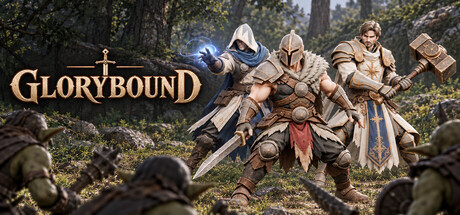
Glorybound was made with the help of generative AI tools during development. All 2D art (interface art, icons, portraits and store images) was created with AI image generation. The 3D models of the characters, monsters and bosses were generated with AI, then rigged, animated and adjusted by the developer. The music and sound effects were also generated with AI. Parts of the in-game and store text were written with AI assistance, and the Chinese, Russian, German and Spanish translations were made with AI. All AI content was created during development and checked by the developer. No AI is used while the game is running.
Portions of the artwork in this game (including card faces, backgrounds and promotional illustrations) were created with assistance from AI tools. All assets have undergone design, selection and post-editing by the development team. No original works from Touhou Project or works by other creators were used as reference images. The game does not generate any AI content during runtime.
Generative AI tools were used during development to create and iterate on 2D card illustrations and other visual and sound assets. All included assets are selected and reviewed by the developer. No generative AI is used during gameplay.
Generative AI was used to create some pre-generated music tracks currently included in the game. These tracks are intended as temporary assets and may later be replaced by music created by a professional composer. Generative AI was also used to assist with localization into languages not spoken by the development team.
Generative AI tools were used in the creation of this game to produce pre-rendered visual assets and audio content. All generated assets have been carefully curated and reviewed to ensure quality and fit within the game's overall design.
*Soulbound Walker* uses generative AI to assist with the creation of character and environment art, story scripts, combat videos, selected voiceover lines, music and sound effects, as well as portions of promotional assets. All AI-generated content is produced in advance during development, then reviewed, edited and integrated by the developers.
The game delivers its adventure experience through pre-produced audiovisual assets, story beats and interactive systems. No new AI content is generated in real time during gameplay, and there are no connections to external third-party AI generation services.
We use Retro Diffusion exclusively to assist with the creation of our game's logos. No other game artwork is AI-generated. We specifically chose Retro Diffusion for its commitment to ethical AI development, utilizing licensed artwork from consenting pixel artists rather than relying on unauthorized web scraping. Every AI-assisted logo is manually reviewed, refined, and carefully integrated into the game to maintain our artistic vision and quality standards. We believe in responsible AI use that respects and supports the artists behind the creative work.
Various visual assets and promotional materials for Sigilbound were created with the assistance of generative AI tools.
All AI-generated content was reviewed, refined, and integrated by the developer to ensure consistency with the game's artistic direction and quality standards.
Ember uses generative AI in two ways. Its art combines AI-generated images with pieces we drew by hand. And its replies are written in real time by a language model (Google's Gemma 4) that runs 100% on your PC, offline: it chats with you, summarizes and translates text, and answers questions about the documents in your library. It can make mistakes; when it quotes your library, it shows you the source so you can check.
Vantage Tactics is the result of years of work by a solo developer. The vast majority of art assets were purchased from several different artists. Generative AI has been used to generate art for the store page, some minor visual and sound effects, and to explore ideas and directions, and therefore has had some influence on the game design, marketing and style.
The game's art (characters, enemies, items, backgrounds and UI icons) was created with AI image generation tools and then edited and cleaned up by the developer. Parts of the in-game text, the English translation and the code were written with the help of AI tools and reviewed by the developer. The music and sound effects are generated by the game's own code. The game does not generate any content with AI while it is being played.