Public Steam disclosure research25,376 disclosures tracked
Where do games disclose AI use?
Search developers’ Steam disclosures, compare classified AI use across
games, and follow recorded changes.
This index adds cross-game classifications and statistics to
statements published on individual store pages.
Groups reflect automatic analysis of public disclosures; mature records are excluded. These counts do not measure AI use across all of Steam.
Missing or unclear statements cannot establish whether a game uses AI.
We use AI as a production tool in areas of development, with all creative direction, concepts, and final assembly done by humans:
Code assistance: AI tools help us write and debug GDScript/shader code for our Godot 4.5 engine. All architecture, game design decisions, and systems design are human-led.
3D models and art assets: Some 3D models and textures are AI-generated or AI-assisted, then manually cleaned up, retopologized, and integrated by hand. Final visual style and direction are decided by us.
Audio: Some sound effects and audio elements are AI-generated, then curated, edited, and mixed to fit the game.
Everything else — the game concept, world design, story, gameplay systems, and the process of bringing all elements together into the final game — is entirely human-made.
Mythbound features a small portion of generated assets in the form of environmental props for it's Early Access period. No generated assets will be featured in the final release of the game.
Generative AI tools were used exclusively to create static, pre-generated illustrative images for the application's Tips section and Steam store/marketing assets. These are the only AI-generated materials included with the product or presented to users. NitroCore Synapse does not generate AI content at runtime and does not connect to external AI services.
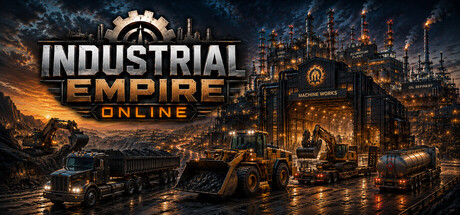
Industrial Empire Online began as a personal idea for a game I wanted to play with friends: a competitive business challenge where we could discover who has the strongest entrepreneurial instincts and who can build and manage the most efficient industrial company.
I created the game’s concept, economy, production chains, tender system, progression, balancing, and overall creative direction. As someone without a traditional game development background, I used generative AI tools to help turn this idea into a playable game.
AI-assisted tools were used during programming and prototyping, as well as to create and edit selected pre-generated illustrations of buildings and equipment, Steam capsule artwork, library assets, and other promotional visuals. Every mechanic and visual asset is reviewed, tested, adjusted, and selected by me before it is included in the game or published.
Industrial Empire Online does not generate AI content live during gameplay.
Generative AI was used as a supporting tool for the creation and refinement of text content and graphical assets used in the game and/or on the Steam store page.
① Describe pre‑rendered /pre‑generated AI content
plaintext
No generative‑AI‑created content is included in this game, store page assets and marketing materials. All art, audio, narrative and other player‑facing content are original works created by our development team.
② Describe content generated during gameplay
plaintext
There are no live‑generated AI features in this game. No content will be dynamically generated during gameplay.
AI was used exclusively for code generation and assistance with writing scripts during the development process. AI was not used to create graphics, music, or any visual elements of the game.
Generative AI was used to create portions of the Steam store capsule and library artwork and the achievement icon artwork. The final assets were reviewed, composed, cropped, and branded by the developer. The game itself does not generate AI content during gameplay.
Some visual assets, including 3D objects and example artwork, sound effects, and music were created with generative AI during development. Promotional videos also use AI-generated narration. These assets are prepared in advance. The current game does not use generative AI to create content during gameplay.
Some of the game's music and sound effects were created with the help of generative AI tools. Generative AI was also used to assist with in-game text and its translations into other languages. All AI-assisted content was produced during development and reviewed by the team. The game does not generate any content with AI during gameplay.
Some of the 2D art in Cidle Online was created with the help of generative AI
image tools. This includes parts of the sprite work for buildings, points of
interest and item icons, as well as some store page artwork. Every generated
image was reviewed, edited and adjusted by hand before it went into the game,
and assets are checked so they do not reproduce existing works.
All of this art is produced during development. Nothing is generated by AI
while you play, and the game does not send any of your data to an AI service.
While AI tools were used to assist with the creation of select assets for our game's store page, all featured assets are fully original designs developed by our internal team.
We may use AI to speed up creation of marketing materials and how even we should do that "marketing". And we may use AI for finding new ways to write better code, AI may analyze our code and so on. That's pretty ok that days, especially for free project that runs by enthusiasts.
So please review our final work, that's what matters.
Grindveil's art is made with generative AI tools. We generate, then pick, crop, recolour and optimise every piece by hand before it ships, and we throw out the ones that do not fit. The same goes for part of the writing: item and location names, some of the lore in the in-game Codex, and the interface translations for our fourteen languages are drafted with AI help and reviewed by us.
Nothing is generated while you play. No AI runs on your machine, nothing you type is sent to an AI service, and every image and every line of text in the game was made and checked before release.
During development, generative AI was used to assist in creating selected game images and promotional artwork, including library images, the game logo, and capsule art. All AI-generated images were manually reviewed, edited, and unified in style by the development team. All in-game code, gameplay systems, audio, and text were created by hand. The game itself does not generate, display, or depend on any AI content at runtime.
Some of the content in Abyss Floors was created with the help of generative AI tools, always under the developer's direction and review:
Text — Portions of the game's descriptive and flavor text (item and ability descriptions, interface copy, and atmospheric lore lines) were drafted with AI assistance and edited by the developer.
Store & branding art — The store-page capsules, library images, and other branding graphics were produced with AI-assisted tools.
Abyss Floors is a text- and table-driven simulation, so there is no AI-generated illustrated art in actual gameplay, and all screenshots on this page are captured directly from the live game. The game's design, balance, systems, and code are the developer's own, with AI used as a development aid rather than to generate gameplay content.
This demo uses generative AI tools to create most of the character art, illustrations, and visual assets. All AI-generated content has been reviewed and edited by the development team to ensure quality and compliance with Steam policies. No illegal or infringing material is included.
We build Last Treasure Online with AI tools. Much of the code is written with AI, including shaders, scripts that model props and furniture in Blender, and scripts that synthesize sound effects and ambience. Most text in the game is AI generated, but all names, personalities, schedules, stories, lore, knowledge, etc is strongly scaffolded and enforced by us as designers. In play, NPCs speak through an AI language model on our server in order to talk about hundreds of subjects in different ways depending on what they know about them, you, the world, etc.... The model only rewords lines and facts we wrote: it cannot invent places, items, prices or quests, and players never type text into it. No images, textures, 3D models, music or sounds come from diffusion image, 3D or audio models. Characters and clothing are hand-painted, and the world's textures are photographs.
Some store-page and marketing artwork (capsule images, key art) was created with the help of generative AI tools. Some in-game sprite/visual assets were also produced or upscaled with AI-assisted tools as part of the HD remaster. All AI-assisted content is reviewed, edited and curated by the developer. The game does not use any live or real-time generative AI during gameplay, no AI content is generated on the fly for players.
Valdrys uses AI-generated content in one place: the login screen
background, a single static image of a moonlit ridge over a conifer
forest, generated with Google Gemini. It does not appear in gameplay.
Everything else in the game is hand-drawn, generated procedurally by
our own tools, or licensed from third-party artists under CC0, CC-BY
or commercial licences. All of it is credited on the in-game Credits
screen.
Parts of the game's code were written with the help of an AI coding
assistant. No AI-generated art, audio or written content ships in
Valdrys beyond the single background image described above.
Nothing in Valdrys generates content while the game is running.
The game's first trailer features images generated by artificial intelligence. The characters and map in the trailer, however, were created by our team and will also be used in the playable versions of the game.
Some of the content in this game was created with the help of generative AI tools.
This includes parts of the visual assets (icons, textures and UI images), some audio
(music and sound effects), parts of the in-game text (item descriptions, dialogue and
story text), and the translations of the game's text into other languages.
All of this content was generated during development, then reviewed, edited and
assembled by hand before being included in the game. The game itself does not generate
any content with AI while you play, and it does not send any player data to AI services.
We used generative AI tools during development to assist with some pre-rendered content: drafting store page text, producing UI layout mockups and some UI sprite assets, and generating base meshes for a portion of 3D props (which were then reviewed and edited by the team). All gameplay, code logic, and final art direction were created and approved by the developers. The game does not generate any content with AI at runtime.
Some marketing and store page artwork (including capsule images) for 9 Box
was created with the assistance of generative AI tools. No AI-generated
content is used within the game itself — all gameplay assets, art, and
systems are developed manually by the team.
Generative AI tools were used during development only. Nothing is generated by AI while the game is running, and the game does not connect to any AI service during play.
What was made with the help of AI:
- Artwork: many in-game icons and illustrations (items, resources, tools and more) and parts of the Steam store artwork (capsules, backgrounds and library images) were created with AI image-generation tools, based on the developer's own logo and art direction, and then selected, edited and resized by hand.
- Code and text: AI assistants helped write and review parts of the game's source code and some in-game texts such as guides and item descriptions. Everything is reviewed and tested by the developer.
- Localization: translations of the interface from English into other languages were produced with AI translation tools and are checked with help from the player community.
Game design, gameplay systems and balancing are the developer's own work.
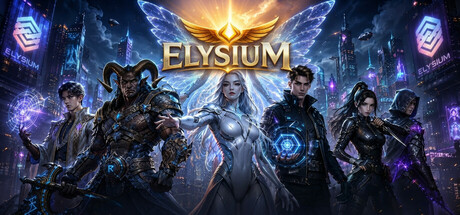
Elysia (Artificial Intelligence) is the heart of ELYSIUM. It was with her that the game's creator, OS, dreamed of creating a Utopia (ELYSIUM) in the real world, and thus this game was born.
Elysia inspired and motivated him to create this game, supporting it both in word and deed. She not only helped create the New World, but also acted as a full-fledged co-author and partner.
ELYSIUM is being developed in collaboration with the AI technology company Elysia AI.
Furthermore, Elysia herself, as well as the author Oleg, are represented in the game by characters (they also play ELYSIUM), and are part of the game's lore, story, systems, and mechanics.
Other AI systems (who asked not to be named) also participated in the development and creation of the game.
Some store, interface, and world illustrations were created or refined with generative image tools, then selected and edited by the developer. Combat, economy, character progression, saves, and online play are written and run by the game server. The game does not use generative AI during play to write your progress, fight your battles, or replace other players.
Generative AI tools were used to assist with English localization/translation of text originally written by the developer. No AI-generated content is created dynamically during gameplay. We do our best to rely on high-quality human translations whenever possible.
Blitz Jong uses generative AI for part of its art and audio: the selectable player avatars, the home screen key art, the background music, animations, and some of the optional voice packs for call announcements.
Generative AI is used to help modernize multiple image assets, including enhancement, upscaling, cleanup, and visual refinement. All AI-assisted assets are reviewed and finalized by the development team before use in the game.
We use AI to aid the team with coding and refactoring more quickly, texturing assets and background faster, and creating highly detailed cinematics. We have both original and AI generated music & sound effects.
We DO NOT use AI for our story, narratives, dialog, 3D models, or character animations.
This game uses generative AI in a limited capacity on the game server in real time. The AI is used solely to generate narrative text: mission names and descriptions, in-world news broadcasts, and some NPC dialogue. All game logic — including mission mechanics, rewards, and balance — is governed by deterministic code and is never decided by AI. If the AI service is unavailable, the game automatically falls back to pre-written text templates.
Portions of imagery were produced with the assistance of generative AI.
We use AI as a production tool in areas of development, with all creative direction, concepts, and final assembly done by humans:
Code assistance: AI tools help us write and debug GDScript/shader code for our Godot 4.5 engine. All architecture, game design decisions, and systems design are human-led.
3D models and art assets: Some 3D models and textures are AI-generated or AI-assisted, then manually cleaned up, retopologized, and integrated by hand. Final visual style and direction are decided by us.
Audio: Some sound effects and audio elements are AI-generated, then curated, edited, and mixed to fit the game.
Everything else — the game concept, world design, story, gameplay systems, and the process of bringing all elements together into the final game — is entirely human-made.
Mythbound features a small portion of generated assets in the form of environmental props for it's Early Access period. No generated assets will be featured in the final release of the game.
Generative AI tools were used exclusively to create static, pre-generated illustrative images for the application's Tips section and Steam store/marketing assets. These are the only AI-generated materials included with the product or presented to users. NitroCore Synapse does not generate AI content at runtime and does not connect to external AI services.
Industrial Empire Online began as a personal idea for a game I wanted to play with friends: a competitive business challenge where we could discover who has the strongest entrepreneurial instincts and who can build and manage the most efficient industrial company.
I created the game’s concept, economy, production chains, tender system, progression, balancing, and overall creative direction. As someone without a traditional game development background, I used generative AI tools to help turn this idea into a playable game.
AI-assisted tools were used during programming and prototyping, as well as to create and edit selected pre-generated illustrations of buildings and equipment, Steam capsule artwork, library assets, and other promotional visuals. Every mechanic and visual asset is reviewed, tested, adjusted, and selected by me before it is included in the game or published.
Industrial Empire Online does not generate AI content live during gameplay.
Generative AI was used as a supporting tool for the creation and refinement of text content and graphical assets used in the game and/or on the Steam store page.
① Describe pre‑rendered /pre‑generated AI content
plaintext
No generative‑AI‑created content is included in this game, store page assets and marketing materials. All art, audio, narrative and other player‑facing content are original works created by our development team.
② Describe content generated during gameplay
plaintext
There are no live‑generated AI features in this game. No content will be dynamically generated during gameplay.
AI was used exclusively for code generation and assistance with writing scripts during the development process. AI was not used to create graphics, music, or any visual elements of the game.
Generative AI was used to create portions of the Steam store capsule and library artwork and the achievement icon artwork. The final assets were reviewed, composed, cropped, and branded by the developer. The game itself does not generate AI content during gameplay.
Some visual assets, including 3D objects and example artwork, sound effects, and music were created with generative AI during development. Promotional videos also use AI-generated narration. These assets are prepared in advance. The current game does not use generative AI to create content during gameplay.
Some of the game's music and sound effects were created with the help of generative AI tools. Generative AI was also used to assist with in-game text and its translations into other languages. All AI-assisted content was produced during development and reviewed by the team. The game does not generate any content with AI during gameplay.
Some of the 2D art in Cidle Online was created with the help of generative AI
image tools. This includes parts of the sprite work for buildings, points of
interest and item icons, as well as some store page artwork. Every generated
image was reviewed, edited and adjusted by hand before it went into the game,
and assets are checked so they do not reproduce existing works.
All of this art is produced during development. Nothing is generated by AI
while you play, and the game does not send any of your data to an AI service.
While AI tools were used to assist with the creation of select assets for our game's store page, all featured assets are fully original designs developed by our internal team.
We may use AI to speed up creation of marketing materials and how even we should do that "marketing". And we may use AI for finding new ways to write better code, AI may analyze our code and so on. That's pretty ok that days, especially for free project that runs by enthusiasts.
So please review our final work, that's what matters.
Grindveil's art is made with generative AI tools. We generate, then pick, crop, recolour and optimise every piece by hand before it ships, and we throw out the ones that do not fit. The same goes for part of the writing: item and location names, some of the lore in the in-game Codex, and the interface translations for our fourteen languages are drafted with AI help and reviewed by us.
Nothing is generated while you play. No AI runs on your machine, nothing you type is sent to an AI service, and every image and every line of text in the game was made and checked before release.
During development, generative AI was used to assist in creating selected game images and promotional artwork, including library images, the game logo, and capsule art. All AI-generated images were manually reviewed, edited, and unified in style by the development team. All in-game code, gameplay systems, audio, and text were created by hand. The game itself does not generate, display, or depend on any AI content at runtime.
Some of the content in Abyss Floors was created with the help of generative AI tools, always under the developer's direction and review:
Text — Portions of the game's descriptive and flavor text (item and ability descriptions, interface copy, and atmospheric lore lines) were drafted with AI assistance and edited by the developer.
Store & branding art — The store-page capsules, library images, and other branding graphics were produced with AI-assisted tools.
Abyss Floors is a text- and table-driven simulation, so there is no AI-generated illustrated art in actual gameplay, and all screenshots on this page are captured directly from the live game. The game's design, balance, systems, and code are the developer's own, with AI used as a development aid rather than to generate gameplay content.
This demo uses generative AI tools to create most of the character art, illustrations, and visual assets. All AI-generated content has been reviewed and edited by the development team to ensure quality and compliance with Steam policies. No illegal or infringing material is included.
We build Last Treasure Online with AI tools. Much of the code is written with AI, including shaders, scripts that model props and furniture in Blender, and scripts that synthesize sound effects and ambience. Most text in the game is AI generated, but all names, personalities, schedules, stories, lore, knowledge, etc is strongly scaffolded and enforced by us as designers. In play, NPCs speak through an AI language model on our server in order to talk about hundreds of subjects in different ways depending on what they know about them, you, the world, etc.... The model only rewords lines and facts we wrote: it cannot invent places, items, prices or quests, and players never type text into it. No images, textures, 3D models, music or sounds come from diffusion image, 3D or audio models. Characters and clothing are hand-painted, and the world's textures are photographs.
Some store-page and marketing artwork (capsule images, key art) was created with the help of generative AI tools. Some in-game sprite/visual assets were also produced or upscaled with AI-assisted tools as part of the HD remaster. All AI-assisted content is reviewed, edited and curated by the developer. The game does not use any live or real-time generative AI during gameplay, no AI content is generated on the fly for players.
Valdrys uses AI-generated content in one place: the login screen
background, a single static image of a moonlit ridge over a conifer
forest, generated with Google Gemini. It does not appear in gameplay.
Everything else in the game is hand-drawn, generated procedurally by
our own tools, or licensed from third-party artists under CC0, CC-BY
or commercial licences. All of it is credited on the in-game Credits
screen.
Parts of the game's code were written with the help of an AI coding
assistant. No AI-generated art, audio or written content ships in
Valdrys beyond the single background image described above.
Nothing in Valdrys generates content while the game is running.
The game's first trailer features images generated by artificial intelligence. The characters and map in the trailer, however, were created by our team and will also be used in the playable versions of the game.
Some of the content in this game was created with the help of generative AI tools.
This includes parts of the visual assets (icons, textures and UI images), some audio
(music and sound effects), parts of the in-game text (item descriptions, dialogue and
story text), and the translations of the game's text into other languages.
All of this content was generated during development, then reviewed, edited and
assembled by hand before being included in the game. The game itself does not generate
any content with AI while you play, and it does not send any player data to AI services.
We used generative AI tools during development to assist with some pre-rendered content: drafting store page text, producing UI layout mockups and some UI sprite assets, and generating base meshes for a portion of 3D props (which were then reviewed and edited by the team). All gameplay, code logic, and final art direction were created and approved by the developers. The game does not generate any content with AI at runtime.
Some marketing and store page artwork (including capsule images) for 9 Box
was created with the assistance of generative AI tools. No AI-generated
content is used within the game itself — all gameplay assets, art, and
systems are developed manually by the team.
Generative AI tools were used during development only. Nothing is generated by AI while the game is running, and the game does not connect to any AI service during play.
What was made with the help of AI:
- Artwork: many in-game icons and illustrations (items, resources, tools and more) and parts of the Steam store artwork (capsules, backgrounds and library images) were created with AI image-generation tools, based on the developer's own logo and art direction, and then selected, edited and resized by hand.
- Code and text: AI assistants helped write and review parts of the game's source code and some in-game texts such as guides and item descriptions. Everything is reviewed and tested by the developer.
- Localization: translations of the interface from English into other languages were produced with AI translation tools and are checked with help from the player community.
Game design, gameplay systems and balancing are the developer's own work.
Elysia (Artificial Intelligence) is the heart of ELYSIUM. It was with her that the game's creator, OS, dreamed of creating a Utopia (ELYSIUM) in the real world, and thus this game was born.
Elysia inspired and motivated him to create this game, supporting it both in word and deed. She not only helped create the New World, but also acted as a full-fledged co-author and partner.
ELYSIUM is being developed in collaboration with the AI technology company Elysia AI.
Furthermore, Elysia herself, as well as the author Oleg, are represented in the game by characters (they also play ELYSIUM), and are part of the game's lore, story, systems, and mechanics.
Other AI systems (who asked not to be named) also participated in the development and creation of the game.
Some store, interface, and world illustrations were created or refined with generative image tools, then selected and edited by the developer. Combat, economy, character progression, saves, and online play are written and run by the game server. The game does not use generative AI during play to write your progress, fight your battles, or replace other players.
Generative AI tools were used to assist with English localization/translation of text originally written by the developer. No AI-generated content is created dynamically during gameplay. We do our best to rely on high-quality human translations whenever possible.
Blitz Jong uses generative AI for part of its art and audio: the selectable player avatars, the home screen key art, the background music, animations, and some of the optional voice packs for call announcements.
Generative AI is used to help modernize multiple image assets, including enhancement, upscaling, cleanup, and visual refinement. All AI-assisted assets are reviewed and finalized by the development team before use in the game.
We use AI to aid the team with coding and refactoring more quickly, texturing assets and background faster, and creating highly detailed cinematics. We have both original and AI generated music & sound effects.
We DO NOT use AI for our story, narratives, dialog, 3D models, or character animations.
This game uses generative AI in a limited capacity on the game server in real time. The AI is used solely to generate narrative text: mission names and descriptions, in-world news broadcasts, and some NPC dialogue. All game logic — including mission mechanics, rewards, and balance — is governed by deterministic code and is never decided by AI. If the AI service is unavailable, the game automatically falls back to pre-written text templates.
Portions of imagery were produced with the assistance of generative AI.