Public Steam disclosure research28,028 disclosures tracked
Where do games disclose AI use?
Search developers’ Steam disclosures, compare classified AI use across
games, and follow recorded changes.
This index adds cross-game classifications and statistics to
statements published on individual store pages.
Groups reflect automatic analysis of public disclosures; mature records are excluded. These counts do not measure AI use across all of Steam.
Missing or unclear statements cannot establish whether a game uses AI.
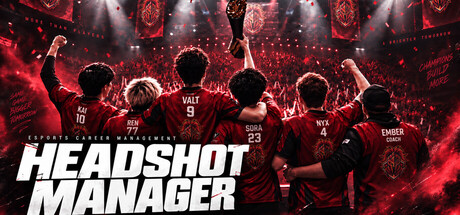
Generative AI tools were used during development to create pre-generated background artwork and stadium audio assets included in the game. On Windows, the game also uses a local AI language model that runs entirely on the player's PC to generate in-game dialogue during gameplay: conversations with players, coaches, scouts and agents, interviews and press conferences, read aloud with local text-to-speech voices. No external AI services are contacted. The feature can be switched off in the settings.
Name of AI model included with the game: Qwen3-4B (local, via llama.cpp), Piper text-to-speech, whisper.cpp speech recognition - all run offline on the player's PC (Windows only)
Some artwork in the game and its Steam store and marketing materials was created or refined with generative AI tools before release. Some music tracks were generated offline with ACE-Step. These are fixed, pre-generated assets. The game does not generate AI content during gameplay or connect to an external AI service.
AI-assisted tools are used throughout the development of Idle Frontier, including design, programming, content creation and marketing. Generative AI is used to generate or assist with player-facing artwork and illustrations, backgrounds, promotional images and logos, narrative and dialogue, encyclopedia text, localization and store-page copy. The developer selects and integrates the material into the released game. This is pre-generated content: the game does not generate content or code with AI during play and does not connect to external AI services.
Generative AI tools were used during development to create part of what you see and hear: the portraits of the fictional players and their faces at different ages, background illustrations, the short ambient videos, the music, the commentator's recorded calls and the surnames he calls out —a synthetic voice that does not belong to any real person— and part of the art on this page. Everything was reviewed, trimmed and edited by hand before going in, and every commentator line was checked with speech recognition to make sure it says what it should. The sound effects are real public-domain recordings. The game does not generate anything with AI while you play.
The key art, store capsules and library artwork were created with an AI image generator and reviewed by the developer. In-game pixel art sprites, the bitmap font, sound effects and music are produced by original project code written with AI coding assistance. Store and in-game text were drafted with AI assistance and edited by the developer. The game does not generate any content with AI while running and requires no AI service.
Generative AI tools were used to create some pre-generated visual assets for the game and its Steam store materials. All outputs were reviewed and edited by the developer. The game does not generate content during gameplay.
Generative AI is being used during development solely to create character head portraits. It enabled us to create thousands of portrait variations across three age stages, helping the large cast of characters feel more varied, immersive and realistic while allowing characters to visibly age during long careers.
Every portrait is created in advance and checked by the Playsport art team before being included in the game. Nothing is generated while the game is running. No other artwork in the game, including vehicles, decals, logos or clothing uses generative AI. AI-generated portraits can be disabled in the preferences menu.
Some of the artwork that ships with Football Ambition 27 was made using
generative AI tools. That covers the club badges and competition logos in
the default database, the menu and screen backgrounds, the stadium and
facility illustrations, and the library of face parts the game builds
portraits from. The national flags are not among them.
Faces are built while you play. Every player, coach and youth prospect gets
a portrait the moment they exist, including people generated seasons into
your save, assembled by the game from that shipped library of parts. It is
ordinary code doing the assembling, not an AI model, and it can only ever
use art that came with the game.
The game does not connect to any AI service. There is an optional feature,
switched off by default, that lets you connect your own AI chat assistant
to the in game database editor, so it can help with jobs like renaming
clubs or building a scenario. It runs only if you turn it on, and it only
reaches your own files on your own computer.
Some pre-generated content — the fictional league, club and player name pools, portions of descriptive and flavour copy, the arena photograph used on the title and store presentation, and parts of the store description — was created with generative-AI assistance during development, then selected, reviewed and edited by the developer. No content is generated at runtime, and no player data is sent to any AI service.
Generative AI tools were used extensively during the development of this game, including assistance with programming and the creation of much of its artwork, music, and localized text. All AI-assisted content was reviewed and edited by the developer before being included. The game does not use generative AI at runtime and does not generate content during gameplay.
Pre-generated AI tools were used during the development of this game, including assistance with programming and the creation of substantial portions of its artwork, music, and localized text. All AI-assisted content included in the game was reviewed by the developer and edited where appropriate. The game does not use generative AI at runtime, and no content is generated during gameplay.
The character portraits, the menu backdrop and the store art were generated with AI image tools in one fixed illustration style, then chosen and checked by the developer. Nothing is generated while you play.
This utility app uses artificial intelligence models to perform real-time speech-to-text transcription (ASR), live subtitle translation (MT), and local text-to-speech synthesis (TTS) based on the user's voice or PC audio stream.
Clash of Crests uses generative AI tools to create some of its content, which the developer then reviews, selects, edits and finishes. This includes: unit and character art and portraits, scene and campaign paintings, map and Library paintings, faction crests and some interface art; the music and sound effects; and the recorded voice lines of soldiers and trainers. Parts of the lore, story and flavour text were drafted with AI assistance and edited by the developer. All of this is made in advance and ships with the game as fixed assets. Nothing is generated by AI while you play.
AI tools assist with programming, translation, and creating selected visual assets and marketing materials. All AI-assisted content is reviewed and edited by the developer before inclusion.
Generative AI was used during development to assist in the creation of some of the game's pre-generated illustrations and visual assets. No generative AI is used to create content during gameplay.
Some visual assets and all story voice-over audio in this game were generated using AI tools, then curated and edited by the developer. Some store page and marketing assets were also AI-assisted.
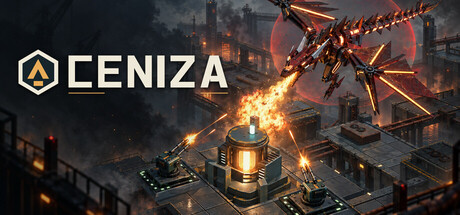
CENIZA is created using AI tools under human creative direction. Pre-generated content includes environmental textures, interface artwork, game text and translations, promotional art, and assets produced through AI-assisted modeling, coding and audio workflows. The base game does not generate content with generative AI while you play and does not connect to an AI service. Mod authors may optionally use external AI tools; manual editing and conventional tools are equally welcome.
Generative AI tools were used during development to help create some artwork, short ambient video clips, audio, written content and localization. This content is generated in advance and included in the game. The game does not generate content through AI services while you play.
Store marketing images (Steam capsule art — header, main, small, and vertical capsules) were created with AI image generation tools and then edited/reviewed by the development team. In-game screenshots and gameplay footage represent the actual game.
Since we’re a very small team, we use generative AI for a small part of the development process, for example, to create graphical placeholders like icons or background images, or to localize newly added text. The vast majority of the game was localized by humans; only new text is machine-translated in order to include as many players as possible.
The voice in the game is text-to-speech, not AI.
Elysia (Artificial Intelligence) is the heart of ELYSIUM. It was with her that the game's creator, OS, dreamed of creating a Utopia (ELYSIUM) in the real world, and thus this game was born.
Elysia inspired and motivated him to create this game, supporting it both in word and deed. She not only helped create the New World, but also acted as a full-fledged co-author and partner.
ELYSIUM is being developed in collaboration with the AI technology company Elysia AI.
Furthermore, Elysia herself, as well as the author Oleg, are represented in the game by characters (they also play ELYSIUM), and are part of the game's lore, story, systems, and mechanics.
Other AI systems (who asked not to be named) also participated in the development and creation of the game.
The game uses generative AI in a limited capacity to create small aesthetic UI elements (such as icons and the mouse cursor), to assist with game translations, and to generate voiceovers for promotional materials, such as the game's trailer and to make minor adjustments.
We only consider AI to be a supportive tool. Every detail is meticulously crafted with human intent, as our creative process is still firmly anchored in manual craftsmanship.
Parts of this product were made with generative AI and checked by a person before release:
• The images and animated video loops in our wallpapers (bundled and official Workshop items), the desktop pet characters and their animations, and the guide mascots were generated with AI image and video models.
• The HTML, CSS, JavaScript and shader code of the bundled wallpapers, the store page text and its translations were drafted with AI assistance.
The application itself does not use generative AI while it runs: it creates no content, and nothing you do in Wallpaper — hardware readings, settings, your own photos and videos — is sent to any AI model. We run no servers of our own.
Every voice you hear in Dub Night Live is a real person. Nothing in the game is AI-generated: no AI voices, no AI art, no AI judging (scoring is player votes).
The clip editor uses two open-source machine-learning tools that run locally on your PC: one separates a clip's original voices from its music and effects, and one drafts line timings for you to review and fix. They process your own video files, never send anything to an external service, and never create content.
During development, AI was used as a coding assistant only.
Some 2D art assets in this game — including UI textures, item icons, and the title and loading screens — were created with the help of generative AI tools and then hand-edited for use in the game. All game design, simulation systems, and gameplay logic are authored and directed by the developer. No content is generated by AI while the game is running. Translations into languages other than English were produced with the help of AI.
Generative AI tools were used to assist in the creation and refinement of some visual assets, including illustrations, user interface elements, and marketing materials.
AI powers real-time dialogue and responses from fictional in-game characters, allowing them to react dynamically to player conversations and actions.
Connects to 3rd-Party Service for AI Content Generation: OpenRouter, DeepSeek
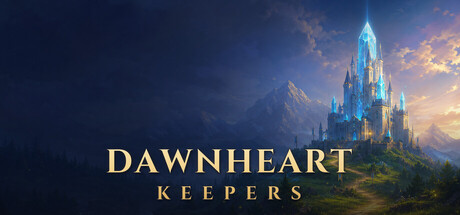
Some of the content in Dawnheart Keepers was created with the help of generative AI tools during development. All of it was made before release: the game does not generate anything with AI while you play, and it never connects to an AI service.
What that covers:
- Illustrated art - menu and story backgrounds, story scenes, the world map, character and tower portraits, and the upgrade-card plates - was made with image-generation models run locally on the developer's own machine, from prompts the developer wrote.
- The English and Hebrew voice-over was generated with ElevenLabs from scripts written by the developer.
- Sound effects were generated from written prompts, or synthesised procedurally in code.
All of it was reviewed, edited, curated and tested by the developer before it shipped, and the same applies to the trailer and store art.
The music is not AI-generated. It is written as code and synthesised by the game itself while you play, the way game soundtracks were built before recorded audio.
Some of the placeholder unit and terrain sprites that I'm using while the game is in development were generated with the help of AI (with a lot of manual curation and editing... I promise that you will not be confronted by any noticeably ugly slop).
Initial sales will contribute toward creating hand-drawn, unique sprites for as many units as possible.
PROMOTER: The Fight Game uses AI-generated content made during development and reviewed by the team before release:
fighter, manager, promoter, trainer and ring-official portraits, and contact pictures (generated with OpenArt, mainly the Seedream model);
the logos of the fictional governing bodies, broadcasters, media outlets and sponsors, the championship belts, some icons and the loading-screen silhouettes (generated with OpenArt, using the Recraft model);
the main menu background and the fight-night moment cards;
in-game text such as emails, news stories, commentary and descriptions, drafted with AI assistance; the team is editing it during development.
All names, organisations, logos and people in the game are fictional. No AI-generated content imitates a real boxer, organisation or brand.
The application includes a small set of pre-generated pixel-art example assets, including default cat character poses, icons, and promotional visuals. They were created with generative AI assistance during development and curated as static demonstration content shipped with the application.
The product does not generate AI content at runtime and does not embed, call, or operate a generative AI model or service. Its AI Material Assistant only provides editable prompt templates and links to third-party services outside the application. Players may import their own images, GIFs, audio, and Workshop content.
We are utilising ElevenLabs’ text-to-speech tool, to generate some voice-over elements within Train Sim World 7. This is utilised in features such as training modules, as well as platform and onboard train announcements. All scripts and content are written by Dovetail Games staff, with ElevenLabs used to generate the audio in these instances.
During development, we used AI tools to assist in creating some art assets, voice acting, and dialogue. All AI-assisted content is pre-generated before release — the game does not generate content with AI in real time while you play. All such content is reviewed and refined by our team to ensure quality and originality, and to avoid generic-looking characters.
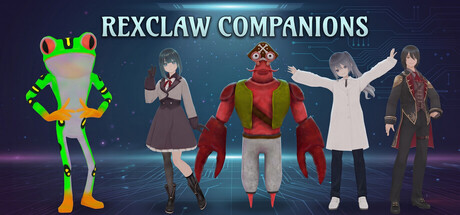
Rexclaw's companions are powered by generative AI, conversations (text and voice), along with files you create together are generated on demand by third party AI models. Some promotional artwork, including store banners, was created with AI assistance.