Public Steam disclosure research25,380 disclosures tracked
Where do games disclose AI use?
Search developers’ Steam disclosures, compare classified AI use across
games, and follow recorded changes.
This index adds cross-game classifications and statistics to
statements published on individual store pages.
Groups reflect automatic analysis of public disclosures; mature records are excluded. These counts do not measure AI use across all of Steam.
Missing or unclear statements cannot establish whether a game uses AI.
I'm a solo developer making this game entirely on my own with a zero budget. Without AI, I would've gone mad creating such a massive project. It would've taken around 15 years just to reach Early Access.
To be completely transparent: during development, I may use AI tools to assist with content creation, primarily for routine tasks. However, everything is always manually reviewed and refined by me. The workflow is strictly: My work → AI → My work.
This game uses AI-assisted tools to generate and refine certain 2D visual assets. These include general artwork such as loading screens, character portraits, item icons, and background illustrations. All AI-generated elements are reviewed, edited, and integrated by our art team to ensure consistency with the game’s visual style and artistic direction.
Some UI icons were created using AI.
The English, French, and Russian localizations were made by human translators; all other localizations were made with AI.
This game includes some icons and images that were created with the assistance of AI tools. No AI is used during gameplay or for generating real-time content.
Since I am a solo dev, i used AI to save time and money on some minor things like sounds or icons, but also to give me different perspectives, solutions and helpful information.
Some images on the store page are generated using AI tools to create initial concept art, which are then manually adjusted and modified by artists. The final works combine AI-generated foundational designs with human artistic revisions.
This game contains AI-generated assets. Specifically, the main menu background image and some in-game icons were created using generative AI. These assets were edited and are used exclusively for this game.
Additionally, AI-generated voice lines are used for speaking bandit characters. The voice files were created specifically for this game and edited accordingly. It is possible that an external text-to-speech service was used, but I can no longer confirm which one. To the best of my knowledge, all usage rights are respected.
Some graphical assets in the game were created or modified using artificial intelligence algorithms. This applies only to certain elements of the game visual artwork.
We use Adobe® Photoshop® software and Adobe® Generative AI image-editing software as part of our 2D icon generation pipeline.
We use machine translation as the first step of our Localization in order to bring the game to as many players as possible in their native language
ChatGPT was used solely to improve sentence structure and correct grammar. All game design and content decisions were made by the developer. No AI-generated images or artwork were used.
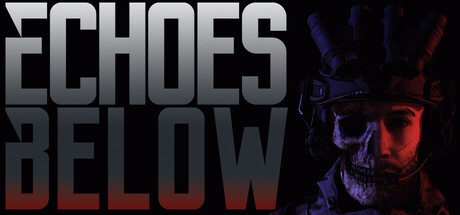
Echoes Below uses AI-generated voiceovers as temporary placeholders for character dialogues. These will be replaced with professionally recorded voice acting during development.
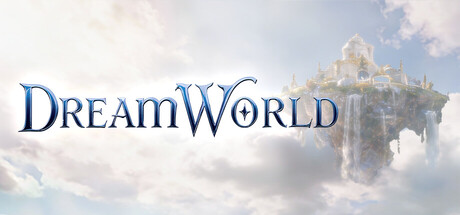
The DreamForge allows players to generate their own 3D models in-game using a text prompt. This tool is a simple way for players to create their own 3D models, but we’re still making DreamWorld’s 3D models using a traditional art pipeline. As of now, non-English language support has been generated through usage of AI models, but has been reviewed by our team thoroughly.
I've used AI to help create concept art, help outline some general story and eventually voice acting until I can afford to pay someone to do all of those things.
The game is developed solo, and during Early Access I’ve occasionally used AI-generated placeholders — some of which I actually quite like. These are temporary and will likely be replaced over time.
AI tools have been like an extra set of hands (or brains) for our small indie dev team. They've played a quiet yet invaluable role in helping us draft initial concept art and brainstorm our way through tricky design challenges. Being Polish native speakers, AI has also been particularly helpful in fine-tuning our writing, ensuring our game's narrative is as engaging as possible.
Generative AI is used for translations into languages I do not master and to create early 3D model prototypes. These prototypes are manually refined before being integrated into the game. No generative AI is used during gameplay or to dynamically generate in-game content.
Some in-game posters were originally designed using AI-generated concepts to speed up the creative process. These visuals were then refined by our artist to fit the game's style. AI is not used during gameplay, and all content is curated by the development team.
We confirm that AI-assisted tools were used in the development of our game. The specific scope and manner of use are as follows:
1. Type of AI-Generated Content:
* Text Content: We used AI text-generation tools to assist in creating initial drafts for some of the in-game copy during the early conceptual stages of development.
* This includes content for:
* Background stories and design documents for boss characters, frigates, and other units.
* Descriptive text for player skills.
* Preliminary outlines and descriptions for the game's overall story background.
* In-game text such as enemy names and skill descriptions.
2. Our Workflow and Human Oversight (The Key Part):
* AI's role was that of an "Assistant Tool": The AI was used solely to generate preliminary, unpolished text drafts and inspiration based on core ideas and directions provided by our producers.
* Deep Human Optimization and Review: All AI-generated text underwent strict review, selection, rewriting, and optimization by our producers and development team. We ensured:
* Creative Direction: The final design direction and core ideas were entirely determined by the human team.
* Content Ownership: We hold full and legal rights to all final content included in the game. The content, after profound human modification and optimization, is no longer a purely AI-generated product but the intellectual property of our team.
* Quality and Compliance Control: We ensured all textual content met our quality standards and Steam's distribution rules, containing no infringing, offensive, or inappropriate material.
3. Commitment and Assurance:
* We guarantee that the final version of the game does not directly include any unmodified AI-generated output.
* We take full responsibility for all content in our game.
In Summary: AI was used as a tool for assistance and inspiration during the design phase, but the final generation, approval, and copyright of all game content are the sole responsibility of our human development team.
I'm a solo developer making this game entirely on my own with a zero budget. Without AI, I would've gone mad creating such a massive project. It would've taken around 15 years just to reach Early Access.
To be completely transparent: during development, I may use AI tools to assist with content creation, primarily for routine tasks. However, everything is always manually reviewed and refined by me. The workflow is strictly: My work → AI → My work.
This game uses AI-assisted tools to generate and refine certain 2D visual assets. These include general artwork such as loading screens, character portraits, item icons, and background illustrations. All AI-generated elements are reviewed, edited, and integrated by our art team to ensure consistency with the game’s visual style and artistic direction.
Some UI icons were created using AI.
The English, French, and Russian localizations were made by human translators; all other localizations were made with AI.
This game includes some icons and images that were created with the assistance of AI tools. No AI is used during gameplay or for generating real-time content.
Since I am a solo dev, i used AI to save time and money on some minor things like sounds or icons, but also to give me different perspectives, solutions and helpful information.
Some images on the store page are generated using AI tools to create initial concept art, which are then manually adjusted and modified by artists. The final works combine AI-generated foundational designs with human artistic revisions.
This game contains AI-generated assets. Specifically, the main menu background image and some in-game icons were created using generative AI. These assets were edited and are used exclusively for this game.
Additionally, AI-generated voice lines are used for speaking bandit characters. The voice files were created specifically for this game and edited accordingly. It is possible that an external text-to-speech service was used, but I can no longer confirm which one. To the best of my knowledge, all usage rights are respected.
Some graphical assets in the game were created or modified using artificial intelligence algorithms. This applies only to certain elements of the game visual artwork.
We use Adobe® Photoshop® software and Adobe® Generative AI image-editing software as part of our 2D icon generation pipeline.
We use machine translation as the first step of our Localization in order to bring the game to as many players as possible in their native language
ChatGPT was used solely to improve sentence structure and correct grammar. All game design and content decisions were made by the developer. No AI-generated images or artwork were used.
Echoes Below uses AI-generated voiceovers as temporary placeholders for character dialogues. These will be replaced with professionally recorded voice acting during development.
The DreamForge allows players to generate their own 3D models in-game using a text prompt. This tool is a simple way for players to create their own 3D models, but we’re still making DreamWorld’s 3D models using a traditional art pipeline. As of now, non-English language support has been generated through usage of AI models, but has been reviewed by our team thoroughly.
I've used AI to help create concept art, help outline some general story and eventually voice acting until I can afford to pay someone to do all of those things.
The game is developed solo, and during Early Access I’ve occasionally used AI-generated placeholders — some of which I actually quite like. These are temporary and will likely be replaced over time.
AI tools have been like an extra set of hands (or brains) for our small indie dev team. They've played a quiet yet invaluable role in helping us draft initial concept art and brainstorm our way through tricky design challenges. Being Polish native speakers, AI has also been particularly helpful in fine-tuning our writing, ensuring our game's narrative is as engaging as possible.
Generative AI is used for translations into languages I do not master and to create early 3D model prototypes. These prototypes are manually refined before being integrated into the game. No generative AI is used during gameplay or to dynamically generate in-game content.
Some in-game posters were originally designed using AI-generated concepts to speed up the creative process. These visuals were then refined by our artist to fit the game's style. AI is not used during gameplay, and all content is curated by the development team.
We confirm that AI-assisted tools were used in the development of our game. The specific scope and manner of use are as follows:
1. Type of AI-Generated Content:
* Text Content: We used AI text-generation tools to assist in creating initial drafts for some of the in-game copy during the early conceptual stages of development.
* This includes content for:
* Background stories and design documents for boss characters, frigates, and other units.
* Descriptive text for player skills.
* Preliminary outlines and descriptions for the game's overall story background.
* In-game text such as enemy names and skill descriptions.
2. Our Workflow and Human Oversight (The Key Part):
* AI's role was that of an "Assistant Tool": The AI was used solely to generate preliminary, unpolished text drafts and inspiration based on core ideas and directions provided by our producers.
* Deep Human Optimization and Review: All AI-generated text underwent strict review, selection, rewriting, and optimization by our producers and development team. We ensured:
* Creative Direction: The final design direction and core ideas were entirely determined by the human team.
* Content Ownership: We hold full and legal rights to all final content included in the game. The content, after profound human modification and optimization, is no longer a purely AI-generated product but the intellectual property of our team.
* Quality and Compliance Control: We ensured all textual content met our quality standards and Steam's distribution rules, containing no infringing, offensive, or inappropriate material.
3. Commitment and Assurance:
* We guarantee that the final version of the game does not directly include any unmodified AI-generated output.
* We take full responsibility for all content in our game.
In Summary: AI was used as a tool for assistance and inspiration during the design phase, but the final generation, approval, and copyright of all game content are the sole responsibility of our human development team.