Public Steam disclosure research27,951 disclosures tracked
Where do games disclose AI use?
Search developers’ Steam disclosures, compare classified AI use across
games, and follow recorded changes.
This index adds cross-game classifications and statistics to
statements published on individual store pages.
Groups reflect automatic analysis of public disclosures; mature records are excluded. These counts do not measure AI use across all of Steam.
Missing or unclear statements cannot establish whether a game uses AI.
This game uses generative AI for some content created ahead of time: character and enemy illustrations, backgrounds, icons and effects, and store/promotional images (OpenAI image generation); background music (Suno); and the in-game text and its English and Japanese translations were written with AI assistance. All content was reviewed and edited by the developer before being integrated. The game does not generate any content with AI while you play and does not connect to any AI service.
Our team designed the game and directed every part of it. AI tools helped us create the art, the story text and the translations, and we reviewed and edited all of it. The music was not made with AI, and nothing is generated by AI while you play.
The in-game text (Japanese and English), the store description and the code that procedurally draws the pixel art were created with the help of generative AI. No AI-generated images or audio are used. Nothing is generated by AI during gameplay.
Generative AI tools were used to create some of the game's visual assets, including character sprites, icons, and other graphical elements. All AI-generated content was reviewed, selected, and refined by the developer where necessary. The game does not use generative AI to create content in real time during gameplay.
This game does not generate images, text, or audio with generative AI during play. Some assets (puzzle patterns, the opening, the ending, and the title screen) were created with generative AI.
Most of the game's pictures were generated with OpenAI image models during development, then cut out, framed and finished with the developer's own tools. That covers the character and monster portraits, item icons, town buildings and interiors, dungeon wall and floor textures, combat backdrops, story scenes and the game's emblem. The depth maps that give portraits and buildings their slight movement were made from those pictures with the Depth Anything model. The 3D buildings, the plaster and glass textures and the status icons were made with the developer's own scripts.
The sound effects, creature sounds, town ambience, the party's combat voices and the opening narration were generated with ElevenLabs. The rain, wind and thunder come from a licensed sound library. All of the music was made by the developer with Stable Audio.
Some in-game text, such as the help pages and item descriptions, was drafted with an AI writing assistant and edited by the developer.
The store capsule art is composed from the generated portraits and emblem. Nothing is generated while the game runs.
Generative AI was used for graphics, sounds, and some rules text. The story, characters, encounters and levels are made by hand, and every design decision is my own.
AI assistance has been used for some game content and localization. All AI-assisted code and 3D assets were reviewed, edited, tested, and integrated by the development team. AI-assisted tools were also used for selected Steam marketing artwork. The game does not generate AI content during play or send players' typed text to an AI service.
Generative AI was used during development to create location illustrations for the world map. These illustrations are included as static image assets. The game does not generate AI content during gameplay.
Made by one person. Written, directed and built by me, with generative AI used as a supplementary tool for some of the game's assets, all of it reviewed and refined by hand.
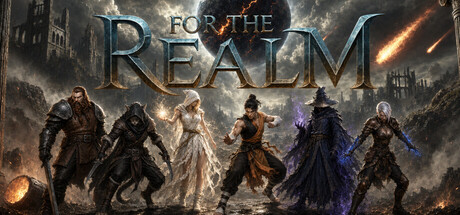
Some of the 2D artwork in For The Realm - including certain textures, icons, and illustrated assets - as well as some store page and marketing imagery, was created with the assistance of generative AI tools. These assets were used as a starting point and, in many cases, further edited and finished by hand before shipping.
No content is generated by AI while you play. All AI-assisted assets are created ahead of time and ship as fixed files.
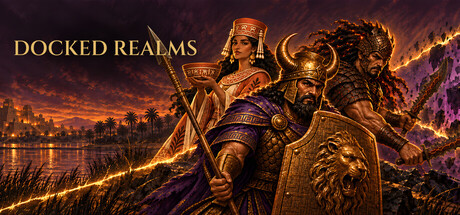
Docked Realms was made by a small team with generative AI tools as part of the production pipeline. Every AI-assisted asset was directed, selected, edited and approved by people.
- Trailer. The Act I trailer is cut from short clips made with AI video generation models, built from our own character art. Its music was generated with Suno. Shot selection, editing, pacing and sound placement were done by the team.
- Art. Hero and creature designs, portraits, and many of the icons and backgrounds were created with AI image generation models under art direction, then revised and selected by hand against the game's existing designs.
- Sprite animation. In-game character animations were derived from AI-generated video (image-to-video from our character art). Frames were chosen, cut, cleaned and assembled into sprite sheets by the team.
- Music and sound. The Act I music loops were generated with ACE-Step 1.5, a locally run model whose license allows commercial use, and some sound effects contain layers made with MOSS-SoundEffect v2.0 (Apache-2.0). These were combined with CC0 sound libraries and our own synthesis, then edited and mixed by the team. The menu music was made by hand, without AI.
- Writing. Approximately half of the in-game text, including parts of the story, was first drafted with an AI language model and then edited by the team.
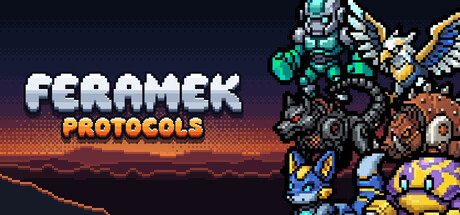
Feramek Protocols is made by a solo developer who uses AI tools to support development. Some of the art was made with AI assistance and then reviewed and polished by hand. The rest is hand-crafted.
The translations were also made with AI assistance.
Lunar Wardens uses generative AI tools for some of its art, sound effects, voice lines, translations. The developers reviewed and edited all AI-assisted content to fit the game.
All of the game’s ideas, characters, stories and design are mine. English is not my first language, so I used AI tools to turn my writing into correct English, for both the game and this store page. The character voices and creature sounds were generated with ElevenLabs from my own scripts. I composed the music together with AI tools under my close direction: I set the style for every area and reviewed each track until it fit the game. Nothing in the game is generated by AI while you play.
During the development of EVILGARD, only a small number of AI-generated images are currently used as temporary placeholders. These will be fully replaced with non-AI-generated artwork as development progresses. By the time of the final release, EVILGARD will no longer contain any AI-generated content.
All creative elements, including the story, characters, quests, dialogue, gameplay systems, and overall creative direction, are developed by the developer personally. AI is not used to generate voice performances, clone voices, or train voice models.
The game does not generate code during gameplay. All game code is developed and compiled before release. Players cannot generate or execute AI-generated code through the game.
Generative AI tools were used during development to create creature and environment artwork, instrumental music and creature sound effects. These assets are pre-generated and included in the game. The game does not generate AI content or connect to AI services during gameplay.
KUR is developed by a single person with over 18 years of experience in software development, using generative AI as a supporting tool, primarily for artwork, translations, and research.
The project marks the return of a developer who spent five years of his teenage years creating online games and contributing to open-source communities. Without the financial resources to hire an art team, AI became a way to make that return possible.
AI-generated artwork is carefully selected, reviewed, corrected, and adapted. Translations also use AI, with the English and Spanish versions reviewed. No content is generated by AI during gameplay.
KUR's mechanics, systems, and game design are the result of countless hours of personal development and dedication. The goal is to create a game with its own identity and, once financially possible, reinvest the game's revenue into hiring human artists to progressively replace AI-generated artwork with human-created art.
Emberspark is an independent project shaped by its creator's game design, creative direction, and playtesting. Generative AI tools helped create and refine the artwork and title logo, in-game text and translations, and music and sound effects. All of this content is prepared in advance; nothing is generated by AI while you play.
Some artwork was created with the help of generative AI tools: the key art used on the store page and in marketing materials, the single ending illustration, and two character illustrations added in the Steam edition. The English localization (in-game text and the store page descriptions) was produced with AI assistance. The story, characters, maps, and game design were created by the developer. Music, sound effects, and other assets include licensed and free materials used under their respective terms. No content is generated by AI while the game is running.
The character art, character poses, battle backgrounds, item and interface icons, the 3D models used in the opening cutscene, the music and the sound effects were created with generative AI tools that we ran on our own computers. We wrote the prompts and designs, then reviewed, selected, corrected and edited every asset by hand: flawed results (extra hands, extra heads, wrong colours) were regenerated or fixed before anything went into the game. The fonts are human-made open-licence fonts, and the game design, characters, abilities and all written text are our own.
2D Asset Generation
- OmniGen (VectorSpaceLab)
- Gemini (Google)
Used to assist in creating visual assets and illustrations for the game.
3D Mesh Generation
- Trellis (Microsoft)
- Meshy.ai
Used to generate 3D models and meshes for use in the game.
Writing Assistance
- Claude (Anthropic)
- ChatGPT (OpenAI)
- Gemini (Google)
Used to assist with writing, editing, and refining text during development.
Voice and Speech Generation
- Qwen2.5-TTS (Alibaba)
Used to generate synthetic speech for in-game audio content.
本作在开发阶段与游玩过程中均使用生成式人工智能。
开发阶段:游戏自带的位面(世界观、区域、敌人、角色、任务)以及部分美术素材,由生成式 AI 辅助创作,再经人工筛选与调整。
游玩阶段:剧情、事件、角色对话、角色形象,以及玩家自行创造的位面与物品,均由生成式 AI 根据玩家的操作实时生成。剧情推进不是预先写好的固定文本,每次游玩产生的内容都不相同。
实时生成功能消耗游戏内 AI 积分;积分可在游戏内用 Steam 钱包购买,首次登录赠送一笔免费额度。
Connects to 3rd-Party Service for AI Content Generation: 第三方大模型 API:DeepSeek、智谱 GLM ,claude,Gemini
Generative AI tools were used during development to assist in the creation of some pre-generated visual assets and promotional materials. All AI-assisted content is reviewed, selected, and integrated by the development team. The game does not use generative AI to create content during gameplay.
This game uses generative AI in the creation of some visual elements, including character illustrations and backgrounds; all results were reviewed and retouched by hand. Voice audio is based on dubbing and recordings by real people, which were then converted or refined using generative AI.
All artwork, music, and sound effects in Geargrave Outlands were created with generative AI tools (images: OpenAI image models; music: Suno; sound effects: ElevenLabs) and then selected, edited, and integrated by the developer.
Pre-generated 3D models. The 3D models of the travel view (convoy and raider vehicles, roadside props, landmarks, ruins and war-zone set pieces, and the walking crew and roadside figures) were generated with Tripo3D (Tripo AI) from AI-generated reference images: model sheets made with the image models above, or the game's own AI-generated vehicle art. Tripo3D also rigged the figures and supplied their idle, walk and run animations. Every model was then reworked in Blender (rescaling and orienting, polygon reduction, re-baking the textures, fixing geometry) and ships as a fixed model file.
Story text was written with AI assistance and edited by the developer. All translations were produced with AI assistance. All of this content is pre-generated and ships as fixed files. The game does not generate any content with AI while you play.
An AI-generated sketch is used as a starting point. Everything else is made by a human: every shipped image is redrawn and retouched by hand, and the code, game design and texts are written by the developer.
Tirona's development used AI tools for much of its 2D artwork (character portraits, card and scene illustrations, quest illustrations), some 3D models, the music (ElevenLabs) and the character voice performers' reference voices. All of it was selected, edited and placed by the developer, and ships as fixed game content.
While you play, a third-party large language model writes the narration and the dialogue of non-player characters in response to what you type or say. Character voices are synthesised locally on your PC from the generated text. You can optionally generate a portrait for your character from your creation choices.
The AI never decides the rules: dice, hit points, gold, items, experience, spells and quest progress change only through the game's own systems. Romance is opt-in, and anything sexual fades to black.
Made by one developer with a little help from AI! Some artwork and text started life in generative AI tools, then got edited and polished by hand. Nothing is generated while you play.
The game uses background music and monster vocal effects created with generative AI tools. These audio assets were produced in advance during development. The game does not generate AI content or connect to external AI services during gameplay.
Table Night has an optional AI LLM game master: if the host turns it on with their own AI account, a language model narrates the match and judges what players write, while the game rolls the dice and decides every result. The AI is instructed to keep everything suitable for teens. Players' text is sent to the host's AI provider, and any table can be played with a human game master or none instead.
Generative AI was used in the creation of images and music in the game. This content was generated and edited during development. No content is generated by AI during gameplay.
Generative AI was used during development to assist with pre-rendered character and environment artwork, animations, music and sound effects, and portions of narrative writing and localization. These materials are included as fixed game assets. The game does not generate AI content or connect to external AI services during gameplay.
Generative AI was used to create some artwork and UI assets, summoning animation videos, and background music. Details of the tools used are listed under Settings > Credits in the game.
During gameplay, AI running on your PC uses the true name and essence you enter to generate Textus data, including abilities and moves, as well as artwork.
Generated results may vary. Depending on the outcome of the safety check, a placeholder explaining why the artwork is unavailable may appear instead of the generated image. The Textus's abilities and moves remain usable.
The title logo was generated with an AI image tool and then cropped and resized by the developer.
The store capsule artwork (the key art behind the logo) was generated with an AI image tool from text prompts only, then cropped and resized by the developer.
The in-game text in every language except English and Japanese is machine-translated with an AI language model from the developer's English and Japanese text, and has not yet been reviewed by native speakers.
Some English and Japanese interface text and the English and Japanese store description were drafted with an AI writing assistant and then reviewed and edited by the developer. The store description in the other languages is translated with an AI language model.
The majority of the code and the design was written by AI coding agents (Claude and Codex) under the developer's direction and review.
The in-game characters, items, maps, effects, music, sound effects and fonts are mostly purchased or licensed assets. The exceptions are 8 equipment icons, the slash and healing effects, the spectators in the stands, the crowd cheers and the app icon, which were drawn or synthesized by programs written by AI coding agents (no image or audio generation model was used). The cutting out, combining, recoloring and touching up of the purchased assets, and the shapes and light effects the game draws on screen during matches, are also done by programs written by AI.