


Disclosure
Generative AI was used to create the tower models, code support, and most of the 2D graphics. Certainly most of the marketing. It's wildly helpful for a solo developer.
- Creator
- Slagathor Studios
- Reviews
- -
- Added
- Nov 22, 2026
Public Steam disclosure research 28,028 disclosures tracked
Search developers’ Steam disclosures, compare classified AI use across games, and follow recorded changes. This index adds cross-game classifications and statistics to statements published on individual store pages.
Code help, debugging and other development work.
Capsule art, trailers and promotional material.
Pre-made art, audio, writing and other game assets.
Interactive or runtime AI features disclosed by the developer.
Groups reflect automatic analysis of public disclosures; mature records are excluded. These counts do not measure AI use across all of Steam. Missing or unclear statements cannot establish whether a game uses AI.
Generative AI was used to create the tower models, code support, and most of the 2D graphics. Certainly most of the marketing. It's wildly helpful for a solo developer.
AI tools were used during development to assist with writing code and shaders (including fire effects, goal nets, webcam distortion filters and paint).
The reveal trailer on this Steam page uses pre-generated synthetic voice performances for three lines of Bosnian dialogue. The trailer also contains in-engine cinematics and recorded gameplay.
During Early Access we use AI-generated 2D concept art as temporary background images on some menu screens while we settle on the game's final art direction. These are placeholders. Once we have feedback from players on the direction we are taking, our 2D artist will replace them with final, hand-made artwork created without AI. No content is generated by AI while you play — the game ships with a fixed set of assets.
The store page text (description and Early Access answers) and the trailer captions were drafted with the help of an AI assistant and reviewed and edited by the developer. All in-game art, effects, sound and music are made by the game’s own procedural generators, not by generative AI. Store screenshots, capsule art and the trailer are taken from real gameplay.
Donut was developed with extensive help from Anthropic's Claude AI, directed and reviewed by our developer. The original card game was designed by hand, and version 2 onward was built with AI. most of the game's code was written with AI, and the card designs, table felts, venue backdrops, game logo and in-game items are drawn by code that AI wrote - no image-generation models were used. Character names, personalities and dialogue, plus much of the game's text, were written with AI. All music and sound effects were created with ElevenLabs. The icon, store art, screenshots, and trailer were produced with AI-written tools from real engine footage.
Some artwork that ships with the game was created with generative AI tools and then curated by the developer: the illustrations and animated portraits of the collectible relics (including the Spactator creatures Cinder Hound and Hearth Moth, made with PixelLab and Agnes AI) and the SpannerGames studio intro animation. The game itself, its stones, levels, music, sounds and code are made by the developer. No content is generated by AI during gameplay.
Some of the game's art, textures, sound effects, interface text and translations, as well as the opening video, were created with the help of generative AI tools, then selected, edited and tested by our team. No content is generated by AI while you play.
Eisenkiefer was originally developed over a period of more than two years without generative AI. Following an extended development break, AI-assisted tools were introduced to help resume development and complete the remaining work. Generative AI is primarily used to assist with programming, debugging, and further development of existing game systems. The original game concept, core gameplay, and majority of the game's content were created through traditional development.
AI Code and SVGs (Mostly), original systems were made in unity by hand and i used ai to port and continue dev.
All concept and design work for the gameplay, characters, and world was done by humans. Generative AI was used in parts of development, as detailed below. Fully human-made: character designs, environment themes and concepts, 2D artwork, sound effects Made by AI operating 3D software (Blender), then adjusted by hand: character models, environment models, textures Generated by AI, then rearranged by hand: music AI output used directly, with no human changes: none
Midgard Arena is created, developed and run by one person. The world, the story, the game systems, the balance and every decision in the game are mine, and I review everything that goes into it. And that is the goal: Midgard Arena will stay a one-developer game, made by me, chasing my dream. As a solo developer, I use generative AI tools as production tools: they let one person do work that would normally take a whole studio. Character and monster art, animations, 3D props, voices, music and parts of the text and translations started in AI tools; then I directed, selected, edited and refined each piece, often over many rounds, before it went into the game. No AI generates content while you play. Everything you see was made and approved before it reached you.
We do not use image gen, and all player facing content was generated or designed by a human. The Steam policy specifically excludes code from their disclaimer requirement. However, we understand people have diverse, and strong opinions about AI use in game development. We want to be transparent about how AI was used in the development of this game, so you can make an informed decision about the content you consume. The graphics, VFX, music, and SFX were created by students at Laguna College of Art and Design, and by members of our community. The core quantum engine was developed by hand over the past 10 years. We leaned heavily on AI in the development of the app around that engine. This includes writing the code for the gameplay systems, and the infrastructure to support the human made assets. Those app features have been refined through over a year of iteration and playtesting by our dedicated community of high level Tetris players. Agentic code tools were critical in our ability to keep up with the rate of player feedback, and to prototype new ideas for them to try. We also used AI to assist in turning human drawn concepts into SVG images. SVG is an image format defined by code, not pixel colors. Generally we had AI generate the first draft of the code to recreate the human drawn concept, and then we went into the code by hand to fix it and make it look correct. We also used AI in some cases to reformat human produced SVG to bring it in line with the game systems we created.
Generative AI was only used to create an original game banner and icons. The in-game graphics in terms of flight were all created by captures or through licensed imagery.
Seat The Queen is based on the developer’s original game concept. AI tools were used under the developer’s direction to create artwork, sound effects, code, and written content during development. The game does not generate AI content during gameplay.
Generative AI tools were used throughout the development of Pigeon Online World, including visual asset creation, audio production, written content, and programming. AI-assisted content is included in the game.
Extensive use of AI was used when making this game. Including textures, 3d assets, voice lines, and code.
Generative AI tools were used to assist in creating the assets in the game. Assets review by developer to ensure quality.
Generative AI was used during development for selected pre-produced illustrations, background artwork, marketing graphics and text. These materials are reviewed and edited before release. Gameplay screenshots show actual game captures. No content is generated by generative AI during gameplay.
This game uses generated voices and localization.
Some sound effects, a few UI images and some background models were created with the help of generative AI tools. Store page text and translations were also produced with AI assistance and reviewed by our team. Characters, gameplay, maps and everything else were made by humans.
- Localization (translation) of in-game text from the original English into other supported languages. The original English text was written by the developers without AI. All AI-generated translations were reviewed and adjusted by the developers before being included in the game. If you find any translation issues, please don't hesitate to contact us!
The use of DeepL for translating from English to other languages have been used.
This game was developed with the help of AI tools. In-game text and translations, the procedural sound effects, some simple shape-built models, the title logo artwork, and the Steam achievement icons were created with AI assistance and reviewed by the developer. The background music was made with an AI music tool. The game does not generate any AI content while it is running.
Generative AI became part of development in 2026, following ten years of work without it. It is now used across all areas of development to help a solo developer expand the game. This work builds on the visual style and original models established by real artists, and all AI-assisted content is manually reviewed and refined before inclusion.
All the artwork, music and sound effects in this game were made with AI. Battle for Noalea started as a board game, and that version still exists. The rules, the factions, the heroes and every number behind them are my own design. I'm a software developer, not an artist. I can write the code for a game like this, but I can't paint it, and without AI this digital version would never have been made. So I created the images and sounds with AI, picked the ones that fit and worked them into the game one by one.
Generative AI tools were used to assist with translating and localizing the game's text into supported languages.
AI Generated Content Disclosure The portraits of 6 added characters started from an AI image and was repainted by the developer. Some newer in-game text and the store and in-game translations were written with AI assistance. The original characters, monsters, music and sound effects (pretty much everything else) were made by people. The game does not generate AI content while you play.
Se han utilizado herramientas de inteligencia artificial generativa para crear parte del material gráfico del juego y de su promoción, incluidos ilustraciones, personajes, iconos y recursos de la página de Steam. Los recursos se preparan y revisan antes de incorporarse al juego.
Generative AI was used to translate the store page and to edit the videos. The original character artwork, UI, and world design are hand-drawn by FUCHI (FUCHI COMPANY), and everything else was finished by BottleCube's designers. The game does not generate any content with AI during gameplay.
Generative AI tools assisted with selected, limited artwork and environmental texture effects, a Local LLM running through Piper TTS using my own voice was used for character voices during development. This was an artistic choice to get a genuine sounding AI voice for characters that require it AI artwork for lore reasons and will be self explanatory in game. These assets were selected, edited and integrated by the very fallible and human development team. No content is generated during gameplay.
The LastShard uses generative AI for some content made in advance. Music, sound effects, creature voices and trailer narration were generated with ElevenLabs. Some 2D artwork was generated with OpenAI's image tools: the key art and story illustrations, spell, skill and action icons, a few interface panels, and website artwork. Some in-game text was drafted with AI help. Everything is reviewed by the developer. The 3D world, characters, creatures and animations are licensed asset packs and our own work. Nothing is generated by AI while you play: computer-controlled players speak pre-written lines.
Translations were made on the game’s own translation website, which offers optional AI-generated suggestions that can be turned off. Every translation that ships with the game was either written from scratch by a human translator, or is an AI suggestion that a human translator edited or approved. The developer then approved each translation under a four-eyes principle. No other content in the game or on the store page was made by generative AI. The AI drivers use traditional machine learning, trained on the developer’s own machines using only the game itself as their environment and data.
Parts of this game's content were made with generative AI tools: the in-game texts and the wiki were written or drafted with AI, and the translations into languages other than English were written with AI and have not yet been reviewed by native speakers. Parts of the game's code and tools were written with AI assistance. The game does not use AI to generate content while you play and does not connect to any AI service.
Local LLM was used to partially generate images for the store page. Interface translations were made with AI assistance.
Generative AI tools were used during development to assist with creating and refining portions of the game’s 2D artwork and promotional imagery. All included outputs were reviewed, edited, selected, and integrated by the developer. The game does not generate AI content while running and does not provide players with live AI generation features.
Some artwork and images were created with the help of AI tools.
Handmade most of the art in game, before the current gen AI wave. That said, AI is an incredibly powerful tool for rapid prototyping and iteration. AI was used to help concept art for achievements and store capsules, and generic UI. Code agents, not image gen tools, were instructed to write svg code to produce a specific image composition, which was then refined by hand. AI was also used to help with the design and text in the "Learn" section, but again it was refined by hand.
Generative AI was used during development solely to assist with localizing the game's menu text and user interface into multiple languages. All gameplay code, character designs, stages, and animations consist entirely of human-created assets and traditional development pipelines.
We used generative AI during development to help create selected visual and audio assets.
Some content in the game was made with the help of generative AI tools. Many character voices, book readings and help narration use AI text-to-speech voices. Translations into German, French, Spanish, Italian, Portuguese, Russian, Japanese and Chinese were produced with AI translation tools. Some interface art, skill icons, achievement icons, a few decorations and some upscaled textures were made with AI image tools. Some newer dialogue, item text and patch notes were drafted with AI writing tools and edited by our team. The in-game Oracle answers player questions with an AI language model that only answers from our own knowledge base of game information. Players can have short catchphrases and in-game books read aloud by AI text-to-speech voices, and community add-on descriptions are drafted by AI. Every piece of player-written text is checked by an AI moderation model before anything is generated, and it is refused if it fails the check. Lengths and usage are capped, staff review voiced content and approve every add-on listing, and abusive accounts can be banned. Public chat and character names are also screened by AI moderation. Connects to 3rd-Party Service for AI Content Generation: Inworld AI (voices), Together AI and Cerebras (Oracle answers)
Some content was created with the help of AI tools and reviewed by the developer, including parts of the text, translations, voice, sound and music. No AI content is generated during gameplay.
Kingslayers has been in development for about six years, and the multiplayer game with all 10 characters was playable before generative AI existed. Human-made: everything purchasable, all playable units, all VFX, the story, character abilities, the menu theme and artwork, about 90% of the voice acting and most card artwork. AI-generated: encounter images, some music, some boss and snake models, and the remaining voice lines and card art. I’m replacing the AI elements over the coming months and will update this list as I go.
The original 2024 version of the game was made entirely by hand, but since Beta 1.2 (October 2026) I’ve been using AI tools - some updates may include models made with AI assistance (e.g. the pumpkins and grave candles in the Hallows Event). Models from the original version such as the coins, board, characters, weapons etc. were made by hand, but they’re so simple anyway that they probably don’t have much artistic value - when I prompt AI for a new model I try to keep it in the same minimalist style as if I were clicking it together manually using primitives in Unity.
Some artwork and marketing images were created with AI tools.
Generative AI was used to assist in creating certain promotional and store page artwork. All AI-generated content was reviewed, edited, and refined by the developer. No generative AI is used during gameplay.
AI has been used in assistance for development. Sound effects were not made using AI. Artwork and 3D models were not generated by AI, however, assistance was used for collecting reference images, prototypes, and general prototypes for design. AI has been used partially in code assistance, however, software architecture, certain parts of the code base, and certain decisions not made by AI. Localization will be used with AI, keeping that in mind.
Used to pre-render scenes using assets and in-game scenes
Generative AI was used to create some interface icons.
Direction and Vision come from the Developer. The game’s code, its pixel art (drawn in code from text grids), its synthesised music and sound, and its text were made with the help of AI tools under the developer’s direction, and reviewed by the developer.
| Title⇅ | Disclosure | Creator⇅ | Src | Reviews⇅ | Added↓ |
|---|---|---|---|---|---|
 SheepTag: Dragons In-game content artcode | Generative AI was used to create the tower models, code support, and most of the 2D graphics. Certainly most of the marketing. It's wildly helpful for a solo developer. | Slagathor Studios | - | Nov 22, 2026 | |
 Bumper Face Dev only code | AI tools were used during development to assist with writing code and shaders (including fire effects, goal nets, webcam distortion filters and paint). | Happy Oddity Ltd | - | Nov 22, 2026 | |
 Bosnian Battlefronts Store/marketing audio | The reveal trailer on this Steam page uses pre-generated synthetic voice performances for three lines of Bosnian dialogue. The trailer also contains in-engine cinematics and recorded gameplay. | Bostralian Ventures | - | Nov 22, 2026 | |
 Boxing Underdog In-game content art | During Early Access we use AI-generated 2D concept art as temporary background images on some menu screens while we settle on the game's final art direction.
These are placeholders. Once we have feedback from players on the direction we are taking, our 2D artist will replace them with final, hand-made artwork created without AI.
No content is generated by AI while you play — the game ships with a fixed set of assets. | Monologic Games | 35 | Nov 22, 2026 | |
 War: Weaponary and Resources Store/marketing text | The store page text (description and Early Access answers) and the trailer captions were drafted with the help of an AI assistant and reviewed and edited by the developer. All in-game art, effects, sound and music are made by the game’s own procedural generators, not by generative AI. Store screenshots, capsule art and the trailer are taken from real gameplay. | CoolCoder64 | - | Nov 22, 2026 | |
 Donut In-game content arttextcodeaudio | Donut was developed with extensive help from Anthropic's Claude AI, directed and reviewed by our developer. The original card game was designed by hand, and version 2 onward was built with AI. most of the game's code was written with AI, and the card designs, table felts, venue backdrops, game logo and in-game items are drawn by code that AI wrote - no image-generation models were used. Character names, personalities and dialogue, plus much of the game's text, were written with AI. All music and sound effects were created with ElevenLabs. The icon, store art, screenshots, and trailer were produced with AI-written tools from real engine footage. | Acro Visuals | - | Nov 21, 2026 | |
 RiverStones In-game content art | Some artwork that ships with the game was created with generative AI tools and then curated by the developer: the illustrations and animated portraits of the collectible relics (including the Spactator creatures Cinder Hound and Hearth Moth, made with PixelLab and Agnes AI) and the SpannerGames studio intro animation. The game itself, its stones, levels, music, sounds and code are made by the developer. No content is generated by AI during gameplay. | Darref | - | Nov 21, 2026 | |
 OVERSPRAY In-game content artaudiotext | Some of the game's art, textures, sound effects, interface text and translations, as well as the opening video, were created with the help of generative AI tools, then selected, edited and tested by our team. No content is generated by AI while you play. | Fazay Games | - | Nov 21, 2026 | |
 Eisenkiefer Dev only code | Eisenkiefer was originally developed over a period of more than two years without generative AI. Following an extended development break, AI-assisted tools were introduced to help resume development and complete the remaining work.
Generative AI is primarily used to assist with programming, debugging, and further development of existing game systems. The original game concept, core gameplay, and majority of the game's content were created through traditional development. | Marcel Rankwiler | - | Nov 21, 2026 | |
 ONYX2D Dev only codeart | AI Code and SVGs (Mostly), original systems were made in unity by hand and i used ai to port and continue dev. | Sindruid | - | Nov 21, 2026 | |
 Tatakabu-Do: Hammer and Helmet In-game content artaudio | All concept and design work for the gameplay, characters, and world was done by humans. Generative AI was used in parts of development, as detailed below.
Fully human-made: character designs, environment themes and concepts, 2D artwork, sound effects
Made by AI operating 3D software (Blender), then adjusted by hand: character models, environment models, textures
Generated by AI, then rearranged by hand: music
AI output used directly, with no human changes: none | PrimateGames | - | Nov 21, 2026 | |
 Midgard Arena In-game content artaudiotext | Midgard Arena is created, developed and run by one person. The world, the story, the game systems, the balance and every decision in the game are mine, and I review everything that goes into it. And that is the goal: Midgard Arena will stay a one-developer game, made by me, chasing my dream.
As a solo developer, I use generative AI tools as production tools: they let one person do work that would normally take a whole studio. Character and monster art, animations, 3D props, voices, music and parts of the text and translations started in AI tools; then I directed, selected, edited and refined each piece, often over many rounds, before it went into the game.
No AI generates content while you play. Everything you see was made and approved before it reached you. | Unfate Games | - | Nov 21, 2026 | |
 Quantris In-game content codeart | We do not use image gen, and all player facing content was generated or designed by a human.
The Steam policy specifically excludes code from their disclaimer requirement. However, we understand people have diverse, and strong opinions about AI use in game development. We want to be transparent about how AI was used in the development of this game, so you can make an informed decision about the content you consume.
The graphics, VFX, music, and SFX were created by students at Laguna College of Art and Design, and by members of our community.
The core quantum engine was developed by hand over the past 10 years. We leaned heavily on AI in the development of the app around that engine. This includes writing the code for the gameplay systems, and the infrastructure to support the human made assets.
Those app features have been refined through over a year of iteration and playtesting by our dedicated community of high level Tetris players. Agentic code tools were critical in our ability to keep up with the rate of player feedback, and to prototype new ideas for them to try.
We also used AI to assist in turning human drawn concepts into SVG images. SVG is an image format defined by code, not pixel colors. Generally we had AI generate the first draft of the code to recreate the human drawn concept, and then we went into the code by hand to fix it and make it look correct. We also used AI in some cases to reformat human produced SVG to bring it in line with the game systems we created. | Quantum Native | - | Nov 21, 2026 | |
 RC Glider Sim In-game content art | Generative AI was only used to create an original game banner and icons.
The in-game graphics in terms of flight were all created by captures or through licensed imagery. | BaaWolf | - | Nov 21, 2026 | |
 Seat The Queen In-game content artaudiotextcode | Seat The Queen is based on the developer’s original game concept. AI tools were used under the developer’s direction to create artwork, sound effects, code, and written content during development. The game does not generate AI content during gameplay. | Zmpli Studios | - | Nov 21, 2026 | |
 Pigeon Online World In-game content artaudiotextcode | Generative AI tools were used throughout the development of Pigeon Online World, including visual asset creation, audio production, written content, and programming. AI-assisted content is included in the game. | Roko Game Studios | 25 | Nov 20, 2026 | |
 Past Visiting Hours In-game content artaudiocode | Extensive use of AI was used when making this game. Including textures, 3d assets, voice lines, and code. | Squabblin' Goblins | - | Nov 20, 2026 | |
 Purrfect Circuit In-game content artaudiotext | Generative AI tools were used to assist in creating the assets in the game. Assets review by developer to ensure quality. | Clever Advisor Games | - | Nov 20, 2026 | |
 TriLeague UFO Wars Store/marketing arttext | Generative AI was used during development for selected pre-produced illustrations, background artwork, marketing graphics and text. These materials are reviewed and edited before release. Gameplay screenshots show actual game captures. No content is generated by generative AI during gameplay. | TDG Gaming Studio | - | Nov 20, 2026 | |
 Silica In-game content audiotext | This game uses generated voices and localization. | Martin 'Dram' Melichárek | 3.7k | Nov 20, 2026 | |
 Tick or Kick! In-game content audioarttext | Some sound effects, a few UI images and some background models were created with the help of generative AI tools. Store page text and translations were also produced with AI assistance and reviewed by our team. Characters, gameplay, maps and everything else were made by humans. | PyroPixel Games Studio | - | Nov 20, 2026 | |
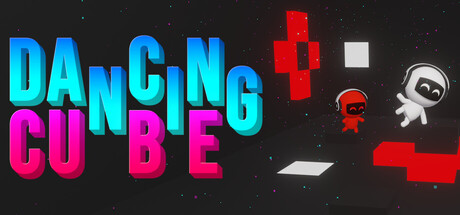 Dancing Cube In-game content text | - Localization (translation) of in-game text from the original English into other supported languages.
The original English text was written by the developers without AI. All AI-generated translations were reviewed and adjusted by the developers before being included in the game. If you find any translation issues, please don't hesitate to contact us! | Soft Mountain | 10 | Nov 20, 2026 | |
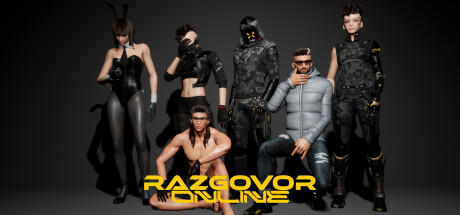 Razgovor In-game content text | The use of DeepL for translating from English to other languages have been used. | Broken Light Games | - | Nov 20, 2026 | |
 Midnight 42 In-game content textaudioart | This game was developed with the help of AI tools. In-game text and translations, the procedural sound effects, some simple shape-built models, the title logo artwork, and the Steam achievement icons were created with AI assistance and reviewed by the developer. The background music was made with an AI music tool. The game does not generate any AI content while it is running. | Studio Yong | - | Nov 20, 2026 | |
 Sheep Tag 2 Dev only art | Generative AI became part of development in 2026, following ten years of work without it. It is now used across all areas of development to help a solo developer expand the game. This work builds on the visual style and original models established by real artists, and all AI-assisted content is manually reviewed and refined before inclusion. | Luna Wolf Studios | - | Nov 20, 2026 | |
 Battle for Noalea In-game content artaudio | All the artwork, music and sound effects in this game were made with AI.
Battle for Noalea started as a board game, and that version still exists. The rules, the factions, the heroes and every number behind them are my own design.
I'm a software developer, not an artist. I can write the code for a game like this, but I can't paint it, and without AI this digital version would never have been made. So I created the images and sounds with AI, picked the ones that fit and worked them into the game one by one. | Kim Windisch | - | Nov 20, 2026 | |
 Who Do Voodoo In-game content text | Generative AI tools were used to assist with translating and localizing the game's text into supported languages. | Kuixo | 48 | Nov 20, 2026 | |
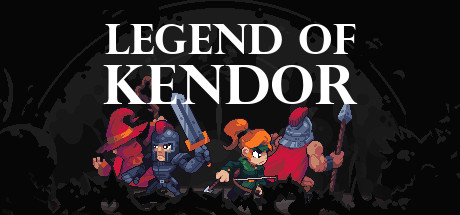 Legend of Kendor In-game content arttext | AI Generated Content Disclosure
The portraits of 6 added characters started from an AI image and was repainted by the developer.
Some newer in-game text and the store and in-game translations were written with AI assistance.
The original characters, monsters, music and sound effects (pretty much everything else) were made by people.
The game does not generate AI content while you play. | pickysource | 46 | Nov 20, 2026 | |
 MegaMagnate In-game content art | Se han utilizado herramientas de inteligencia artificial generativa para crear parte del material gráfico del juego y de su promoción, incluidos ilustraciones, personajes, iconos y recursos de la página de Steam. Los recursos se preparan y revisan antes de incorporarse al juego. | Blove Games | - | Nov 20, 2026 | |
 FUCHI's Chick: Mini Many PANIC Store/marketing textart | Generative AI was used to translate the store page and to edit the videos. The original character artwork, UI, and world design are hand-drawn by FUCHI (FUCHI COMPANY), and everything else was finished by BottleCube's designers. The game does not generate any content with AI during gameplay. | BottleCube Inc. | - | Nov 20, 2026 | |
 HOVER 2177: Halcyon Recharged In-game content artaudiotext | Generative AI tools assisted with selected, limited artwork and environmental texture effects, a Local LLM running through Piper TTS using my own voice was used for character voices during development. This was an artistic choice to get a genuine sounding AI voice for characters that require it AI artwork for lore reasons and will be self explanatory in game. These assets were selected, edited and integrated by the very fallible and human development team. No content is generated during gameplay. | 54 Degrees North Gaming | - | Nov 20, 2026 | |
 The LastShard In-game content audioarttext | The LastShard uses generative AI for some content made in advance. Music, sound effects, creature voices and trailer narration were generated with ElevenLabs. Some 2D artwork was generated with OpenAI's image tools: the key art and story illustrations, spell, skill and action icons, a few interface panels, and website artwork. Some in-game text was drafted with AI help. Everything is reviewed by the developer. The 3D world, characters, creatures and animations are licensed asset packs and our own work. Nothing is generated by AI while you play: computer-controlled players speak pre-written lines. | Newtro Studios | - | Nov 20, 2026 | |
 Backseat Champions In-game content text | Translations were made on the game’s own translation website, which offers optional AI-generated suggestions that can be turned off. Every translation that ships with the game was either written from scratch by a human translator, or is an AI suggestion that a human translator edited or approved. The developer then approved each translation under a four-eyes principle.
No other content in the game or on the store page was made by generative AI. The AI drivers use traditional machine learning, trained on the developer’s own machines using only the game itself as their environment and data. | f13rce | 172 | Nov 20, 2026 | |
 SpaceCorps In-game content textcode | Parts of this game's content were made with generative AI tools: the in-game texts and the wiki were written or drafted with AI, and the translations into languages other than English were written with AI and have not yet been reviewed by native speakers. Parts of the game's code and tools were written with AI assistance. The game does not use AI to generate content while you play and does not connect to any AI service. | SpaceCorps Technology | 35 | Nov 20, 2026 | |
 Globul In-game content arttext | Local LLM was used to partially generate images for the store page.
Interface translations were made with AI assistance. | CrowComrade | - | Nov 20, 2026 | |
 The Dark Signal Store/marketing art | Generative AI tools were used during development to assist with creating and refining portions of the game’s 2D artwork and promotional imagery. All included outputs were reviewed, edited, selected, and integrated by the developer. The game does not generate AI content while running and does not provide players with live AI generation features. | Bryan J. Drumm | - | Nov 20, 2026 | |
 Pulp Friction In-game content art | Some artwork and images were created with the help of AI tools. | Inntertainment | - | Nov 19, 2026 | |
 Quantum Chess Store/marketing arttextcode | Handmade most of the art in game, before the current gen AI wave. That said, AI is an incredibly powerful tool for rapid prototyping and iteration.
AI was used to help concept art for achievements and store capsules, and generic UI. Code agents, not image gen tools, were instructed to write svg code to produce a specific image composition, which was then refined by hand.
AI was also used to help with the design and text in the "Learn" section, but again it was refined by hand. | Quantum Native | 50 | Nov 19, 2026 | |
 Gemion Function In-game content text | Generative AI was used during development solely to assist with localizing the game's menu text and user interface into multiple languages. All gameplay code, character designs, stages, and animations consist entirely of human-created assets and traditional development pipelines. | Nagooyen | - | Nov 19, 2026 | |
 Armory Chaos: Tidy Up In-game content artaudio | We used generative AI during development to help create selected visual and audio assets. | Heavy Helmet Studio | - | Nov 19, 2026 | |
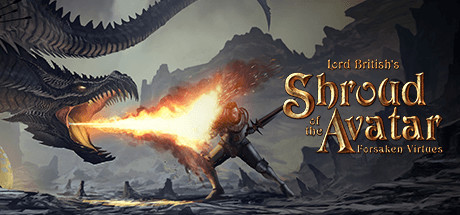 Shroud of the Avatar: Forsaken Virtues Live AI audiotextart | Some content in the game was made with the help of generative AI tools. Many character voices, book readings and help narration use AI text-to-speech voices. Translations into German, French, Spanish, Italian, Portuguese, Russian, Japanese and Chinese were produced with AI translation tools. Some interface art, skill icons, achievement icons, a few decorations and some upscaled textures were made with AI image tools. Some newer dialogue, item text and patch notes were drafted with AI writing tools and edited by our team.
The in-game Oracle answers player questions with an AI language model that only answers from our own knowledge base of game information. Players can have short catchphrases and in-game books read aloud by AI text-to-speech voices, and community add-on descriptions are drafted by AI. Every piece of player-written text is checked by an AI moderation model before anything is generated, and it is refused if it fails the check. Lengths and usage are capped, staff review voiced content and approve every add-on listing, and abusive accounts can be banned. Public chat and character names are also screened by AI moderation.
Connects to 3rd-Party Service for AI Content Generation: Inworld AI (voices), Together AI and Cerebras (Oracle answers) | Catnip Games | 2.4k | Nov 19, 2026 | |
 Trivia Arena: The Grand Stage In-game content textaudio | Some content was created with the help of AI tools and reviewed by the developer, including parts of the text, translations, voice, sound and music. No AI content is generated during gameplay. | myDOS Interactive | - | Nov 19, 2026 | |
 Kingslayers In-game content artaudiotext | Kingslayers has been in development for about six years, and the multiplayer game with all 10 characters was playable before generative AI existed.
Human-made: everything purchasable, all playable units, all VFX, the story, character abilities, the menu theme and artwork, about 90% of the voice acting and most card artwork.
AI-generated: encounter images, some music, some boss and snake models, and the remaining voice lines and card art.
I’m replacing the AI elements over the coming months and will update this list as I go. | BortDad | 24 | Nov 19, 2026 | |
 Chess for idiots In-game content art | The original 2024 version of the game was made entirely by hand, but since Beta 1.2 (October 2026) I’ve been using AI tools - some updates may include models made with AI assistance (e.g. the pumpkins and grave candles in the Hallows Event). Models from the original version such as the coins, board, characters, weapons etc. were made by hand, but they’re so simple anyway that they probably don’t have much artistic value - when I prompt AI for a new model I try to keep it in the same minimalist style as if I were clicking it together manually using primitives in Unity. | Polish Hacker | 1.6k | Nov 19, 2026 | |
 Battle Planes Multiplayer Store/marketing art | Some artwork and marketing images were created with AI tools. | Duct Tape Games | - | Nov 19, 2026 | |
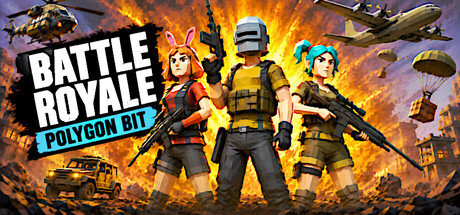 Polygon Bit Battle Royale In-game content art | Generative AI was used to assist in creating certain promotional and store page artwork. All AI-generated content was reviewed, edited, and refined by the developer. No generative AI is used during gameplay. | Army Troop Studios | 103 | Nov 19, 2026 | |
 Generations Of Steel In-game content artcodetext | AI has been used in assistance for development. Sound effects were not made using AI. Artwork and 3D models were not generated by AI, however, assistance was used for collecting reference images, prototypes, and general prototypes for design. AI has been used partially in code assistance, however, software architecture, certain parts of the code base, and certain decisions not made by AI. Localization will be used with AI, keeping that in mind. | ReallyBadGames | - | Nov 19, 2026 | |
 Spellburst Store/marketing art | Used to pre-render scenes using assets and in-game scenes | xixgames | - | Nov 19, 2026 | |
 To Rule Is to Ruin In-game content art | Generative AI was used to create some interface icons. | Fiery Swan | - | Nov 19, 2026 | |
 Grandmasters Ascent In-game content artaudiotextcode | Direction and Vision come from the Developer. The game’s code, its pixel art (drawn in code from text grids), its synthesised music and sound, and its text were made with the help of AI tools under the developer’s direction, and reviewed by the developer. | Zugzwang Studios | - | Nov 19, 2026 |


