Public Steam disclosure research25,376 disclosures tracked
Where do games disclose AI use?
Search developers’ Steam disclosures, compare classified AI use across
games, and follow recorded changes.
This index adds cross-game classifications and statistics to
statements published on individual store pages.
Groups reflect automatic analysis of public disclosures; mature records are excluded. These counts do not measure AI use across all of Steam.
Missing or unclear statements cannot establish whether a game uses AI.
AI created promotional images, cinematic trailer footage and helped translate this store page. No AI content is generated during gameplay. The game does not connect to an external AI service while playing.
3D models were made with Meshy and the radio and trailer music with ElevenLabs, all then selected and edited by the developer. Code was written with AI assistance. Nothing is generated while you play.
Parte del texturizado, la optimización de mallas y las traducciones se realizaron con ayuda de herramientas de IA generativa. Todo el contenido fue revisado y editado manualmente.
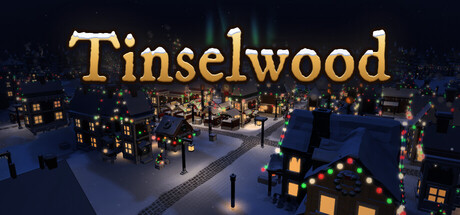
Parts of Tinselwood were made with generative AI during development: its music and sound effects, its interface icons and store art, some of its set-piece models, and parts of its code. All of it was reviewed and reworked by hand, and nothing is generated while you play.
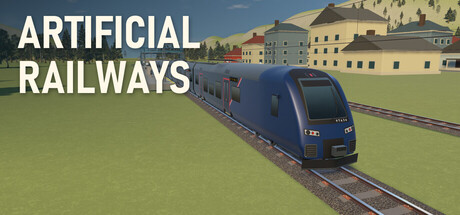
Artifical Railways was developed with extensive AI assistance, including programming and the creation of custom train models, procedural scenery, interface elements, and procedural sound effects. The game also incorporates third-party models, music, sound recordings, and fonts. Station announcements use AI-generated speech synthesized locally during gameplay from announcement templates and in-game railway information. This speech generation does not connect to an external AI service.
TV Dynasty Manager was designed by a solo developer. The game idea, the gameplay systems and the original German texts were created by the developer.
Generative AI was used as a tool for some parts, and all results were reviewed and edited by hand:
- Store artwork, logos and the main menu background image
- Translations of the German original into English, Spanish, French, Italian, Portuguese, Japanese, Russian and Chinese
- Help with some in-game descriptions (shows, films, characters)
The game does not use AI while you play.
Generative AI was used during development to create some visual assets, including the title artwork and app icon. AI tools also assisted with some 3D models, in-game text, localization, and sound effects. The game does not use generative AI services to create content during play.
Generative AI was used to create pre-generated vivid reinterpretations of public-domain classical paintings and promotional/store artwork. These fixed images are included with the game. Gameplay does not generate AI content or connect to external AI services; imported images are processed locally.
Some icons and images in the game were created using generative AI. All AI-generated content is reviewed, edited, and curated by the developer. No live generative AI is used during gameplay.
Generative AI was used for pre-generated promotional artwork and localization text. No AI content is generated during gameplay. The game does not connect to external AI services.
The game uses AI-assisted tools during development, including code generation, asset creation, music composition, map prototyping, and image generation. These systems are part of the production workflow and do not generate new content during gameplay.
AI for Coding: Development tools assist with scripting, debugging, and generating boilerplate code. All AI-generated code is reviewed and manually refined by the development team.
AI for Visual Assets: Some environmental elements, props, and textures are created or enhanced using AI image-generation tools. These images are always curated, edited, and finalized by artists to ensure consistency with the game’s historical art direction.
AI for Music: Background tracks and ambient layers may be composed with AI tools, then adjusted by human composers to match the tone of the game.
AI for Maps: AI is used to prototype terrain shapes and layout ideas, which are later fully redesigned and polished by level designers.
AI for Image Generation: Certain concept art, reference images, and early-stage visual drafts are produced using AI image-generation systems. These are used only as development references or starting points, not as final in‑game assets.
All AI-generated materials are static, pre-produced, and manually validated.
No AI system creates dynamic content, gameplay outcomes, or real-time images while the player is playing.
Desert Springs uses AI-assisted tools in parts of its development: some UI icons and Images were made with AI image generation. All of it was reviewed and edited by the developer. 2D art, level design, game design and codes are human made. No content is generated by AI while the game runs.
Generative AI was used to assist in the creation and iteration of selected visual assets and marketing materials. All final content was reviewed, selected, and integrated by the developer. No generative AI is used during gameplay.
As a solo developer AI helped me with:
- fine tuning text and Steam store descriptions
- solve complex coding issues
- visuals are not "ai" generated, but all visuals are programmatically generated within my own software, and the scripts that do that, are optimised by AI coding tools
The game's sprites, characters and building artwork were created with generative AI image tools, and the background music tracks were created with generative AI audio tools. All assets were selected and integrated into the game by the developer. Gameplay, design and sound effects were made without generative AI. The game does not generate any AI content during play and does not connect to any AI services.
The store page description was drafted with help from an AI writing assistant and reviewed by the developer. The game includes AI-generated voice audio made with Kokoro TTS from developer-written scripts, including waiting-room broadcasts, public-address announcements, and story voices. The game does not generate new content with AI during play; staff and patient behavior uses authored, rule-based simulation systems. No game art or text is AI-generated.
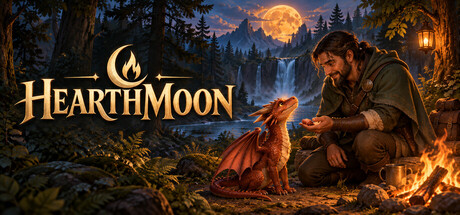
HearthMoon uses AI to generate NPC dialogue during gameplay and synthesize NPC voices. Spoken input is transcribed so villagers and the dragon companion can respond to the player. AI-assisted artwork and writing are also used in development and in store-page marketing. Conversations are experimental and responses may be inconsistent.
Parts of the game's code and the store page text were written with the help of an AI assistant. All art, 3D models, sounds and music are not AI-generated: 3D models come from Kenney asset packs (CC0) or are built procedurally in code, visuals and marketing images are rendered in-engine, and sounds and music come from CC0 libraries.
As a solo developer I have utilized some AI-based tools to help during development. However all visuals in the game are generated procedurally by the game's own code
Generative AI was used to create selected promotional artwork for the Steam store page and to assist with the localization of store text. All generated content was reviewed and edited by the developer. No generative AI is used during gameplay, and the game does not connect to external AI services.
This game uses generative AI tools to help create some of the visual assets displayed in the game and on its store page, including select images and icons. All gameplay systems, mechanics, and code are designed and implemented by the development team. AI-generated visuals are reviewed and curated before being included in the final product.
The use of generative AI in this title is limited exclusively to technical assistance for the creation of secondary environmental textures and background patterns. The art direction, the design of all main characters, and the vast majority of visual elements have been handcrafted by our development team.
Asharven's code, in-game text, logo and store text were created with the help of AI tools and reviewed by the developer. 3D models, animations, textures, icons, effects and music are licensed assets made by people. The game does not generate content with AI while it is running.
This product includes some visual assets and background music generated using AI during development. Some visual assets provide illustrative fills for missing celestial surface data or artistic representations and do not represent actual observations. No generative AI content is generated during gameplay.
Some text in this game — the store page, in-game UI labels and menus, and the English translation — was drafted with the help of an AI assistant and then reviewed and edited by the developer. AI coding assistants were also used during development. All in-game art, 3D models, textures and sounds are hand-made, generated procedurally by the game's own code, or licensed third-party assets; none of them are AI-generated. No AI is used to generate content during gameplay.
Parts of the source code and some store and marketing text were written with help from AI coding assistants during development. All terrain, water simulation, satellite imagery and map data come from real geographic datasets. No AI-generated artwork, audio or narrative ships with the app, and nothing is generated during play.
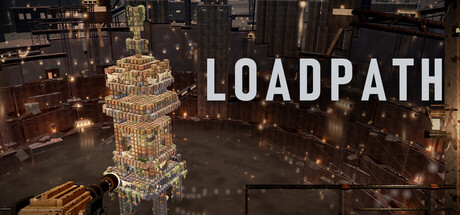
Generative AI tools assisted with LOADPATH’s development and the creation of game content, under the developer’s creative direction. The game was shaped through extensive iteration, selection and hands-on playtesting. The promotional trailer also uses AI-generated narration and music. All AI-generated content is prepared in advance; no generative AI runs during gameplay.
As a solo developer, generative AI tools were used to assist in creating promotional capsule artwork and achievement icons. All gameplay mechanics, coding, and game design were created directly by the developer.
Software engineering is primarily by hand in C# and python, with local SLM's, run via Ollama, and occasional cloud-based LLM's used to research knowledge deficits and prototype code snippets for specific systems that map to those deficits. Any AI-generated code was reviewed line-by-line, hand-integrated and heavily modified.
The application requires local file access to files selected by the player from a standard operating system folder browser with permissions. It scans the user's system via the psutil and gputil standard python packages to ascertain the specifications of the user's system to select a model that will match their system's performance profile.
Pinocchio and Hunyuan were used to generate 3D models of mushrooms from 19th century public domain botanical illustrations, and the integrated SLM model is used to generate text labels and summaries at runtime.
The application has absolutely no chat interface. An SLM is integrated locally as a black-box system with robust system prompts to generate structured output in the form of JSON based on the player's file inputs. The JSON is consumed by the game to generate maps and levels.
Additional Specifications & Technical Notes:
- A localhost python server is back-compiled to a C executable and deployed with the main executable and invoked from its application domain to host the local model.
- The local model is downloaded from the Internet via Ollama.
- The end-user needs to have the Ollama client installed to run the model locally.
- The python server has robust internal system prompts to prevent violation of the Terms of Service on the Steam and Itch platforms regarding disallowed content.
- The python server is run from the main executable's application domain, in the same directory structure.
- The python server and main executable communicate via a local socket connection via IANA-approved port numbers according to RFC 6335. Ports are tested and iterated to ensure that they are available on the local system. If an IANA-approved port listed in RFC 6335 is not available, the application will not run.
Heaps adheres to the ARTS standard for AI labeling. A full accounting of our use of AI in this game can be found at:
droidknot.com/ARTS/Heaps_SIS_082726.pdf
AI-assisted coding and editor automation tools were used during development for workflow efficiency.
Most of the art was hand-made by me. The remaining art generated by AI tools like icons or textures will be swapped to human-made art in the near future.
AI translation tools were used to create localization drafts, that are being reviewed by speakers of the language.
Generative AI was used to assist with localization and to create some sprites included in this demo. We plan to replace these icons with original artwork for the full release.
AI coding tools help write and maintain the game's plugin code, and parts of the in-game text like NPC combinatorial string banks and translations were written with AI assistance, all being reviewed manully by the developer.
Generative AI tools were used to assist with the creation of some game and promotional content. All final content was reviewed and approved by the developer.
AI Generated Content Disclosure
AI tools were used to assist in drafting the written text of this game (in-game explanations, codex entries, the four language versions of the interface, and store page descriptions); all such text was reviewed and edited by the developer. All artwork is procedurally rendered by shaders written by the developer, the store capsule artwork was commissioned from a human artist, and all sound is synthesised by the developer's own code. The game does not use AI to generate any content at runtime.
Use of Generative AI & AI Credits
This game uses AI to generate in-game dialogue text and small gameplay extension modules ("evolution modules"). AI features consume AI credits.
You can get AI credits via small in-game purchases processed by Steam, or connect your own AI service at no extra cost — the settings menu lets you enter a custom API URL and key (any OpenAI-compatible endpoint), in which case usage is billed directly by your provider and no credits are consumed.
AI-generated code runs in a strictly sandboxed environment with a limited set of game APIs, and every output must pass the game's validation and test gates before taking effect. AI features can be disabled at any time.
AI created promotional images, cinematic trailer footage and helped translate this store page. No AI content is generated during gameplay. The game does not connect to an external AI service while playing.
3D models were made with Meshy and the radio and trailer music with ElevenLabs, all then selected and edited by the developer. Code was written with AI assistance. Nothing is generated while you play.
Parte del texturizado, la optimización de mallas y las traducciones se realizaron con ayuda de herramientas de IA generativa. Todo el contenido fue revisado y editado manualmente.
Parts of Tinselwood were made with generative AI during development: its music and sound effects, its interface icons and store art, some of its set-piece models, and parts of its code. All of it was reviewed and reworked by hand, and nothing is generated while you play.
Artifical Railways was developed with extensive AI assistance, including programming and the creation of custom train models, procedural scenery, interface elements, and procedural sound effects. The game also incorporates third-party models, music, sound recordings, and fonts. Station announcements use AI-generated speech synthesized locally during gameplay from announcement templates and in-game railway information. This speech generation does not connect to an external AI service.
TV Dynasty Manager was designed by a solo developer. The game idea, the gameplay systems and the original German texts were created by the developer.
Generative AI was used as a tool for some parts, and all results were reviewed and edited by hand:
- Store artwork, logos and the main menu background image
- Translations of the German original into English, Spanish, French, Italian, Portuguese, Japanese, Russian and Chinese
- Help with some in-game descriptions (shows, films, characters)
The game does not use AI while you play.
Generative AI was used during development to create some visual assets, including the title artwork and app icon. AI tools also assisted with some 3D models, in-game text, localization, and sound effects. The game does not use generative AI services to create content during play.
Generative AI was used to create pre-generated vivid reinterpretations of public-domain classical paintings and promotional/store artwork. These fixed images are included with the game. Gameplay does not generate AI content or connect to external AI services; imported images are processed locally.
Some icons and images in the game were created using generative AI. All AI-generated content is reviewed, edited, and curated by the developer. No live generative AI is used during gameplay.
Generative AI was used for pre-generated promotional artwork and localization text. No AI content is generated during gameplay. The game does not connect to external AI services.
The game uses AI-assisted tools during development, including code generation, asset creation, music composition, map prototyping, and image generation. These systems are part of the production workflow and do not generate new content during gameplay.
AI for Coding: Development tools assist with scripting, debugging, and generating boilerplate code. All AI-generated code is reviewed and manually refined by the development team.
AI for Visual Assets: Some environmental elements, props, and textures are created or enhanced using AI image-generation tools. These images are always curated, edited, and finalized by artists to ensure consistency with the game’s historical art direction.
AI for Music: Background tracks and ambient layers may be composed with AI tools, then adjusted by human composers to match the tone of the game.
AI for Maps: AI is used to prototype terrain shapes and layout ideas, which are later fully redesigned and polished by level designers.
AI for Image Generation: Certain concept art, reference images, and early-stage visual drafts are produced using AI image-generation systems. These are used only as development references or starting points, not as final in‑game assets.
All AI-generated materials are static, pre-produced, and manually validated.
No AI system creates dynamic content, gameplay outcomes, or real-time images while the player is playing.
Desert Springs uses AI-assisted tools in parts of its development: some UI icons and Images were made with AI image generation. All of it was reviewed and edited by the developer. 2D art, level design, game design and codes are human made. No content is generated by AI while the game runs.
Generative AI was used to assist in the creation and iteration of selected visual assets and marketing materials. All final content was reviewed, selected, and integrated by the developer. No generative AI is used during gameplay.
As a solo developer AI helped me with:
- fine tuning text and Steam store descriptions
- solve complex coding issues
- visuals are not "ai" generated, but all visuals are programmatically generated within my own software, and the scripts that do that, are optimised by AI coding tools
The game's sprites, characters and building artwork were created with generative AI image tools, and the background music tracks were created with generative AI audio tools. All assets were selected and integrated into the game by the developer. Gameplay, design and sound effects were made without generative AI. The game does not generate any AI content during play and does not connect to any AI services.
The store page description was drafted with help from an AI writing assistant and reviewed by the developer. The game includes AI-generated voice audio made with Kokoro TTS from developer-written scripts, including waiting-room broadcasts, public-address announcements, and story voices. The game does not generate new content with AI during play; staff and patient behavior uses authored, rule-based simulation systems. No game art or text is AI-generated.
HearthMoon uses AI to generate NPC dialogue during gameplay and synthesize NPC voices. Spoken input is transcribed so villagers and the dragon companion can respond to the player. AI-assisted artwork and writing are also used in development and in store-page marketing. Conversations are experimental and responses may be inconsistent.
Parts of the game's code and the store page text were written with the help of an AI assistant. All art, 3D models, sounds and music are not AI-generated: 3D models come from Kenney asset packs (CC0) or are built procedurally in code, visuals and marketing images are rendered in-engine, and sounds and music come from CC0 libraries.
As a solo developer I have utilized some AI-based tools to help during development. However all visuals in the game are generated procedurally by the game's own code
Generative AI was used to create selected promotional artwork for the Steam store page and to assist with the localization of store text. All generated content was reviewed and edited by the developer. No generative AI is used during gameplay, and the game does not connect to external AI services.
This game uses generative AI tools to help create some of the visual assets displayed in the game and on its store page, including select images and icons. All gameplay systems, mechanics, and code are designed and implemented by the development team. AI-generated visuals are reviewed and curated before being included in the final product.
The use of generative AI in this title is limited exclusively to technical assistance for the creation of secondary environmental textures and background patterns. The art direction, the design of all main characters, and the vast majority of visual elements have been handcrafted by our development team.
Asharven's code, in-game text, logo and store text were created with the help of AI tools and reviewed by the developer. 3D models, animations, textures, icons, effects and music are licensed assets made by people. The game does not generate content with AI while it is running.
This product includes some visual assets and background music generated using AI during development. Some visual assets provide illustrative fills for missing celestial surface data or artistic representations and do not represent actual observations. No generative AI content is generated during gameplay.
Some text in this game — the store page, in-game UI labels and menus, and the English translation — was drafted with the help of an AI assistant and then reviewed and edited by the developer. AI coding assistants were also used during development. All in-game art, 3D models, textures and sounds are hand-made, generated procedurally by the game's own code, or licensed third-party assets; none of them are AI-generated. No AI is used to generate content during gameplay.
Parts of the source code and some store and marketing text were written with help from AI coding assistants during development. All terrain, water simulation, satellite imagery and map data come from real geographic datasets. No AI-generated artwork, audio or narrative ships with the app, and nothing is generated during play.
Generative AI tools assisted with LOADPATH’s development and the creation of game content, under the developer’s creative direction. The game was shaped through extensive iteration, selection and hands-on playtesting. The promotional trailer also uses AI-generated narration and music. All AI-generated content is prepared in advance; no generative AI runs during gameplay.
As a solo developer, generative AI tools were used to assist in creating promotional capsule artwork and achievement icons. All gameplay mechanics, coding, and game design were created directly by the developer.
Software engineering is primarily by hand in C# and python, with local SLM's, run via Ollama, and occasional cloud-based LLM's used to research knowledge deficits and prototype code snippets for specific systems that map to those deficits. Any AI-generated code was reviewed line-by-line, hand-integrated and heavily modified.
The application requires local file access to files selected by the player from a standard operating system folder browser with permissions. It scans the user's system via the psutil and gputil standard python packages to ascertain the specifications of the user's system to select a model that will match their system's performance profile.
Pinocchio and Hunyuan were used to generate 3D models of mushrooms from 19th century public domain botanical illustrations, and the integrated SLM model is used to generate text labels and summaries at runtime.
The application has absolutely no chat interface. An SLM is integrated locally as a black-box system with robust system prompts to generate structured output in the form of JSON based on the player's file inputs. The JSON is consumed by the game to generate maps and levels.
Additional Specifications & Technical Notes:
- A localhost python server is back-compiled to a C executable and deployed with the main executable and invoked from its application domain to host the local model.
- The local model is downloaded from the Internet via Ollama.
- The end-user needs to have the Ollama client installed to run the model locally.
- The python server has robust internal system prompts to prevent violation of the Terms of Service on the Steam and Itch platforms regarding disallowed content.
- The python server is run from the main executable's application domain, in the same directory structure.
- The python server and main executable communicate via a local socket connection via IANA-approved port numbers according to RFC 6335. Ports are tested and iterated to ensure that they are available on the local system. If an IANA-approved port listed in RFC 6335 is not available, the application will not run.
Heaps adheres to the ARTS standard for AI labeling. A full accounting of our use of AI in this game can be found at:
droidknot.com/ARTS/Heaps_SIS_082726.pdf
AI-assisted coding and editor automation tools were used during development for workflow efficiency.
Most of the art was hand-made by me. The remaining art generated by AI tools like icons or textures will be swapped to human-made art in the near future.
AI translation tools were used to create localization drafts, that are being reviewed by speakers of the language.
Generative AI was used to assist with localization and to create some sprites included in this demo. We plan to replace these icons with original artwork for the full release.
AI coding tools help write and maintain the game's plugin code, and parts of the in-game text like NPC combinatorial string banks and translations were written with AI assistance, all being reviewed manully by the developer.
Generative AI tools were used to assist with the creation of some game and promotional content. All final content was reviewed and approved by the developer.
AI Generated Content Disclosure
AI tools were used to assist in drafting the written text of this game (in-game explanations, codex entries, the four language versions of the interface, and store page descriptions); all such text was reviewed and edited by the developer. All artwork is procedurally rendered by shaders written by the developer, the store capsule artwork was commissioned from a human artist, and all sound is synthesised by the developer's own code. The game does not use AI to generate any content at runtime.
Use of Generative AI & AI Credits
This game uses AI to generate in-game dialogue text and small gameplay extension modules ("evolution modules"). AI features consume AI credits.
You can get AI credits via small in-game purchases processed by Steam, or connect your own AI service at no extra cost — the settings menu lets you enter a custom API URL and key (any OpenAI-compatible endpoint), in which case usage is billed directly by your provider and no credits are consumed.
AI-generated code runs in a strictly sandboxed environment with a limited set of game APIs, and every output must pass the game's validation and test gates before taking effect. AI features can be disabled at any time.