Public Steam disclosure research25,376 disclosures tracked
Where do games disclose AI use?
Search developers’ Steam disclosures, compare classified AI use across
games, and follow recorded changes.
This index adds cross-game classifications and statistics to
statements published on individual store pages.
Groups reflect automatic analysis of public disclosures; mature records are excluded. These counts do not measure AI use across all of Steam.
Missing or unclear statements cannot establish whether a game uses AI.
This game uses generative AI tools during development to create or assist with some pre-generated content. This includes code assistance, visual asset creation, and music creation.
Generative AI tools are used to assist with programming during development, to create or assist with character artwork, background artwork, store page graphics, Steam community assets, and marketing materials, and to create or assist with background music.
AI-assisted assets and code are reviewed, edited, and integrated by the developer before release. The game does not use generative AI to generate real-time content during gameplay, and players do not directly interact with a generative AI system.
The “combat AI” described in the game is a gameplay system that controls enemy behavior and tactical decision-making. It is not generative AI.
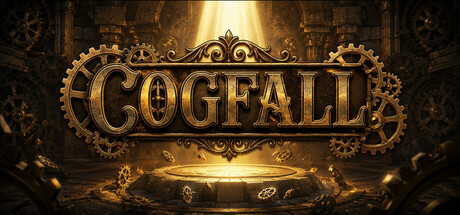
Cogfall was developed solo by Nodding Panda Studios. To bring the steampunk Clockwork Kingdom to life, AI tools were used to generate artwork and music under the creative direction of the developer. Every image and track was intentionally prompted, selected, and refined to fit the game's vision — AI served as a creative tool, not a replacement for creative decisions. All gameplay systems, code, game design, writing, and balancing were created entirely by the developer.
This game uses generative AI tools to assist in creating certain environmental assets, which were then manually upscaled, recolored, and heavily edited for quality
Generative AI tools were used only to assist in the creation of certain store page and marketing images. No AI-generated content is created during gameplay, and the game does not use live AI systems or connect to external AI services while running.
A Quick Note on AI Tools:
To give our loading screens a cinematic, atmospheric feel, we took screenshots of our actual game environments and used AI tools solely to enhance the lighting, details, and decals for those transition images. For our Achievement Icons, we used AI-generated imagery only for the background fillers, while the main icon artwork was manually created.
Rest assured, 100% of the actual playable game, including all 3D models, world textures, animations, and code was fully handcrafted by our team.
Generative AI tools were used during development for technical planning, system architecture, building custom systems, code cleanup, and similar engineering support.
Some current pre-release visual/model assets are AI-generated placeholders. These are intended to be replaced with final authored assets before release.
The demo version contains temporary AI (generated music and promotional artwork only). These assets will be replaced with original content in the final version of the game.
This game uses generative AI to create live in-game dialogue, AI character responses, personality details, and evaluation feedback during gameplay. The generated content is text-based and is produced dynamically through an external AI API.
Generative AI has been used when creating some of the images in the menu and the backgrounds in the game. The technology has also been used when creating and editing some of the audio tracks.
Generative AI tools were used to assist with writing, reviewing, and improving parts of the game's code.
All models, textures, images, sounds, and music used in Single Note are created through human work. The game does not use AI-generated visual assets, audio assets, music, or 3D models.
Single Note is developed by a small independent studio, and AI tools were used as development assistance during production. All final implementation decisions, testing, integration, and creative direction are handled by Fanjoy Studio. The game does not use live-generated AI content during gameplay.
Generative AI was used only for temporary placeholder visuals on this Steam store page. These images are not final game content and will be replaced with original artwork created by our artists before release.
Generative AI was used for base sprites and code. All assets were manually edited and adapted to match the game's aesthetic and ensure originality. Content is static and pre-rendered.
AI was used to help fine-tuning some graphics and animations, also to create some background graphics.
AI was used to create voices and to fine tune music.
AI tools were used during development to assist with asset creation (pixel art sprites, terrain textures, localization drafts) and game design iteration. All AI-generated content was reviewed, edited and curated by the developer.
I’m a good programmer, but a terrible artist. So some of the images were created with the help of AI. By the time of release, I’ll try to remove all AI-generated images from the Steam page and from some textures in the game.
AI tools were used in various stages of development, including prototyping, localization and the creation of some visual assets. The project is developed by a single creator, and AI-assisted tools are part of the workflow. All gameplay systems and implementation are authored and controlled by the developer. No generative AI is used at runtime.
This game employs generative AI technology for portions of the background art and UI design. All AI-generated content has been manually reviewed, edited, and verified to ensure it is free of illegal or infringing material.
We use AI in a very limited way to generate rough starting meshes for 3D models. Those initial models act only as a starting point - similar to a placeholder. From there, all the work is done by us: Models are manually refined, rebuilt, optimized and integrated by the development team. All environments, level design, lighting, materials, and world building are hand-crafted. All gameplay systems, programming, mechanics, and logic are human-written. All story, narrative design, pacing and world lore are human-created. All art direction, maps, layouts, and creative decisions are human-driven.
The purpose of this is simple: to remove an entry barrier so this game can exist.
We are a small, self-funded team of two developers learning Unreal Engine hands-on, building everything piece by piece. Using AI in this limited way allows us to start from a basic form instead of a blank screen - but the final result is the product of human effort, learning, iteration, and creative intent.
We know this can be a sensitive topic, especially for artists and voice actors, and those concerns are completely valid.
We truly appreciate everyone who chooses to be a part of this journey.
This game uses generative AI in a limited, supportive role during parts of the development process.
Specifically, some background images and item images are based on assets generated with the help of generative AI and then manually edited and refined by the developer. Additionally, certain 3D models are created by modifying and adjusting AI-generated base models through manual work.
The use of generative AI is limited to the art creation process only. No generative AI is used during gameplay, and no game content is generated or altered by AI at runtime.
The game itself was developed without the use of generative AI.
During the development and release process, we may use AI-based tools to assist with the creation of certain store marketing materials (such as Steam banners). In all such cases, the final materials reflect the creativity and expression of our own development team.
Generative AI was used in the prototyping stage to develop card art concept alternatives and communicate with human artists on our intentions for each finished piece. These images have all been replaced with human-created artwork.
AI is not used to live-generate content or code during gameplay.
You talk to characters in the game using a local LLM. There is no cost for tokens, and the model responds in a fun and interesting way. Art in the game is also AI generated (and you can generate your own art to decorate your apartment).
Use of AI:
1. AI is used for creative concepts during the art design phase, while final production is completed manually.
2. AI is used for creative concepts in data naming.
3. AI is used for bulk generation of icon assets, followed by manual style unification and refinement.
4. AI is used to generate portions of the background music, which are then manually adjusted.
This game uses Artificial Intelligence tools only to generate pre-rendered content such as promotional images, concept art, and some non-essential visual elements. The music tracks are also AI-generated. No part of the gameplay uses AI in real time; no levels, code, or dynamic content are generated during play.
All gameplay, level design, programming, and mechanics were created manually, with AI assistance only used to solve specific issues and speed up the development process. Artificial Intelligence does not intervene in or modify the player’s experience during gameplay.
Some minor assets and text were created with the assistance of AI tools during development.
All core game design, gameplay systems, programming, and overall art direction were created and implemented by the developer.
AI tools were used only as a supportive tool during the development process.
Some of the multilingual descriptions on this page have been generated with AI assistance, and certain in-game text has also been proofread using AI tools.
Embedded LLM for generating lore friendly Daily Journal based on event happening in the Outpost.
Might contains placeholder assets created during prototype to be replaced later during development.
This game uses generative AI tools during development to create or assist with some pre-generated content. This includes code assistance, visual asset creation, and music creation.
Generative AI tools are used to assist with programming during development, to create or assist with character artwork, background artwork, store page graphics, Steam community assets, and marketing materials, and to create or assist with background music.
AI-assisted assets and code are reviewed, edited, and integrated by the developer before release. The game does not use generative AI to generate real-time content during gameplay, and players do not directly interact with a generative AI system.
The “combat AI” described in the game is a gameplay system that controls enemy behavior and tactical decision-making. It is not generative AI.
Cogfall was developed solo by Nodding Panda Studios. To bring the steampunk Clockwork Kingdom to life, AI tools were used to generate artwork and music under the creative direction of the developer. Every image and track was intentionally prompted, selected, and refined to fit the game's vision — AI served as a creative tool, not a replacement for creative decisions. All gameplay systems, code, game design, writing, and balancing were created entirely by the developer.
This game uses generative AI tools to assist in creating certain environmental assets, which were then manually upscaled, recolored, and heavily edited for quality
Generative AI tools were used only to assist in the creation of certain store page and marketing images. No AI-generated content is created during gameplay, and the game does not use live AI systems or connect to external AI services while running.
A Quick Note on AI Tools:
To give our loading screens a cinematic, atmospheric feel, we took screenshots of our actual game environments and used AI tools solely to enhance the lighting, details, and decals for those transition images. For our Achievement Icons, we used AI-generated imagery only for the background fillers, while the main icon artwork was manually created.
Rest assured, 100% of the actual playable game, including all 3D models, world textures, animations, and code was fully handcrafted by our team.
Generative AI tools were used during development for technical planning, system architecture, building custom systems, code cleanup, and similar engineering support.
Some current pre-release visual/model assets are AI-generated placeholders. These are intended to be replaced with final authored assets before release.
The demo version contains temporary AI (generated music and promotional artwork only). These assets will be replaced with original content in the final version of the game.
This game uses generative AI to create live in-game dialogue, AI character responses, personality details, and evaluation feedback during gameplay. The generated content is text-based and is produced dynamically through an external AI API.
Generative AI has been used when creating some of the images in the menu and the backgrounds in the game. The technology has also been used when creating and editing some of the audio tracks.
Generative AI tools were used to assist with writing, reviewing, and improving parts of the game's code.
All models, textures, images, sounds, and music used in Single Note are created through human work. The game does not use AI-generated visual assets, audio assets, music, or 3D models.
Single Note is developed by a small independent studio, and AI tools were used as development assistance during production. All final implementation decisions, testing, integration, and creative direction are handled by Fanjoy Studio. The game does not use live-generated AI content during gameplay.
Generative AI was used only for temporary placeholder visuals on this Steam store page. These images are not final game content and will be replaced with original artwork created by our artists before release.
Generative AI was used for base sprites and code. All assets were manually edited and adapted to match the game's aesthetic and ensure originality. Content is static and pre-rendered.
AI was used to help fine-tuning some graphics and animations, also to create some background graphics.
AI was used to create voices and to fine tune music.
AI tools were used during development to assist with asset creation (pixel art sprites, terrain textures, localization drafts) and game design iteration. All AI-generated content was reviewed, edited and curated by the developer.
I’m a good programmer, but a terrible artist. So some of the images were created with the help of AI. By the time of release, I’ll try to remove all AI-generated images from the Steam page and from some textures in the game.
AI tools were used in various stages of development, including prototyping, localization and the creation of some visual assets. The project is developed by a single creator, and AI-assisted tools are part of the workflow. All gameplay systems and implementation are authored and controlled by the developer. No generative AI is used at runtime.
This game employs generative AI technology for portions of the background art and UI design. All AI-generated content has been manually reviewed, edited, and verified to ensure it is free of illegal or infringing material.
We use AI in a very limited way to generate rough starting meshes for 3D models. Those initial models act only as a starting point - similar to a placeholder. From there, all the work is done by us: Models are manually refined, rebuilt, optimized and integrated by the development team. All environments, level design, lighting, materials, and world building are hand-crafted. All gameplay systems, programming, mechanics, and logic are human-written. All story, narrative design, pacing and world lore are human-created. All art direction, maps, layouts, and creative decisions are human-driven.
The purpose of this is simple: to remove an entry barrier so this game can exist.
We are a small, self-funded team of two developers learning Unreal Engine hands-on, building everything piece by piece. Using AI in this limited way allows us to start from a basic form instead of a blank screen - but the final result is the product of human effort, learning, iteration, and creative intent.
We know this can be a sensitive topic, especially for artists and voice actors, and those concerns are completely valid.
We truly appreciate everyone who chooses to be a part of this journey.
This game uses generative AI in a limited, supportive role during parts of the development process.
Specifically, some background images and item images are based on assets generated with the help of generative AI and then manually edited and refined by the developer. Additionally, certain 3D models are created by modifying and adjusting AI-generated base models through manual work.
The use of generative AI is limited to the art creation process only. No generative AI is used during gameplay, and no game content is generated or altered by AI at runtime.
The game itself was developed without the use of generative AI.
During the development and release process, we may use AI-based tools to assist with the creation of certain store marketing materials (such as Steam banners). In all such cases, the final materials reflect the creativity and expression of our own development team.
Generative AI was used in the prototyping stage to develop card art concept alternatives and communicate with human artists on our intentions for each finished piece. These images have all been replaced with human-created artwork.
AI is not used to live-generate content or code during gameplay.
You talk to characters in the game using a local LLM. There is no cost for tokens, and the model responds in a fun and interesting way. Art in the game is also AI generated (and you can generate your own art to decorate your apartment).
Use of AI:
1. AI is used for creative concepts during the art design phase, while final production is completed manually.
2. AI is used for creative concepts in data naming.
3. AI is used for bulk generation of icon assets, followed by manual style unification and refinement.
4. AI is used to generate portions of the background music, which are then manually adjusted.
This game uses Artificial Intelligence tools only to generate pre-rendered content such as promotional images, concept art, and some non-essential visual elements. The music tracks are also AI-generated. No part of the gameplay uses AI in real time; no levels, code, or dynamic content are generated during play.
All gameplay, level design, programming, and mechanics were created manually, with AI assistance only used to solve specific issues and speed up the development process. Artificial Intelligence does not intervene in or modify the player’s experience during gameplay.
Some minor assets and text were created with the assistance of AI tools during development.
All core game design, gameplay systems, programming, and overall art direction were created and implemented by the developer.
AI tools were used only as a supportive tool during the development process.
Some of the multilingual descriptions on this page have been generated with AI assistance, and certain in-game text has also been proofread using AI tools.
Embedded LLM for generating lore friendly Daily Journal based on event happening in the Outpost.
Might contains placeholder assets created during prototype to be replaced later during development.