Public Steam disclosure research25,376 disclosures tracked
Where do games disclose AI use?
Search developers’ Steam disclosures, compare classified AI use across
games, and follow recorded changes.
This index adds cross-game classifications and statistics to
statements published on individual store pages.
Groups reflect automatic analysis of public disclosures; mature records are excluded. These counts do not measure AI use across all of Steam.
Missing or unclear statements cannot establish whether a game uses AI.
Some of the images in the game were generated using AI during the prototype stage. Such assets may be present in the game up until the release of the demo (inclusive). During the development process, we gradually get rid of generated assets and replace them with hand-made ones. By the time of the official release, all generated content will be removed. This is a normal process for developing an indie game.
This game actively supports human creativity, notably musicians and programmers - but uses AI in the design of marketing materials and some aspects of software development. Neither the game itself - nor the procedural generation techniques used to create the world, music, or audio - use AI or AI-generated art.
AI tools were used in a limited capacity during the development of the game, primarily to assist with certain programming tasks and the creation of temporary assets.
No AI-generated content is created in real time while playing the game.
Generative AI Disclosure
Some visual concepts, promotional images, text drafts, and background music were created or edited with the assistance of generative AI tools. The final materials were reviewed, selected, modified, and integrated by the developer.
The game does not include real-time generative AI features during gameplay.
Generative AI was used for a very limited portion of the programming and for most of the English translation. However, all textures and 3D models were created by human artists.
1. In-game artwork
Some visual assets (e.g., character/decor sprites, UI icons) are generated with Google Gemini and OpenAI ChatGPT
(image generation) and further edited, retouched, and composed by the developer in the final art pipeline.
2. Store page and marketing graphical assets
Capsule art, library hero, library capsule, and promotional images are generated with Google Gemini and OpenAI
ChatGPT, and further edited, retouched, and composed by the developer before upload.
3. In-game localization
Text translations are AI-assisted using Anthropic Claude, with developer review for tone and accuracy.
Runtime behavior:
- No generative AI models are bundled with or called from the shipped game binary.
- All AI-generated content is pre-rendered and baked into final assets at build time.
- No user inputs are sent to any AI service during gameplay.
Some parts of development used AI-assisted workflows, including asset creation, image processing/background removal, voice work, and localization of in-game/help text into multiple languages.
I’m a good programmer, but a terrible artist. So some of the images were created with the help of AI. By the time of release, I’ll try to remove all AI-generated images from the Steam page and from some textures in the game.
Some visual assets in the game were partially generated using AI tools and further edited by the developer. No AI-generated content is created during gameplay.
Generative AI tools were used during the development of this game to assist in the localization of in-game text and store page descriptions into multiple languages. All AI-assisted content has been thoroughly reviewed and curated by the developer to ensure it meets the creative vision and quality standards of the project.
Some written content (store descriptions, in-game text) and select marketing images were created with the assistance of AI tools. No AI-generated content is used in gameplay, game assets, or game systems.
Generative AI was used only as a support tool during development to help create some 2D art assets. No AI-generated content is created during gameplay, and the game does not use any third-party AI services at runtime.
Portions of the 3D textures and object assets in this game were created with the assistance of generative AI. All AI-assisted content has been reviewed and curated by our team before being implemented into the game.
This game does not use generative AI for gameplay, dialogue, environments, or player-facing content. A generative AI tool was used to create small pieces of non-interactive promotional artwork. All in-game assets, systems, and content are created by the developer or licensed from third-party creators.
This game does not generate or modify content at runtime.
A small portion of assets (around 20%) was created with generative AI tools during development.
All such assets were manually edited, reviewed, and finalized to ensure originality, quality, and compliance with copyright and safety standards
AI tools have only been used when they add real benefit to the game and where I have full control on the creative output. In all such cases, the final product reflects my own creativity and expression.
AI tools were used only to assist in creating some 2D assets such as the store artwork, promotional images, and achievement icons, as well as to generate a few early design ideas.
No AI systems or models are included or executed within the game.
All logic, and final assets were verified manually. Some mechanics were configurated by AI but verified manually.
Some UI icons were created using AI.
The English, French, and Russian localizations were made by human translators; all other localizations were made with AI.
AI was used for enhancing promo-art for the game. Software using AI algorithms was also used to create part of the game's soundtrack. Video trailer voiceover was generated using AI tools.
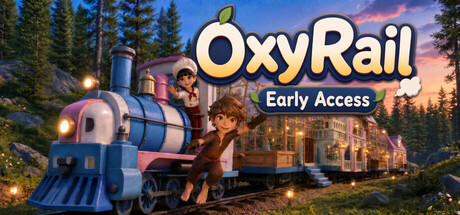
OxyRail contains a vast amount of content, with over 516 obtainable items currently available and many more planned for future updates. AI-generated content represents only a very small portion of the game. Due to the large number of items, we use AI-assisted tools in the creation of some item icons, certain background music tracks, and a very small number of visual assets to improve consistency and controllability during content production.
All AI-assisted content is carefully reviewed, adjusted, and further refined by hand to ensure it meets the artistic and design standards of the game.
We will continue to improve the game and gradually replace existing AI-assisted content with manually created assets whenever possible, increasing the proportion of original content over time.
Some of the multilingual descriptions on this page have been generated with AI assistance, and certain in-game text has also been proofread using AI tools.
We are utilising ElevenLabs’ text-to-speech tool, to generate some voice-over elements within Train Sim World 6. This is utilised in features such as training modules, as well as platform and onboard train announcements. All scripts and content are written by Dovetail Games staff, with ElevenLabs used to generate the audio in these instances.
Some of the images in the game were generated using AI during the prototype stage. Such assets may be present in the game up until the release of the demo (inclusive). During the development process, we gradually get rid of generated assets and replace them with hand-made ones. By the time of the official release, all generated content will be removed. This is a normal process for developing an indie game.
This game actively supports human creativity, notably musicians and programmers - but uses AI in the design of marketing materials and some aspects of software development. Neither the game itself - nor the procedural generation techniques used to create the world, music, or audio - use AI or AI-generated art.
AI tools were used in a limited capacity during the development of the game, primarily to assist with certain programming tasks and the creation of temporary assets.
No AI-generated content is created in real time while playing the game.
Generative AI Disclosure
Some visual concepts, promotional images, text drafts, and background music were created or edited with the assistance of generative AI tools. The final materials were reviewed, selected, modified, and integrated by the developer.
The game does not include real-time generative AI features during gameplay.
Generative AI was used for a very limited portion of the programming and for most of the English translation. However, all textures and 3D models were created by human artists.
1. In-game artwork
Some visual assets (e.g., character/decor sprites, UI icons) are generated with Google Gemini and OpenAI ChatGPT
(image generation) and further edited, retouched, and composed by the developer in the final art pipeline.
2. Store page and marketing graphical assets
Capsule art, library hero, library capsule, and promotional images are generated with Google Gemini and OpenAI
ChatGPT, and further edited, retouched, and composed by the developer before upload.
3. In-game localization
Text translations are AI-assisted using Anthropic Claude, with developer review for tone and accuracy.
Runtime behavior:
- No generative AI models are bundled with or called from the shipped game binary.
- All AI-generated content is pre-rendered and baked into final assets at build time.
- No user inputs are sent to any AI service during gameplay.
Some parts of development used AI-assisted workflows, including asset creation, image processing/background removal, voice work, and localization of in-game/help text into multiple languages.
I’m a good programmer, but a terrible artist. So some of the images were created with the help of AI. By the time of release, I’ll try to remove all AI-generated images from the Steam page and from some textures in the game.
Some visual assets in the game were partially generated using AI tools and further edited by the developer. No AI-generated content is created during gameplay.
Generative AI tools were used during the development of this game to assist in the localization of in-game text and store page descriptions into multiple languages. All AI-assisted content has been thoroughly reviewed and curated by the developer to ensure it meets the creative vision and quality standards of the project.
Some written content (store descriptions, in-game text) and select marketing images were created with the assistance of AI tools. No AI-generated content is used in gameplay, game assets, or game systems.
Generative AI was used only as a support tool during development to help create some 2D art assets. No AI-generated content is created during gameplay, and the game does not use any third-party AI services at runtime.
Portions of the 3D textures and object assets in this game were created with the assistance of generative AI. All AI-assisted content has been reviewed and curated by our team before being implemented into the game.
This game does not use generative AI for gameplay, dialogue, environments, or player-facing content. A generative AI tool was used to create small pieces of non-interactive promotional artwork. All in-game assets, systems, and content are created by the developer or licensed from third-party creators.
This game does not generate or modify content at runtime.
A small portion of assets (around 20%) was created with generative AI tools during development.
All such assets were manually edited, reviewed, and finalized to ensure originality, quality, and compliance with copyright and safety standards
AI tools have only been used when they add real benefit to the game and where I have full control on the creative output. In all such cases, the final product reflects my own creativity and expression.
AI tools were used only to assist in creating some 2D assets such as the store artwork, promotional images, and achievement icons, as well as to generate a few early design ideas.
No AI systems or models are included or executed within the game.
All logic, and final assets were verified manually. Some mechanics were configurated by AI but verified manually.
Some UI icons were created using AI.
The English, French, and Russian localizations were made by human translators; all other localizations were made with AI.
AI was used for enhancing promo-art for the game. Software using AI algorithms was also used to create part of the game's soundtrack. Video trailer voiceover was generated using AI tools.
OxyRail contains a vast amount of content, with over 516 obtainable items currently available and many more planned for future updates. AI-generated content represents only a very small portion of the game. Due to the large number of items, we use AI-assisted tools in the creation of some item icons, certain background music tracks, and a very small number of visual assets to improve consistency and controllability during content production.
All AI-assisted content is carefully reviewed, adjusted, and further refined by hand to ensure it meets the artistic and design standards of the game.
We will continue to improve the game and gradually replace existing AI-assisted content with manually created assets whenever possible, increasing the proportion of original content over time.
Some of the multilingual descriptions on this page have been generated with AI assistance, and certain in-game text has also been proofread using AI tools.
We are utilising ElevenLabs’ text-to-speech tool, to generate some voice-over elements within Train Sim World 6. This is utilised in features such as training modules, as well as platform and onboard train announcements. All scripts and content are written by Dovetail Games staff, with ElevenLabs used to generate the audio in these instances.