Public Steam disclosure research25,376 disclosures tracked
Where do games disclose AI use?
Search developers’ Steam disclosures, compare classified AI use across
games, and follow recorded changes.
This index adds cross-game classifications and statistics to
statements published on individual store pages.
Groups reflect automatic analysis of public disclosures; mature records are excluded. These counts do not measure AI use across all of Steam.
Missing or unclear statements cannot establish whether a game uses AI.
AI Generated Content Disclosure
The developers of LIGHT IT provide the following disclosure regarding the use of AI tools in the creation of this game. All AI-assisted content is pre-generated; the game does not generate any AI content live during gameplay.
Music: The in-game music was produced using Suno, an AI music-generation tool.
Art: Some visual assets were created with the assistance of AI image-generation tools.
Code: AI assistants were used to help brainstorm implementation ideas and to assist with debugging.
All AI-assisted content and code was reviewed, tested, and refined by the developer before being included in the final game.
Parts of the game's code, interface art, store artwork and store text were created with the help of AI tools and then reviewed and edited by the developer. Nothing is generated by AI while you play.
Artifical Railways was developed with extensive AI assistance, including programming and the creation of custom train models, procedural scenery, interface elements, and procedural sound effects. The game also incorporates third-party models, music, sound recordings, and fonts. Station announcements use AI-generated speech synthesized locally during gameplay from announcement templates and in-game railway information. This speech generation does not connect to an external AI service.
Generative AI was used for pre-generated promotional artwork and localization text. No AI content is generated during gameplay. The game does not connect to external AI services.
Some sprites, event card illustrations, background music and sound effects were created with locally-run generative AI models (Stable Diffusion XL, ACE-Step, Stable Audio Open) and then edited by the developer. No generative AI is used while the game is running.
Generative AI tools were used during development to help with coding. All assets are 3d modeled or free to use assets. The game does not generate AI content or connect to an AI service.
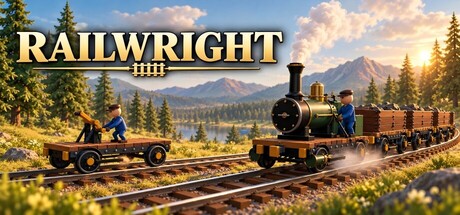
Generative AI tools were used to assist in creating and iterating on selected promotional artwork and graphical assets for Railwright, including materials used on the Steam store page and related marketing. Gameplay screenshots shown on the store page are captured from the actual game. Railwright does not use generative AI to generate content during gameplay.
Some visual assets used on the Steam store page were created with the assistance of generative AI. The game itself does not contain AI-generated content and does not include any live-generated AI features.
The store artwork (key art, capsule images, logo) was created with the help of generative AI and then selected and edited by hand. AI tools assisted with programming, in-game text and translations; all content was reviewed and revised by the developer. The in-game 3D models, textures and animations come from licensed asset packs and are not AI-generated. No content is generated by AI during gameplay.
Some of the text in this product was drafted with generative AI and then edited by the developer: parts of this store page description and some in-game text. Parts of the source code were also written with AI coding assistance and reviewed by hand.
The art, 3D models, animation and audio in this game are not AI-generated, and no generative AI runs while you play.
Parts of this game were made with AI assistance. AI-assisted coding was used during development, and some artwork was AI-generated and then edited by hand. The design, the systems and the writing are my own.
Generative AI was used to assist with the composition of some concept artwork, a small number of promotional video shots, and multilingual localization. All related content was reviewed, edited, and finally approved by the development team before use.
Generative AI was used during development to assist with some pre-generated visual assets, including selected 3D models, textures, and animations. All such content is reviewed and edited by the development team. No generative AI runs during gameplay, and no player input is sent to an AI service.
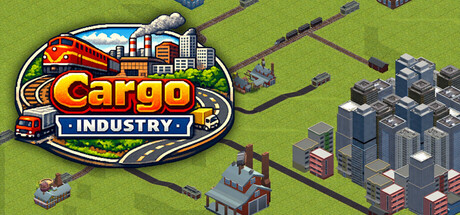
Generative AI tools were used during the development of Cargo Industry as programming assistance tools. They were used to assist with code generation, code modification, debugging, and exploring programming solutions. AI-generated code is included in the game's released codebase.
I’m a solo developer. At this stage, generative AI is used only for some character artwork shown in the game’s trailer and promotional material. These assets are temporary and are not used in the game itself.
As a one-person studio, I’m using temporary AI-generated artwork to gauge interest in the game before committing significant time or money to producing the final character art. I plan to replace this artwork with original/non-AI assets before release and will update this disclosure when that happens.
AI tools were used during development as a learning and support aid. They helped me understand development workflows, troubleshoot technical problems, explore gameplay and UI ideas, and create early concept images used as visual references. All final decisions, implementation, balancing, and content selection were handled and reviewed by me. No AI content is generated during gameplay.
We are utilising ElevenLabs’ text-to-speech tool, to generate some voice-over elements within Train Sim World 7. This is utilised in features such as training modules, as well as platform and onboard train announcements. All scripts and content are written by Dovetail Games staff, with ElevenLabs used to generate the audio in these instances.
3D models for props and buildings have been generated with code developed by AI. The game splash screens and logo have been generated by AI. Music is generated live with code developed by AI.
Some shipped visual assets, narrative text, localization, and store or marketing artwork were created or iterated with the assistance of generative AI tools. All output was selected, edited, reviewed, integrated, and tested by the developer. The game performs no live AI generation
and sends no player input or data to an AI service.
This game does not generate or modify content at runtime.
A small portion of assets (around 20%) was made with the help of some generative AI tools during development.
All such assets were manually edited, reviewed, and finalized to ensure originality, quality, and compliance with copyright and safety standards.
Some BGM are AI-generated. Additionally, some textures were AI-generated based on human designs and fully refined by hand. AI tools were also used for translation and general development assistance.
Some store page artwork was created with the assistance of generative AI and manually reviewed and edited. All in-game content and gameplay systems are made by the developer.
Pre-generated generative AI tools were used during development to assist in creating and editing some 2D visual assets, including backgrounds, character images, scene variations, and promotional artwork. AI tools were also used to assist with drafting, editing, and localization of some text. All final content was selected, reviewed, and edited by the developer before inclusion. No generative AI is used during gameplay, and players cannot generate content in the game.
Generative AI was used during production of some visual and audio assets. All generated material is selected, directed, edited, and integrated through a human-led creative process. The game does not generate content with AI during play.
AI-assisted. Developer-directed. Generative AI was used as a production tool during development: Claude assisted with prototyping and implementation, while Google Lyria was used to create the game's original 15-track soundtrack. The music and all other AI-assisted material were selected, edited, integrated, and play-tested by the developer to serve Boiler & Blood's dieselpunk folk-occult world.
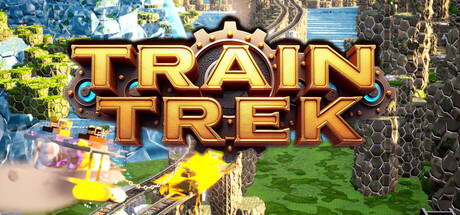
Train Trek uses generative AI in two ways.
During development we used AI tools to help make some assets: the user-interface art (HUD and menu icons, menu artwork, frames, button plates, mouse cursors), the instrumental soundtrack, and some sound effects. All of it was chosen, edited and finished by hand before it shipped. The 3D models are built procedurally by our own scripts, and the design, world generation and balancing are authored by hand. Parts of the source code were written with an AI coding assistant, reviewed and tested by the developer.
While you play, the game speaks using a text-to-speech model that ships inside the game and runs entirely on your own computer. It voices tutorial guidance, hints and menu narration instead of pre-recorded audio. It needs no internet connection, sends nothing anywhere, and never records or listens to you. It only reads lines we wrote and shipped with the game - it does not invent dialogue.
Generative AI was used to enhance marketing assets such as steam capsule & early sketch concept before offloaded & polished by Humans.
All gameplay, art, and final content remain crafted by Human.
Generative artificial intelligence has been used to create store page thumbnails based on the developer's scene work.
Generative artificial intelligence has been used by the developer to vastly improve the performance of the developers code with respect to loading times. The developer struggled for months to figure out how to reduce a 30 second+ loading time and thanks to the contributions of gen AI that has been brought down to 5 seconds.
Some development used generative AI tools to assist with writing code, shaders, and drafting some in-game text. All content was approved by the developer.
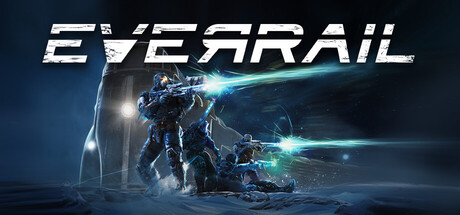
In EverRail, AI-generated voiceover is used only for machine characters: the train's AI board computer and robot enemies, voices that are artificial in the story itself, which also lets us offer them in multiple languages. Beyond that, our team uses generative AI as a tool to support development, with our artists, designers, and engineers refining and hand-building every asset that makes it into the game.
We used AI to generate additional chat message ideas based on the initial list we made ourselves. Relevant message ideas were added to the game, some messages were altered to fit, and rest were left on the cutting room floor.
AI Generated Content Disclosure
The developers of LIGHT IT provide the following disclosure regarding the use of AI tools in the creation of this game. All AI-assisted content is pre-generated; the game does not generate any AI content live during gameplay.
Music: The in-game music was produced using Suno, an AI music-generation tool.
Art: Some visual assets were created with the assistance of AI image-generation tools.
Code: AI assistants were used to help brainstorm implementation ideas and to assist with debugging.
All AI-assisted content and code was reviewed, tested, and refined by the developer before being included in the final game.
Parts of the game's code, interface art, store artwork and store text were created with the help of AI tools and then reviewed and edited by the developer. Nothing is generated by AI while you play.
Artifical Railways was developed with extensive AI assistance, including programming and the creation of custom train models, procedural scenery, interface elements, and procedural sound effects. The game also incorporates third-party models, music, sound recordings, and fonts. Station announcements use AI-generated speech synthesized locally during gameplay from announcement templates and in-game railway information. This speech generation does not connect to an external AI service.
Generative AI was used for pre-generated promotional artwork and localization text. No AI content is generated during gameplay. The game does not connect to external AI services.
Some sprites, event card illustrations, background music and sound effects were created with locally-run generative AI models (Stable Diffusion XL, ACE-Step, Stable Audio Open) and then edited by the developer. No generative AI is used while the game is running.
Generative AI tools were used during development to help with coding. All assets are 3d modeled or free to use assets. The game does not generate AI content or connect to an AI service.
Generative AI tools were used to assist in creating and iterating on selected promotional artwork and graphical assets for Railwright, including materials used on the Steam store page and related marketing. Gameplay screenshots shown on the store page are captured from the actual game. Railwright does not use generative AI to generate content during gameplay.
Some visual assets used on the Steam store page were created with the assistance of generative AI. The game itself does not contain AI-generated content and does not include any live-generated AI features.
The store artwork (key art, capsule images, logo) was created with the help of generative AI and then selected and edited by hand. AI tools assisted with programming, in-game text and translations; all content was reviewed and revised by the developer. The in-game 3D models, textures and animations come from licensed asset packs and are not AI-generated. No content is generated by AI during gameplay.
Some of the text in this product was drafted with generative AI and then edited by the developer: parts of this store page description and some in-game text. Parts of the source code were also written with AI coding assistance and reviewed by hand.
The art, 3D models, animation and audio in this game are not AI-generated, and no generative AI runs while you play.
Parts of this game were made with AI assistance. AI-assisted coding was used during development, and some artwork was AI-generated and then edited by hand. The design, the systems and the writing are my own.
Generative AI was used to assist with the composition of some concept artwork, a small number of promotional video shots, and multilingual localization. All related content was reviewed, edited, and finally approved by the development team before use.
Generative AI was used during development to assist with some pre-generated visual assets, including selected 3D models, textures, and animations. All such content is reviewed and edited by the development team. No generative AI runs during gameplay, and no player input is sent to an AI service.
Generative AI tools were used during the development of Cargo Industry as programming assistance tools. They were used to assist with code generation, code modification, debugging, and exploring programming solutions. AI-generated code is included in the game's released codebase.
I’m a solo developer. At this stage, generative AI is used only for some character artwork shown in the game’s trailer and promotional material. These assets are temporary and are not used in the game itself.
As a one-person studio, I’m using temporary AI-generated artwork to gauge interest in the game before committing significant time or money to producing the final character art. I plan to replace this artwork with original/non-AI assets before release and will update this disclosure when that happens.
AI tools were used during development as a learning and support aid. They helped me understand development workflows, troubleshoot technical problems, explore gameplay and UI ideas, and create early concept images used as visual references. All final decisions, implementation, balancing, and content selection were handled and reviewed by me. No AI content is generated during gameplay.
We are utilising ElevenLabs’ text-to-speech tool, to generate some voice-over elements within Train Sim World 7. This is utilised in features such as training modules, as well as platform and onboard train announcements. All scripts and content are written by Dovetail Games staff, with ElevenLabs used to generate the audio in these instances.
3D models for props and buildings have been generated with code developed by AI. The game splash screens and logo have been generated by AI. Music is generated live with code developed by AI.
Some shipped visual assets, narrative text, localization, and store or marketing artwork were created or iterated with the assistance of generative AI tools. All output was selected, edited, reviewed, integrated, and tested by the developer. The game performs no live AI generation
and sends no player input or data to an AI service.
This game does not generate or modify content at runtime.
A small portion of assets (around 20%) was made with the help of some generative AI tools during development.
All such assets were manually edited, reviewed, and finalized to ensure originality, quality, and compliance with copyright and safety standards.
Some BGM are AI-generated. Additionally, some textures were AI-generated based on human designs and fully refined by hand. AI tools were also used for translation and general development assistance.
Some store page artwork was created with the assistance of generative AI and manually reviewed and edited. All in-game content and gameplay systems are made by the developer.
Pre-generated generative AI tools were used during development to assist in creating and editing some 2D visual assets, including backgrounds, character images, scene variations, and promotional artwork. AI tools were also used to assist with drafting, editing, and localization of some text. All final content was selected, reviewed, and edited by the developer before inclusion. No generative AI is used during gameplay, and players cannot generate content in the game.
Generative AI was used during production of some visual and audio assets. All generated material is selected, directed, edited, and integrated through a human-led creative process. The game does not generate content with AI during play.
AI-assisted. Developer-directed. Generative AI was used as a production tool during development: Claude assisted with prototyping and implementation, while Google Lyria was used to create the game's original 15-track soundtrack. The music and all other AI-assisted material were selected, edited, integrated, and play-tested by the developer to serve Boiler & Blood's dieselpunk folk-occult world.
Train Trek uses generative AI in two ways.
During development we used AI tools to help make some assets: the user-interface art (HUD and menu icons, menu artwork, frames, button plates, mouse cursors), the instrumental soundtrack, and some sound effects. All of it was chosen, edited and finished by hand before it shipped. The 3D models are built procedurally by our own scripts, and the design, world generation and balancing are authored by hand. Parts of the source code were written with an AI coding assistant, reviewed and tested by the developer.
While you play, the game speaks using a text-to-speech model that ships inside the game and runs entirely on your own computer. It voices tutorial guidance, hints and menu narration instead of pre-recorded audio. It needs no internet connection, sends nothing anywhere, and never records or listens to you. It only reads lines we wrote and shipped with the game - it does not invent dialogue.
Generative AI was used to enhance marketing assets such as steam capsule & early sketch concept before offloaded & polished by Humans.
All gameplay, art, and final content remain crafted by Human.
Generative artificial intelligence has been used to create store page thumbnails based on the developer's scene work.
Generative artificial intelligence has been used by the developer to vastly improve the performance of the developers code with respect to loading times. The developer struggled for months to figure out how to reduce a 30 second+ loading time and thanks to the contributions of gen AI that has been brought down to 5 seconds.
Some development used generative AI tools to assist with writing code, shaders, and drafting some in-game text. All content was approved by the developer.
In EverRail, AI-generated voiceover is used only for machine characters: the train's AI board computer and robot enemies, voices that are artificial in the story itself, which also lets us offer them in multiple languages. Beyond that, our team uses generative AI as a tool to support development, with our artists, designers, and engineers refining and hand-building every asset that makes it into the game.
We used AI to generate additional chat message ideas based on the initial list we made ourselves. Relevant message ideas were added to the game, some messages were altered to fit, and rest were left on the cutting room floor.