Public Steam disclosure research25,394 disclosures tracked
Where do games disclose AI use?
Search developers’ Steam disclosures, compare classified AI use across
games, and follow recorded changes.
This index adds cross-game classifications and statistics to
statements published on individual store pages.
Groups reflect automatic analysis of public disclosures; mature records are excluded. These counts do not measure AI use across all of Steam.
Missing or unclear statements cannot establish whether a game uses AI.
Generative AI was used during the development of Between Jobs to assist in creating 2D graphical assets. This includes static background art, environmental textures, and store page graphics. No AI content is live-generated while playing the game.
LIMP MODE is made by a solo developer who uses generative AI as a tool during production.
Where AI was used: the game's code, the cover artwork that all store page capsule images are built from, the songs played on the in-game radio, the spoken lines of one story character (text-to-speech), parts of the in-game visual and audio assets, and the drafting of the English store page and marketing texts. The player character's voice lines are recorded by the developer himself and are not AI-generated.
All game design, mechanics, balancing and creative direction come from the developer. Every AI-assisted result was reviewed and edited by the developer before it shipped.
The game does not generate any content while it is running and does not connect to any AI service during gameplay.
Generative AI was used during development to assist with programming and to help
produce some 3D models and logo artwork, all reviewed and integrated by the developer.
No AI runs while you play: the game is fully offline and generates no content at runtime.
Some visual assets, branding exploration, and first-pass localization drafts were created or assisted with generative AI tools. All content is reviewed, edited, and integrated by the developer before being included in the game or store materials. The game does not generate AI content in real time during gameplay.
All spoken roles were performed by the developer, Morph. Those recordings were then transformed into different character voices and accents using AI voice conversion and further processed with Logic Pro.
As a small indie studio, we set out to bring as many of our ideas to life as possible and deliver a deep gaming experience. To turn these ambitions into reality, we utilized AI as an assistant tool. Neural networks helped us write code, create some of the art, and voice the characters. However, the entire creative concept, the design of the interactive diary, the shadow theater sequence, and the overall atmosphere of the project are completely the result of our human imagination and direction.
Some ambient audio in this game — background crowd voices and station announcements — is generated using neural text-to-speech. All visual art, music, and narrative writing are human-authored or made with traditional, non-generative tools.
Some visual assets (a portion of skill icons and the boss health-bar UI element) and background music tracks were created with the assistance of AI generation tools.
Generative AI tools were used during development to assist with portions of the game's code, visual asset creation, localization, and marketing artwork. All included content was selected, edited, integrated, and reviewed by the developer. The game does not generate AI content during gameplay.
American Gold Rush uses limited AI-generated art in a small number of places, all of it pre-generated during development. No AI is used while you play, and nothing about the game changes at runtime.
AI-generated: the title artwork, some background pieces like the sky.
Not AI-generated: all pixel art, all sound effects, all music, all game code and all writing. These are human-made, by named people paid for the work.
Generative AI was used for:
- The game's logo and Steam store capsule artwork (image generation)
- Translation of in-game text into Turkish, German, French and Spanish
-AI-generated images were reviewed and edited before use.
This game utilizes pre-generated AI tools to create SFXs, music, UI images, texts, and one 3D model. Some of which are edited and all of which are selected with care.
Some promotional materials for this game — including portions of the trailer and key art — were created with the assistance of generative AI tools. All such content is pre-generated, reviewed, and edited by the developer before publication. The game itself does not generate any content with AI at runtime.
Generative AI tools were used during development to assist in the creation of some visual assets. All AI-assisted content is pre-generated and included as part of the game. The game does not generate AI content during gameplay.
The narrative and interface text in this game - dialogue, tutorial guidance, in-game descriptions, and localization into all supported languages (Russian, English, French, Italian, German, Spanish, Dutch, Polish, Portuguese) - was generated with the assistance of generative AI (a large language model), based on the developer's original game concept, design, and creative direction. No other content in this game - art, music, sound, or gameplay - is AI-generated.
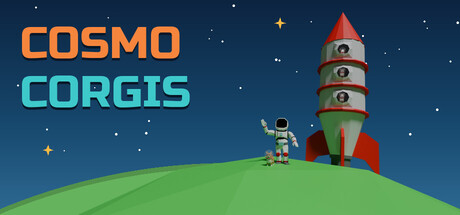
Cosmo Corgis is designed and directed by one person. During development, AI tools were used as a production assistant — helping write and test the game's code and assisting with portions of the 3D asset work, always under the developer's direction. The music and sound effects were generated with AI tools. Every design decision, and the game's look and feel, are the developer's own. Nothing is generated by AI while you play: everything in the game ships fixed and tested.
Generative AI was used during development to create some concept art, early promotional images, certain 3D assets, and UI illustrations. All AI-generated content was reviewed, edited, and integrated by the developer. The game does not use AI-generated content during gameplay.
Some 3D model creatures generated from my own hand-drawn concept art via Meshy; all 2D art sources, game design, and voice work is human-made, with voice acting by Manicvelocity and The Altoholic.
Generative AI tools were used to assist in the creation of some 2D visual assets and artwork (including character illustrations and background art). All generated assets have been reviewed and refined to fit the game's pixel art style and quality standards.
Generative AI was used to help create certain visual assets and promotional materials. Originally hand-drawn building graphics were processed with AI tools to increase detail and were subsequently manually edited.
Generative AI tools were used to assist in the creation of promotional store assets (such as store banners and visual graphics). Additionally, AI-assisted tools were used during development to help write and optimize procedural C# code for dynamic map generation and environment layout variation. The game itself does not generate content or call external AI models in real-time while running.
Wildreach is made by a solo developer working alongside AI tools. AI assisted in authoring game logic (Blueprint scripting) and some store/marketing text during development. All 3D art, animation, and audio are licensed asset-pack content made by human artists. No AI content is generated at runtime.
Generative AI tools were used during development to assist in creating certain environmental textures and ambient sound effects to enhance the game's atmosphere. All generated assets were reviewed and integrated manually to fit the retro aesthetic of the game.
Generative AI was only used to assist in creating some of the inventory icons and promotional artwork, as TEMPORARY PLACEHOLDERS.
The game's environments, gameplay systems, characters, mechanics, world design, and narrative were created by the developer. No AI content is generated during gameplay.
1. During development, due to objective constraints including limited budget, we utilized AI models such as GPT Image2, Banana2, Banana Pro and Seedream 5.0 Pro for art asset creation. Relevant AI-generated assets will be gradually replaced with fully original materials as development progresses.
2. DeepSeek V4 was used to assist translations for non-Chinese text versions. Chinese is the only official language of this game. Players may switch to other available languages in game settings, yet Ritsuai Works provides no guarantee regarding the quality of non-Chinese translations.
Some background music inside the game was created with generative AI tools. Generative AI was also used as a development assistant for some debugging, and code building. The game does not use live AI generation during playing.
Generative AI tools were used during development to create and refine the promotional capsule art, library graphics, and marketing assets for the store page. The game itself does not contain or generate any AI content during gameplay.
Some visual assets and promotional artwork were created with the assistance of generative AI tools and subsequently selected, edited, composited, and integrated by the developer.
We intend to use AI to help for translating and localizing the game.
Generative AI tools were used to assist in creating a limited number of 2D images included in the game and certain store-page graphical assets. All AI-assisted images were subsequently manually edited, corrected, and finalized by the developer. Other assets were created by the developer or obtained from appropriately licensed or free-to-use sources. The game does not use generative AI in real time.
Some images in the current version were created with the assistance of generative AI. These assets are planned to be replaced with original artwork during development.
Some artwork (ship, station and environment sprites, icons) and sound effects were created using generative AI tools during development, then curated and hand-edited by the developer. All AI-generated content was reviewed before inclusion.
Generative AI was used during the development of Between Jobs to assist in creating 2D graphical assets. This includes static background art, environmental textures, and store page graphics. No AI content is live-generated while playing the game.
LIMP MODE is made by a solo developer who uses generative AI as a tool during production.
Where AI was used: the game's code, the cover artwork that all store page capsule images are built from, the songs played on the in-game radio, the spoken lines of one story character (text-to-speech), parts of the in-game visual and audio assets, and the drafting of the English store page and marketing texts. The player character's voice lines are recorded by the developer himself and are not AI-generated.
All game design, mechanics, balancing and creative direction come from the developer. Every AI-assisted result was reviewed and edited by the developer before it shipped.
The game does not generate any content while it is running and does not connect to any AI service during gameplay.
Generative AI was used during development to assist with programming and to help
produce some 3D models and logo artwork, all reviewed and integrated by the developer.
No AI runs while you play: the game is fully offline and generates no content at runtime.
Some visual assets, branding exploration, and first-pass localization drafts were created or assisted with generative AI tools. All content is reviewed, edited, and integrated by the developer before being included in the game or store materials. The game does not generate AI content in real time during gameplay.
All spoken roles were performed by the developer, Morph. Those recordings were then transformed into different character voices and accents using AI voice conversion and further processed with Logic Pro.
As a small indie studio, we set out to bring as many of our ideas to life as possible and deliver a deep gaming experience. To turn these ambitions into reality, we utilized AI as an assistant tool. Neural networks helped us write code, create some of the art, and voice the characters. However, the entire creative concept, the design of the interactive diary, the shadow theater sequence, and the overall atmosphere of the project are completely the result of our human imagination and direction.
Some ambient audio in this game — background crowd voices and station announcements — is generated using neural text-to-speech. All visual art, music, and narrative writing are human-authored or made with traditional, non-generative tools.
Some visual assets (a portion of skill icons and the boss health-bar UI element) and background music tracks were created with the assistance of AI generation tools.
Generative AI tools were used during development to assist with portions of the game's code, visual asset creation, localization, and marketing artwork. All included content was selected, edited, integrated, and reviewed by the developer. The game does not generate AI content during gameplay.
American Gold Rush uses limited AI-generated art in a small number of places, all of it pre-generated during development. No AI is used while you play, and nothing about the game changes at runtime.
AI-generated: the title artwork, some background pieces like the sky.
Not AI-generated: all pixel art, all sound effects, all music, all game code and all writing. These are human-made, by named people paid for the work.
Generative AI was used for:
- The game's logo and Steam store capsule artwork (image generation)
- Translation of in-game text into Turkish, German, French and Spanish
-AI-generated images were reviewed and edited before use.
This game utilizes pre-generated AI tools to create SFXs, music, UI images, texts, and one 3D model. Some of which are edited and all of which are selected with care.
Some promotional materials for this game — including portions of the trailer and key art — were created with the assistance of generative AI tools. All such content is pre-generated, reviewed, and edited by the developer before publication. The game itself does not generate any content with AI at runtime.
Generative AI tools were used during development to assist in the creation of some visual assets. All AI-assisted content is pre-generated and included as part of the game. The game does not generate AI content during gameplay.
The narrative and interface text in this game - dialogue, tutorial guidance, in-game descriptions, and localization into all supported languages (Russian, English, French, Italian, German, Spanish, Dutch, Polish, Portuguese) - was generated with the assistance of generative AI (a large language model), based on the developer's original game concept, design, and creative direction. No other content in this game - art, music, sound, or gameplay - is AI-generated.
Cosmo Corgis is designed and directed by one person. During development, AI tools were used as a production assistant — helping write and test the game's code and assisting with portions of the 3D asset work, always under the developer's direction. The music and sound effects were generated with AI tools. Every design decision, and the game's look and feel, are the developer's own. Nothing is generated by AI while you play: everything in the game ships fixed and tested.
Generative AI was used during development to create some concept art, early promotional images, certain 3D assets, and UI illustrations. All AI-generated content was reviewed, edited, and integrated by the developer. The game does not use AI-generated content during gameplay.
Some 3D model creatures generated from my own hand-drawn concept art via Meshy; all 2D art sources, game design, and voice work is human-made, with voice acting by Manicvelocity and The Altoholic.
Generative AI tools were used to assist in the creation of some 2D visual assets and artwork (including character illustrations and background art). All generated assets have been reviewed and refined to fit the game's pixel art style and quality standards.
Generative AI was used to help create certain visual assets and promotional materials. Originally hand-drawn building graphics were processed with AI tools to increase detail and were subsequently manually edited.
Generative AI tools were used to assist in the creation of promotional store assets (such as store banners and visual graphics). Additionally, AI-assisted tools were used during development to help write and optimize procedural C# code for dynamic map generation and environment layout variation. The game itself does not generate content or call external AI models in real-time while running.
Wildreach is made by a solo developer working alongside AI tools. AI assisted in authoring game logic (Blueprint scripting) and some store/marketing text during development. All 3D art, animation, and audio are licensed asset-pack content made by human artists. No AI content is generated at runtime.
Generative AI tools were used during development to assist in creating certain environmental textures and ambient sound effects to enhance the game's atmosphere. All generated assets were reviewed and integrated manually to fit the retro aesthetic of the game.
Generative AI was only used to assist in creating some of the inventory icons and promotional artwork, as TEMPORARY PLACEHOLDERS.
The game's environments, gameplay systems, characters, mechanics, world design, and narrative were created by the developer. No AI content is generated during gameplay.
1. During development, due to objective constraints including limited budget, we utilized AI models such as GPT Image2, Banana2, Banana Pro and Seedream 5.0 Pro for art asset creation. Relevant AI-generated assets will be gradually replaced with fully original materials as development progresses.
2. DeepSeek V4 was used to assist translations for non-Chinese text versions. Chinese is the only official language of this game. Players may switch to other available languages in game settings, yet Ritsuai Works provides no guarantee regarding the quality of non-Chinese translations.
Some background music inside the game was created with generative AI tools. Generative AI was also used as a development assistant for some debugging, and code building. The game does not use live AI generation during playing.
Generative AI tools were used during development to create and refine the promotional capsule art, library graphics, and marketing assets for the store page. The game itself does not contain or generate any AI content during gameplay.
Some visual assets and promotional artwork were created with the assistance of generative AI tools and subsequently selected, edited, composited, and integrated by the developer.
We intend to use AI to help for translating and localizing the game.
Generative AI tools were used to assist in creating a limited number of 2D images included in the game and certain store-page graphical assets. All AI-assisted images were subsequently manually edited, corrected, and finalized by the developer. Other assets were created by the developer or obtained from appropriately licensed or free-to-use sources. The game does not use generative AI in real time.
Some images in the current version were created with the assistance of generative AI. These assets are planned to be replaced with original artwork during development.
Some artwork (ship, station and environment sprites, icons) and sound effects were created using generative AI tools during development, then curated and hand-edited by the developer. All AI-generated content was reviewed before inclusion.