Public Steam disclosure research25,380 disclosures tracked
Where do games disclose AI use?
Search developers’ Steam disclosures, compare classified AI use across
games, and follow recorded changes.
This index adds cross-game classifications and statistics to
statements published on individual store pages.
Groups reflect automatic analysis of public disclosures; mature records are excluded. These counts do not measure AI use across all of Steam.
Missing or unclear statements cannot establish whether a game uses AI.
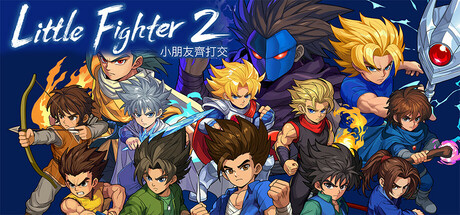
AI was used in the creation of certain visual assets, including character avatars, title screen artwork, promotional materials, and background art. However, these assets still required substantial manual work such as design, sketching, outline drawing, and polishing. The AI was used primarily as a tool for coloring and enhancement, and it did not dictate the creative direction. The visual style remains faithful to the original Little Fighter 2.
Some people assume that because AI was used in certain artwork, it must have been applied throughout the entire project. That is far from the truth. I used AI primarily for large-scale visual tasks. To give a clearer picture: the game includes over 3,000 hand-crafted sprite frames, composed from thousands of hand-drawn body parts. In contrast, only about 100 images were AI-assisted, and many of those, such as promotional artwork, don't even appear in the actual game.
I understand that some people may have concerns about the use of AI in the creative process. But I hope people can see the broader context and appreciate the amount of manual effort that went into making this game. Please know that I’m a solo developer working with a limited budget. I’ve been developing this project for around 3.5 years; even quitting my full-time job for a year to work on it full time, without expecting it to cover even half of my previous salary. I've done my best to balance quality and practicality. Your understanding and support mean a great deal to me.
I used generative AI as part of my process for creating images and text for monsters and NPCs. To do so, I have a proprietary way I generate and tune the prompt that feed the system, followed by multiple-post processing steps to generate the images and text you see in the game.
The developers make use of agentic coding tools like Claude Code in their work process.
In-game and store descriptions have been translated using ai-tools in the localization process.
We used AI tools for the following elements in the game:
- Translation of the experimental in-game languages
- Some textures (primarily wall pictures and item icons)
- Three sound effects
Why We Used AI:
We are two developers working with limited resources and without external funding or a publisher.
All other assets including 3D models, other textures, sound design, rigging, animations, story, music, and programming, were created by us.
Our goal was to achieve a distinct visual and atmospheric style that avoids both hand-painted aesthetics and asset flipping. Instead, we aimed for a more grounded, realistic look, and selectively used AI tools to support this vision.
AI helps me with texts on the Steam page (grammar correction, translations, and texts).
AI helps me correct errors in the game code and optimize it (Integrated Microsoft Copilot in the Visual Studio environment).
I don't use AI at all for music and sound creation.
I don't use AI at all for 3D or 2D graphics creation.
Some images that are later modified or edited for higher quality and to reflect what the image is intended to represent. Not all images in the game are AI generated.
AI-generated materials are not used directly.
of some of the character illustrations are used
Posing, facial expressions, and composition of some character illustrations are used as references.
I draw by hand while looking at the AI-generated materials.
The grapics on the shop page is ai generated. Most of the texture in the game are hand-drawn, but some of them are ai-generated.
All game levels are hand-crafted in the level editor (everybody who owns the game can do that, too).
Enemy behaviour is deterministic and sometimes random; no ai used here.
AI played a key role in the development of this game, enhancing both the creative and technical aspects. From generating detailed textures to assisting in the creation of 3D models, AI helped bring the game world to life with greater efficiency and precision. Additionally, AI contributed to coding and the creation of promotional materials, ensuring a high-quality experience both in-game and on the store page.
In our ongoing effort to bring you a unique and immersive gaming experience, we’ve integrated AI-assisted tools into the creation of some of our in-game art. These tools have been used to inspire and enhance the visual style of our game, helping to generate distinct and creative elements that complement our hand-crafted assets.
By utilizing AI, we’ve been able to explore new artistic possibilities, ensuring that our game features a vibrant and visually compelling world. However, every AI-assisted asset has been carefully reviewed, refined, and curated by our development team to align with our artistic vision and maintain a cohesive aesthetic throughout the game.
Our primary goal is to deliver a game that is both visually stunning and enjoyable, and AI has been one of the many tools we've used to achieve that. We hope you enjoy the result as much as we enjoyed creating it!
AI generated content is used for voice audio, generation of concept art for inspiration, and GitHub Copilot AI assistant is used to aid with gameplay coding.
For the Demo we have used Midjourney for some of our concept and promotional images.
Some item icons and specialized textures are made with DALE as a supporting tool
No AI content is generated during gameplay. Some art was created with the help of AI, but everything was hand-edited and polished. As a solo indie dev with limited resources, I used AI as a tool — the final style and heart of the game are purely crafted with care.
AI was used to generate the picture on the menu screen as well as the game's logo picture. AI was not used to write code or has anything to do with gameplay. I didn't have an artist at the time of creation.
AI was used to assist in some of the music creation and pitch correct some of the level tracks for the game. All training assets for the music are assets we made for previous games or licensed for this purpose.
AI has been used in the generation of musical compositions and several UI graphical elements. AI was also used in the making of character dialogue (NOTE: dialogues in-game were spoken by a real actor, but changed, updated, and/or modified to suit different characters).
During the development process, we may use AI-based tools to assist with content creation.
In those cases, the final product reflects our creativity and expression.
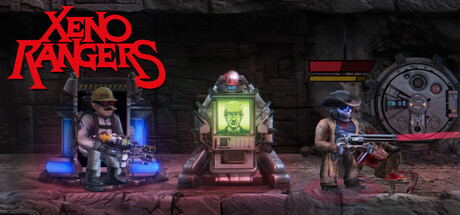
Xeno Rangers uses AI to help generate interface image details as well as community / promotional material. The AI uses our own 3D models as reference to generate from and uses realistic photographic styling as to not infringe on any works.
There is some use of AI art on the Store page. There is a photograph in the introduction of the game that was created by AI. Once at the main menu, no more AI art or tools are used in the game experience.
AI was used in the creation of certain visual assets, including character avatars, title screen artwork, promotional materials, and background art. However, these assets still required substantial manual work such as design, sketching, outline drawing, and polishing. The AI was used primarily as a tool for coloring and enhancement, and it did not dictate the creative direction. The visual style remains faithful to the original Little Fighter 2.
Some people assume that because AI was used in certain artwork, it must have been applied throughout the entire project. That is far from the truth. I used AI primarily for large-scale visual tasks. To give a clearer picture: the game includes over 3,000 hand-crafted sprite frames, composed from thousands of hand-drawn body parts. In contrast, only about 100 images were AI-assisted, and many of those, such as promotional artwork, don't even appear in the actual game.
I understand that some people may have concerns about the use of AI in the creative process. But I hope people can see the broader context and appreciate the amount of manual effort that went into making this game. Please know that I’m a solo developer working with a limited budget. I’ve been developing this project for around 3.5 years; even quitting my full-time job for a year to work on it full time, without expecting it to cover even half of my previous salary. I've done my best to balance quality and practicality. Your understanding and support mean a great deal to me.
I used generative AI as part of my process for creating images and text for monsters and NPCs. To do so, I have a proprietary way I generate and tune the prompt that feed the system, followed by multiple-post processing steps to generate the images and text you see in the game.
The developers make use of agentic coding tools like Claude Code in their work process.
In-game and store descriptions have been translated using ai-tools in the localization process.
We used AI tools for the following elements in the game:
- Translation of the experimental in-game languages
- Some textures (primarily wall pictures and item icons)
- Three sound effects
Why We Used AI:
We are two developers working with limited resources and without external funding or a publisher.
All other assets including 3D models, other textures, sound design, rigging, animations, story, music, and programming, were created by us.
Our goal was to achieve a distinct visual and atmospheric style that avoids both hand-painted aesthetics and asset flipping. Instead, we aimed for a more grounded, realistic look, and selectively used AI tools to support this vision.
AI helps me with texts on the Steam page (grammar correction, translations, and texts).
AI helps me correct errors in the game code and optimize it (Integrated Microsoft Copilot in the Visual Studio environment).
I don't use AI at all for music and sound creation.
I don't use AI at all for 3D or 2D graphics creation.
Some images that are later modified or edited for higher quality and to reflect what the image is intended to represent. Not all images in the game are AI generated.
AI-generated materials are not used directly.
of some of the character illustrations are used
Posing, facial expressions, and composition of some character illustrations are used as references.
I draw by hand while looking at the AI-generated materials.
The grapics on the shop page is ai generated. Most of the texture in the game are hand-drawn, but some of them are ai-generated.
All game levels are hand-crafted in the level editor (everybody who owns the game can do that, too).
Enemy behaviour is deterministic and sometimes random; no ai used here.
AI played a key role in the development of this game, enhancing both the creative and technical aspects. From generating detailed textures to assisting in the creation of 3D models, AI helped bring the game world to life with greater efficiency and precision. Additionally, AI contributed to coding and the creation of promotional materials, ensuring a high-quality experience both in-game and on the store page.
In our ongoing effort to bring you a unique and immersive gaming experience, we’ve integrated AI-assisted tools into the creation of some of our in-game art. These tools have been used to inspire and enhance the visual style of our game, helping to generate distinct and creative elements that complement our hand-crafted assets.
By utilizing AI, we’ve been able to explore new artistic possibilities, ensuring that our game features a vibrant and visually compelling world. However, every AI-assisted asset has been carefully reviewed, refined, and curated by our development team to align with our artistic vision and maintain a cohesive aesthetic throughout the game.
Our primary goal is to deliver a game that is both visually stunning and enjoyable, and AI has been one of the many tools we've used to achieve that. We hope you enjoy the result as much as we enjoyed creating it!
AI generated content is used for voice audio, generation of concept art for inspiration, and GitHub Copilot AI assistant is used to aid with gameplay coding.
For the Demo we have used Midjourney for some of our concept and promotional images.
Some item icons and specialized textures are made with DALE as a supporting tool
No AI content is generated during gameplay. Some art was created with the help of AI, but everything was hand-edited and polished. As a solo indie dev with limited resources, I used AI as a tool — the final style and heart of the game are purely crafted with care.
AI was used to generate the picture on the menu screen as well as the game's logo picture. AI was not used to write code or has anything to do with gameplay. I didn't have an artist at the time of creation.
AI was used to assist in some of the music creation and pitch correct some of the level tracks for the game. All training assets for the music are assets we made for previous games or licensed for this purpose.
AI has been used in the generation of musical compositions and several UI graphical elements. AI was also used in the making of character dialogue (NOTE: dialogues in-game were spoken by a real actor, but changed, updated, and/or modified to suit different characters).
During the development process, we may use AI-based tools to assist with content creation.
In those cases, the final product reflects our creativity and expression.
Xeno Rangers uses AI to help generate interface image details as well as community / promotional material. The AI uses our own 3D models as reference to generate from and uses realistic photographic styling as to not infringe on any works.
There is some use of AI art on the Store page. There is a photograph in the introduction of the game that was created by AI. Once at the main menu, no more AI art or tools are used in the game experience.