Public Steam disclosure research26,001 disclosures tracked
Where do games disclose AI use?
Search developers’ Steam disclosures, compare classified AI use across
games, and follow recorded changes.
This index adds cross-game classifications and statistics to
statements published on individual store pages.
Groups reflect automatic analysis of public disclosures; mature records are excluded. These counts do not measure AI use across all of Steam.
Missing or unclear statements cannot establish whether a game uses AI.
Generative AI was used during the development of Arcane Souls to create and iterate on visual assets, specifically the game's icon, logo elements, and UI concepts. All AI-generated content has been manually reviewed, curated, and edited to ensure it aligns with the game's artistic direction and does not violate any third-party rights or Steam’s community standards.
Some of the images and in game models and sounds are created using AI to speed up the development process and allow focus on core gameplay elements.
All elements are reviewed by devs.
No AI is running or applied during gameplay.
Generative AI tools were used during early prototyping to accelerate visual iteration and research.
Any AI generated assets from the prototype have been fully replaced with original artist made content in the final game.
No AI generated content is present in the game.
The development process of this project involved the use of advanced digital synthesis and generative tools to assist in the creation and curation of certain audio assets. These tools were utilized to enhance the thematic consistency of the soundtrack and to supplement the creative workflow. All final assets have been reviewed and integrated to ensure they meet the quality standards of the studio.
GenAI was used for the generation of limited in-game and store page artwork. I am actively seeking an artist open to minor projects to replace AI content.
This game uses generative AI-assisted tools in a small amount of non-core content, such as certain event illustration backgrounds, world map event displays, and some promotional materials used on the store page.
The core content of the game, including gameplay design, combat systems, character design, primary visual presentation, and programming, has been manually created and refined by the developer. AI-generated content is used only for supplementary visual purposes and does not affect the core gameplay experience.
Scope: Pre-generated 2D visual content only. Some visual assets use AI-generated source images created from developer prompts, while other visual assets come from licensed art packs. These assets are selected, composited, cropped, and edited by the developer for use in the game.
No runtime AI: The game does not generate any content during gameplay.
Guardrails: Players cannot generate or upload content in-game. AI-generated images are manually reviewed before use, and license records are kept for third-party art packs used in development.
AI tools were occasionally used during development to assist with coding challenges and debugging. All visual assets, audio, and in-game content were created entirely by humans, with no AI-generated art, music, or gameplay elements included in the final product.
This game includes limited use of AI-generated voice acting for background TV dialogue. All core gameplay, art, and story content were created by humans.
AI handled the code, all non-English translations, and part of the 2D art.
I made all the 3D art, designed the game, and wrote the English text.
I'm a solo artist developing this game by myself.
Generative AI (LLM) was used to assist in translating in-game text.
Additionally, AI tools provided assistance in writing, optimizing, and debugging source code.
AI generated fictional football player faces (facepack)
Interactive AI NPC's (players and staff members)
AI generated translations of text and UI elements.
This game uses generative AI for its multi-language localization to provide immediate support for French, German, Spanish, Portuguese, Russian, Japanese and Korean. While we strive for accuracy, some linguistic nuances may vary.
Generative AI was used exclusively for creating marketing visuals (Steam capsules). All game content—including code, 3D models, environments, and gameplay—is an original, hand-developed creation.
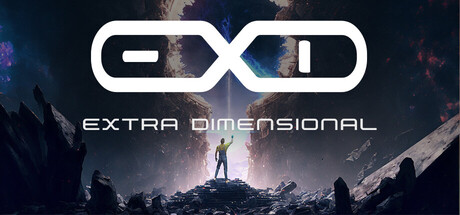
EXD was created by a small independent team over the course of more than three years of development. 99.99% of its content was made entirely by hand, including real-world objects that were physically sculpted and later digitized to be brought into the game world.
A very small number of assets (~30 out of more than 27,000 total) were created by our artists with the help of generative AI tools.
During development, this game used generative AI tools to help brainstorm, expand, and polish narrative and dialogue text, and to assist with in-editor organization in the development stage (for example, using novel/story-related plugins to structure plot outlines). All such material was reviewed, rewritten, and unified by the team; the final in-game text is based on the version approved by the team.
If a game build includes dialogue or text generated in real time by a large language model (for example, online responses from a third-party AI service), we will update this disclosure with the specific scope when that feature goes live. In the currently public version, the experience is primarily based on pre-written, human-reviewed story content.
We did not use generative AI to replace basic fact-checking for historical subject matter; statements involving history and historical figures remain guided by design intent and human oversight.
Some pre-generated visual assets used in the game and its store/marketing materials, including certain splash images and UI icons, were created with the assistance of generative AI tools. These assets were integrated as pre-generated content during development. The game does not use live-generated AI content during gameplay and does not connect to external AI services while running.
As a micro independent team, we utilized AI tools to assist in creating minor graphical assets. This allowed our super limited resources to remain focused entirely on the core gameplay mechanics, coding, and storytelling that define the experience.
Generative AI was used during the development of Arcane Souls to create and iterate on visual assets, specifically the game's icon, logo elements, and UI concepts. All AI-generated content has been manually reviewed, curated, and edited to ensure it aligns with the game's artistic direction and does not violate any third-party rights or Steam’s community standards.
Some of the images and in game models and sounds are created using AI to speed up the development process and allow focus on core gameplay elements.
All elements are reviewed by devs.
No AI is running or applied during gameplay.
Generative AI tools were used during early prototyping to accelerate visual iteration and research.
Any AI generated assets from the prototype have been fully replaced with original artist made content in the final game.
No AI generated content is present in the game.
The development process of this project involved the use of advanced digital synthesis and generative tools to assist in the creation and curation of certain audio assets. These tools were utilized to enhance the thematic consistency of the soundtrack and to supplement the creative workflow. All final assets have been reviewed and integrated to ensure they meet the quality standards of the studio.
GenAI was used for the generation of limited in-game and store page artwork. I am actively seeking an artist open to minor projects to replace AI content.
This game uses generative AI-assisted tools in a small amount of non-core content, such as certain event illustration backgrounds, world map event displays, and some promotional materials used on the store page.
The core content of the game, including gameplay design, combat systems, character design, primary visual presentation, and programming, has been manually created and refined by the developer. AI-generated content is used only for supplementary visual purposes and does not affect the core gameplay experience.
Scope: Pre-generated 2D visual content only. Some visual assets use AI-generated source images created from developer prompts, while other visual assets come from licensed art packs. These assets are selected, composited, cropped, and edited by the developer for use in the game.
No runtime AI: The game does not generate any content during gameplay.
Guardrails: Players cannot generate or upload content in-game. AI-generated images are manually reviewed before use, and license records are kept for third-party art packs used in development.
AI tools were occasionally used during development to assist with coding challenges and debugging. All visual assets, audio, and in-game content were created entirely by humans, with no AI-generated art, music, or gameplay elements included in the final product.
This game includes limited use of AI-generated voice acting for background TV dialogue. All core gameplay, art, and story content were created by humans.
AI handled the code, all non-English translations, and part of the 2D art.
I made all the 3D art, designed the game, and wrote the English text.
I'm a solo artist developing this game by myself.
Generative AI (LLM) was used to assist in translating in-game text.
Additionally, AI tools provided assistance in writing, optimizing, and debugging source code.
AI generated fictional football player faces (facepack)
Interactive AI NPC's (players and staff members)
AI generated translations of text and UI elements.
This game uses generative AI for its multi-language localization to provide immediate support for French, German, Spanish, Portuguese, Russian, Japanese and Korean. While we strive for accuracy, some linguistic nuances may vary.
Generative AI was used exclusively for creating marketing visuals (Steam capsules). All game content—including code, 3D models, environments, and gameplay—is an original, hand-developed creation.
EXD was created by a small independent team over the course of more than three years of development. 99.99% of its content was made entirely by hand, including real-world objects that were physically sculpted and later digitized to be brought into the game world.
A very small number of assets (~30 out of more than 27,000 total) were created by our artists with the help of generative AI tools.
During development, this game used generative AI tools to help brainstorm, expand, and polish narrative and dialogue text, and to assist with in-editor organization in the development stage (for example, using novel/story-related plugins to structure plot outlines). All such material was reviewed, rewritten, and unified by the team; the final in-game text is based on the version approved by the team.
If a game build includes dialogue or text generated in real time by a large language model (for example, online responses from a third-party AI service), we will update this disclosure with the specific scope when that feature goes live. In the currently public version, the experience is primarily based on pre-written, human-reviewed story content.
We did not use generative AI to replace basic fact-checking for historical subject matter; statements involving history and historical figures remain guided by design intent and human oversight.
Some pre-generated visual assets used in the game and its store/marketing materials, including certain splash images and UI icons, were created with the assistance of generative AI tools. These assets were integrated as pre-generated content during development. The game does not use live-generated AI content during gameplay and does not connect to external AI services while running.
As a micro independent team, we utilized AI tools to assist in creating minor graphical assets. This allowed our super limited resources to remain focused entirely on the core gameplay mechanics, coding, and storytelling that define the experience.