Public Steam disclosure research25,512 disclosures tracked
Where do games disclose AI use?
Search developers’ Steam disclosures, compare classified AI use across
games, and follow recorded changes.
This index adds cross-game classifications and statistics to
statements published on individual store pages.
Groups reflect automatic analysis of public disclosures; mature records are excluded. These counts do not measure AI use across all of Steam.
Missing or unclear statements cannot establish whether a game uses AI.
Our game features an AI-driven narrative system utilized during the opening cutscene. This AI is used exclusively to generate a dynamic, cinematic introduction that adapts based on the player's initial choices or in-game context. It does not influence gameplay mechanics or decision-making beyond the cutscene, but it helps create a unique and immersive storytelling experience.
Museums of History uses AI technology to enhance the visual quality of menu background images. These backgrounds showcase beautifully rendered scenes from the game environment, offering players an engaging preview of the historical settings they’ll explore.
By using AI to refine and generate these visuals, we ensure stunning and immersive artwork that sets the tone for the game, while maintaining a focus on historical accuracy and aesthetic appeal.
Use of AI for color enhancement, lighting, and character posing, combined with Adobe suite programs for the final touch.
Applied to the various banners for the Steam store.
Used to create additional concept art which inspired our artists
Used to help create an initial draft the narrative of the game.
Used to create various code snippets and check the quality of the games code base.
We’ve used AI technology in a minimal capacity to assist in the creation of the game’s visuals. AI was utilized primarily for generating rough background sketches and concept drafts. All final artwork was hand-drawn to ensure a personal, unique touch and to maintain a distinct artistic style in the game.
The vast majority of the artwork in the game was created by our team of artists, hired freelancers or purchased on market places. In some cases, AI was used to generate reference images to assist with the creative process, but all final assets were either fully redrawn or significantly refined by human artists to ensure quality and originality.
AI tools were used during development for non-interactive assets: ChatGPT for translation support, Suno for music generation, and Hotpot.ai for some graphic assets. These assets are fixed and do not change during gameplay. No AI is used at runtime or for any user-generated content.
Some portions of the textual content in English, French, Russian, and German in this game were pre-generated using artificial intelligence. Additionally, some of the original concept art in the game was generated with the assistance of artificial intelligence. The AI-generated elements contain no illegal, prohibited, or infringing material and align with the representations shown in the game's marketing materials.
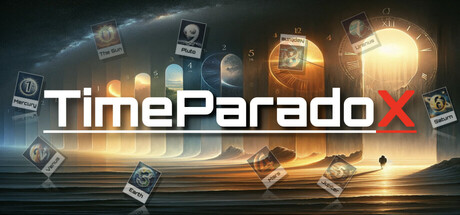
TimeParadox uses generative AI to create unique images for different cards in the game. The AI generates new visual content for cards, enhancing the game's aesthetic and diversity.
As a solo indie dev with very limited resources, and also not a native English speaker. I use AI to assist with writing for both in-game and store page content, and translate the game to other languages.
Some visuals and models used in this game were created with the assistance of AI tools during development. The game does not generate new content in real time during gameplay.
The vast majority of the artwork in the game was created by our team of artists, hired freelancers or purchased on market places. In some cases, AI was used to generate reference images to assist with the creative process, but all final assets were either fully redrawn or significantly refined by human artists to ensure quality and originality.
For Lets Get Loot, we have used generative AI for some store materials and also for some of the music within the game. Aside from this, the gameplay experience does not include in-game generated assets, functionality, or any other form of content.
Our designers manually craft the game logo, though we employ neural networks during pre-production to expedite the rendering of intricate character details.
No live AI-generated content is used!
In the development of this game, generative AI tools were utilized to assist in the creation of a few textures, images, and translations. As a solo developer, this approach aimed to enhance the visual and linguistic quality of the game, ensuring a more immersive experience for players. All AI-generated content was carefully reviewed and refined to align with the game's artistic vision and maintain high-quality standards.
Our game features an AI-driven narrative system utilized during the opening cutscene. This AI is used exclusively to generate a dynamic, cinematic introduction that adapts based on the player's initial choices or in-game context. It does not influence gameplay mechanics or decision-making beyond the cutscene, but it helps create a unique and immersive storytelling experience.
Museums of History uses AI technology to enhance the visual quality of menu background images. These backgrounds showcase beautifully rendered scenes from the game environment, offering players an engaging preview of the historical settings they’ll explore.
By using AI to refine and generate these visuals, we ensure stunning and immersive artwork that sets the tone for the game, while maintaining a focus on historical accuracy and aesthetic appeal.
Use of AI for color enhancement, lighting, and character posing, combined with Adobe suite programs for the final touch.
Applied to the various banners for the Steam store.
Used to create additional concept art which inspired our artists
Used to help create an initial draft the narrative of the game.
Used to create various code snippets and check the quality of the games code base.
We’ve used AI technology in a minimal capacity to assist in the creation of the game’s visuals. AI was utilized primarily for generating rough background sketches and concept drafts. All final artwork was hand-drawn to ensure a personal, unique touch and to maintain a distinct artistic style in the game.
The vast majority of the artwork in the game was created by our team of artists, hired freelancers or purchased on market places. In some cases, AI was used to generate reference images to assist with the creative process, but all final assets were either fully redrawn or significantly refined by human artists to ensure quality and originality.
AI tools were used during development for non-interactive assets: ChatGPT for translation support, Suno for music generation, and Hotpot.ai for some graphic assets. These assets are fixed and do not change during gameplay. No AI is used at runtime or for any user-generated content.
Some portions of the textual content in English, French, Russian, and German in this game were pre-generated using artificial intelligence. Additionally, some of the original concept art in the game was generated with the assistance of artificial intelligence. The AI-generated elements contain no illegal, prohibited, or infringing material and align with the representations shown in the game's marketing materials.
TimeParadox uses generative AI to create unique images for different cards in the game. The AI generates new visual content for cards, enhancing the game's aesthetic and diversity.
As a solo indie dev with very limited resources, and also not a native English speaker. I use AI to assist with writing for both in-game and store page content, and translate the game to other languages.
Some visuals and models used in this game were created with the assistance of AI tools during development. The game does not generate new content in real time during gameplay.
The vast majority of the artwork in the game was created by our team of artists, hired freelancers or purchased on market places. In some cases, AI was used to generate reference images to assist with the creative process, but all final assets were either fully redrawn or significantly refined by human artists to ensure quality and originality.
For Lets Get Loot, we have used generative AI for some store materials and also for some of the music within the game. Aside from this, the gameplay experience does not include in-game generated assets, functionality, or any other form of content.
Our designers manually craft the game logo, though we employ neural networks during pre-production to expedite the rendering of intricate character details.
No live AI-generated content is used!
In the development of this game, generative AI tools were utilized to assist in the creation of a few textures, images, and translations. As a solo developer, this approach aimed to enhance the visual and linguistic quality of the game, ensuring a more immersive experience for players. All AI-generated content was carefully reviewed and refined to align with the game's artistic vision and maintain high-quality standards.