Public Steam disclosure research25,394 disclosures tracked
Where do games disclose AI use?
Search developers’ Steam disclosures, compare classified AI use across
games, and follow recorded changes.
This index adds cross-game classifications and statistics to
statements published on individual store pages.
Groups reflect automatic analysis of public disclosures; mature records are excluded. These counts do not measure AI use across all of Steam.
Missing or unclear statements cannot establish whether a game uses AI.
Generative AI tools were used to assist in the creation of some 2D visual assets and artwork (including character illustrations and background art). All generated assets have been reviewed and refined to fit the game's pixel art style and quality standards.
Some 2D art in the game was created with the help of an AI pixel-art tool during development, specifically the application icons and and was hand-adjusted before shipping. The rest of the game's art, including all fish sprites and item icons, was made without AI.
Some of the artwork in this game — including bumper, ball, table and mark sprites — was created with AI-assisted pixel art tools and then reviewed, edited and assembled by hand. The world and boss music comes from licensed artists who state that they work with AI assistance; the sound effects are not AI-generated. Parts of the source code were written with AI assistance. No content is generated by AI while playing.
Generative AI tools were used to create visual concepts and initial drafts for most of the game's artwork. These drafts were used as references and starting points for the final pixel art assets, which were manually created, reviewed, edited, and refined by the developer before being included in the game or its marketing materials.
Generative AI tools were also used to assist with localization and the creation of some in-game names and text. All AI-assisted text was manually reviewed and edited by the developer before being included in the game.
The game does not use generative AI to create content during gameplay.
Generative AI is used in this game for localization.
Text plays a supporting role here: the game has no story, dialogue or voice acting. Its text is limited to interface labels, node names and short stat descriptions, while the gameplay itself runs on numbers and visual language.
Generative AI was used solely as a development assistance tool. All player-facing artwork, audio, narrative, localization, and marketing assets were created by the developer. The game does not include or generate AI-created content.
This game uses generative AI in a limited way. Some in-game and store-page text was drafted, edited, or partially translated with the help of an AI model, then reviewed, adapted, and finalized by the developer. None of the game's art, sprites, animation, music or sound is AI-generated.
This game uses AI-generated art assets (character portraits,
backgrounds, and promotional images) created during development.
AI tools also assisted with coding. All AI-generated content has
been reviewed and finalized by the developer. The game does NOT
generate any AI content in real-time during gameplay.
This game used generative artificial intelligence to assist in creating certain content, including: concept designs for the opening comic and concept art for some UI elements. All AI-assisted content has been reviewed, edited, and remade manually. The game does not generate real-time AI content during runtime.
Some of the capsule artwork on this store page was created with the help of AI tools. No AI-generated content is used in the game's in-game art, code, audio or text.
Some content was created with the help of neural networks; all materials were reviewed and edited by hand. The game does not generate anything with AI at runtime.
AI-generated content is used in this product. The store page capsule artwork was created using an AI image generation tool. Portions of the store page description text were drafted with the assistance of an AI writing tool and reviewed/edited by the developer.
During development, AI was used to refine some fixed ASCII pixel-art data and portions of the code-defined sound data embedded in the game's C# source. Deterministic rendering and synthesis functions convert this fixed data into sprites and audio at runtime. Some Steam store images use renders of the same sprites.
No generative AI is used while the game is running. The game does not contact an AI service, generate AI content during play, or send player input to an AI service.
This work incorporates the use of generative artificial intelligence (AI) in the following areas:
Parts of the artwork, parts of the sound, and localization.
Generative AI tools were used to assist in creating initial visual assets (such as background textures and UI elements). All generated assets have been manually edited, refined, and integrated into the game by the developer.
As a solo project, Vibin & Survivin leverages AI assistance for asset design, audio generation, and coding support. This allowed me to punch above my weight class as a single developer and focus on crafting tight, responsive action-roguelike gameplay!
This game was developed with substantial help from generative AI: the pixel art (in-game art, capsules and icons), the code, much of the text, and the translations were produced with AI assistance and then reviewed, refined, and directed by the developer.
The 2D background images in the main menu and the promotional (capsule) designs used on the Steam store page were created with the help of generative AI tools and subsequently edited manually. The characters, battlefields, and in-game pixel art graphics that make up the core game experience are completely outside of this scope.
Certain visual assets incorporated into the final product were subject to a multi-stage development, revision, and production process involving, at intermediate stages of asset preparation, generative AI-assisted material, together with subsequent developer-directed editing, alteration, reconstruction, and final implementation.
Generative tools were used during development to assist with portions of the game's source code and to create or refine some visual assets and promotional artwork. All included content was reviewed and edited by the developer. The game does not generate content during gameplay.
All pixel artwork is hand-made by a human artist (Dani Maccari, licensed and credited). Sound effects are procedurally synthesized from hand-authored code and Suno AI. AI tools were used during development as a programming assistant and to help draft and edit some in-game and store text, all of which was human-directed, reviewed, and curated. No generative AI runs at runtime, and no AI-generated imagery ships with the game.
Generative AI has been used for concepts and early sketches of some backgrounds. No final graphical assets included in the game have been generated by AI.
Some promotional images have been enhanced using AI.
Some music tracks have been created with the help of AI.
The images in this game start from generative AI output and are then redrawn pixel by pixel by the developer. This covers equipment icons, character and enemy sprites, backgrounds, and the images on this store page.
The music was created with a generative AI music service under a commercial-use license.
The text is written in Japanese and machine-translated into other languages.
Some pre-rendered visual artwork, promotional material, as well as game elements were created with AI and then selected, edited, and integrated by the developer. The game does not generate AI content during gameplay and does not connect to third-party AI services during gameplay.
Generative AI tools were used during the development process exclusively to assist with programming, specifically for structuring GDScript code and debugging.
Some of our store and marketing art started as AI-generated images. We used Midjourney to create the base key art for the Steam capsules, the library hero and the page background, then edited and composited those into the final images ourselves. The logo, wordmark and typography are our own work.
The game itself does not use generative AI. Every in-game asset (art, animation, UI, music, sound, and code) was made by us, by hand or with our own tools.
We’ve reviewed the AI-assisted art, we hold the rights to use it commercially, and as far as we’re aware it doesn’t infringe anyone else’s work.
This work of love was made with the best tools and talent I could get my hands on. That includes commercially available AI tools, because what idiot wouldn't use the best tools at their disposal? Some of the sprite art, the key art, and the score were made with AI under my direction and finished by hand. Play the game. If it sucks, that's because I'm a lousy manager, not because some of the tools were AI.
Some visual assets were created with the assistance of generative AI tools and then curated and edited by the developer: story illustrations, character portraits, key art / capsule backgrounds, and a small number of decorative item images.
All gameplay sprites, animations, environments, music and sound effects are human-made assets used under CC0 / open licenses (credited in-game).
Voice-over lines (English and Turkish) were generated with ElevenLabs text-to-speech under a commercial license, from scripts written by the developer.
The game does not generate any content with AI at runtime. The developer has reviewed all AI-assisted content to ensure it is not illegal or infringing.
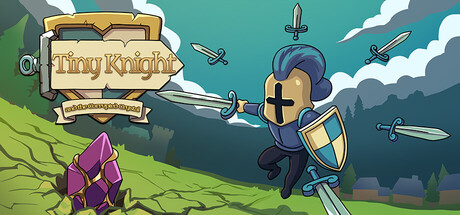
Tiny Knight and the Corrupted Crystal uses AI-generated music. All background music tracks were created with Suno, then edited, and mixed by the developer before being placed in the game.
AI tools were used during development to assist with coding and to create internal task, references and supporting documentation. The game does not include any player-facing generative AI features.
Image assets and some localized text were created with generative AI assistance, then manually processed and reviewed by the developer. No content is generated at runtime.
The pixel art was generated with PixelLab. The music was generated with Suno on a paid plan. I wrote the prompts, picked what worked, and threw out what didn't. The game itself, the economy, the systems, the design, the words on screen, I built. Nothing is generated while the game runs. Everything ships as files. There are no AI calls at play time, no AI voice, and no chatbots.
Generative AI tools were used to assist in the creation of some 2D visual assets and artwork (including character illustrations and background art). All generated assets have been reviewed and refined to fit the game's pixel art style and quality standards.
Some 2D art in the game was created with the help of an AI pixel-art tool during development, specifically the application icons and and was hand-adjusted before shipping. The rest of the game's art, including all fish sprites and item icons, was made without AI.
Some of the artwork in this game — including bumper, ball, table and mark sprites — was created with AI-assisted pixel art tools and then reviewed, edited and assembled by hand. The world and boss music comes from licensed artists who state that they work with AI assistance; the sound effects are not AI-generated. Parts of the source code were written with AI assistance. No content is generated by AI while playing.
Generative AI tools were used to create visual concepts and initial drafts for most of the game's artwork. These drafts were used as references and starting points for the final pixel art assets, which were manually created, reviewed, edited, and refined by the developer before being included in the game or its marketing materials.
Generative AI tools were also used to assist with localization and the creation of some in-game names and text. All AI-assisted text was manually reviewed and edited by the developer before being included in the game.
The game does not use generative AI to create content during gameplay.
Generative AI is used in this game for localization.
Text plays a supporting role here: the game has no story, dialogue or voice acting. Its text is limited to interface labels, node names and short stat descriptions, while the gameplay itself runs on numbers and visual language.
Generative AI was used solely as a development assistance tool. All player-facing artwork, audio, narrative, localization, and marketing assets were created by the developer. The game does not include or generate AI-created content.
This game uses generative AI in a limited way. Some in-game and store-page text was drafted, edited, or partially translated with the help of an AI model, then reviewed, adapted, and finalized by the developer. None of the game's art, sprites, animation, music or sound is AI-generated.
This game uses AI-generated art assets (character portraits,
backgrounds, and promotional images) created during development.
AI tools also assisted with coding. All AI-generated content has
been reviewed and finalized by the developer. The game does NOT
generate any AI content in real-time during gameplay.
This game used generative artificial intelligence to assist in creating certain content, including: concept designs for the opening comic and concept art for some UI elements. All AI-assisted content has been reviewed, edited, and remade manually. The game does not generate real-time AI content during runtime.
Some of the capsule artwork on this store page was created with the help of AI tools. No AI-generated content is used in the game's in-game art, code, audio or text.
Some content was created with the help of neural networks; all materials were reviewed and edited by hand. The game does not generate anything with AI at runtime.
AI-generated content is used in this product. The store page capsule artwork was created using an AI image generation tool. Portions of the store page description text were drafted with the assistance of an AI writing tool and reviewed/edited by the developer.
During development, AI was used to refine some fixed ASCII pixel-art data and portions of the code-defined sound data embedded in the game's C# source. Deterministic rendering and synthesis functions convert this fixed data into sprites and audio at runtime. Some Steam store images use renders of the same sprites.
No generative AI is used while the game is running. The game does not contact an AI service, generate AI content during play, or send player input to an AI service.
This work incorporates the use of generative artificial intelligence (AI) in the following areas:
Parts of the artwork, parts of the sound, and localization.
Generative AI tools were used to assist in creating initial visual assets (such as background textures and UI elements). All generated assets have been manually edited, refined, and integrated into the game by the developer.
As a solo project, Vibin & Survivin leverages AI assistance for asset design, audio generation, and coding support. This allowed me to punch above my weight class as a single developer and focus on crafting tight, responsive action-roguelike gameplay!
This game was developed with substantial help from generative AI: the pixel art (in-game art, capsules and icons), the code, much of the text, and the translations were produced with AI assistance and then reviewed, refined, and directed by the developer.
The 2D background images in the main menu and the promotional (capsule) designs used on the Steam store page were created with the help of generative AI tools and subsequently edited manually. The characters, battlefields, and in-game pixel art graphics that make up the core game experience are completely outside of this scope.
Certain visual assets incorporated into the final product were subject to a multi-stage development, revision, and production process involving, at intermediate stages of asset preparation, generative AI-assisted material, together with subsequent developer-directed editing, alteration, reconstruction, and final implementation.
Generative tools were used during development to assist with portions of the game's source code and to create or refine some visual assets and promotional artwork. All included content was reviewed and edited by the developer. The game does not generate content during gameplay.
All pixel artwork is hand-made by a human artist (Dani Maccari, licensed and credited). Sound effects are procedurally synthesized from hand-authored code and Suno AI. AI tools were used during development as a programming assistant and to help draft and edit some in-game and store text, all of which was human-directed, reviewed, and curated. No generative AI runs at runtime, and no AI-generated imagery ships with the game.
Generative AI has been used for concepts and early sketches of some backgrounds. No final graphical assets included in the game have been generated by AI.
Some promotional images have been enhanced using AI.
Some music tracks have been created with the help of AI.
The images in this game start from generative AI output and are then redrawn pixel by pixel by the developer. This covers equipment icons, character and enemy sprites, backgrounds, and the images on this store page.
The music was created with a generative AI music service under a commercial-use license.
The text is written in Japanese and machine-translated into other languages.
Some pre-rendered visual artwork, promotional material, as well as game elements were created with AI and then selected, edited, and integrated by the developer. The game does not generate AI content during gameplay and does not connect to third-party AI services during gameplay.
Generative AI tools were used during the development process exclusively to assist with programming, specifically for structuring GDScript code and debugging.
Some of our store and marketing art started as AI-generated images. We used Midjourney to create the base key art for the Steam capsules, the library hero and the page background, then edited and composited those into the final images ourselves. The logo, wordmark and typography are our own work.
The game itself does not use generative AI. Every in-game asset (art, animation, UI, music, sound, and code) was made by us, by hand or with our own tools.
We’ve reviewed the AI-assisted art, we hold the rights to use it commercially, and as far as we’re aware it doesn’t infringe anyone else’s work.
This work of love was made with the best tools and talent I could get my hands on. That includes commercially available AI tools, because what idiot wouldn't use the best tools at their disposal? Some of the sprite art, the key art, and the score were made with AI under my direction and finished by hand. Play the game. If it sucks, that's because I'm a lousy manager, not because some of the tools were AI.
Some visual assets were created with the assistance of generative AI tools and then curated and edited by the developer: story illustrations, character portraits, key art / capsule backgrounds, and a small number of decorative item images.
All gameplay sprites, animations, environments, music and sound effects are human-made assets used under CC0 / open licenses (credited in-game).
Voice-over lines (English and Turkish) were generated with ElevenLabs text-to-speech under a commercial license, from scripts written by the developer.
The game does not generate any content with AI at runtime. The developer has reviewed all AI-assisted content to ensure it is not illegal or infringing.
Tiny Knight and the Corrupted Crystal uses AI-generated music. All background music tracks were created with Suno, then edited, and mixed by the developer before being placed in the game.
AI tools were used during development to assist with coding and to create internal task, references and supporting documentation. The game does not include any player-facing generative AI features.
Image assets and some localized text were created with generative AI assistance, then manually processed and reviewed by the developer. No content is generated at runtime.
The pixel art was generated with PixelLab. The music was generated with Suno on a paid plan. I wrote the prompts, picked what worked, and threw out what didn't. The game itself, the economy, the systems, the design, the words on screen, I built. Nothing is generated while the game runs. Everything ships as files. There are no AI calls at play time, no AI voice, and no chatbots.