Public Steam disclosure research25,394 disclosures tracked
Where do games disclose AI use?
Search developers’ Steam disclosures, compare classified AI use across
games, and follow recorded changes.
This index adds cross-game classifications and statistics to
statements published on individual store pages.
Groups reflect automatic analysis of public disclosures; mature records are excluded. These counts do not measure AI use across all of Steam.
Missing or unclear statements cannot establish whether a game uses AI.
Some pre-generated visual assets used for the game’s store page and promotional materials were created with the assistance of generative AI. All AI-assisted content was reviewed, edited, and finalized by the developer before publication. The game does not use live-generated AI, and players cannot generate AI content while playing.
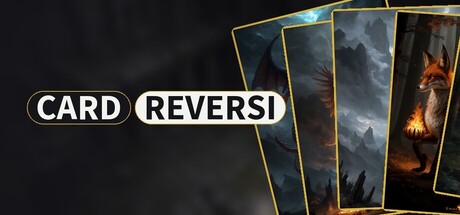
The card illustrations and backgrounds in this game were pre-generated by the developer using image-generation AI (Stable Diffusion / DreamShaper 8), then curated and edited by hand. Text, game logic, music, and fonts are NOT AI-generated. No content is generated by AI during gameplay (pre-generated, fixed assets only).
Some of this game's visual assets (such as background art, city and airport imagery, and icons) and background music tracks were created
with the help of generative AI tools,
None of the game's artwork, audio, or imagery is AI-generated. Portraits, interface, and all store and marketing art are hand-authored vector and procedural work, and that is a hard rule of the project. We do use AI assistance during development for writing and code, including drafting store text and the scripts that lay out our marketing art, all of it reviewed and edited by hand. No image-generation models are used anywhere, in the game or in its marketing.
Dialogue and narration are generated at runtime by a small language model running entirely on the player's machine. Nothing is sent to any server. The model has no authority over the game: a deterministic simulation decides every outcome, fact, and number, and the model only phrases scenes from state the engine hands it. Its output is structurally constrained and validated against the simulation before it appears, and invalid output is rejected. Prompts and validation keep generated text within the game's fiction and its PG-13 register. Player-typed orders go only to the local model and never leave the machine.
Ever since I was a child, I dreamed of making my own game. I tried again and again — I gathered teams, but something always fell apart and I would give up halfway. This time is different: with the help of AI, I am finally able to bring my dream to life. AI helped me with some of the text and translations — all the art, music, and sound are human-made or licensed, and the game uses no AI while you play.
I am an honest person, and I will keep giving this game everything I have. Thank you for taking the time to read this. 💚
The game's 2D artwork (character portraits, scenes, backgrounds) and music were created with generative AI tools, then curated and edited by the developer. Parts of the game's code and narrative text were written with AI assistance, under human direction, review and rewriting. All AI-assisted content is pre-generated during development: nothing is generated by AI while you play.
The art, audio, and writing in Refund Speedrun are created by hand. Generative AI was used only for the voice-over narration in our promotional teaser trailer (ElevenLabs). The game does not generate any content using AI at runtime.
Generative AI was used during production of some visual and audio assets. All generated material is selected, directed, edited, and integrated through a human-led creative process. The game does not generate content with AI during play.
I use generative AI tools in the development of OXYTOPIA. All AI output is directed, reviewed, and edited by me before it ships.
What AI is used for:
Branding art — the game's logo and app/store icons were designed with the help of AI models and are rendered in-engine as original vector/code artwork.
Source code — parts of the game's code were written with AI coding assistants.
What is not AI-generated: the in-game gameplay art (tiles, characters, buildings, items, plants) and all audio are hand-made or licensed from human creators.
At runtime: OXYTOPIA generates no content with AI while you play, and no player data is ever sent to any AI service during gameplay.
Some of the graphics and illustrations used in the game were created with the help of generative AI and have been reviewed and edited by the developers. Generative AI is not used during gameplay.
AI was used to help develop parts of the game such as code, formulas, and concepts. Game origination, development, assets, and management was solely led by human solo developer. There is no use of AI during any active play of this game.
This game uses generative AI for some pre-generated content. Specifically, generative AI tools were used in the creation of some in-game background/wallpaper assets and some in-game background music. All such content has been reviewed, selected, and edited by the developer before being included in the game. The game does not use live-generated AI content during gameplay.
Global Plates uses generative AI in limited, development-time ways only:
• Music: the game's soundtrack was created using AI music generation tools, then selected and edited by the developer.
• Store page artwork: the key art is based on real screenshots rendered directly from the game, stylized with AI image tools.
All other content — 3D environments, machines, characters, and game design — was hand-crafted by the developer or licensed from professional asset libraries. The game does not use generative AI at runtime: nothing is AI-generated while you play.
Pre-generated AI content is used in the following ways, with every piece reviewed, edited, and placed by hand by the developer:
Voice acting: character voice lines (the tutorial narrator and tenant voices) are generated with AI text to speech from scripts written by the developer.
2D artwork: some in-game 2D art (such as the travel map illustration and map icons) and some marketing and store page artwork (capsule backgrounds and logo concepts) started from AI generated images that were then selected, edited, and integrated by the developer.
Generative AI was used exclusively for marketing and promotional materials. This includes the store page capsule art, translations and the background music featured in the promotional trailer.
No AI generated assets, imagery or audio are used within the actual game build, game screenshots or gameplay experience.
Our team uses generative AI tools to help develop some in game & marketing assets.
We don't use AI to replace artists and developers, but to improve our teams' productivity and offer you a more complete game at an affordable price.
Fish species artwork in Swimcraft is pre-rendered AI-generated imagery. All venue photography is the developer's own, and all audio, UI and game code are non-generated. No AI content is generated live during play.
The game is hanadcrafted by very talented individuals in our team. But as a small studio that is still learning and growing, we leveraged AI to aid us in production. We used AI to generate a few textures for the game. Having said that, we assure everyone that the final game is a result of the hardwork and dedication of a very talented and passionate team.
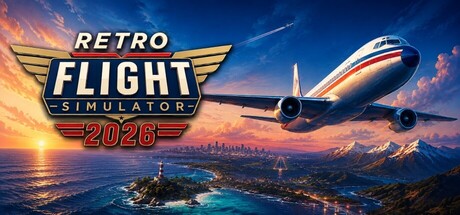
Some pre-rendered artwork and visual assets used in Retro Flight Simulator 2026 were created with the assistance of generative AI and then reviewed and edited by the developer before being included in the game. The game does not use AI-generated content during gameplay and does not rely on external AI services.
Generative AI (Claude, Anthropic) was used to draft narrative text including level briefing descriptions, objective text, and in-game educational hints. All narrative content was written collaboratively with human review and editing before inclusion in the final game.
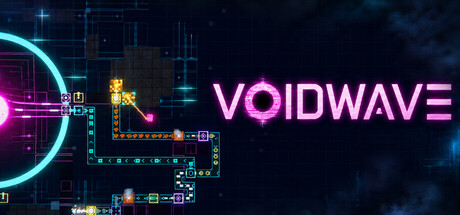
VOIDWAVE's game design, programming, and automation simulation are built by hand. Some visual assets — certain sprites, icons, and UI art — were created with the help of generative AI tools and hand-edited to fit the game's style, and the game's music is AI-generated. Sound effects use procedural synthesis (not AI). All gameplay, systems, and balancing are human-designed, and all content is finalized during development — nothing is AI-generated while you play.
Generative artificial intelligence has been used to create store page thumbnails based on the developer's scene work.
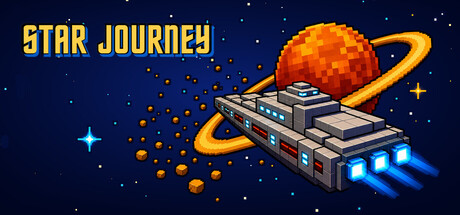
Generative artificial intelligence has been used by the developer to improve the performance of the developers code to achieve incredible in game performance with respect to voxel mesh rendering and voxel lighting calculations. Thanks to the contributions of gen ai Star Journey performs beautifully even on laptops that have no dedicated GPU.
Generative AI was used during development as a supporting tool for parts of the music, selected visual assets, some voice-over lines, portions of the code, and the editing or localization of selected text. The game's concept, design, story, and creative direction are the developer's original work. All AI-assisted content was reviewed and edited as needed by the developer. The game does not use generative AI or generate new AI content during gameplay.
Generative AI tools were used during development to create and refine some pre-generated visual assets, including character illustrations, office environments, decorative objects, and promotional artwork. All generated materials were manually selected, edited, integrated, and reviewed by the developer. The game does not generate any AI content while running.
Some pre-generated 3D art assets and textures were created with generative AI tools during development. These assets are reviewed, selected, adjusted, and integrated by the developer before inclusion. The game does not provide player-facing real-time generative AI features.
During gameplay, the AI generates regional information and sightseeing guides (utilizing the Google Gemini API ). These generated texts change in real time and may occasionally contain inaccurate information.
Additionally, some images displayed within the game and on the store page utilize assets pre-generated by Google Gemini. (These are pre-generated contents, not live-generated during gameplay.)
This game makes use of AI for localization of the following languages: Ukrainian, Spanish, Japanese, Korean, Polish, Portugese (Brasil), Russian, Simplified Chinese, Traditional Chinese, Turkish, Hindi. We're working with native translators, so expect this list to become shorter with time.
During Early Access, we use AI-generated voice-overs as temporary placeholders for some characters. These will be replaced with professionally recorded voice-overs during development or, at the latest, after the end of the Early Access period.
AI Used to Generate SOME Game Aspects such as backend simulations and Graphical Textures. ALL AI Usage is Pre-Rendered and approved by Development team before being built into the game.
AI tools were used to create pre-rendered assets during development, including background illustrations, item images, some video cutscenes, and background music. All AI-generated content was curated, edited, and integrated by the developer. The game does not generate any content at runtime (no live-generated AI content).
Some of the visual and audio assets in Fifth Tier — such as artwork, logos, promotional images, and music — were created with the assistance of generative AI tools. All AI-assisted content was reviewed, edited, and curated by the developer before release. The game does not generate any content in real time during gameplay; all such content is created in advance.
Generative AI tools were used during development to assist with creating some concept art, graphical assets, and text for the game and its Steam store page. All generated content was reviewed, edited, and integrated by the developer. No generative AI is used during gameplay.
This game uses AI-generated content in the following ways:
Images: AI tools were used to help compose the wine bottle label artwork.
Music: AI tools were used to compose the in-game radio music and sound effects.
Some pre-generated visual assets used for the game’s store page and promotional materials were created with the assistance of generative AI. All AI-assisted content was reviewed, edited, and finalized by the developer before publication. The game does not use live-generated AI, and players cannot generate AI content while playing.
The card illustrations and backgrounds in this game were pre-generated by the developer using image-generation AI (Stable Diffusion / DreamShaper 8), then curated and edited by hand. Text, game logic, music, and fonts are NOT AI-generated. No content is generated by AI during gameplay (pre-generated, fixed assets only).
Some of this game's visual assets (such as background art, city and airport imagery, and icons) and background music tracks were created
with the help of generative AI tools,
None of the game's artwork, audio, or imagery is AI-generated. Portraits, interface, and all store and marketing art are hand-authored vector and procedural work, and that is a hard rule of the project. We do use AI assistance during development for writing and code, including drafting store text and the scripts that lay out our marketing art, all of it reviewed and edited by hand. No image-generation models are used anywhere, in the game or in its marketing.
Dialogue and narration are generated at runtime by a small language model running entirely on the player's machine. Nothing is sent to any server. The model has no authority over the game: a deterministic simulation decides every outcome, fact, and number, and the model only phrases scenes from state the engine hands it. Its output is structurally constrained and validated against the simulation before it appears, and invalid output is rejected. Prompts and validation keep generated text within the game's fiction and its PG-13 register. Player-typed orders go only to the local model and never leave the machine.
Ever since I was a child, I dreamed of making my own game. I tried again and again — I gathered teams, but something always fell apart and I would give up halfway. This time is different: with the help of AI, I am finally able to bring my dream to life. AI helped me with some of the text and translations — all the art, music, and sound are human-made or licensed, and the game uses no AI while you play.
I am an honest person, and I will keep giving this game everything I have. Thank you for taking the time to read this. 💚
The game's 2D artwork (character portraits, scenes, backgrounds) and music were created with generative AI tools, then curated and edited by the developer. Parts of the game's code and narrative text were written with AI assistance, under human direction, review and rewriting. All AI-assisted content is pre-generated during development: nothing is generated by AI while you play.
The art, audio, and writing in Refund Speedrun are created by hand. Generative AI was used only for the voice-over narration in our promotional teaser trailer (ElevenLabs). The game does not generate any content using AI at runtime.
Generative AI was used during production of some visual and audio assets. All generated material is selected, directed, edited, and integrated through a human-led creative process. The game does not generate content with AI during play.
I use generative AI tools in the development of OXYTOPIA. All AI output is directed, reviewed, and edited by me before it ships.
What AI is used for:
Branding art — the game's logo and app/store icons were designed with the help of AI models and are rendered in-engine as original vector/code artwork.
Source code — parts of the game's code were written with AI coding assistants.
What is not AI-generated: the in-game gameplay art (tiles, characters, buildings, items, plants) and all audio are hand-made or licensed from human creators.
At runtime: OXYTOPIA generates no content with AI while you play, and no player data is ever sent to any AI service during gameplay.
Some of the graphics and illustrations used in the game were created with the help of generative AI and have been reviewed and edited by the developers. Generative AI is not used during gameplay.
AI was used to help develop parts of the game such as code, formulas, and concepts. Game origination, development, assets, and management was solely led by human solo developer. There is no use of AI during any active play of this game.
This game uses generative AI for some pre-generated content. Specifically, generative AI tools were used in the creation of some in-game background/wallpaper assets and some in-game background music. All such content has been reviewed, selected, and edited by the developer before being included in the game. The game does not use live-generated AI content during gameplay.
Global Plates uses generative AI in limited, development-time ways only:
• Music: the game's soundtrack was created using AI music generation tools, then selected and edited by the developer.
• Store page artwork: the key art is based on real screenshots rendered directly from the game, stylized with AI image tools.
All other content — 3D environments, machines, characters, and game design — was hand-crafted by the developer or licensed from professional asset libraries. The game does not use generative AI at runtime: nothing is AI-generated while you play.
Pre-generated AI content is used in the following ways, with every piece reviewed, edited, and placed by hand by the developer:
Voice acting: character voice lines (the tutorial narrator and tenant voices) are generated with AI text to speech from scripts written by the developer.
2D artwork: some in-game 2D art (such as the travel map illustration and map icons) and some marketing and store page artwork (capsule backgrounds and logo concepts) started from AI generated images that were then selected, edited, and integrated by the developer.
Generative AI was used exclusively for marketing and promotional materials. This includes the store page capsule art, translations and the background music featured in the promotional trailer.
No AI generated assets, imagery or audio are used within the actual game build, game screenshots or gameplay experience.
Our team uses generative AI tools to help develop some in game & marketing assets.
We don't use AI to replace artists and developers, but to improve our teams' productivity and offer you a more complete game at an affordable price.
Fish species artwork in Swimcraft is pre-rendered AI-generated imagery. All venue photography is the developer's own, and all audio, UI and game code are non-generated. No AI content is generated live during play.
The game is hanadcrafted by very talented individuals in our team. But as a small studio that is still learning and growing, we leveraged AI to aid us in production. We used AI to generate a few textures for the game. Having said that, we assure everyone that the final game is a result of the hardwork and dedication of a very talented and passionate team.
Some pre-rendered artwork and visual assets used in Retro Flight Simulator 2026 were created with the assistance of generative AI and then reviewed and edited by the developer before being included in the game. The game does not use AI-generated content during gameplay and does not rely on external AI services.
Generative AI (Claude, Anthropic) was used to draft narrative text including level briefing descriptions, objective text, and in-game educational hints. All narrative content was written collaboratively with human review and editing before inclusion in the final game.
VOIDWAVE's game design, programming, and automation simulation are built by hand. Some visual assets — certain sprites, icons, and UI art — were created with the help of generative AI tools and hand-edited to fit the game's style, and the game's music is AI-generated. Sound effects use procedural synthesis (not AI). All gameplay, systems, and balancing are human-designed, and all content is finalized during development — nothing is AI-generated while you play.
Generative artificial intelligence has been used to create store page thumbnails based on the developer's scene work.
Generative artificial intelligence has been used by the developer to improve the performance of the developers code to achieve incredible in game performance with respect to voxel mesh rendering and voxel lighting calculations. Thanks to the contributions of gen ai Star Journey performs beautifully even on laptops that have no dedicated GPU.
Generative AI was used during development as a supporting tool for parts of the music, selected visual assets, some voice-over lines, portions of the code, and the editing or localization of selected text. The game's concept, design, story, and creative direction are the developer's original work. All AI-assisted content was reviewed and edited as needed by the developer. The game does not use generative AI or generate new AI content during gameplay.
Generative AI tools were used during development to create and refine some pre-generated visual assets, including character illustrations, office environments, decorative objects, and promotional artwork. All generated materials were manually selected, edited, integrated, and reviewed by the developer. The game does not generate any AI content while running.
Some pre-generated 3D art assets and textures were created with generative AI tools during development. These assets are reviewed, selected, adjusted, and integrated by the developer before inclusion. The game does not provide player-facing real-time generative AI features.
During gameplay, the AI generates regional information and sightseeing guides (utilizing the Google Gemini API ). These generated texts change in real time and may occasionally contain inaccurate information.
Additionally, some images displayed within the game and on the store page utilize assets pre-generated by Google Gemini. (These are pre-generated contents, not live-generated during gameplay.)
This game makes use of AI for localization of the following languages: Ukrainian, Spanish, Japanese, Korean, Polish, Portugese (Brasil), Russian, Simplified Chinese, Traditional Chinese, Turkish, Hindi. We're working with native translators, so expect this list to become shorter with time.
During Early Access, we use AI-generated voice-overs as temporary placeholders for some characters. These will be replaced with professionally recorded voice-overs during development or, at the latest, after the end of the Early Access period.
AI Used to Generate SOME Game Aspects such as backend simulations and Graphical Textures. ALL AI Usage is Pre-Rendered and approved by Development team before being built into the game.
AI tools were used to create pre-rendered assets during development, including background illustrations, item images, some video cutscenes, and background music. All AI-generated content was curated, edited, and integrated by the developer. The game does not generate any content at runtime (no live-generated AI content).
Some of the visual and audio assets in Fifth Tier — such as artwork, logos, promotional images, and music — were created with the assistance of generative AI tools. All AI-assisted content was reviewed, edited, and curated by the developer before release. The game does not generate any content in real time during gameplay; all such content is created in advance.
Generative AI tools were used during development to assist with creating some concept art, graphical assets, and text for the game and its Steam store page. All generated content was reviewed, edited, and integrated by the developer. No generative AI is used during gameplay.
This game uses AI-generated content in the following ways:
Images: AI tools were used to help compose the wine bottle label artwork.
Music: AI tools were used to compose the in-game radio music and sound effects.