Public Steam disclosure research25,383 disclosures tracked
Where do games disclose AI use?
Search developers’ Steam disclosures, compare classified AI use across
games, and follow recorded changes.
This index adds cross-game classifications and statistics to
statements published on individual store pages.
Groups reflect automatic analysis of public disclosures; mature records are excluded. These counts do not measure AI use across all of Steam.
Missing or unclear statements cannot establish whether a game uses AI.
This game uses AI-generated images that were created during the development phase (e.g., for backgrounds, characters, or other visual assets). No AI-generated content is created or modified while the game is running.
The game contains AI-generated art assets. AI characters, as featured content, account for no more than 10% of the overall game.
The primary goal of using AI characters in the game is to expand the possibilities of interactive film and television games. Beyond this, AI-generated content accounts for no more than 1% of the overall art assets.
The AI technology and AI-generated characters used in the game are copyrighted and protected by law.
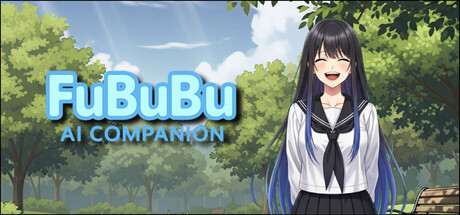
This game uses AI to create a dynamic relationship simulation. The AI remembers your past conversations, adapts to your choices, and generates natural dialogue in real time. The character can start conversations, send you messages, and react emotionally based on your actions, creating a unique bond that evolves over time. Players provide their own API key to enable AI features.
This game does not generate AI content during gameplay. Some promotional materials and in-game art assets were created with the assistance of AI tools under a commercial-use license, with all content curated and finalized by the developer.
Speak Boy!
Legal Beagll: Justice is Argued uses novel dialogue mechanics to bring your arguments into the courtroom. Characters respond with their own logic and reasoning. Creating dynamic and realistic character interactions.
*The voice of one character in the game is a mechanical sound synthesized by AI and a synthesizer, using a public voice source. All other characters are voiced by real actors.
*Some background images in the game were created with the assistance of AI-generated art. All other art assets are manually produced.
There are only four people in our team, and we are short of money. In order to present the conceived content, our team puts the paper rendered by 3D model animation frame by frame into AI for rendering. The 3D model and animation lens are original by our team, but we try to use AI to help render in the final rendering stage. Because I couldn't afford dubbing and music, I used AI for dubbing and music. Our team only uses AI to present the effects we want to the players. Using AI does not reduce our workload, because we try our best to present what we want to express to the players.
Approximately 70% of the background illustrations were generated using Midjourney. The game's English translation was drafted with AI and then refined through human LQA.
AI was also used for store page translations (other than English and Japanese), audio noise reduction, brainstorming, and parts of the coding process.
The text of the in-game "Study Notes" was generated with AI, then reviewed and edited by a human.
AI tools were used in a limited capacity during development:
· As Korean is not my native language, some Korean text was translated using AI. I am actively looking for a suitable localization translator; thank you for your understanding.
Some visual assets in this game were created with the help of AI tools (e.g., OpenAI’s DALL·E, MidJourney, ElevenLabs). The developers reviewed every AI-assisted asset and selectively refined them to ensure they fit the game’s artistic direction and story. All tools were used within their terms of service, and the developers retain the necessary commercial rights. No real-time AI generation is used in gameplay.
Development of Visual Assets:
For the original sprites (game characters/objects) designed and drawn by our team, AI support was utilized in the time-consuming stages such as coloring and shading. This allowed us to accelerate the process and experiment with different color palettes. AI was used strictly as a tool for editing and enhancing the existing artwork.
Software Development Support:
During the coding phase, AI-based code assistants were occasionally consulted to help solve specific algorithmic challenges, optimize existing code blocks, and overcome debugging difficulties.
We would like to emphasize that AI has only been employed as a source of inspiration and a productivity aid throughout these processes. All final visual and code assets included in the game have been reviewed, adjusted, and approved by our team. No AI-generated content is produced in real time during gameplay.
The majority of 5 Girls, 1 Honey was created manually, including:
all 3D characters and outfits
character animations
story and dialogue
core gameplay systems
However, a few visual elements were originally generated with the help of AI and then manually enhanced by our team. These include:
* the cinematic for the intros
* background visuals on the map and date scenes
* some decorative UI elements and static screens
We hope these AI-supported parts enrich the overall experience.
This game uses AI to generate dynamic, branching conversations with in-game characters, allowing each player to experience unique story interactions.
The AI system adapts dialogue to the player’s choices, creating personalized comedic and narrative moments while staying within safe and curated content boundaries.
All AI outputs are filtered and moderated to maintain a safe and enjoyable experience.
In addition, some design assets were created with the assistance of AI tools, and were reviewed and refined by human artists before inclusion in the game.
We have utilized AI-assisted design for the store materials and some 2D background images within the game. However, these are not purely AI-generated; they are based on our original photographs that were enhanced using AI technology, and subsequently refined manually to ensure quality.
To focus more effort on refining the script and optimize costs, AI tools have been used to assist in creating background images within the game. These background images are produced through a combination of AI generation and manual refinement, with flaws corrected and style consistency ensured.
Except for the background images, all core content of the game (including character illustrations, music, and the script) is original work created manually, with no AI involved.
Some of the visuals were generated with the help of Sora AI and then edited by me in Photoshop. Everything else — the music, the text, the story, and the characters — was made by a human. The AI was only used to help with the graphics."
This game used generative AI as an assistive tool during development to expand the scope of content production and improve workflow efficiency. The specific areas of use are as follows:
Art: AI was used to create most of the background images that establish the game’s historical atmosphere, to enhance the quality of the main character concept art, to create extra character images, and to produce UI icons. All AI-generated visual assets were retouched and edited by artists to match the game’s direction and visual tone.
Text and Localization: AI was used to draft large volumes of newspaper articles, public reactions, and text used in minigames. AI was also used to assist with proofreading, context checking, and drafting or reviewing some localized text.
All AI-generated or AI-assisted results were reviewed, edited, and adjusted directly by the development team before being used in the game.
During development, we mainly used it to generate and complete code. We also used it to improve work efficiency by proofreading some text and converting images to black and white for verification.
Players can generate unique lines for stories based on their text input within their adventure. Additionally, the actions and thoughts of the NPCs players interacted with are controlled through Lattice AI Technology, enabling more engaging and intuitive interactions.
To improve efficiency during the prototyping stage, the current demo version of our project temporarily uses AI-generated assets as placeholders for some background elements.
We want to be clear that in the final version of the game, these placeholder assets will be entirely removed. All graphics will be replaced with 100% original artwork created by our in-house artists. This is our firm commitment to ensuring a unique and high-quality experience for all players.
We used generative AI tools to assist in the creation of static artwork such as character portraits, backgrounds, and promotional screenshots. No AI is used in gameplay or live content generation.
All 2D characters in the game are fully created by our 2D artist. Currently, the interactions between characters are generated with the help of ChatGPT. Additionally, the book story has been edited for grammar improvements using ChatGPT. In the future, once we secure funding or generate income from the project, our artist will create all character interactions manually to ensure the highest quality and authenticity.
This game uses AI-generated images that were created during the development phase (e.g., for backgrounds, characters, or other visual assets). No AI-generated content is created or modified while the game is running.
The game contains AI-generated art assets. AI characters, as featured content, account for no more than 10% of the overall game.
The primary goal of using AI characters in the game is to expand the possibilities of interactive film and television games. Beyond this, AI-generated content accounts for no more than 1% of the overall art assets.
The AI technology and AI-generated characters used in the game are copyrighted and protected by law.
This game uses AI to create a dynamic relationship simulation. The AI remembers your past conversations, adapts to your choices, and generates natural dialogue in real time. The character can start conversations, send you messages, and react emotionally based on your actions, creating a unique bond that evolves over time. Players provide their own API key to enable AI features.
This game does not generate AI content during gameplay. Some promotional materials and in-game art assets were created with the assistance of AI tools under a commercial-use license, with all content curated and finalized by the developer.
Speak Boy!
Legal Beagll: Justice is Argued uses novel dialogue mechanics to bring your arguments into the courtroom. Characters respond with their own logic and reasoning. Creating dynamic and realistic character interactions.
*The voice of one character in the game is a mechanical sound synthesized by AI and a synthesizer, using a public voice source. All other characters are voiced by real actors.
*Some background images in the game were created with the assistance of AI-generated art. All other art assets are manually produced.
There are only four people in our team, and we are short of money. In order to present the conceived content, our team puts the paper rendered by 3D model animation frame by frame into AI for rendering. The 3D model and animation lens are original by our team, but we try to use AI to help render in the final rendering stage. Because I couldn't afford dubbing and music, I used AI for dubbing and music. Our team only uses AI to present the effects we want to the players. Using AI does not reduce our workload, because we try our best to present what we want to express to the players.
Approximately 70% of the background illustrations were generated using Midjourney. The game's English translation was drafted with AI and then refined through human LQA.
AI was also used for store page translations (other than English and Japanese), audio noise reduction, brainstorming, and parts of the coding process.
The text of the in-game "Study Notes" was generated with AI, then reviewed and edited by a human.
AI tools were used in a limited capacity during development:
· As Korean is not my native language, some Korean text was translated using AI. I am actively looking for a suitable localization translator; thank you for your understanding.
Some visual assets in this game were created with the help of AI tools (e.g., OpenAI’s DALL·E, MidJourney, ElevenLabs). The developers reviewed every AI-assisted asset and selectively refined them to ensure they fit the game’s artistic direction and story. All tools were used within their terms of service, and the developers retain the necessary commercial rights. No real-time AI generation is used in gameplay.
Development of Visual Assets:
For the original sprites (game characters/objects) designed and drawn by our team, AI support was utilized in the time-consuming stages such as coloring and shading. This allowed us to accelerate the process and experiment with different color palettes. AI was used strictly as a tool for editing and enhancing the existing artwork.
Software Development Support:
During the coding phase, AI-based code assistants were occasionally consulted to help solve specific algorithmic challenges, optimize existing code blocks, and overcome debugging difficulties.
We would like to emphasize that AI has only been employed as a source of inspiration and a productivity aid throughout these processes. All final visual and code assets included in the game have been reviewed, adjusted, and approved by our team. No AI-generated content is produced in real time during gameplay.
The majority of 5 Girls, 1 Honey was created manually, including:
all 3D characters and outfits
character animations
story and dialogue
core gameplay systems
However, a few visual elements were originally generated with the help of AI and then manually enhanced by our team. These include:
* the cinematic for the intros
* background visuals on the map and date scenes
* some decorative UI elements and static screens
We hope these AI-supported parts enrich the overall experience.
This game uses AI to generate dynamic, branching conversations with in-game characters, allowing each player to experience unique story interactions.
The AI system adapts dialogue to the player’s choices, creating personalized comedic and narrative moments while staying within safe and curated content boundaries.
All AI outputs are filtered and moderated to maintain a safe and enjoyable experience.
In addition, some design assets were created with the assistance of AI tools, and were reviewed and refined by human artists before inclusion in the game.
We have utilized AI-assisted design for the store materials and some 2D background images within the game. However, these are not purely AI-generated; they are based on our original photographs that were enhanced using AI technology, and subsequently refined manually to ensure quality.
To focus more effort on refining the script and optimize costs, AI tools have been used to assist in creating background images within the game. These background images are produced through a combination of AI generation and manual refinement, with flaws corrected and style consistency ensured.
Except for the background images, all core content of the game (including character illustrations, music, and the script) is original work created manually, with no AI involved.
Some of the visuals were generated with the help of Sora AI and then edited by me in Photoshop. Everything else — the music, the text, the story, and the characters — was made by a human. The AI was only used to help with the graphics."
This game used generative AI as an assistive tool during development to expand the scope of content production and improve workflow efficiency. The specific areas of use are as follows:
Art: AI was used to create most of the background images that establish the game’s historical atmosphere, to enhance the quality of the main character concept art, to create extra character images, and to produce UI icons. All AI-generated visual assets were retouched and edited by artists to match the game’s direction and visual tone.
Text and Localization: AI was used to draft large volumes of newspaper articles, public reactions, and text used in minigames. AI was also used to assist with proofreading, context checking, and drafting or reviewing some localized text.
All AI-generated or AI-assisted results were reviewed, edited, and adjusted directly by the development team before being used in the game.
During development, we mainly used it to generate and complete code. We also used it to improve work efficiency by proofreading some text and converting images to black and white for verification.
Players can generate unique lines for stories based on their text input within their adventure. Additionally, the actions and thoughts of the NPCs players interacted with are controlled through Lattice AI Technology, enabling more engaging and intuitive interactions.
To improve efficiency during the prototyping stage, the current demo version of our project temporarily uses AI-generated assets as placeholders for some background elements.
We want to be clear that in the final version of the game, these placeholder assets will be entirely removed. All graphics will be replaced with 100% original artwork created by our in-house artists. This is our firm commitment to ensuring a unique and high-quality experience for all players.
We used generative AI tools to assist in the creation of static artwork such as character portraits, backgrounds, and promotional screenshots. No AI is used in gameplay or live content generation.
All 2D characters in the game are fully created by our 2D artist. Currently, the interactions between characters are generated with the help of ChatGPT. Additionally, the book story has been edited for grammar improvements using ChatGPT. In the future, once we secure funding or generate income from the project, our artist will create all character interactions manually to ensure the highest quality and authenticity.