Public Steam disclosure research25,394 disclosures tracked
Where do games disclose AI use?
Search developers’ Steam disclosures, compare classified AI use across
games, and follow recorded changes.
This index adds cross-game classifications and statistics to
statements published on individual store pages.
Groups reflect automatic analysis of public disclosures; mature records are excluded. These counts do not measure AI use across all of Steam.
Missing or unclear statements cannot establish whether a game uses AI.
Some visual assets were created with the assistance of generative AI tools and then curated and edited by the developer: story illustrations, character portraits, key art / capsule backgrounds, and a small number of decorative item images.
All gameplay sprites, animations, environments, music and sound effects are human-made assets used under CC0 / open licenses (credited in-game).
Voice-over lines (English and Turkish) were generated with ElevenLabs text-to-speech under a commercial license, from scripts written by the developer.
The game does not generate any content with AI at runtime. The developer has reviewed all AI-assisted content to ensure it is not illegal or infringing.
Tiny Knight and the Corrupted Crystal uses AI-generated music. All background music tracks were created with Suno, then edited, and mixed by the developer before being placed in the game.
Generative AI was used to create the game's artwork, audio, localization, and promotional materials. All AI-generated content was personally reviewed, selected, directed, and refined by the developer before being included in the game. No generative AI is used during gameplay.
RUSTCAN includes an optional live-generated AI guide called the Gnome. Players can ask the Gnome questions about gameplay, controls, progression, and the in-game world. The Gnome generates text responses at runtime through a server-side AI service.
Responses may be inaccurate and are provided for entertainment and gameplay guidance only. The Gnome does not provide professional, financial, medical, or legal advice.
Players access the feature after signing in, entering Hollow Pines, and selecting Ask the Gnome or speaking with the Gnome in town.
Requests require an authenticated RUSTCAN account and server-side application verification. Requests are rate-limited and monitored. Server-side input moderation blocks or flags severe illegal, exploitative, violent, self-harm, and other prohibited requests.
Generated replies are sanitized before display, and fallback responses are used when the AI service fails or produces no usable response. Players can report problems through the in-game bug/report tools.
Guild Management Simulator began as an AI-assisted prototype. Generative AI tools were used during early development to assist with portions of programming, written game content, interface copy, design iteration, and the current Steam marketing artwork. All AI-assisted material is pre-generated and reviewed before inclusion. The game does not generate content while running, connect players to an AI service, or send player data to an AI system. The long-term goal is to replace AI-assisted material with original, developer-created work as the project is rebuilt in a dedicated game engine.
Some of the visual artwork in Coilbound — including character and card illustrations, environment art, and store assets — was created with the assistance of generative AI image tools during development. All generated content was reviewed, edited, and curated by the developer. Coilbound does not use any AI-generated content in real time during gameplay.
This game uses live generative AI to create text-based character dialogue, diaries, journey events, NPC conversations, and outcomes of player-directed interactions. Responses are generated from player-created character profiles, recent in-game memories, current objectives, and player messages. Relevant text context is sent to a third-party AI service to generate these responses. Generated content may vary between sessions and may occasionally produce unexpected results. AI is not used to generate executable code or modify files on the player's device.
In the interest of transparency, illustrations were created with the help of AI-assisted tools, used as creative support within a human-led artistic process.
Generative AI tools were used during development to assist in the creation of certain visual and audio assets. This includes some concept art, textures, UI elements, loading screens, promotional artwork, graphical assets, music, and sound effects.
AI-assisted content may be edited, modified, retouched, mixed, or otherwise integrated by the development team before being included in the game or promotional materials.
Generative AI is not used to dynamically generate content during gameplay.
Rockinforged is a studio that develops games with an AI-assisted production pipeline. Generative AI tools are used across development — including 2D art, cinematic and video footage, sound, localization, store page text, and marketing materials — always under the developer's direct authorship, curation, and review. The game does not generate any content with AI at runtime.
This game was developed with AI assistance for localization, in-game text (tutorial, lore, item descriptions, UI), monster/enemy artwork, and store page artwork (including the game's capsule image). All AI-assisted content was reviewed and edited by the developer before release. No content is generated by AI during gameplay.
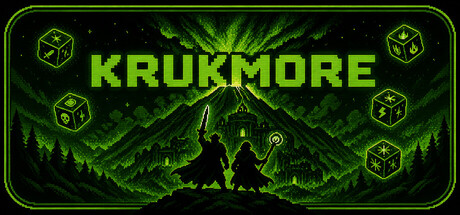
Krukmore is developed by a solo developer who uses generative AI as part of the production pipeline. Character and environment sprite art was created using AI image generation, then processed, edited, and integrated by hand. Portions of the game's code were written with AI assistance under the developer's direction, with all systems designed, reviewed, and tested by the developer. All AI-generated content is created during development ("pre-generated") — the game does not generate any content while you play, and no AI runs on your machine. Game design, writing, and all creative decisions are the work of the developer.
This game used AI generated content in early phases for help with game art. This content was later modified or changed completely to achieve the creative vision of the developer.
Some of our art (not all) began as generative drafts made with AI tools, then heavily reworked by hand to fit the game's look. Everything else, story, music, game design and level design is human-made (with love).
Generative AI was used to assist in the creation of character illustrations, selected artwork, store page assets, and localization. All AI-assisted content has been reviewed, edited, and integrated by the developer. The game does not use generative AI to create content during gameplay.
The card illustrations, background art and background music in this game were created with generative AI tools during development. All of it is produced ahead of time, reviewed and selected by the developer, and shipped as fixed asset files. The game does not generate any content at runtime and does not connect to any AI service while you play.
Some store page artwork (capsule images) was created with the assistance of generative AI tools and then edited and reviewed by the developer. Some 2D art (card artwork, backgrounds, UI) and in-game text (card descriptions, flavor text) were created with the help of generative AI tools.
Generative AI tools were used during development to assist with some pre-generated visual assets and store marketing images. These assets are fixed in advance and are not generated during gameplay. The released game does not call an external generative AI service and does not generate text, images, audio, code, or other content at runtime.
Some store page artwork (capsules, library images, and promotional visuals) was created with the assistance of generative AI tools and edited by the developer.
Select in-game art assets were also created with AI-assisted tools during development and integrated into the game as pre-made content.
Gameplay is built in Unreal Engine. In-game content is not generated by AI during play.
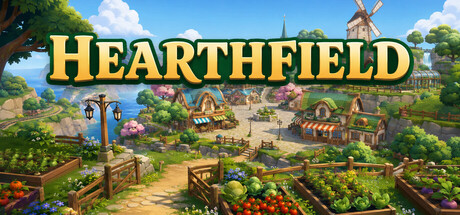
Hearthfield's world is built in code and from CC0 model packs, and everything you
see in play is made by hand. Our Steam store art, the capsules, the icons and the
logo, was created with the help of AI image tools and then finished by us. We also
use an AI coding assistant while building the game, and AI help when drafting store
text. Our screenshots are always genuine captures from the real game. Nothing in
Hearthfield is generated by AI while you play.
Some visual assets were created with the assistance of generative AI tools and then curated and edited by the developer: story illustrations, character portraits, key art / capsule backgrounds, and a small number of decorative item images.
All gameplay sprites, animations, environments, music and sound effects are human-made assets used under CC0 / open licenses (credited in-game).
Voice-over lines (English and Turkish) were generated with ElevenLabs text-to-speech under a commercial license, from scripts written by the developer.
The game does not generate any content with AI at runtime. The developer has reviewed all AI-assisted content to ensure it is not illegal or infringing.
Tiny Knight and the Corrupted Crystal uses AI-generated music. All background music tracks were created with Suno, then edited, and mixed by the developer before being placed in the game.
Generative AI was used to create the game's artwork, audio, localization, and promotional materials. All AI-generated content was personally reviewed, selected, directed, and refined by the developer before being included in the game. No generative AI is used during gameplay.
RUSTCAN includes an optional live-generated AI guide called the Gnome. Players can ask the Gnome questions about gameplay, controls, progression, and the in-game world. The Gnome generates text responses at runtime through a server-side AI service.
Responses may be inaccurate and are provided for entertainment and gameplay guidance only. The Gnome does not provide professional, financial, medical, or legal advice.
Players access the feature after signing in, entering Hollow Pines, and selecting Ask the Gnome or speaking with the Gnome in town.
Requests require an authenticated RUSTCAN account and server-side application verification. Requests are rate-limited and monitored. Server-side input moderation blocks or flags severe illegal, exploitative, violent, self-harm, and other prohibited requests.
Generated replies are sanitized before display, and fallback responses are used when the AI service fails or produces no usable response. Players can report problems through the in-game bug/report tools.
Guild Management Simulator began as an AI-assisted prototype. Generative AI tools were used during early development to assist with portions of programming, written game content, interface copy, design iteration, and the current Steam marketing artwork. All AI-assisted material is pre-generated and reviewed before inclusion. The game does not generate content while running, connect players to an AI service, or send player data to an AI system. The long-term goal is to replace AI-assisted material with original, developer-created work as the project is rebuilt in a dedicated game engine.
Some of the visual artwork in Coilbound — including character and card illustrations, environment art, and store assets — was created with the assistance of generative AI image tools during development. All generated content was reviewed, edited, and curated by the developer. Coilbound does not use any AI-generated content in real time during gameplay.
This game uses live generative AI to create text-based character dialogue, diaries, journey events, NPC conversations, and outcomes of player-directed interactions. Responses are generated from player-created character profiles, recent in-game memories, current objectives, and player messages. Relevant text context is sent to a third-party AI service to generate these responses. Generated content may vary between sessions and may occasionally produce unexpected results. AI is not used to generate executable code or modify files on the player's device.
In the interest of transparency, illustrations were created with the help of AI-assisted tools, used as creative support within a human-led artistic process.
Generative AI tools were used during development to assist in the creation of certain visual and audio assets. This includes some concept art, textures, UI elements, loading screens, promotional artwork, graphical assets, music, and sound effects.
AI-assisted content may be edited, modified, retouched, mixed, or otherwise integrated by the development team before being included in the game or promotional materials.
Generative AI is not used to dynamically generate content during gameplay.
Rockinforged is a studio that develops games with an AI-assisted production pipeline. Generative AI tools are used across development — including 2D art, cinematic and video footage, sound, localization, store page text, and marketing materials — always under the developer's direct authorship, curation, and review. The game does not generate any content with AI at runtime.
This game was developed with AI assistance for localization, in-game text (tutorial, lore, item descriptions, UI), monster/enemy artwork, and store page artwork (including the game's capsule image). All AI-assisted content was reviewed and edited by the developer before release. No content is generated by AI during gameplay.
Krukmore is developed by a solo developer who uses generative AI as part of the production pipeline. Character and environment sprite art was created using AI image generation, then processed, edited, and integrated by hand. Portions of the game's code were written with AI assistance under the developer's direction, with all systems designed, reviewed, and tested by the developer. All AI-generated content is created during development ("pre-generated") — the game does not generate any content while you play, and no AI runs on your machine. Game design, writing, and all creative decisions are the work of the developer.
This game used AI generated content in early phases for help with game art. This content was later modified or changed completely to achieve the creative vision of the developer.
Some of our art (not all) began as generative drafts made with AI tools, then heavily reworked by hand to fit the game's look. Everything else, story, music, game design and level design is human-made (with love).
Generative AI was used to assist in the creation of character illustrations, selected artwork, store page assets, and localization. All AI-assisted content has been reviewed, edited, and integrated by the developer. The game does not use generative AI to create content during gameplay.
The card illustrations, background art and background music in this game were created with generative AI tools during development. All of it is produced ahead of time, reviewed and selected by the developer, and shipped as fixed asset files. The game does not generate any content at runtime and does not connect to any AI service while you play.
Some store page artwork (capsule images) was created with the assistance of generative AI tools and then edited and reviewed by the developer. Some 2D art (card artwork, backgrounds, UI) and in-game text (card descriptions, flavor text) were created with the help of generative AI tools.
Generative AI tools were used during development to assist with some pre-generated visual assets and store marketing images. These assets are fixed in advance and are not generated during gameplay. The released game does not call an external generative AI service and does not generate text, images, audio, code, or other content at runtime.
Some store page artwork (capsules, library images, and promotional visuals) was created with the assistance of generative AI tools and edited by the developer.
Select in-game art assets were also created with AI-assisted tools during development and integrated into the game as pre-made content.
Gameplay is built in Unreal Engine. In-game content is not generated by AI during play.
Hearthfield's world is built in code and from CC0 model packs, and everything you
see in play is made by hand. Our Steam store art, the capsules, the icons and the
logo, was created with the help of AI image tools and then finished by us. We also
use an AI coding assistant while building the game, and AI help when drafting store
text. Our screenshots are always genuine captures from the real game. Nothing in
Hearthfield is generated by AI while you play.