Public Steam disclosure research25,394 disclosures tracked
Where do games disclose AI use?
Search developers’ Steam disclosures, compare classified AI use across
games, and follow recorded changes.
This index adds cross-game classifications and statistics to
statements published on individual store pages.
Groups reflect automatic analysis of public disclosures; mature records are excluded. These counts do not measure AI use across all of Steam.
Missing or unclear statements cannot establish whether a game uses AI.
Some Steam store and library artwork (capsules, hero, broadcast panels, and similar marketing images) was created with generative AI, then selected and cropped by the developer.
A few 3D props were blocked out with an AI modeling tool and then adjusted by hand for the game.
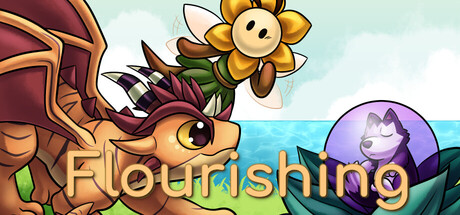
The game itself does not use generative AI while you play. Halley, the story, fishing, and locations are human-authored. Worlds and water use traditional game systems, not live AI generation.
We are team of two with a design and development background. We have a combined decades experience shipping production-quality code and art. We use AI along with our other tools, like Blender, Substance, etc. to help us build our vision. We use AI in the early stage of concept development and prototyping, coding assistance, but everything that makes it in-game is hand-crafted and authored by us. The music is played by hand real instruments. All screen captures are 100% in-game with no alterations.
Este jogo foi desenvolvido por um único criador com o auxílio de Inteligência Artificial (IA) no processo de programação e na criação de alguns efeitos sonoros e áudios.
Todas as artes, imagens, sprites e frames dentro do jogo foram criados inteiramente à mão, sem qualquer uso de IA.
Generative AI tools were used during part of the development process.
Generative AI was used for some 3D models and image assets. AI-generated assets were reviewed and adjusted by the developer before being included in the game.
No content is generated by AI while the game is running.
Some game art was created with the assistance of generative AI. Examples of where generative AI was used would be as follows, Creature art, Logo, Music, Game systems.
This game uses content created or assisted by generative AI. Generative AI was used to help create and edit some visual assets, music/sound materials, and scripts. All final content was reviewed, selected, and adjusted by the developer before being included in the game.
Some visual assets were partially created with the help of generative AI. It was used as a reference for a few alpha brushes, clothing patterns, and some card designs. No output was used as-is — everything was heavily modified and finished by hand. All other content in the game was created entirely by the developer.
AI tools were used in a limited way during development to assist with certain aspects of the game's creation. AI was mainly used for occasional assistance and brainstorming, while the majority of the game's design, development, artwork, and content were created and directed by the developer.
During development of this game, generative AI was used for the creation of some sound effects and background music, localization.
Generative AI was not used in the creation of the game's artwork or story.
This game uses generative AI tools during development for some pre-rendered assets, including store capsules and key art, character sprites, backgrounds, CGs, and certain audio. AI-assisted assets are selected and edited before inclusion. Story and game systems are human-authored.
Generative AI tools were used during development to assist with the localization of some in-game text and the creation of certain visual assets. All AI-assisted content was reviewed and edited by the developer before being included in the game.
Generative AI was used during development to assist with the creation of some promotional and visual assets. All AI-assisted content was reviewed and edited by the developer before being included in the game or its Steam store materials. No generative AI is used during gameplay.
We used generative AI tools during development to help create pre-rendered assets: part of the visual art (environments, buildings, characters and interface elements), the music, and store page artwork. All AI-generated content was reviewed, edited and assembled by us. Generative AI is not used at runtime — the game generates no AI content while you play.
Some of this game's assets were made with the help of generative AI tools and then edited by hand: the in-game notebook UI sprites, a few background props and set-dressing models, some texture work, and the English localization, which was drafted from our Korean original and reviewed by us.
The original Korean writing, the characters, the level design, and all gameplay systems were made without generative AI. Nothing is generated while you play.
In this game, players converse with characters via free-form text input. Responses are text generated by AI and will vary depending on the player's input.
Some of this game's content was created with the assistance of generative AI tools, always under human direction and review. Portions of the painted environment artwork and the store/marketing artwork began as AI-generated images that were then curated, edited, and integrated by hand. The music was generated with a licensed AI music tool, then curated and edited. Nothing is generated by AI while you play — everything you see and hear ships as fixed, human-reviewed content.
Generative AI tools were used to assist with the localization of this game into English, Simplified Chinese, Traditional Chinese, and Korean. 本作は、英語、簡体字中国語、繁体字中国語、韓国語へのローカライズの補助として生成AIツールを使用しました。
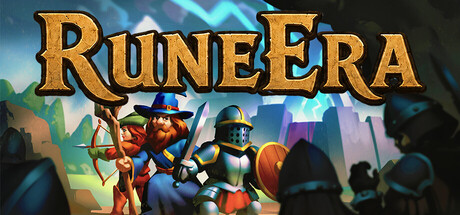
Generative AI tools were used during development to assist with portions of selected sprite artwork and to create some sound effects and background music. All AI-assisted content was generated before release, reviewed and curated by the developer, and edited or integrated into the final game as appropriate. RuneEra does not use AI to generate content while the game is running.
Some sprites started as AI-generated references before being rebuilt in the game's palette and resolution. All English writing is my own; the other nine languages are machine translated. No AI runs in the game itself. Nothing is generated while you play, and it never connects to an AI service.
We use generative AI for text only: writing this store page and translating the game's in-game text into the supported languages. Everything else, including all art, animation and audio, is made by hand, and no content is generated while you play.
Loop 9 uses generative AI to power text-only dialogue with Dragojlo, a fictional in-game coworker. Player-written messages and limited game-state context are sent through our backend to OpenAI to generate brief in-character replies. Some store marketing artwork was created with AI assistance and reviewed and edited by the developer. Player messages and generated replies are not shared with other players.
The in-game videos were created using AI tools. All dialogue writing, choices, characters, environments, game systems, minigames, UI design, and programming were handcrafted by the development team.
AI was primarily used in two sections of the game. To aid and assist with turning 2d sprites that were created into animated variations of them.
Steam store page pictures use AI to create variants of my logo. The background itself is AI the logo was designed by me and AI was used to adjust it in the photo.
A small number of textures in this game were generated with the assistance of AI tools. These are placeholders intended to be replaced with hand-made assets in future updates. As for the rest of the assets, they were hand made using 3D modelling and texturing software.
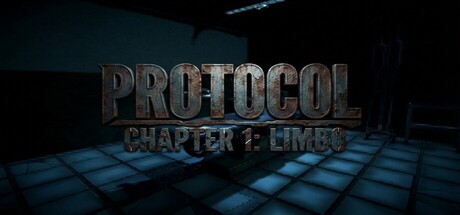
Generative AI tools were used during the development of Protocol as development assistance. AI was used to help with brainstorming, programming assistance, troubleshooting, and other development-related tasks. The final game content was reviewed, edited, and implemented by the developer.
The game is developed entirely by a solo developer. AI has therefore only been leveraged as a tool for productivity and efficiency - the overall game is fully imagined, designed, and brought together by the developer.
Generative AI was used to create selected store and library artwork, music, and sound-effect source material. The outputs were curated and edited by the developer before inclusion. No generative AI runs during gameplay, and players cannot generate AI content.
Standard C++ game code, written during development with the assistance of an AI programming assistant, used as a pair-programming tool. This includes gameplay systems (crafting, inventory, world simulation), rendering and UI code, and development tooling. It is ordinary, static game logic.
AI assistance was used only during development, directed by myself through specific requests, with every change reviewed, tested, and committed to version control by myself.
The shipped game contains no AI models and does not execute or generate any code or content via AI at runtime. The game is a fully offline, single-player experience.
Generative AI was used for programming assistance and to create some BGM. The generated music was edited and remastered by the developer. All visual assets were created manually without generative AI. No live-generated AI is used during gameplay.
During development we used generative AI tools to create the some of this game's assets. This includes 2D art and audios. All AI-generated assets were produced during development, reviewed by us, and ship as fixed files in the build. Some were hand-edited, recoloured, composited or retimed afterwards. Game code, design, writing and dialogue are authored by us.
Generative AI was used to create portions of the promotional trailer. The game itself does not contain AI-generated 3D assets; its 3D assets are commercially licensed assets.
Some Steam store and library artwork (capsules, hero, broadcast panels, and similar marketing images) was created with generative AI, then selected and cropped by the developer.
A few 3D props were blocked out with an AI modeling tool and then adjusted by hand for the game.
The game itself does not use generative AI while you play. Halley, the story, fishing, and locations are human-authored. Worlds and water use traditional game systems, not live AI generation.
We are team of two with a design and development background. We have a combined decades experience shipping production-quality code and art. We use AI along with our other tools, like Blender, Substance, etc. to help us build our vision. We use AI in the early stage of concept development and prototyping, coding assistance, but everything that makes it in-game is hand-crafted and authored by us. The music is played by hand real instruments. All screen captures are 100% in-game with no alterations.
Este jogo foi desenvolvido por um único criador com o auxílio de Inteligência Artificial (IA) no processo de programação e na criação de alguns efeitos sonoros e áudios.
Todas as artes, imagens, sprites e frames dentro do jogo foram criados inteiramente à mão, sem qualquer uso de IA.
Generative AI tools were used during part of the development process.
Generative AI was used for some 3D models and image assets. AI-generated assets were reviewed and adjusted by the developer before being included in the game.
No content is generated by AI while the game is running.
Some game art was created with the assistance of generative AI. Examples of where generative AI was used would be as follows, Creature art, Logo, Music, Game systems.
This game uses content created or assisted by generative AI. Generative AI was used to help create and edit some visual assets, music/sound materials, and scripts. All final content was reviewed, selected, and adjusted by the developer before being included in the game.
Some visual assets were partially created with the help of generative AI. It was used as a reference for a few alpha brushes, clothing patterns, and some card designs. No output was used as-is — everything was heavily modified and finished by hand. All other content in the game was created entirely by the developer.
AI tools were used in a limited way during development to assist with certain aspects of the game's creation. AI was mainly used for occasional assistance and brainstorming, while the majority of the game's design, development, artwork, and content were created and directed by the developer.
During development of this game, generative AI was used for the creation of some sound effects and background music, localization.
Generative AI was not used in the creation of the game's artwork or story.
This game uses generative AI tools during development for some pre-rendered assets, including store capsules and key art, character sprites, backgrounds, CGs, and certain audio. AI-assisted assets are selected and edited before inclusion. Story and game systems are human-authored.
Generative AI tools were used during development to assist with the localization of some in-game text and the creation of certain visual assets. All AI-assisted content was reviewed and edited by the developer before being included in the game.
Generative AI was used during development to assist with the creation of some promotional and visual assets. All AI-assisted content was reviewed and edited by the developer before being included in the game or its Steam store materials. No generative AI is used during gameplay.
We used generative AI tools during development to help create pre-rendered assets: part of the visual art (environments, buildings, characters and interface elements), the music, and store page artwork. All AI-generated content was reviewed, edited and assembled by us. Generative AI is not used at runtime — the game generates no AI content while you play.
Some of this game's assets were made with the help of generative AI tools and then edited by hand: the in-game notebook UI sprites, a few background props and set-dressing models, some texture work, and the English localization, which was drafted from our Korean original and reviewed by us.
The original Korean writing, the characters, the level design, and all gameplay systems were made without generative AI. Nothing is generated while you play.
In this game, players converse with characters via free-form text input. Responses are text generated by AI and will vary depending on the player's input.
Some of this game's content was created with the assistance of generative AI tools, always under human direction and review. Portions of the painted environment artwork and the store/marketing artwork began as AI-generated images that were then curated, edited, and integrated by hand. The music was generated with a licensed AI music tool, then curated and edited. Nothing is generated by AI while you play — everything you see and hear ships as fixed, human-reviewed content.
Generative AI tools were used to assist with the localization of this game into English, Simplified Chinese, Traditional Chinese, and Korean. 本作は、英語、簡体字中国語、繁体字中国語、韓国語へのローカライズの補助として生成AIツールを使用しました。
Generative AI tools were used during development to assist with portions of selected sprite artwork and to create some sound effects and background music. All AI-assisted content was generated before release, reviewed and curated by the developer, and edited or integrated into the final game as appropriate. RuneEra does not use AI to generate content while the game is running.
Some sprites started as AI-generated references before being rebuilt in the game's palette and resolution. All English writing is my own; the other nine languages are machine translated. No AI runs in the game itself. Nothing is generated while you play, and it never connects to an AI service.
We use generative AI for text only: writing this store page and translating the game's in-game text into the supported languages. Everything else, including all art, animation and audio, is made by hand, and no content is generated while you play.
Loop 9 uses generative AI to power text-only dialogue with Dragojlo, a fictional in-game coworker. Player-written messages and limited game-state context are sent through our backend to OpenAI to generate brief in-character replies. Some store marketing artwork was created with AI assistance and reviewed and edited by the developer. Player messages and generated replies are not shared with other players.
The in-game videos were created using AI tools. All dialogue writing, choices, characters, environments, game systems, minigames, UI design, and programming were handcrafted by the development team.
AI was primarily used in two sections of the game. To aid and assist with turning 2d sprites that were created into animated variations of them.
Steam store page pictures use AI to create variants of my logo. The background itself is AI the logo was designed by me and AI was used to adjust it in the photo.
A small number of textures in this game were generated with the assistance of AI tools. These are placeholders intended to be replaced with hand-made assets in future updates. As for the rest of the assets, they were hand made using 3D modelling and texturing software.
Generative AI tools were used during the development of Protocol as development assistance. AI was used to help with brainstorming, programming assistance, troubleshooting, and other development-related tasks. The final game content was reviewed, edited, and implemented by the developer.
The game is developed entirely by a solo developer. AI has therefore only been leveraged as a tool for productivity and efficiency - the overall game is fully imagined, designed, and brought together by the developer.
Generative AI was used to create selected store and library artwork, music, and sound-effect source material. The outputs were curated and edited by the developer before inclusion. No generative AI runs during gameplay, and players cannot generate AI content.
Standard C++ game code, written during development with the assistance of an AI programming assistant, used as a pair-programming tool. This includes gameplay systems (crafting, inventory, world simulation), rendering and UI code, and development tooling. It is ordinary, static game logic.
AI assistance was used only during development, directed by myself through specific requests, with every change reviewed, tested, and committed to version control by myself.
The shipped game contains no AI models and does not execute or generate any code or content via AI at runtime. The game is a fully offline, single-player experience.
Generative AI was used for programming assistance and to create some BGM. The generated music was edited and remastered by the developer. All visual assets were created manually without generative AI. No live-generated AI is used during gameplay.
During development we used generative AI tools to create the some of this game's assets. This includes 2D art and audios. All AI-generated assets were produced during development, reviewed by us, and ship as fixed files in the build. Some were hand-edited, recoloured, composited or retimed afterwards. Game code, design, writing and dialogue are authored by us.
Generative AI was used to create portions of the promotional trailer. The game itself does not contain AI-generated 3D assets; its 3D assets are commercially licensed assets.