Public Steam disclosure research25,383 disclosures tracked
Where do games disclose AI use?
Search developers’ Steam disclosures, compare classified AI use across
games, and follow recorded changes.
This index adds cross-game classifications and statistics to
statements published on individual store pages.
Groups reflect automatic analysis of public disclosures; mature records are excluded. These counts do not measure AI use across all of Steam.
Missing or unclear statements cannot establish whether a game uses AI.
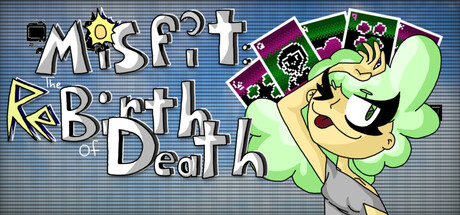
Hello! The card illustrations in this work were created with the help of AI, which supported me in developing this independent game. I apologize for my limited art skills, so I’ve mainly kept a minimalist style throughout the game.
All visual assets in the game, including character portraits, backgrounds, user interface (UI) elements, icons, and menus, were created using generative Artificial Intelligence tools. Additionally, all the background music and musical tracks were also composed and generated using AI. All of these assets are pre-rendered during development ; there is no live AI generation occurring in real-time while the user is playing.
This demo includes a limited number of pre-generated AI-assisted art assets used as placeholders (e.g., some concept/illustration elements and textures). These assets are not generated in real time and do not affect gameplay. We plan to replace AI-assisted placeholder assets with original final assets for the full release.
This game uses pre-rendered generative AI to create its character artwork, environment assets and marketing material. All AI-generated art has been reviewed and edited to ensure it meets our quality standards and does not include illegal or infringing material.
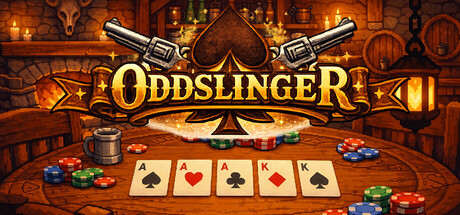
Some 2D visuals in Oddslinger were created with the help of generative AI tools (primarily background art and a small number of UI icons, such as card suit symbols) and then curated/edited by the developer
For this game, generative AI is used as an auxiliary tool in some parts of development and production.
It is used to create rough drafts of some of the images, text, and localization ideas used on the store page and in-game.
Final acceptance, editing, and quality checks are handled by the developers, and the content is released only after being confirmed for accuracy and appropriateness.
Please note that no content is generated in real time in response to player input within the game.
Generative AI was used as an assistive tool during development for (a) translating portions of in-game text (always human-reviewed/edited) and (b) creating or iterating some 2D art assets. All AI-assisted content is curated and may be further edited before shipping. No AI features are present in-game at runtime (no user prompts, no procedural AI generation), and no user data is used for AI training.
Generative AI have been used during development to:
assist with visual ideation (preliminary concepts and artistic inspiration) and some initial visuals.
help with the writing or rephrasing of certain descriptive texts.
All content present in the game (gameplay, mechanics, final visuals, interfaces, animations, and balancing) has been designed, selected, modified, and integrated manually by the developer.
No other artists' works were used as reference to generate anything.
Generative artificial intelligence is not used during gameplay, does not influence in-game decisions, and does not interact with player data.
This game uses generative AI during development in the following areas:
* Localization: AI tools were used to assist with translating some in-game text. All translations are reviewed and edited by the developer before being included in the game.
* Art Assets: AI tools were used to assist in creating some visual assets. All generated materials are selected, edited, and finalized by the developer.
* Programming: AI tools were used to assist with parts of the game's code development.
* Store Page: AI tools were used to assist in creating certain store page materials.
The game does not include any live-generated AI content. All AI-assisted content is generated during development, reviewed by a human, and finalized before being included in the shipped build.
This game contains art assets that were created with the assistance of generative AI tools. All AI-generated content was heavily curated, edited, and modified by our human art team to ensure it aligns with the game's unique artistic vision and quality standards. We affirm that we have the appropriate rights to all assets, both AI-generated and human-created, used in our game.
Some images in the game were created with the help of artificial intelligence to enhance the atmosphere and the visual design of cards and environments. The AI was used only for artistic purposes and does not affect gameplay.
Generative A.I. that was used in the game:
Coding for the Select Arrow, that replaces the default RPG Maker selection highlight, moving left and right (the actual arrow is not A.I. generated)
Coding for the Select Arrow changing depending where in the game you are (the arrows themselves are not A.I. generated)
Coding for the Enemy Health Numbers appearing
Coding for checking if both the player and enemy are at 1 HP (not the actual heartbeat event itself)
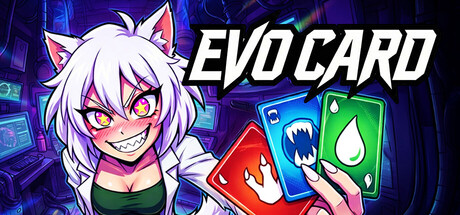
"The Strongest Evolution: EVO Card" utilizes Generative AI not as a shortcut, but as a core "Mutation Engine" to fit the game's biopunk theme.
Visual Assets: The creature mutations, body parts, and UI elements are generated using AI tools. However, they are not raw outputs; every asset has been heavily curated, retouched, and assembled by human developers to ensure a consistent and unique art style.
Concept: The infinite possibilities of evolution in the game mirror the generative nature of AI. We treat AI as the "Mad Scientist" inside the lab, allowing for a volume of biological variations that would be impossible with traditional methods.
Safety: All AI-generated content is manually reviewed to ensure it complies with copyright laws and contains no illegal or offensive material.
This title uses generative AI tools to assist in the creation of some written content and visual assets. All AI-assisted content is curated, edited, and finalized by the developer, and no AI-generated content is created dynamically during gameplay.
AI was used during development to help create some visual assets, including certain textures, logo elements, and background images. These assets were reviewed, edited, and integrated by the developer before being used in the game. The game does not use live AI generation during gameplay.
Some of the game's visual elements were created using AI tools during the development stage (for example, the design of Albums). Artists manually refined all such materials. Generative AI is not used in the gameplay and does not generate any content during the game.
Some of the game's visual elements were created using AI tools during the development stage (for example, the design of Albums). Artists manually refined all such materials. Generative AI is not used in the gameplay and does not generate any content during the game.
Artificial Intelligence was used exclusively for text localization and language translations. The pixel art and animations were handcrafted by the professional artists credited within the game. Sound effects and music are licensed assets curated for this project. No generative AI was used for any artistic, visual, or audio production.
Artificial intelligence was used in the creation of in-game artworks. These assets were curated, reviewed, and integrated to ensure consistency with the game’s artistic direction and quality standards.
Generative AI was used to create temporary placeholder visuals during development. All such content is reviewed, edited, and progressively replaced with human-created artwork.
This game utilizes AI image generation tools in the creation process of visual assets, specifically for card illustrations, relic images, and background images. All generated images have been manually reviewed, retouched, and edited by the developer before being implemented in the game. We have verified that these assets do not contain any illegal content or infringe upon any third-party rights.
Ghostwriter's Pact uses AI as an engine to enable gameplay that would be impossible to achieve with traditional game development methods.
The game is built on a "Hybrid AI" system designed to maximize player creativity while minimizing environmental impact and latency:
1. Pre-generated Content: To allow players to combine word cards into valid sentences, we used LLMs to pre-generate and validate a database of over 1 million properly structured sentences. It would be humanly impossible for a writing team to manually author this volume of text. By pre-generating this data, we ensure the core gameplay is instant, responsive, and does not require constant, energy-intensive API calls for every move the player makes.
2. Live Generation: When a player finalizes a story arc, the game connects to a live LLM to weave their sentences into a cohesive story. A secondary AI acts as a "Critic," evaluating the player's story for cohesiveness and creativity. Pre-generation of stories is impossible here, since players can mix sentences to create a near infinite amount of stories.
3. Visual Assets: The game's imagery was generated locally on developer hardware using custom-trained models (LoRAs) and workflows to ensure a consistent, stylized aesthetic that fits the game's theme.
Hello! The card illustrations in this work were created with the help of AI, which supported me in developing this independent game. I apologize for my limited art skills, so I’ve mainly kept a minimalist style throughout the game.
All visual assets in the game, including character portraits, backgrounds, user interface (UI) elements, icons, and menus, were created using generative Artificial Intelligence tools. Additionally, all the background music and musical tracks were also composed and generated using AI. All of these assets are pre-rendered during development ; there is no live AI generation occurring in real-time while the user is playing.
This demo includes a limited number of pre-generated AI-assisted art assets used as placeholders (e.g., some concept/illustration elements and textures). These assets are not generated in real time and do not affect gameplay. We plan to replace AI-assisted placeholder assets with original final assets for the full release.
This game uses pre-rendered generative AI to create its character artwork, environment assets and marketing material. All AI-generated art has been reviewed and edited to ensure it meets our quality standards and does not include illegal or infringing material.
Some 2D visuals in Oddslinger were created with the help of generative AI tools (primarily background art and a small number of UI icons, such as card suit symbols) and then curated/edited by the developer
For this game, generative AI is used as an auxiliary tool in some parts of development and production.
It is used to create rough drafts of some of the images, text, and localization ideas used on the store page and in-game.
Final acceptance, editing, and quality checks are handled by the developers, and the content is released only after being confirmed for accuracy and appropriateness.
Please note that no content is generated in real time in response to player input within the game.
Generative AI was used as an assistive tool during development for (a) translating portions of in-game text (always human-reviewed/edited) and (b) creating or iterating some 2D art assets. All AI-assisted content is curated and may be further edited before shipping. No AI features are present in-game at runtime (no user prompts, no procedural AI generation), and no user data is used for AI training.
Generative AI have been used during development to:
assist with visual ideation (preliminary concepts and artistic inspiration) and some initial visuals.
help with the writing or rephrasing of certain descriptive texts.
All content present in the game (gameplay, mechanics, final visuals, interfaces, animations, and balancing) has been designed, selected, modified, and integrated manually by the developer.
No other artists' works were used as reference to generate anything.
Generative artificial intelligence is not used during gameplay, does not influence in-game decisions, and does not interact with player data.
This game uses generative AI during development in the following areas:
* Localization: AI tools were used to assist with translating some in-game text. All translations are reviewed and edited by the developer before being included in the game.
* Art Assets: AI tools were used to assist in creating some visual assets. All generated materials are selected, edited, and finalized by the developer.
* Programming: AI tools were used to assist with parts of the game's code development.
* Store Page: AI tools were used to assist in creating certain store page materials.
The game does not include any live-generated AI content. All AI-assisted content is generated during development, reviewed by a human, and finalized before being included in the shipped build.
This game contains art assets that were created with the assistance of generative AI tools. All AI-generated content was heavily curated, edited, and modified by our human art team to ensure it aligns with the game's unique artistic vision and quality standards. We affirm that we have the appropriate rights to all assets, both AI-generated and human-created, used in our game.
Some images in the game were created with the help of artificial intelligence to enhance the atmosphere and the visual design of cards and environments. The AI was used only for artistic purposes and does not affect gameplay.
Generative A.I. that was used in the game:
Coding for the Select Arrow, that replaces the default RPG Maker selection highlight, moving left and right (the actual arrow is not A.I. generated)
Coding for the Select Arrow changing depending where in the game you are (the arrows themselves are not A.I. generated)
Coding for the Enemy Health Numbers appearing
Coding for checking if both the player and enemy are at 1 HP (not the actual heartbeat event itself)
"The Strongest Evolution: EVO Card" utilizes Generative AI not as a shortcut, but as a core "Mutation Engine" to fit the game's biopunk theme.
Visual Assets: The creature mutations, body parts, and UI elements are generated using AI tools. However, they are not raw outputs; every asset has been heavily curated, retouched, and assembled by human developers to ensure a consistent and unique art style.
Concept: The infinite possibilities of evolution in the game mirror the generative nature of AI. We treat AI as the "Mad Scientist" inside the lab, allowing for a volume of biological variations that would be impossible with traditional methods.
Safety: All AI-generated content is manually reviewed to ensure it complies with copyright laws and contains no illegal or offensive material.
This title uses generative AI tools to assist in the creation of some written content and visual assets. All AI-assisted content is curated, edited, and finalized by the developer, and no AI-generated content is created dynamically during gameplay.
AI was used during development to help create some visual assets, including certain textures, logo elements, and background images. These assets were reviewed, edited, and integrated by the developer before being used in the game. The game does not use live AI generation during gameplay.
Some of the game's visual elements were created using AI tools during the development stage (for example, the design of Albums). Artists manually refined all such materials. Generative AI is not used in the gameplay and does not generate any content during the game.
Some of the game's visual elements were created using AI tools during the development stage (for example, the design of Albums). Artists manually refined all such materials. Generative AI is not used in the gameplay and does not generate any content during the game.
Artificial Intelligence was used exclusively for text localization and language translations. The pixel art and animations were handcrafted by the professional artists credited within the game. Sound effects and music are licensed assets curated for this project. No generative AI was used for any artistic, visual, or audio production.
Artificial intelligence was used in the creation of in-game artworks. These assets were curated, reviewed, and integrated to ensure consistency with the game’s artistic direction and quality standards.
Generative AI was used to create temporary placeholder visuals during development. All such content is reviewed, edited, and progressively replaced with human-created artwork.
This game utilizes AI image generation tools in the creation process of visual assets, specifically for card illustrations, relic images, and background images. All generated images have been manually reviewed, retouched, and edited by the developer before being implemented in the game. We have verified that these assets do not contain any illegal content or infringe upon any third-party rights.
Ghostwriter's Pact uses AI as an engine to enable gameplay that would be impossible to achieve with traditional game development methods.
The game is built on a "Hybrid AI" system designed to maximize player creativity while minimizing environmental impact and latency:
1. Pre-generated Content: To allow players to combine word cards into valid sentences, we used LLMs to pre-generate and validate a database of over 1 million properly structured sentences. It would be humanly impossible for a writing team to manually author this volume of text. By pre-generating this data, we ensure the core gameplay is instant, responsive, and does not require constant, energy-intensive API calls for every move the player makes.
2. Live Generation: When a player finalizes a story arc, the game connects to a live LLM to weave their sentences into a cohesive story. A secondary AI acts as a "Critic," evaluating the player's story for cohesiveness and creativity. Pre-generation of stories is impossible here, since players can mix sentences to create a near infinite amount of stories.
3. Visual Assets: The game's imagery was generated locally on developer hardware using custom-trained models (LoRAs) and workflows to ensure a consistent, stylized aesthetic that fits the game's theme.