Public Steam disclosure research25,394 disclosures tracked
Where do games disclose AI use?
Search developers’ Steam disclosures, compare classified AI use across
games, and follow recorded changes.
This index adds cross-game classifications and statistics to
statements published on individual store pages.
Groups reflect automatic analysis of public disclosures; mature records are excluded. These counts do not measure AI use across all of Steam.
Missing or unclear statements cannot establish whether a game uses AI.
I know many players have reservations about AI-generated content, so I want to be upfront about exactly how it was used in this game.
I'm an ordinary gamer who has played games for almost twenty years and always dreamed of making one of my own. But I can't write code, and I've never been trained in art or music. This game exists because generative AI filled those gaps for me: parts of the code were written with the help of AI coding tools; some character, environment, and UI art was created with image-generation models, then hand-picked and adjusted by me; some animation, music, and sound effects were also made with AI tools.
Everything that makes it an actual game, though — the design, the balancing, the game feel, and every "is this fun?" decision — was done by me, across hundreds of playtests. The game contains no live-generated AI content.
For me, AI wasn't an assembly line making a game in my place. It's what let an ordinary player finally build the game he'd been dreaming about. I hope some of that comes through when you play — and I'd genuinely welcome your feedback.
Some of the visual art in this game including card, Relic, and background artwork was created with the help of generative AI tools during development.
All AI generated content was reviewed, curated, and edited by the developer to fit the game's style and quality standards.
Some 2D art assets in this game (such as certain face-card portraits and mascots) were created with the assistance of AI image-generation tools and then hand-edited and composited. All game design, code, writing, and music are human-authored, and all store screenshots are captured from real gameplay. No AI-generated content is produced live during gameplay.
AI tools were used to assist in drafting some written text (in-game lore entries and store page descriptions); all such text was reviewed and edited by the developer. All artwork, animation, music, and sound effects are human-created licensed assets. The game does not use AI to generate any content at runtime.
Updated 8/24/2026 for Full Transparency:
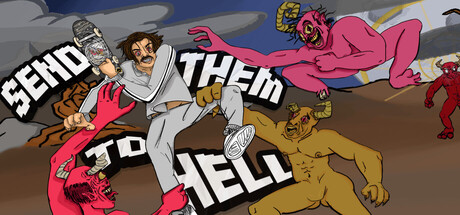
Send Them to Hell was built by a very small team with a very large appetite for demonic slaughter. Generative AI was used during development to create concept art and visual references for the graphic design team. These concepts were used as references during the creation and refinement of the game’s sprites and visual assets. The final assets were created and modified by the development team. The remainder of the artwork was created by human artists, who were compensated for their work and are credited in-game.
Some of Tapis's visual assets were created with the help of generative AI tools. These elements are produced ahead of time, then art-directed, selected and reworked by the studio to fit the game's world. No AI generates any content while you play: the gameplay, rules, balancing and all systems are entirely designed and hand-validated.
Generative AI was used during development as an assistance tool for code development, review, debugging, and refinement. Final implementation and testing were performed by the developer. The game does not use generative AI to create content at runtime. Visual assets are either original works or appropriately licensed third-party assets that were manually edited and adapted for the game.
Pre-generated AI tools were used during development to assist with the creation of selected 2D artwork, visual assets, and sound effects. All AI-assisted content was reviewed, edited, and integrated by the developer. The game does not use generative AI to create content during gameplay.
AI tools were used to create early drafts and a few base images for certain small visual elements, such as mission briefing cityscape thumbnails. Some initial sprite concepts were generated using AI. These assets were manually edited, adjusted, and integrated into the game’s visual style. No live generative AI is used during gameplay.
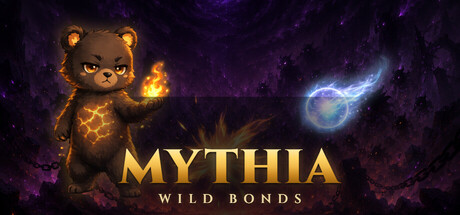
Mythia Wild Bonds was designed and built by a solo developer, game design, art direction, sound direction, and architecture are all the developer's own. AI generation tools were used to accelerate production of pixel art, sound effects, and music, each piece selected, reworked, and approved within the game's art bible and audio direction; code was also developed with AI pair-programming assistance, with all game systems designed by the developer. No content is AI-generated at runtime.
Some visual assets and audio assets used in this game were created or assisted using generative AI tools. All AI-generated content has been reviewed, edited, and integrated by the developer as part of the game's production process. The game does not generate content using AI during gameplay.
This game uses AI-generated content for marketing and
promotional materials, including the game trailer, teaser,
Steam capsule images, title images, and other marketing assets.
Most of the AI-generated images were additionally edited and
refined by our team using artistic and creative techniques
to better fit the game's visual style.
The AI-generated content is limited to external marketing
materials only. All actual gameplay, game mechanics, and
in-game content were created by the development team.
AI tools were used as supportive tools during the development process, including assistance with code, visual assets, and music. All AI-assisted content was reviewed, edited, and integrated by our development team before being included in the game.
Some visual assets, concept art, character portraits, promotional images, and store-related materials may be created or assisted using generative AI tools. All AI-assisted content is reviewed and edited by the developer before use. The game does not use real-time AI generation during gameplay.
This game's art and music were created during development using generative AI tools. Specifically: the painted 2D illustrations — card art, event illustrations, and background images — were generated with AI image tools, and the background music tracks were produced with AI music tools. In every case the developer reviewed, selected, edited, and finalized the results, which ship as fixed image and audio files.
AI tools were used during development.
The interface translations (English, French, German, Italian and Portuguese) and the log translations were generated with AI assistance, under the developer's direction and with human review. The game does not generate AI content at runtime.
Lumenfall is built by a small studio using AI-assisted development tools. Some pre-generated content — including portions of the game's code, the store page text, and the 2D promotional/capsule artwork and achievement icons — was created with the help of AI tools, always under human direction and review. The game does not generate any content with AI at runtime; everything you play is fixed, hand-tuned content.
Generative AI was used during development to assist in creating some pre-generated visual assets for the game and its promotional materials, as well as parts of the English localization. All AI-assisted content was reviewed by the developer and edited where necessary. No content is generated by AI while the game is running.
Some illustrations and background art were pre-generated using AI image tools, then manually curated, edited, and tone-matched by the developer. All game text, game design, and code are human-authored. The game does not generate any content with AI at runtime.
Some 2D art assets (e.g. icons, store capsules, background art) were created with the help of generative AI image tools and then curated and edited by the developer. No AI-generated content is produced live during gameplay.
Space Planet Explorer uses generative AI to create assets that ship with the game, including planet surface textures, cinematic sequences, voice narration, and music. All of this content was generated during development — no AI content is generated live during gameplay. Planet visuals are AI-generated interpretations based on real scientific data, not actual NASA photography.
This game uses generative AI during gameplay to create an original in-game character called a "Logos" for use by that player. Based on text entered or selected by the player, the AI generates a 2D illustration of the Logos in real time, along with its name, flavor text, and similar content. The generated Logos can be added to your deck and used to progress through the game.
The game also includes pre-generated AI content: enemy and event illustrations were created with Adobe Firefly during development. Generation is performed using cloud-based external AI services (Adobe Firefly for image generation, OpenAI for text generation).
The words entered by the player, generation conditions, and the data of the generated Logos are sent to and stored on our server. These records are used to provide the generation feature, review reported results, and investigate errors. A generated Logos is visible only to the player who created it and is not shared with other players.
Some information required for generation is sent from our server to external AI services. Data sent from our server to these services is not used to train or improve their models. Please do not enter any personal information, such as your name or contact details, or any confidential information you would not want third parties to know.
Salt and Soil uses generative AI during gameplay to create some Annual Family Council narrative text and structured choice outcomes based on the current campaign state. Generated council content is constrained by the game’s historical setting, family data, localization rules, and gameplay schema, then validated before it is shown to the player.
Some artwork, music, text, and translations in this game were initially created with the assistance of AI tools, and were then manually edited, revised, or recreated by the developer.
Generative AI-assisted tools were used as part of the development process for Xenogarden.
This includes support in creating and refining selected visual content such as concept art, artwork, textures, marketing materials and store page assets, as well as assistance with text, localization, sound/music ideas and creative drafts.
All content included in the game is pre-generated, selected, reviewed and curated. The game does not generate new AI content during gameplay and does not connect to external AI services during gameplay.
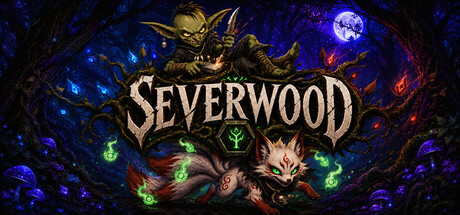
Severwood uses generative AI as part of its development. Many visual assets — including character art, backgrounds, and card illustrations — were created with the assistance of AI image-generation tools, then selected, edited, and assembled by the developer to fit the game's art direction. Some code was written with AI assistance, directed and reviewed by the developer. Game design, writing, planning, and systems are created and directed by the human developer. No AI-generated content is produced live during gameplay; all assets are fixed and were finalized during development.
Some visual assets and promotional artwork were created or assisted using generative AI, then reviewed and refined by the developer. All gameplay systems, game design, programming, balance, and core content were created by the developer. No generative AI is used during gameplay.
Chrome Circuit is developed by a solo developer who uses generative AI as part of the production pipeline. Character and environment sprite art was created using AI image generation, then processed, edited, and integrated by hand. Portions of the game's code were written with AI assistance under the developer's direction, with all systems designed, reviewed, and tested by the developer. All AI-generated content is created during development ("pre-generated") — the game does not generate any content while you play, and no AI runs on your machine. Game design, writing, and all creative decisions are the work of the developer.
AI tools were used during development to assist with certain aspects of programming, artwork, sound effects, and localization. All AI-assisted outputs were reviewed, substantially edited, and integrated by the developer. No unedited or raw AI-generated content appears in the final game.
Forged Cards is a passion project, built by one person. I'm not a game studio, I'm a single developer who fell in love with an idea for a deck-builder where you build the cards and set out to make it real.
Games like this usually take a team. Modern AI development tools are a big part of how one person was able to build something at this scope. I used AI coding assistants to help me build and iterate on the game's systems, AI image generation for the art, and AI-generated sound effects, all of it reviewed, edited, and shaped by me to fit the world I wanted to create. Every card, every enemy, every choice about how this game looks and feels came from a person (and some close friends) who cared about getting it right.
I'm being upfront about this because I think you deserve to know how the thing you're playing was made. Forged Cards exists because these tools let one person build a game that otherwise would have stayed an idea in a notebook.
I know many players have reservations about AI-generated content, so I want to be upfront about exactly how it was used in this game.
I'm an ordinary gamer who has played games for almost twenty years and always dreamed of making one of my own. But I can't write code, and I've never been trained in art or music. This game exists because generative AI filled those gaps for me: parts of the code were written with the help of AI coding tools; some character, environment, and UI art was created with image-generation models, then hand-picked and adjusted by me; some animation, music, and sound effects were also made with AI tools.
Everything that makes it an actual game, though — the design, the balancing, the game feel, and every "is this fun?" decision — was done by me, across hundreds of playtests. The game contains no live-generated AI content.
For me, AI wasn't an assembly line making a game in my place. It's what let an ordinary player finally build the game he'd been dreaming about. I hope some of that comes through when you play — and I'd genuinely welcome your feedback.
Some of the visual art in this game including card, Relic, and background artwork was created with the help of generative AI tools during development.
All AI generated content was reviewed, curated, and edited by the developer to fit the game's style and quality standards.
Some 2D art assets in this game (such as certain face-card portraits and mascots) were created with the assistance of AI image-generation tools and then hand-edited and composited. All game design, code, writing, and music are human-authored, and all store screenshots are captured from real gameplay. No AI-generated content is produced live during gameplay.
AI tools were used to assist in drafting some written text (in-game lore entries and store page descriptions); all such text was reviewed and edited by the developer. All artwork, animation, music, and sound effects are human-created licensed assets. The game does not use AI to generate any content at runtime.
Updated 8/24/2026 for Full Transparency:
Send Them to Hell was built by a very small team with a very large appetite for demonic slaughter. Generative AI was used during development to create concept art and visual references for the graphic design team. These concepts were used as references during the creation and refinement of the game’s sprites and visual assets. The final assets were created and modified by the development team. The remainder of the artwork was created by human artists, who were compensated for their work and are credited in-game.
Some of Tapis's visual assets were created with the help of generative AI tools. These elements are produced ahead of time, then art-directed, selected and reworked by the studio to fit the game's world. No AI generates any content while you play: the gameplay, rules, balancing and all systems are entirely designed and hand-validated.
Generative AI was used during development as an assistance tool for code development, review, debugging, and refinement. Final implementation and testing were performed by the developer. The game does not use generative AI to create content at runtime. Visual assets are either original works or appropriately licensed third-party assets that were manually edited and adapted for the game.
Pre-generated AI tools were used during development to assist with the creation of selected 2D artwork, visual assets, and sound effects. All AI-assisted content was reviewed, edited, and integrated by the developer. The game does not use generative AI to create content during gameplay.
AI tools were used to create early drafts and a few base images for certain small visual elements, such as mission briefing cityscape thumbnails. Some initial sprite concepts were generated using AI. These assets were manually edited, adjusted, and integrated into the game’s visual style. No live generative AI is used during gameplay.
Mythia Wild Bonds was designed and built by a solo developer, game design, art direction, sound direction, and architecture are all the developer's own. AI generation tools were used to accelerate production of pixel art, sound effects, and music, each piece selected, reworked, and approved within the game's art bible and audio direction; code was also developed with AI pair-programming assistance, with all game systems designed by the developer. No content is AI-generated at runtime.
Some visual assets and audio assets used in this game were created or assisted using generative AI tools. All AI-generated content has been reviewed, edited, and integrated by the developer as part of the game's production process. The game does not generate content using AI during gameplay.
This game uses AI-generated content for marketing and
promotional materials, including the game trailer, teaser,
Steam capsule images, title images, and other marketing assets.
Most of the AI-generated images were additionally edited and
refined by our team using artistic and creative techniques
to better fit the game's visual style.
The AI-generated content is limited to external marketing
materials only. All actual gameplay, game mechanics, and
in-game content were created by the development team.
AI tools were used as supportive tools during the development process, including assistance with code, visual assets, and music. All AI-assisted content was reviewed, edited, and integrated by our development team before being included in the game.
Some visual assets, concept art, character portraits, promotional images, and store-related materials may be created or assisted using generative AI tools. All AI-assisted content is reviewed and edited by the developer before use. The game does not use real-time AI generation during gameplay.
This game's art and music were created during development using generative AI tools. Specifically: the painted 2D illustrations — card art, event illustrations, and background images — were generated with AI image tools, and the background music tracks were produced with AI music tools. In every case the developer reviewed, selected, edited, and finalized the results, which ship as fixed image and audio files.
AI tools were used during development.
The interface translations (English, French, German, Italian and Portuguese) and the log translations were generated with AI assistance, under the developer's direction and with human review. The game does not generate AI content at runtime.
Lumenfall is built by a small studio using AI-assisted development tools. Some pre-generated content — including portions of the game's code, the store page text, and the 2D promotional/capsule artwork and achievement icons — was created with the help of AI tools, always under human direction and review. The game does not generate any content with AI at runtime; everything you play is fixed, hand-tuned content.
Generative AI was used during development to assist in creating some pre-generated visual assets for the game and its promotional materials, as well as parts of the English localization. All AI-assisted content was reviewed by the developer and edited where necessary. No content is generated by AI while the game is running.
Some illustrations and background art were pre-generated using AI image tools, then manually curated, edited, and tone-matched by the developer. All game text, game design, and code are human-authored. The game does not generate any content with AI at runtime.
Some 2D art assets (e.g. icons, store capsules, background art) were created with the help of generative AI image tools and then curated and edited by the developer. No AI-generated content is produced live during gameplay.
Space Planet Explorer uses generative AI to create assets that ship with the game, including planet surface textures, cinematic sequences, voice narration, and music. All of this content was generated during development — no AI content is generated live during gameplay. Planet visuals are AI-generated interpretations based on real scientific data, not actual NASA photography.
This game uses generative AI during gameplay to create an original in-game character called a "Logos" for use by that player. Based on text entered or selected by the player, the AI generates a 2D illustration of the Logos in real time, along with its name, flavor text, and similar content. The generated Logos can be added to your deck and used to progress through the game.
The game also includes pre-generated AI content: enemy and event illustrations were created with Adobe Firefly during development. Generation is performed using cloud-based external AI services (Adobe Firefly for image generation, OpenAI for text generation).
The words entered by the player, generation conditions, and the data of the generated Logos are sent to and stored on our server. These records are used to provide the generation feature, review reported results, and investigate errors. A generated Logos is visible only to the player who created it and is not shared with other players.
Some information required for generation is sent from our server to external AI services. Data sent from our server to these services is not used to train or improve their models. Please do not enter any personal information, such as your name or contact details, or any confidential information you would not want third parties to know.
Salt and Soil uses generative AI during gameplay to create some Annual Family Council narrative text and structured choice outcomes based on the current campaign state. Generated council content is constrained by the game’s historical setting, family data, localization rules, and gameplay schema, then validated before it is shown to the player.
Some artwork, music, text, and translations in this game were initially created with the assistance of AI tools, and were then manually edited, revised, or recreated by the developer.
Generative AI-assisted tools were used as part of the development process for Xenogarden.
This includes support in creating and refining selected visual content such as concept art, artwork, textures, marketing materials and store page assets, as well as assistance with text, localization, sound/music ideas and creative drafts.
All content included in the game is pre-generated, selected, reviewed and curated. The game does not generate new AI content during gameplay and does not connect to external AI services during gameplay.
Severwood uses generative AI as part of its development. Many visual assets — including character art, backgrounds, and card illustrations — were created with the assistance of AI image-generation tools, then selected, edited, and assembled by the developer to fit the game's art direction. Some code was written with AI assistance, directed and reviewed by the developer. Game design, writing, planning, and systems are created and directed by the human developer. No AI-generated content is produced live during gameplay; all assets are fixed and were finalized during development.
Some visual assets and promotional artwork were created or assisted using generative AI, then reviewed and refined by the developer. All gameplay systems, game design, programming, balance, and core content were created by the developer. No generative AI is used during gameplay.
Chrome Circuit is developed by a solo developer who uses generative AI as part of the production pipeline. Character and environment sprite art was created using AI image generation, then processed, edited, and integrated by hand. Portions of the game's code were written with AI assistance under the developer's direction, with all systems designed, reviewed, and tested by the developer. All AI-generated content is created during development ("pre-generated") — the game does not generate any content while you play, and no AI runs on your machine. Game design, writing, and all creative decisions are the work of the developer.
AI tools were used during development to assist with certain aspects of programming, artwork, sound effects, and localization. All AI-assisted outputs were reviewed, substantially edited, and integrated by the developer. No unedited or raw AI-generated content appears in the final game.
Forged Cards is a passion project, built by one person. I'm not a game studio, I'm a single developer who fell in love with an idea for a deck-builder where you build the cards and set out to make it real.
Games like this usually take a team. Modern AI development tools are a big part of how one person was able to build something at this scope. I used AI coding assistants to help me build and iterate on the game's systems, AI image generation for the art, and AI-generated sound effects, all of it reviewed, edited, and shaped by me to fit the world I wanted to create. Every card, every enemy, every choice about how this game looks and feels came from a person (and some close friends) who cared about getting it right.
I'm being upfront about this because I think you deserve to know how the thing you're playing was made. Forged Cards exists because these tools let one person build a game that otherwise would have stayed an idea in a notebook.