Public Steam disclosure research25,383 disclosures tracked
Where do games disclose AI use?
Search developers’ Steam disclosures, compare classified AI use across
games, and follow recorded changes.
This index adds cross-game classifications and statistics to
statements published on individual store pages.
Groups reflect automatic analysis of public disclosures; mature records are excluded. These counts do not measure AI use across all of Steam.
Missing or unclear statements cannot establish whether a game uses AI.
All cards in the game that currently have art are created using various AI generators and models. All AI artwork contained within this game is to be considered temporary over a long term period of time. Some AI generated artworks may be replaced by human-made artwork of the course of this game's existence. New cards added into the game may or may not contain AI artworks. Any replacements of AI to human-made artworks will always be announced in the game's Discord server.
Part of the program code, in-game image assets, and store page promotional materials in this game were generated or produced with the assistance of artificial intelligence technology.
The visual assets for the cards used in the game were created using generative AI tools during the development process. All generated content has been manually reviewed, edited, and approved by the developer to ensure it aligns with the game's artistic vision and standards. The game code was developed with the assistance of AI coding tools but contains no real-time AI generation mechanics for the player.
Generative AI was used only in limited cases: for a few UI elements and temporary draft translation. Before release, all machine-translated text will be replaced with human localization.
Board/scene backgrounds, some video footage and a few character variations are made with the help of generative AI.
Video voiceovers are made with AI-powered text-to-speech services.
1. Asset Creation: Generative AI was used to create base images for some backgrounds and non-character card illustrations (such as items or objects). All these assets have been manually edited and processed by the developer to fit the game's art style and ensure they are used appropriately.
2. Translation: AI is used, as the translation is primarily based on machine translation.
3. Real-time Generation: The game features an optional AI text generation system for exploration flavor text. This function is only activated if the player provides their own API endpoint. The generated text is based on in-game variables (player skills, partners, and floor names) and does not affect the core story or progression. It is a purely cosmetic addition for enhanced immersion.
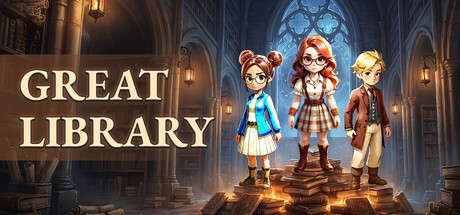
For the development of Great Library, generative AI tools were used to assist in the creation of static visual assets, including environmental textures, character concept art, and store page promotional imagery. All AI-assisted content has been manually reviewed, refined, and integrated by our development team to ensure quality and consistency. There is no live-generated AI content, code, or real-time generation used during gameplay.
This product uses generative AI to create selected assets, including visual content such as background images, map illustrations, and character portraits, as well as background music. The AI-generated content is partially edited and integrated into the game’s overall design.
AI was used to translate the game into French, Spanish and Brazil Portuguese.
Friends speaking these languages checked for accuracy but I will adjust any translation errors, when the community let me know about them!
AI was used as a tool to support the creative and technical process, not as a replacement for design, implementation, or artistic decision-making.
AI was used to assist with programming tasks, such as problem-solving, code structuring, and iteration during development. All final code was reviewed, adapted, and integrated manually by the developer.
AI was also used to generate early visual concepts and rough art sketches. These assets were not used directly in the final game; instead, they served as references and inspiration. All final visuals were manually reviewed, refined, and adjusted to fit the game’s art direction and technical constraints.
Initial enemy and card images are supported by AI and some of the promotional and storefront images were also created with AI tools and then refined by hand.
This game does not use AI to generate content during gameplay. All gameplay systems, visuals, audio, and text are handcrafted and included as part of the game.
AI tools were used during development in a limited way to assist the developer with prototyping, debugging, and refining code. These tools acted as a productivity aid only. All final decisions, implementations, and content were created and reviewed manually.
There are no AI-driven characters, dynamic content generation, or systems that learn from player behavior. The game does not connect to external AI services, collect player data, or use AI to influence gameplay, difficulty, or monetization.
Players can expect a traditional, deterministic game experience without AI-generated content during play.
We use AI in all our products, where possible, including but not limited to helping in creation of code, graphical assets and text. AI is used as a workflow tool, much like digital art software or modern coding tools. Use of AI allows us to have more and better features which would otherwise be impossible or time and cost prohibitive for a small independent game studio.
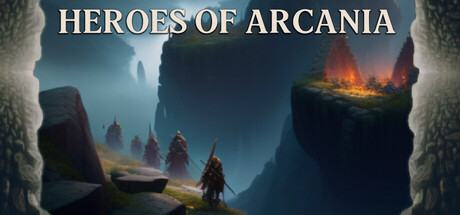
The art in this demo was either directly created using the visual assets of the Second Edition of the tabletop game "Heroes of Arcania" or inspired by/edited to be a close approximation of the visual assets of said tabletop game.
The art from the tabletop game is NOT AI generated art but AI assisted.
All of the art started as a drawing or photograph created by the original artist which was then used as a base image that was processed by AI to sharpen the image.
This process ensures that NO ONE'S art is stolen.
On top of this, every one of the over 750 unique images used for the tabletop game is put through google image search. If any come back with a result other than "No image found", it is replaced to ensure due diligence is done to protect others.
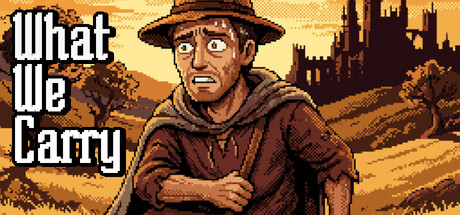
I am a solo indie developer with limited time and funds. I use AI art to help in places where my personal pixel art skills are lacking. Many/most all of these pieces get hand cleaned up by me to ensure overall aesthetics, feel, and theme are maintained.
Specific usages of AI Art:
Character/Armor Art - (The characters are the focal pieces of the game. I wanted them clean with the gritty overtones and proper shading. My art is not there yet)
Location Backgrounds - (The floor the character is seen walking on is largely created by AI with touch ups to ensure proper parallax looping)
The pixel art hands in the game's logo/title images - (I'm terrible with pixel art hands... something about the shading)
AI-generated images were used for some in-game assets including icons and artworks. These assets were generated using image generation AI tools and then edited/refined by the developer. AI translation tools were also used to support localization, with review and editing by the developer. No AI is used during actual gameplay.
Some 2D art and sound effects were created using limited AI-assisted drafts, then fully hand-edited and finalized by our art team. No AI runs during gameplay, and players do not generate or interact with AI content.
Following is generated using AI:
AI is used only to generate some pre-created assets. No AI-generated content is produced during gameplay.
Store Page
*The game icon was created with the help of AI tools.
*The store page description was rewritten using AI assistance.
In-Game Content
*The tutorial voice-overs are generated using the text-to-speech service TTSFree.
*The tutorial narration text was originally written in German and translated into English with DeepL, with developer review and adjustments.
There is no live AI generation in the game. All maps and characters are hand-crafted. Some audio and a few in-game art elements (such as lore background pages) currently use AI as placeholders and will be replaced as development continues.
During development, an AI writing assistant was used to draft and polish in-game text, including item descriptions, dialogues, and system logs. All text was then manually proofread, edited, and verified by the developers.
This game features an optional AI integration known as "The Oracle," which utilizes generative text technology to provide dynamic narrative commentary and sarcastic tactical analysis based on your real-time gameplay actions. This feature is powered by the Gemini API and operates on a "Bring Your Own Key" (BYOK) architecture, meaning users must provide their own personal API Key to enable this specific functionality. The AI generation is strictly cosmetic, text-based, and completely optional, ensuring that the core gameplay experience, mechanics, and balance remain fully intact and enjoyable whether or not the feature is active.
All cards in the game that currently have art are created using various AI generators and models. All AI artwork contained within this game is to be considered temporary over a long term period of time. Some AI generated artworks may be replaced by human-made artwork of the course of this game's existence. New cards added into the game may or may not contain AI artworks. Any replacements of AI to human-made artworks will always be announced in the game's Discord server.
Part of the program code, in-game image assets, and store page promotional materials in this game were generated or produced with the assistance of artificial intelligence technology.
The visual assets for the cards used in the game were created using generative AI tools during the development process. All generated content has been manually reviewed, edited, and approved by the developer to ensure it aligns with the game's artistic vision and standards. The game code was developed with the assistance of AI coding tools but contains no real-time AI generation mechanics for the player.
Generative AI was used only in limited cases: for a few UI elements and temporary draft translation. Before release, all machine-translated text will be replaced with human localization.
Board/scene backgrounds, some video footage and a few character variations are made with the help of generative AI.
Video voiceovers are made with AI-powered text-to-speech services.
1. Asset Creation: Generative AI was used to create base images for some backgrounds and non-character card illustrations (such as items or objects). All these assets have been manually edited and processed by the developer to fit the game's art style and ensure they are used appropriately.
2. Translation: AI is used, as the translation is primarily based on machine translation.
3. Real-time Generation: The game features an optional AI text generation system for exploration flavor text. This function is only activated if the player provides their own API endpoint. The generated text is based on in-game variables (player skills, partners, and floor names) and does not affect the core story or progression. It is a purely cosmetic addition for enhanced immersion.
For the development of Great Library, generative AI tools were used to assist in the creation of static visual assets, including environmental textures, character concept art, and store page promotional imagery. All AI-assisted content has been manually reviewed, refined, and integrated by our development team to ensure quality and consistency. There is no live-generated AI content, code, or real-time generation used during gameplay.
This product uses generative AI to create selected assets, including visual content such as background images, map illustrations, and character portraits, as well as background music. The AI-generated content is partially edited and integrated into the game’s overall design.
AI was used to translate the game into French, Spanish and Brazil Portuguese.
Friends speaking these languages checked for accuracy but I will adjust any translation errors, when the community let me know about them!
AI was used as a tool to support the creative and technical process, not as a replacement for design, implementation, or artistic decision-making.
AI was used to assist with programming tasks, such as problem-solving, code structuring, and iteration during development. All final code was reviewed, adapted, and integrated manually by the developer.
AI was also used to generate early visual concepts and rough art sketches. These assets were not used directly in the final game; instead, they served as references and inspiration. All final visuals were manually reviewed, refined, and adjusted to fit the game’s art direction and technical constraints.
Initial enemy and card images are supported by AI and some of the promotional and storefront images were also created with AI tools and then refined by hand.
This game does not use AI to generate content during gameplay. All gameplay systems, visuals, audio, and text are handcrafted and included as part of the game.
AI tools were used during development in a limited way to assist the developer with prototyping, debugging, and refining code. These tools acted as a productivity aid only. All final decisions, implementations, and content were created and reviewed manually.
There are no AI-driven characters, dynamic content generation, or systems that learn from player behavior. The game does not connect to external AI services, collect player data, or use AI to influence gameplay, difficulty, or monetization.
Players can expect a traditional, deterministic game experience without AI-generated content during play.
We use AI in all our products, where possible, including but not limited to helping in creation of code, graphical assets and text. AI is used as a workflow tool, much like digital art software or modern coding tools. Use of AI allows us to have more and better features which would otherwise be impossible or time and cost prohibitive for a small independent game studio.
The art in this demo was either directly created using the visual assets of the Second Edition of the tabletop game "Heroes of Arcania" or inspired by/edited to be a close approximation of the visual assets of said tabletop game.
The art from the tabletop game is NOT AI generated art but AI assisted.
All of the art started as a drawing or photograph created by the original artist which was then used as a base image that was processed by AI to sharpen the image.
This process ensures that NO ONE'S art is stolen.
On top of this, every one of the over 750 unique images used for the tabletop game is put through google image search. If any come back with a result other than "No image found", it is replaced to ensure due diligence is done to protect others.
I am a solo indie developer with limited time and funds. I use AI art to help in places where my personal pixel art skills are lacking. Many/most all of these pieces get hand cleaned up by me to ensure overall aesthetics, feel, and theme are maintained.
Specific usages of AI Art:
Character/Armor Art - (The characters are the focal pieces of the game. I wanted them clean with the gritty overtones and proper shading. My art is not there yet)
Location Backgrounds - (The floor the character is seen walking on is largely created by AI with touch ups to ensure proper parallax looping)
The pixel art hands in the game's logo/title images - (I'm terrible with pixel art hands... something about the shading)
AI-generated images were used for some in-game assets including icons and artworks. These assets were generated using image generation AI tools and then edited/refined by the developer. AI translation tools were also used to support localization, with review and editing by the developer. No AI is used during actual gameplay.
Some 2D art and sound effects were created using limited AI-assisted drafts, then fully hand-edited and finalized by our art team. No AI runs during gameplay, and players do not generate or interact with AI content.
Following is generated using AI:
AI is used only to generate some pre-created assets. No AI-generated content is produced during gameplay.
Store Page
*The game icon was created with the help of AI tools.
*The store page description was rewritten using AI assistance.
In-Game Content
*The tutorial voice-overs are generated using the text-to-speech service TTSFree.
*The tutorial narration text was originally written in German and translated into English with DeepL, with developer review and adjustments.
There is no live AI generation in the game. All maps and characters are hand-crafted. Some audio and a few in-game art elements (such as lore background pages) currently use AI as placeholders and will be replaced as development continues.
During development, an AI writing assistant was used to draft and polish in-game text, including item descriptions, dialogues, and system logs. All text was then manually proofread, edited, and verified by the developers.
This game features an optional AI integration known as "The Oracle," which utilizes generative text technology to provide dynamic narrative commentary and sarcastic tactical analysis based on your real-time gameplay actions. This feature is powered by the Gemini API and operates on a "Bring Your Own Key" (BYOK) architecture, meaning users must provide their own personal API Key to enable this specific functionality. The AI generation is strictly cosmetic, text-based, and completely optional, ensuring that the core gameplay experience, mechanics, and balance remain fully intact and enjoyable whether or not the feature is active.