Public Steam disclosure research25,394 disclosures tracked
Where do games disclose AI use?
Search developers’ Steam disclosures, compare classified AI use across
games, and follow recorded changes.
This index adds cross-game classifications and statistics to
statements published on individual store pages.
Groups reflect automatic analysis of public disclosures; mature records are excluded. These counts do not measure AI use across all of Steam.
Missing or unclear statements cannot establish whether a game uses AI.
We use generative AI tools to create and iterate on certain marketing visuals (e.g., concept mockups and promotional graphics). These assets are reviewed and refined by our team before publication, and AI is not used to generate in-game content or gameplay-critical assets.
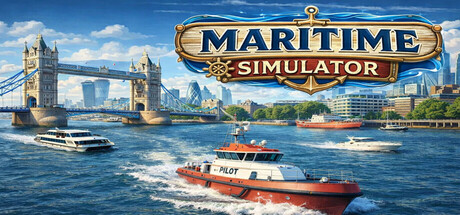
This game uses generative AI to create dynamic in-game dialogue (e.g., radio/operator lines) during gameplay. The player does not provide free-form text input; prompts are system-controlled. Outputs are filtered to avoid disallowed content (hate, sexual content, extreme violence, personal data). AI-generated dialogue is thematic and does not imitate real people.
This game uses pre-generated AI only for certain UI background images and promotional store visuals. These assets were created before release and remain fixed. The game does not include any live AI generation during gameplay.
Promotional artwork for the Steam store page was created with the help of generative AI tools during the development process. The game does not utilize any generative AI during gameplay, runtime systems, or player-facing content.
I use AI to supplement as a stand in for what will eventually become human made content, currently its just music at the main menu and some parts of images in advertisements
AI-based voice conversion is used for a single cameo character to respectfully recreate and restore the voice of a deceased person from archival recordings, while all dialogue is written manually.
Since this game is older than “Reflection Of Sin”, I was inexperienced when it came to finding good ambient music. For this reason, I used AI to create ambient music in only a few levels.
AI has been used to enable the small team of developers to generate code faster and speed up development significantly. It has also been used to generate some art assets. We aim to use AI in a way to enhance the speed and quality of our output, while being mindful of not using it in a way that hurts the artistical integrity of the game.
This game does not use AI to generate content during gameplay. All gameplay systems, visuals, audio, and text are handcrafted and included as part of the game.
AI tools were used during development in a limited way to assist the developer with prototyping, debugging, and refining code. These tools acted as a productivity aid only. All final decisions, implementations, and content were created and reviewed manually.
There are no AI-driven characters, dynamic content generation, or systems that learn from player behavior. The game does not connect to external AI services, collect player data, or use AI to influence gameplay, difficulty, or monetization.
Players can expect a traditional, deterministic game experience without AI-generated content during play.
"Generative AI was used solely for the creation of marketing and promotional materials, such as storefront banners and promotional posters. All in-game assets—including 3D models, textures, environments, and animations—have been manually hand-crafted by the developer without the use of AI to ensure artistic integrity and the highest quality for the gameplay experience."
As an indie game project, to overcome limitations in budget and time,
this game utilizes AI-generated assets for some visual elements (including character art, background scenes, and UI icons) and music.
All AI-generated content has undergone the following manual processing:
• Frame-by-frame adjustments for detail consistency.
• Redrawing of parts inconsistent with the game's worldbuilding.
Ayu promises that all assets comply with Steam's policies, and the core gameplay and narrative are 100% original.
Thank you for your understanding and support.
Generative artificial intelligence was used during development to assist with creating only a few concept art pieces, while the majority of concept art was drawn by the development team. AI was also used to help polish certain 2D scene visuals. All AI-assisted content was reviewed, refined, and integrated by the team to ensure it fits the game’s artistic vision and quality standards.
We used generative AI tools during development for some marketing images, certain UI elements, store page text drafting, and code suggestions. All outputs were reviewed and edited by the developer. The game does not use AI to generate content during gameplay.
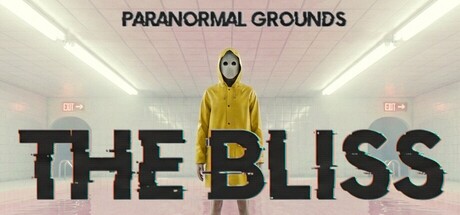
Generative AI tools were utilized during the development of The Bliss to assist with initial script brainstorming, technical troubleshooting, and the creation of minor 2D artwork elements. All AI-assisted content was heavily modified, edited, and curated by the development team to align with the game's strict artistic vision. (Note: Any 3D AI-generated assets were used strictly as temporary placeholders during prototyping and have been completely replaced by human-crafted models in the final release).
Use of UI Assets and Visual Elements
The game uses a combination of custom-made assets and assisted tools for certain visual elements.
Some UI icons and minor interface elements were created with the help of generation tools and then manually edited and integrated into the game.
This includes:
small UI icons
damage indicators
ability cards and card elements
UI cards and visual overlays
promotional banners for the Steam store
All generated elements are used as supporting visuals, refined and adapted to fit the game’s original design, gameplay systems, and overall art direction.
Core gameplay visuals, mechanics, environments, and animations are fully custom and developed specifically for the game.
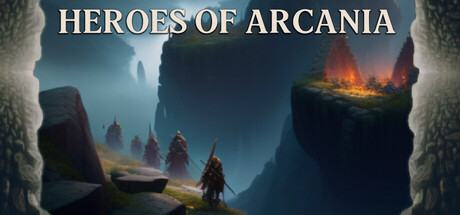
The art in this demo was either directly created using the visual assets of the Second Edition of the tabletop game "Heroes of Arcania" or inspired by/edited to be a close approximation of the visual assets of said tabletop game.
The art from the tabletop game is NOT AI generated art but AI assisted.
All of the art started as a drawing or photograph created by the original artist which was then used as a base image that was processed by AI to sharpen the image.
This process ensures that NO ONE'S art is stolen.
On top of this, every one of the over 750 unique images used for the tabletop game is put through google image search. If any come back with a result other than "No image found", it is replaced to ensure due diligence is done to protect others.
The AI is used in game to generate some props (small in-game objects models which make environment look more authentic.
The AI is NOT USED for any of the major game features, narrative or important visuals
This game includes pre-generated visual assets created and edited using MidJourney.
Written content was developed with AI assistance (ChatGPT, GitHub Copilot) and edited by the developer.
Voice-over generated by ElevenLabs.
This uses AI-assisted tools within software like Adobe Photoshop, Adobe Illustrator, or programs such as Topaz Gigapixel to enhance or upscale texture quality in development.
Artificial intelligence was only used to generate book covers, as there were a huge number of them and they were only used on classic books, they were not used on the remaining unique and magical books.
Only certain visual assets such as the cover art, banners, and installation icons were created using AI. No in-game content, gameplay elements, or narrative assets were generated with AI.
The game may utilize artificial intelligence technologies to generate or assist in generating certain visual materials or other multimedia assets for marketing and promotional purposes.
The game’s logo + the level's images list was generated using AI and then manually edited and finalized by the developer. No gameplay, art, or audio content was AI-generated.
This game utilizes pre-generated AI assets to enhance the immersive atmosphere and production value. Specifically, AI tools were used to assist in the creation of:
Audio: Atmospheric sound effects and character voice-over performances designed to heighten the psychological horror experience.
Promotional Material: Static visual elements and artwork used for marketing purposes.
All AI-generated content has been manually reviewed, curated, and integrated by the development team to ensure it aligns with the game's narrative and artistic vision.
We use generative AI tools to create and iterate on certain marketing visuals (e.g., concept mockups and promotional graphics). These assets are reviewed and refined by our team before publication, and AI is not used to generate in-game content or gameplay-critical assets.
This game uses generative AI to create dynamic in-game dialogue (e.g., radio/operator lines) during gameplay. The player does not provide free-form text input; prompts are system-controlled. Outputs are filtered to avoid disallowed content (hate, sexual content, extreme violence, personal data). AI-generated dialogue is thematic and does not imitate real people.
This game uses pre-generated AI only for certain UI background images and promotional store visuals. These assets were created before release and remain fixed. The game does not include any live AI generation during gameplay.
Promotional artwork for the Steam store page was created with the help of generative AI tools during the development process. The game does not utilize any generative AI during gameplay, runtime systems, or player-facing content.
I use AI to supplement as a stand in for what will eventually become human made content, currently its just music at the main menu and some parts of images in advertisements
AI-based voice conversion is used for a single cameo character to respectfully recreate and restore the voice of a deceased person from archival recordings, while all dialogue is written manually.
Since this game is older than “Reflection Of Sin”, I was inexperienced when it came to finding good ambient music. For this reason, I used AI to create ambient music in only a few levels.
AI has been used to enable the small team of developers to generate code faster and speed up development significantly. It has also been used to generate some art assets. We aim to use AI in a way to enhance the speed and quality of our output, while being mindful of not using it in a way that hurts the artistical integrity of the game.
This game does not use AI to generate content during gameplay. All gameplay systems, visuals, audio, and text are handcrafted and included as part of the game.
AI tools were used during development in a limited way to assist the developer with prototyping, debugging, and refining code. These tools acted as a productivity aid only. All final decisions, implementations, and content were created and reviewed manually.
There are no AI-driven characters, dynamic content generation, or systems that learn from player behavior. The game does not connect to external AI services, collect player data, or use AI to influence gameplay, difficulty, or monetization.
Players can expect a traditional, deterministic game experience without AI-generated content during play.
"Generative AI was used solely for the creation of marketing and promotional materials, such as storefront banners and promotional posters. All in-game assets—including 3D models, textures, environments, and animations—have been manually hand-crafted by the developer without the use of AI to ensure artistic integrity and the highest quality for the gameplay experience."
As an indie game project, to overcome limitations in budget and time,
this game utilizes AI-generated assets for some visual elements (including character art, background scenes, and UI icons) and music.
All AI-generated content has undergone the following manual processing:
• Frame-by-frame adjustments for detail consistency.
• Redrawing of parts inconsistent with the game's worldbuilding.
Ayu promises that all assets comply with Steam's policies, and the core gameplay and narrative are 100% original.
Thank you for your understanding and support.
Generative artificial intelligence was used during development to assist with creating only a few concept art pieces, while the majority of concept art was drawn by the development team. AI was also used to help polish certain 2D scene visuals. All AI-assisted content was reviewed, refined, and integrated by the team to ensure it fits the game’s artistic vision and quality standards.
We used generative AI tools during development for some marketing images, certain UI elements, store page text drafting, and code suggestions. All outputs were reviewed and edited by the developer. The game does not use AI to generate content during gameplay.
Generative AI tools were utilized during the development of The Bliss to assist with initial script brainstorming, technical troubleshooting, and the creation of minor 2D artwork elements. All AI-assisted content was heavily modified, edited, and curated by the development team to align with the game's strict artistic vision. (Note: Any 3D AI-generated assets were used strictly as temporary placeholders during prototyping and have been completely replaced by human-crafted models in the final release).
Use of UI Assets and Visual Elements
The game uses a combination of custom-made assets and assisted tools for certain visual elements.
Some UI icons and minor interface elements were created with the help of generation tools and then manually edited and integrated into the game.
This includes:
small UI icons
damage indicators
ability cards and card elements
UI cards and visual overlays
promotional banners for the Steam store
All generated elements are used as supporting visuals, refined and adapted to fit the game’s original design, gameplay systems, and overall art direction.
Core gameplay visuals, mechanics, environments, and animations are fully custom and developed specifically for the game.
The art in this demo was either directly created using the visual assets of the Second Edition of the tabletop game "Heroes of Arcania" or inspired by/edited to be a close approximation of the visual assets of said tabletop game.
The art from the tabletop game is NOT AI generated art but AI assisted.
All of the art started as a drawing or photograph created by the original artist which was then used as a base image that was processed by AI to sharpen the image.
This process ensures that NO ONE'S art is stolen.
On top of this, every one of the over 750 unique images used for the tabletop game is put through google image search. If any come back with a result other than "No image found", it is replaced to ensure due diligence is done to protect others.
The AI is used in game to generate some props (small in-game objects models which make environment look more authentic.
The AI is NOT USED for any of the major game features, narrative or important visuals
This game includes pre-generated visual assets created and edited using MidJourney.
Written content was developed with AI assistance (ChatGPT, GitHub Copilot) and edited by the developer.
Voice-over generated by ElevenLabs.
This uses AI-assisted tools within software like Adobe Photoshop, Adobe Illustrator, or programs such as Topaz Gigapixel to enhance or upscale texture quality in development.
Artificial intelligence was only used to generate book covers, as there were a huge number of them and they were only used on classic books, they were not used on the remaining unique and magical books.
Only certain visual assets such as the cover art, banners, and installation icons were created using AI. No in-game content, gameplay elements, or narrative assets were generated with AI.
The game may utilize artificial intelligence technologies to generate or assist in generating certain visual materials or other multimedia assets for marketing and promotional purposes.
The game’s logo + the level's images list was generated using AI and then manually edited and finalized by the developer. No gameplay, art, or audio content was AI-generated.
This game utilizes pre-generated AI assets to enhance the immersive atmosphere and production value. Specifically, AI tools were used to assist in the creation of:
Audio: Atmospheric sound effects and character voice-over performances designed to heighten the psychological horror experience.
Promotional Material: Static visual elements and artwork used for marketing purposes.
All AI-generated content has been manually reviewed, curated, and integrated by the development team to ensure it aligns with the game's narrative and artistic vision.