Public Steam disclosure research25,497 disclosures tracked
Where do games disclose AI use?
Search developers’ Steam disclosures, compare classified AI use across
games, and follow recorded changes.
This index adds cross-game classifications and statistics to
statements published on individual store pages.
Groups reflect automatic analysis of public disclosures; mature records are excluded. These counts do not measure AI use across all of Steam.
Missing or unclear statements cannot establish whether a game uses AI.
This game uses generative AI to create some of its audio, visual, and localization content. The music was generated with AI tools, certain sound effects were produced using AI-based audio synthesis, and some in‑game images and artwork were created with the assistance of generative AI. Part of the game's translations were also assisted by AI. All content has been manually reviewed, edited, and adapted to maintain the artistic and narrative coherence of the project.
AI assisted tools were utilized during development to help generate and refine various assets and ideas. All content was reviewed, edited, and integrated by the developer to ensure consistency with the game's design and vision.
Specifically:
Tools used: ChatGPT
What was created with AI: Capsule images, library assets, and in-game artwork (backgrounds, visual elements, UI components).
Process: All AI-generated outputs were reviewed, curated, and edited by me to ensure they fit the game's pixel-neon aesthetic and overall style. Outputs that did not meet quality or style standards were discarded or further edited.
Rights & legal compliance: I have taken care to avoid generating content that infringes on existing copyrights or trademarks. No prompts referenced real persons, specific copyrighted characters, or trademarked properties. The final assets are used only within this game and its marketing materials.
No live-generated AI is used during gameplay. All AI-generated content was finalized during development and ships as static assets.
All design, writing, and creative direction in this game are human-made. Generative AI was used only as a workflow tool for pre-rendered assets — achievement icons, platform tilesets, zone backgrounds, the soundtrack, and the DE / FR / ES / IT translations
of the human-written English text. All assets were reviewed and finalised by the developer. The game runs no AI at runtime.
Some visual assets in this game were created with the help of generative AI tools. As a solo developer with a programming background I used AI to generate graphics. This allowed me to develop and present the game despite not having access to a dedicated graphic designer. All AI-generated content has been reviewed and integrated into the game by the developer.
This game utilizes a generative AI tool for the creation of its SE and localization.
The data was pre-rendered by the developer during the game's development and integrated as final game assets before release.
The game does not contain any features that generate content in real-time during gameplay. All content has been checked by the developer for compliance with the AI tool's commercial terms, and careful attention has been paid to avoid any copyright infringement or violation of general decency standards.
Anchored Protocol uses generative AI throughout its development and gameplay:
• Most of our 3D assets, sound effects, and visual art were created with the help of generative AI tools and reviewed by our team before shipping.
• During play, the game live-generates NPC dialogue, voice lines (TTS), and certain artworks in response to your actions, so each playthrough feels different.
We use input filtering and output moderation on live-generated content to prevent illegal, harmful, or off-topic responses. If you encounter anything
inappropriate, please report it via https://aako.world/support
Some visual assets in this game have been created with the assistance of AI tools, then refined and integrated to fit the artistic direction of the project.
All music featured in the game is original and performed by a real pianist, composed specifically to enhance the emotional experience.
Some 2D graphic assets in this game, including character concept art and background images, were pre-rendered using generative AI tools. These AI-generated assets were then manually edited, refined, and optimized by the developer to fit the game's specific space theme and pixel art aesthetic.
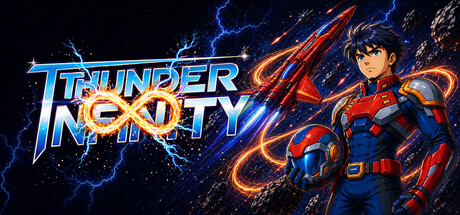
Thunder Infinity was developed by a single person with no resources or financial support.
The artwork for the project was produced by generative AI under strict artistic guidelines.
In the future, if the game is well-received and sells well, a redesign by professional artists could be considered.
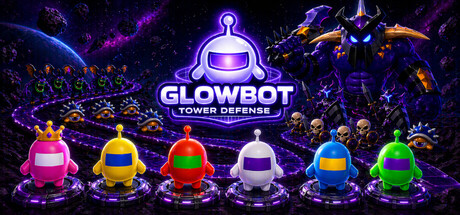
Some store assets (such as capsules and promotional images) were created with the assistance of AI tools due to limited resources during development. All gameplay, design, and core content of Glowbot Tower Defense are fully original and developed by me.
As future projects grow, I plan to collaborate with artists to further enhance the visual presentation.
Nexus Legacy is made by a solo developer using AI-assisted production tools. These tools were used during development to help with visual iteration, asset production, prototyping and code assistance, making a larger persistent MMO possible with a small production pipeline.
The final game is not a live AI generator. Gameplay design, balance, economy, progression, PvE/PvP rules, server logic, world structure, final visuals and updates are selected, reviewed, edited and maintained by the developer.
No live generative AI is used to create player-facing content while the game is running.
Some marketing assets for this game (capsule art) were created with the assistance of AI image generation tools. All gameplay content is procedurally generated by the NAGAS simulation engine — a custom-built system using deterministic algorithms, not generative AI.
This game's development used generative AI in three specific areas:
1. Source code: Portions of the source code were authored with assistance from large language model (LLM) coding tools.
2. Localization: In-game text translations for 10 languages (English, Simplified Chinese, Traditional Chinese, Korean, Russian, German, French, Spanish, Brazilian Portuguese, and Italian) were generated
using LLM-based tools from the original Japanese source text.
3. Visual assets (UI graphics and logo): Generative AI was used in some cases to assist with creating certain in-game UI icons and the game logo. These AI-assisted assets are limited to generic UI elements
(icons, indicators) and abstract logo designs, and do not depict real-world characters, brands, or copyrighted materials.
Some visual assets and audio elements in the game were created using AI-assisted tools and then refined and integrated into the final experience by the developer.
Some visual assets (card art and character portraits) generated using Google Gemini image models. Some SFX partially generated via ElevenLabs where Unity Assets were not available. All licensed for commercial use. Game design, code, and text content are original.
This game uses AI tools to help assist in the development process. To ensure a high-quality experience, all element has been manually reviewed and refined by our development team to meet our creative standards and Steam's community guidelines.
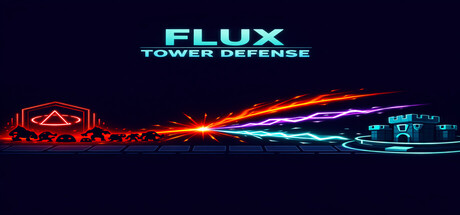
Flux Tower Defense uses generative AI in the following development areas:
• Store page artwork: Main, header, library, small, and vertical capsule images, library hero, library header, and page background were created using AI image generation tools with human direction, prompt iteration, and post-processing. The "FLUX TOWER DEFENSE" wordmark typography was added manually.
• Achievement icons: The 20 in-game achievement icons were generated with AI image tools using hand-authored prompts and manually curated selections.
• Localization: Non-English store page descriptions were translated with AI assistance and reviewed before publication.
The game's runtime contains NO generative AI. All gameplay systems (towers, enemies, traps, waves, pathfinding, damage, upgrades), UI, and in-game visuals are deterministic code rendered live via HTML5 Canvas 2D. There are no pre-rendered sprites, no AI-generated game content, and no AI inference during play.
This title uses generative AI for part of its localization process.
AI-generated translation drafts are reviewed and edited by the developer before implementation.
No content is dynamically generated by generative AI during gameplay.
This game was made available in many languages thanks to generative AI. Creation of some assets was performed or aided by generative AI tools.
If you ever beat an open-world game, you probably used more power than was used to generate all the assets in this game, including the ones that went unused. If you 100%'d that game, you used much, much more.
Our Creative Approach: A Human-First Duo and AI Disclosure
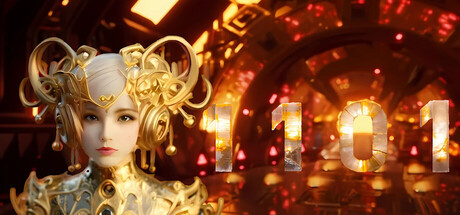
We are a passionate two-person team dedicated to bringing 1101 to life. To achieve the visual depth and cinematic quality we envisioned as a small studio, we utilized AI-assisted tools specifically for cinematic refinement, 3D texturing and modeling.
Here is exactly how we use AI to support our hand-crafted work:
From Concept to 3D Reality
Our 3D creation process combines traditional artistry with modern efficiency. Once we finalize a self-made image reference, hand-drawn sketch or a custom-generated image reference, we use AI-assisted modeling tools to convert that 2D vision into a 3D base mesh.
The Human Touch
This AI-assisted object is only the starting point. As a two-person team, we then step in to manually refine the geometry, adjust the proportions, and hand-modify the details. This "Human-in-the-Loop" approach allows us to bridge the gap between a 2D idea and a high-quality 3D asset, ensuring every object fits perfectly within our world’s hand-crafted design.
Cinematics: AI tools helped us polish visuals in our cinematics, allowing us to deliver high-quality storytelling that would typically require a much larger team.
Everything else is human-made. From the core gameplay mechanics and level design to the dialogue, music, and sound effects, every "soul" of this game comes directly from our hands. Ultimately, being an indie underdog means being resourceful. Using these tools wasn't about cutting corners; it was about bridging the gap to deliver a high-quality experience that a duo could otherwise never achieve. We’ve used technology to work harder on what matters most: making a game you'll love to play.
This game uses generative AI in the following areas:
- Some in-game background images
- Some sound effects
- Translation for some languages
All AI-generated content was reviewed and edited by the developer.
Some text content prepared in advance, including descriptions and localized text, may be created, translated, or improved with the assistance of AI-based tools.
During the development of this game, generative AI tools were used as a supportive resource for technical and creative tasks. Specifically, AI was utilized to assist in structuring complex C# scripts and providing visual reference images for world-building and character design. This allowed me as a solo developer to streamline my technical workflow and focus more on the core gameplay, environmental puzzles, and the unique atmospheric feel of the project. Every piece of AI-assisted logic or visual concept has been manually reviewed, adapted, and implemented by me to ensure it fits perfectly within the game's overall design.
The developer uses Generative AI tools to assist in the creation of 2D character sprites, background artwork, UI elements, and visual effects frames. All AI-generated graphical assets are pre-rendered, manually edited, and carefully integrated into the game engine by the developer. The game does not generate any AI content in real-time during gameplay.
The only AI that was used for this game was placeholders and for research into the Norwegian culture. Everything else was designed and produced by humans.
This game uses generative AI tools to assist in the creation of certain assets, such as music and visual elements.
All content is reviewed, selected, and integrated by the developer to ensure consistency and quality.
No AI is used during gameplay, and the player experience is fully handcrafted.
This game uses generative AI to create some of its audio, visual, and localization content. The music was generated with AI tools, certain sound effects were produced using AI-based audio synthesis, and some in‑game images and artwork were created with the assistance of generative AI. Part of the game's translations were also assisted by AI. All content has been manually reviewed, edited, and adapted to maintain the artistic and narrative coherence of the project.
AI assisted tools were utilized during development to help generate and refine various assets and ideas. All content was reviewed, edited, and integrated by the developer to ensure consistency with the game's design and vision.
Specifically:
Tools used: ChatGPT
What was created with AI: Capsule images, library assets, and in-game artwork (backgrounds, visual elements, UI components).
Process: All AI-generated outputs were reviewed, curated, and edited by me to ensure they fit the game's pixel-neon aesthetic and overall style. Outputs that did not meet quality or style standards were discarded or further edited.
Rights & legal compliance: I have taken care to avoid generating content that infringes on existing copyrights or trademarks. No prompts referenced real persons, specific copyrighted characters, or trademarked properties. The final assets are used only within this game and its marketing materials.
No live-generated AI is used during gameplay. All AI-generated content was finalized during development and ships as static assets.
All design, writing, and creative direction in this game are human-made. Generative AI was used only as a workflow tool for pre-rendered assets — achievement icons, platform tilesets, zone backgrounds, the soundtrack, and the DE / FR / ES / IT translations
of the human-written English text. All assets were reviewed and finalised by the developer. The game runs no AI at runtime.
Some visual assets in this game were created with the help of generative AI tools. As a solo developer with a programming background I used AI to generate graphics. This allowed me to develop and present the game despite not having access to a dedicated graphic designer. All AI-generated content has been reviewed and integrated into the game by the developer.
This game utilizes a generative AI tool for the creation of its SE and localization.
The data was pre-rendered by the developer during the game's development and integrated as final game assets before release.
The game does not contain any features that generate content in real-time during gameplay. All content has been checked by the developer for compliance with the AI tool's commercial terms, and careful attention has been paid to avoid any copyright infringement or violation of general decency standards.
Anchored Protocol uses generative AI throughout its development and gameplay:
• Most of our 3D assets, sound effects, and visual art were created with the help of generative AI tools and reviewed by our team before shipping.
• During play, the game live-generates NPC dialogue, voice lines (TTS), and certain artworks in response to your actions, so each playthrough feels different.
We use input filtering and output moderation on live-generated content to prevent illegal, harmful, or off-topic responses. If you encounter anything
inappropriate, please report it via https://aako.world/support
Some visual assets in this game have been created with the assistance of AI tools, then refined and integrated to fit the artistic direction of the project.
All music featured in the game is original and performed by a real pianist, composed specifically to enhance the emotional experience.
Some 2D graphic assets in this game, including character concept art and background images, were pre-rendered using generative AI tools. These AI-generated assets were then manually edited, refined, and optimized by the developer to fit the game's specific space theme and pixel art aesthetic.
Thunder Infinity was developed by a single person with no resources or financial support.
The artwork for the project was produced by generative AI under strict artistic guidelines.
In the future, if the game is well-received and sells well, a redesign by professional artists could be considered.
Some store assets (such as capsules and promotional images) were created with the assistance of AI tools due to limited resources during development. All gameplay, design, and core content of Glowbot Tower Defense are fully original and developed by me.
As future projects grow, I plan to collaborate with artists to further enhance the visual presentation.
Nexus Legacy is made by a solo developer using AI-assisted production tools. These tools were used during development to help with visual iteration, asset production, prototyping and code assistance, making a larger persistent MMO possible with a small production pipeline.
The final game is not a live AI generator. Gameplay design, balance, economy, progression, PvE/PvP rules, server logic, world structure, final visuals and updates are selected, reviewed, edited and maintained by the developer.
No live generative AI is used to create player-facing content while the game is running.
Some marketing assets for this game (capsule art) were created with the assistance of AI image generation tools. All gameplay content is procedurally generated by the NAGAS simulation engine — a custom-built system using deterministic algorithms, not generative AI.
This game's development used generative AI in three specific areas:
1. Source code: Portions of the source code were authored with assistance from large language model (LLM) coding tools.
2. Localization: In-game text translations for 10 languages (English, Simplified Chinese, Traditional Chinese, Korean, Russian, German, French, Spanish, Brazilian Portuguese, and Italian) were generated
using LLM-based tools from the original Japanese source text.
3. Visual assets (UI graphics and logo): Generative AI was used in some cases to assist with creating certain in-game UI icons and the game logo. These AI-assisted assets are limited to generic UI elements
(icons, indicators) and abstract logo designs, and do not depict real-world characters, brands, or copyrighted materials.
Some visual assets and audio elements in the game were created using AI-assisted tools and then refined and integrated into the final experience by the developer.
Some visual assets (card art and character portraits) generated using Google Gemini image models. Some SFX partially generated via ElevenLabs where Unity Assets were not available. All licensed for commercial use. Game design, code, and text content are original.
This game uses AI tools to help assist in the development process. To ensure a high-quality experience, all element has been manually reviewed and refined by our development team to meet our creative standards and Steam's community guidelines.
Flux Tower Defense uses generative AI in the following development areas:
• Store page artwork: Main, header, library, small, and vertical capsule images, library hero, library header, and page background were created using AI image generation tools with human direction, prompt iteration, and post-processing. The "FLUX TOWER DEFENSE" wordmark typography was added manually.
• Achievement icons: The 20 in-game achievement icons were generated with AI image tools using hand-authored prompts and manually curated selections.
• Localization: Non-English store page descriptions were translated with AI assistance and reviewed before publication.
The game's runtime contains NO generative AI. All gameplay systems (towers, enemies, traps, waves, pathfinding, damage, upgrades), UI, and in-game visuals are deterministic code rendered live via HTML5 Canvas 2D. There are no pre-rendered sprites, no AI-generated game content, and no AI inference during play.
This title uses generative AI for part of its localization process.
AI-generated translation drafts are reviewed and edited by the developer before implementation.
No content is dynamically generated by generative AI during gameplay.
This game was made available in many languages thanks to generative AI. Creation of some assets was performed or aided by generative AI tools.
If you ever beat an open-world game, you probably used more power than was used to generate all the assets in this game, including the ones that went unused. If you 100%'d that game, you used much, much more.
Our Creative Approach: A Human-First Duo and AI Disclosure
We are a passionate two-person team dedicated to bringing 1101 to life. To achieve the visual depth and cinematic quality we envisioned as a small studio, we utilized AI-assisted tools specifically for cinematic refinement, 3D texturing and modeling.
Here is exactly how we use AI to support our hand-crafted work:
From Concept to 3D Reality
Our 3D creation process combines traditional artistry with modern efficiency. Once we finalize a self-made image reference, hand-drawn sketch or a custom-generated image reference, we use AI-assisted modeling tools to convert that 2D vision into a 3D base mesh.
The Human Touch
This AI-assisted object is only the starting point. As a two-person team, we then step in to manually refine the geometry, adjust the proportions, and hand-modify the details. This "Human-in-the-Loop" approach allows us to bridge the gap between a 2D idea and a high-quality 3D asset, ensuring every object fits perfectly within our world’s hand-crafted design.
Cinematics: AI tools helped us polish visuals in our cinematics, allowing us to deliver high-quality storytelling that would typically require a much larger team.
Everything else is human-made. From the core gameplay mechanics and level design to the dialogue, music, and sound effects, every "soul" of this game comes directly from our hands. Ultimately, being an indie underdog means being resourceful. Using these tools wasn't about cutting corners; it was about bridging the gap to deliver a high-quality experience that a duo could otherwise never achieve. We’ve used technology to work harder on what matters most: making a game you'll love to play.
This game uses generative AI in the following areas:
- Some in-game background images
- Some sound effects
- Translation for some languages
All AI-generated content was reviewed and edited by the developer.
Some text content prepared in advance, including descriptions and localized text, may be created, translated, or improved with the assistance of AI-based tools.
During the development of this game, generative AI tools were used as a supportive resource for technical and creative tasks. Specifically, AI was utilized to assist in structuring complex C# scripts and providing visual reference images for world-building and character design. This allowed me as a solo developer to streamline my technical workflow and focus more on the core gameplay, environmental puzzles, and the unique atmospheric feel of the project. Every piece of AI-assisted logic or visual concept has been manually reviewed, adapted, and implemented by me to ensure it fits perfectly within the game's overall design.
The developer uses Generative AI tools to assist in the creation of 2D character sprites, background artwork, UI elements, and visual effects frames. All AI-generated graphical assets are pre-rendered, manually edited, and carefully integrated into the game engine by the developer. The game does not generate any AI content in real-time during gameplay.
The only AI that was used for this game was placeholders and for research into the Norwegian culture. Everything else was designed and produced by humans.
This game uses generative AI tools to assist in the creation of certain assets, such as music and visual elements.
All content is reviewed, selected, and integrated by the developer to ensure consistency and quality.
No AI is used during gameplay, and the player experience is fully handcrafted.