Public Steam disclosure research25,376 disclosures tracked
Where do games disclose AI use?
Search developers’ Steam disclosures, compare classified AI use across
games, and follow recorded changes.
This index adds cross-game classifications and statistics to
statements published on individual store pages.
Groups reflect automatic analysis of public disclosures; mature records are excluded. These counts do not measure AI use across all of Steam.
Missing or unclear statements cannot establish whether a game uses AI.
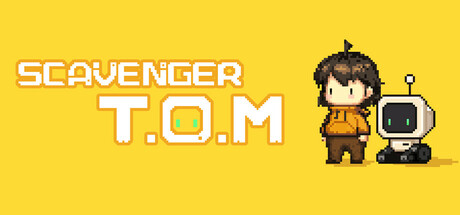
Scavenger T.O.M utilizes AI-based environment generation technology to explore and reconstruct the radiation-ravaged surface in real-time. In hazardous areas where players cannot venture directly, AI acts as T.O.M’s eyes and analytical core, dynamically processing the environment based on movement paths.
The Diffusion model-based AI system goes beyond simple image generation, creating explorable spaces at the object level and seamlessly integrating them into the game environment to enhance interactivity.
Through this technology, Scavenger T.O.M provides a unique survival environment that evolves with the player's exploration. Step into the AI-generated wasteland and craft your own survival strategy.
Generative AI was only used to create image references during the creation of promotionnal artworks :
The main promotional artwork shows a hallway where the pillars and the lights are arranged to form the word : DON'T.
The artist who drew these promotional artworks used generative AI to get reference images on how to integrate text with natural elements of a scene so that the elements of the scene seems to be forming letters.
The final artwork is purely derivative and original and was made by the artist from zero, with the help of the AI generated images as inspiration for placing the letters on the final drawing.
Some visual assets — such as community materials, marketing content, and select transition screens — were created with limited AI assistance. All final in-game art is created by our artists.
The game does not contain AI generated content.
All art, music, sound effects and all other assets are crafted by human hands.
The intro video on the store page contains an AI generated voice.
During development process, we may use procedural and AI-based tools to assist with art content creation. In all such cases, the final product reflects the creativity and expression of our own development team.
We prioritize the most ethical AI sources as possible.
Our game is about shooting movies. We also allow players to create their own movies, including having characters say the lines of the movie script. Players can write dialogue and generate audio. The 3D animated characters act out the script.
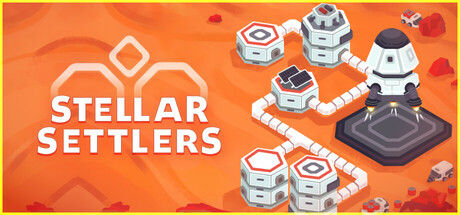
In-game settler busts and some concepts of planets are generated with self-trained generative image techniques. Some ideas for flavor text of settlers, planets and/or artifacts were created with the help of NLP technologies. (only for idea and concept generation, not for text)
Our game leverages generative AI during development to create visually rich and immersive environments, character designs, and narrative elements. AI tools have been used to assist in crafting unique pre-rendered assets, such as artwork and animations, ensuring a high-quality experience while adhering to copyright and ethical guidelines.
However, the game does not use AI to generate live content or code during gameplay. All in-game interactions and mechanics are pre-designed and curated by our team, ensuring a consistent and controlled gaming experience.
By incorporating AI responsibly, we aim to deliver a creative and engaging experience while maintaining transparency and safeguarding user trust.
AI tools have been like an extra set of hands (or brains) for our small indie dev team. They've played a quiet yet invaluable role in helping us draft initial concept art and brainstorm our way through tricky design challenges. Being Polish native speakers, AI has also been particularly helpful in fine-tuning our writing, ensuring our game's narrative is as engaging as possible.
AI, employed for the purpose of narrative refinement, intricately weaves the storyline into a captivating tapestry while preserving the fundamental essence envisioned by the developer. It is imperative to acknowledge that every narrative and enigma originates from the creative prowess of the developer, whose ingenuity shapes tales grounded in actuality.Only the steam page art are generated with AI.
Generative AI is used for translations into languages I do not master and to create early 3D model prototypes. These prototypes are manually refined before being integrated into the game. No generative AI is used during gameplay or to dynamically generate in-game content.
Core design elements including units, animations, visual effects and sound effects were all created by real artists. AI tools were used solely for supporting assets like background images, portraits, buttons, and background music. These AI-generated assets were subsequently modified by our team. This approach enabled our three-person team to concentrate on core design and game mechanics.
During development we use AI assistance in certain tasks, such as upscaling in-game assets to higher detail versions. An example would be creating higher detail 2D UI portraits for NPCs in their in-game environment from the in-game art. All original artwork and the final creative vision come from our development team.
The game has optional computer generated voice overs.
Terrors of War is being developed solo on a tight budget. To get the project to its current state I've used generative AI for a handful of placeholder assets: some voice lines, sound effects, UI iconography and the current Steam capsule art. These are all temporary. Every AI-assisted asset is flagged in the project as a placeholder and will be replaced with custom work from freelance artists progressively through Early Access. Wherever possible I use in-game screenshots and footage. What you see represents actual gameplay. No content is generated at runtime. All AI-assisted assets ship pre-generated in the build.
Store page image assets (excluding screenshots and videos) has been generated with AI as the game will need to be further developed to get final assets but will fit the themes as presented.
Scavenger T.O.M utilizes AI-based environment generation technology to explore and reconstruct the radiation-ravaged surface in real-time. In hazardous areas where players cannot venture directly, AI acts as T.O.M’s eyes and analytical core, dynamically processing the environment based on movement paths.
The Diffusion model-based AI system goes beyond simple image generation, creating explorable spaces at the object level and seamlessly integrating them into the game environment to enhance interactivity.
Through this technology, Scavenger T.O.M provides a unique survival environment that evolves with the player's exploration. Step into the AI-generated wasteland and craft your own survival strategy.
Generative AI was only used to create image references during the creation of promotionnal artworks :
The main promotional artwork shows a hallway where the pillars and the lights are arranged to form the word : DON'T.
The artist who drew these promotional artworks used generative AI to get reference images on how to integrate text with natural elements of a scene so that the elements of the scene seems to be forming letters.
The final artwork is purely derivative and original and was made by the artist from zero, with the help of the AI generated images as inspiration for placing the letters on the final drawing.
Some visual assets — such as community materials, marketing content, and select transition screens — were created with limited AI assistance. All final in-game art is created by our artists.
The game does not contain AI generated content.
All art, music, sound effects and all other assets are crafted by human hands.
The intro video on the store page contains an AI generated voice.
During development process, we may use procedural and AI-based tools to assist with art content creation. In all such cases, the final product reflects the creativity and expression of our own development team.
We prioritize the most ethical AI sources as possible.
Our game is about shooting movies. We also allow players to create their own movies, including having characters say the lines of the movie script. Players can write dialogue and generate audio. The 3D animated characters act out the script.
In-game settler busts and some concepts of planets are generated with self-trained generative image techniques. Some ideas for flavor text of settlers, planets and/or artifacts were created with the help of NLP technologies. (only for idea and concept generation, not for text)
Our game leverages generative AI during development to create visually rich and immersive environments, character designs, and narrative elements. AI tools have been used to assist in crafting unique pre-rendered assets, such as artwork and animations, ensuring a high-quality experience while adhering to copyright and ethical guidelines.
However, the game does not use AI to generate live content or code during gameplay. All in-game interactions and mechanics are pre-designed and curated by our team, ensuring a consistent and controlled gaming experience.
By incorporating AI responsibly, we aim to deliver a creative and engaging experience while maintaining transparency and safeguarding user trust.
AI tools have been like an extra set of hands (or brains) for our small indie dev team. They've played a quiet yet invaluable role in helping us draft initial concept art and brainstorm our way through tricky design challenges. Being Polish native speakers, AI has also been particularly helpful in fine-tuning our writing, ensuring our game's narrative is as engaging as possible.
AI, employed for the purpose of narrative refinement, intricately weaves the storyline into a captivating tapestry while preserving the fundamental essence envisioned by the developer. It is imperative to acknowledge that every narrative and enigma originates from the creative prowess of the developer, whose ingenuity shapes tales grounded in actuality.Only the steam page art are generated with AI.
Generative AI is used for translations into languages I do not master and to create early 3D model prototypes. These prototypes are manually refined before being integrated into the game. No generative AI is used during gameplay or to dynamically generate in-game content.
Core design elements including units, animations, visual effects and sound effects were all created by real artists. AI tools were used solely for supporting assets like background images, portraits, buttons, and background music. These AI-generated assets were subsequently modified by our team. This approach enabled our three-person team to concentrate on core design and game mechanics.
During development we use AI assistance in certain tasks, such as upscaling in-game assets to higher detail versions. An example would be creating higher detail 2D UI portraits for NPCs in their in-game environment from the in-game art. All original artwork and the final creative vision come from our development team.
The game has optional computer generated voice overs.
Terrors of War is being developed solo on a tight budget. To get the project to its current state I've used generative AI for a handful of placeholder assets: some voice lines, sound effects, UI iconography and the current Steam capsule art. These are all temporary. Every AI-assisted asset is flagged in the project as a placeholder and will be replaced with custom work from freelance artists progressively through Early Access. Wherever possible I use in-game screenshots and footage. What you see represents actual gameplay. No content is generated at runtime. All AI-assisted assets ship pre-generated in the build.
Store page image assets (excluding screenshots and videos) has been generated with AI as the game will need to be further developed to get final assets but will fit the themes as presented.