Public Steam disclosure research25,394 disclosures tracked
Where do games disclose AI use?
Search developers’ Steam disclosures, compare classified AI use across
games, and follow recorded changes.
This index adds cross-game classifications and statistics to
statements published on individual store pages.
Groups reflect automatic analysis of public disclosures; mature records are excluded. These counts do not measure AI use across all of Steam.
Missing or unclear statements cannot establish whether a game uses AI.
Powered by some of the most advanced chess engines ever created. It also uses two neural networks to recognize chess positions directly from game diagrams, turning images into playable positions in seconds.
The game engine is written with substantial AI assistance.
Some dialogues and quest texts are AI generated, and are successively replaced by human-written dialogue. Every piece of flavor text has a label that states the author (human or ai).
The 3D character models are currently generated with AI, and then transformed through a custom pipeline to work with the text-based graphics and CPU rendering. It is possible to replace them with manually crafted models.
Some promotional artwork on this store page was created using generative AI tools. All in-game assets (characters, environments, effects) are original or licensed third-party content.
Generative AI was used during development to create and assist with character illustrations, card artwork, textures, other visual assets, music, story text, localization, and store and promotional artwork. The game uses pre-generated content selected and incorporated by the developer. It does not generate content with AI during gameplay or connect to external AI services during gameplay. Generative AI was also used for narration in promotional videos.
AI-assisted tools were used during development to help create visual assets. These assets are included as finished content; the game does not use generative AI during gameplay.
Generative AI tools were used during development to assist with the creation of some pre-generated visual artwork. AI-assisted artwork is substantially edited, painted over, composited, and finalized by the developer before inclusion in the game. No generative AI is used to create content during gameplay.
Generative AI was used during development to create artwork, music, sound effects, and translations, as well as store and promotional artwork. The game does not generate AI content during gameplay or connect to external AI services.
The campaign's spoken dialogue is AI-generated speech. Over 650 lines were produced with ElevenLabs under a paid plan that licenses commercial use of the output. I wrote every line of that dialogue myself - the writing is mine, the performance is synthetic. I would prefer human voice actors and intend to replace these recordings when the project can afford it.
No AI-generated art ships in the game. Every ship, station and environment mesh is either licensed art or made by me. A set of AI-generated 3D models was removed from the project in July 2026.
The combat and zone music tracks are AI-generated songs I made with Suno on a paid plan that grants commercial-use rights to the output. The remaining music and all sound effects are licensed audio packs and my own work.
Some 3D models and textures in MemTown were created or converted with the assistance of generative AI during development. These assets are used for certain tools, capture capsules, resource objects, and production facilities in the territory.
Generative AI was used to create some pre-generated artwork, audio, and text included in the game and its promotional materials. The game does not generate AI content during gameplay.
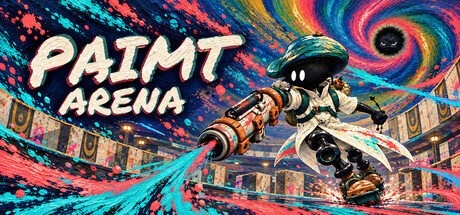
Some of PAIMT ARENA's 3D weapon models started as AI-generated meshes (Tripo) that were then hand-edited, retopologized, textured and rigged by the team. Some store and library artwork was produced with AI image tools and then edited by hand. No content is generated during play; gameplay, code, level design and UI are human-authored.
Some pre-generated artwork used in the game and on its Steam store page, including title, introduction, event illustration, and capsule artwork, was created using OpenAI image generation tools. One music track was generated using Google Gemini from a developer-written prompt. All generated assets were reviewed and selected by the developer before release. The game does not generate AI content during gameplay or connect to external AI services.
Generative AI was used in the creation of select in-game BGM (music) as well as promotional graphics and in-game imagery (such as concept artwork and backgrounds).
Some background environment props and their textures (signage, lamps,
surfaces, decals and small set-dressing objects) were generated with AI
assistance, using AI written procedural code rather than an image or mesh
generator. They ship with the game as scenery.
Everything else is the developer's own work: all writing and in-game text,
game design, game code, audio and sound design, the visual identity, and all
store page art.
No AI generated content is produced while the game is running.
Generative AI tools were used during development to assist with the creation of selected visual, audio and creative assets. All content included in the final game was reviewed and selected by the developer.
AI tools were used during development for programming, image creation, scenario writing, and translation.
All AI-assisted or AI-generated content has been reviewed and, where necessary, edited by the developer before being included in the final release.
No content is generated by AI during gameplay.
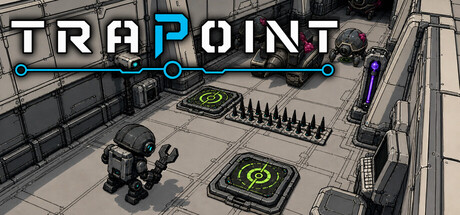
Trapoint is made by a single developer. 3D models, 2D art, sound, music, UI text, and the English localization were generated with AI tools from the developer's own prompts and then edited and integrated by hand; game design, systems, and level data are the developer's own work.
All of the game's art, music and sound effects were made by human artists (commercially licensed packs, credited in the game). AI tools were used to assist with programming and with writing and translating the game's text; all content was reviewed and edited by the developer. The game does not generate any AI content while you play.
Generative AI is used as a supplementary tool, primarily for partial editing of image assets and translation.
※It is not used to generate images from scratch or to create 3D models.
This game is a solo-developed hobby project. Generative AI tools were used as part of the production workflow, including assistance with code, audio, and base visual assets. No generative AI output is used as a final in-game asset; all assets were manually edited, and integrated by the developer. The story, dialogue, and all other written in-game content were written by the developer. All gameplay design, creative direction, balancing, and final content decisions were made by the developer.
Some of the visual and audio assets in Subject 4471 were created with the assistance of generative AI tools during development. All AI-generated content was reviewed, curated, and edited by the developer to ensure it is appropriate, and the developer has taken steps to ensure it holds the rights necessary to use this content. This game does not generate any AI content in real time during gameplay.
Some UI icons were generated using AI, then refined by our artists to suit the UI. All other artwork was created by hand. No AI content is generated during gameplay.
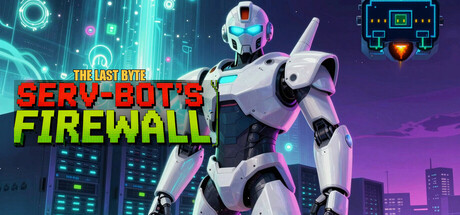
Serv-Bot's Firewall uses AI tools in its art and media pipeline, always under human direction and review:
Sprite art. The game's original hand-authored sprites were upscaled and repainted at native resolution with an image-editing model (Qwen-Image-Edit), then reviewed, corrected and in many cases restored to the originals by hand. Concept art for the six "arsenal" enemy types, the Serv-Bot HUD portraits and the achievement icon motifs were generated with local image models (Z-Image Turbo, Qwen-Image-Edit) from our own designs and reference art, then composited and finished in code. Canon elements such as the Greeb ship in the icons are the game's own sprite art, not generated.
Cutscenes. The in-game story videos come from our SIGNAL series. Keyframes were generated with a local image model trained on our own characters, motion with a local video model (Wan 2.2), narration with a text-to-speech model (Kokoro) and music with local music models (ACE-Step, Stable Audio Open). Scripts, story, character designs, editing and direction are ours.
Localization. Interface text in 28 languages was machine-translated with an AI model from our English source and has not yet been reviewed by native speakers.
Code. Parts of the game's code were written with AI coding assistance, reviewed and tested by the developer.
Sound effects are procedurally synthesised, not AI-generated. All AI generation ran on the developer's own hardware; no copyrighted third-party works were used as inputs beyond our own assets and characters.
During development, generative AI tools (such as ChatGPT) were used to assist in writing and optimizing portions of the Godot (GDScript) game code, as well as for brainstorming visual concepts during the early stages of art design. All final art assets, text, audio, and code within the game have been reviewed, modified, and finalized by the developer prior to release. The game does not generate any AI content in real-time during gameplay.
This game was made with the help of generative AI tools. The in-game relic, element, rune and skill icons are AI-generated. The tutorial illustrations were AI-generated and then edited by hand. Some sound effects, and the localization of the interface text into the game's supported languages, were produced with AI assistance. Some of the source code was also written with AI tools. All of it was reviewed and adjusted by a human before release. Nothing is generated while you play, and the game never connects to any external AI service.
Some images shipped in the game were created with generative AI during development and then selected and reviewed by the developer. No other shipped content was generated by AI.
Generative AI tools were used during the development of SCRAPBOX to assist with programming, UI design, voice acting, music, and the creation of some 3D models and other game assets. The game does not generate AI content during gameplay.
Powered by some of the most advanced chess engines ever created. It also uses two neural networks to recognize chess positions directly from game diagrams, turning images into playable positions in seconds.
The game engine is written with substantial AI assistance.
Some dialogues and quest texts are AI generated, and are successively replaced by human-written dialogue. Every piece of flavor text has a label that states the author (human or ai).
The 3D character models are currently generated with AI, and then transformed through a custom pipeline to work with the text-based graphics and CPU rendering. It is possible to replace them with manually crafted models.
Some promotional artwork on this store page was created using generative AI tools. All in-game assets (characters, environments, effects) are original or licensed third-party content.
Generative AI was used during development to create and assist with character illustrations, card artwork, textures, other visual assets, music, story text, localization, and store and promotional artwork. The game uses pre-generated content selected and incorporated by the developer. It does not generate content with AI during gameplay or connect to external AI services during gameplay. Generative AI was also used for narration in promotional videos.
AI-assisted tools were used during development to help create visual assets. These assets are included as finished content; the game does not use generative AI during gameplay.
Generative AI tools were used during development to assist with the creation of some pre-generated visual artwork. AI-assisted artwork is substantially edited, painted over, composited, and finalized by the developer before inclusion in the game. No generative AI is used to create content during gameplay.
Generative AI was used during development to create artwork, music, sound effects, and translations, as well as store and promotional artwork. The game does not generate AI content during gameplay or connect to external AI services.
The campaign's spoken dialogue is AI-generated speech. Over 650 lines were produced with ElevenLabs under a paid plan that licenses commercial use of the output. I wrote every line of that dialogue myself - the writing is mine, the performance is synthetic. I would prefer human voice actors and intend to replace these recordings when the project can afford it.
No AI-generated art ships in the game. Every ship, station and environment mesh is either licensed art or made by me. A set of AI-generated 3D models was removed from the project in July 2026.
The combat and zone music tracks are AI-generated songs I made with Suno on a paid plan that grants commercial-use rights to the output. The remaining music and all sound effects are licensed audio packs and my own work.
Some 3D models and textures in MemTown were created or converted with the assistance of generative AI during development. These assets are used for certain tools, capture capsules, resource objects, and production facilities in the territory.
Generative AI was used to create some pre-generated artwork, audio, and text included in the game and its promotional materials. The game does not generate AI content during gameplay.
Some of PAIMT ARENA's 3D weapon models started as AI-generated meshes (Tripo) that were then hand-edited, retopologized, textured and rigged by the team. Some store and library artwork was produced with AI image tools and then edited by hand. No content is generated during play; gameplay, code, level design and UI are human-authored.
Some pre-generated artwork used in the game and on its Steam store page, including title, introduction, event illustration, and capsule artwork, was created using OpenAI image generation tools. One music track was generated using Google Gemini from a developer-written prompt. All generated assets were reviewed and selected by the developer before release. The game does not generate AI content during gameplay or connect to external AI services.
Generative AI was used in the creation of select in-game BGM (music) as well as promotional graphics and in-game imagery (such as concept artwork and backgrounds).
Some background environment props and their textures (signage, lamps,
surfaces, decals and small set-dressing objects) were generated with AI
assistance, using AI written procedural code rather than an image or mesh
generator. They ship with the game as scenery.
Everything else is the developer's own work: all writing and in-game text,
game design, game code, audio and sound design, the visual identity, and all
store page art.
No AI generated content is produced while the game is running.
Generative AI tools were used during development to assist with the creation of selected visual, audio and creative assets. All content included in the final game was reviewed and selected by the developer.
AI tools were used during development for programming, image creation, scenario writing, and translation.
All AI-assisted or AI-generated content has been reviewed and, where necessary, edited by the developer before being included in the final release.
No content is generated by AI during gameplay.
Trapoint is made by a single developer. 3D models, 2D art, sound, music, UI text, and the English localization were generated with AI tools from the developer's own prompts and then edited and integrated by hand; game design, systems, and level data are the developer's own work.
All of the game's art, music and sound effects were made by human artists (commercially licensed packs, credited in the game). AI tools were used to assist with programming and with writing and translating the game's text; all content was reviewed and edited by the developer. The game does not generate any AI content while you play.
Generative AI is used as a supplementary tool, primarily for partial editing of image assets and translation.
※It is not used to generate images from scratch or to create 3D models.
This game is a solo-developed hobby project. Generative AI tools were used as part of the production workflow, including assistance with code, audio, and base visual assets. No generative AI output is used as a final in-game asset; all assets were manually edited, and integrated by the developer. The story, dialogue, and all other written in-game content were written by the developer. All gameplay design, creative direction, balancing, and final content decisions were made by the developer.
Some of the visual and audio assets in Subject 4471 were created with the assistance of generative AI tools during development. All AI-generated content was reviewed, curated, and edited by the developer to ensure it is appropriate, and the developer has taken steps to ensure it holds the rights necessary to use this content. This game does not generate any AI content in real time during gameplay.
Some UI icons were generated using AI, then refined by our artists to suit the UI. All other artwork was created by hand. No AI content is generated during gameplay.
Serv-Bot's Firewall uses AI tools in its art and media pipeline, always under human direction and review:
Sprite art. The game's original hand-authored sprites were upscaled and repainted at native resolution with an image-editing model (Qwen-Image-Edit), then reviewed, corrected and in many cases restored to the originals by hand. Concept art for the six "arsenal" enemy types, the Serv-Bot HUD portraits and the achievement icon motifs were generated with local image models (Z-Image Turbo, Qwen-Image-Edit) from our own designs and reference art, then composited and finished in code. Canon elements such as the Greeb ship in the icons are the game's own sprite art, not generated.
Cutscenes. The in-game story videos come from our SIGNAL series. Keyframes were generated with a local image model trained on our own characters, motion with a local video model (Wan 2.2), narration with a text-to-speech model (Kokoro) and music with local music models (ACE-Step, Stable Audio Open). Scripts, story, character designs, editing and direction are ours.
Localization. Interface text in 28 languages was machine-translated with an AI model from our English source and has not yet been reviewed by native speakers.
Code. Parts of the game's code were written with AI coding assistance, reviewed and tested by the developer.
Sound effects are procedurally synthesised, not AI-generated. All AI generation ran on the developer's own hardware; no copyrighted third-party works were used as inputs beyond our own assets and characters.
During development, generative AI tools (such as ChatGPT) were used to assist in writing and optimizing portions of the Godot (GDScript) game code, as well as for brainstorming visual concepts during the early stages of art design. All final art assets, text, audio, and code within the game have been reviewed, modified, and finalized by the developer prior to release. The game does not generate any AI content in real-time during gameplay.
This game was made with the help of generative AI tools. The in-game relic, element, rune and skill icons are AI-generated. The tutorial illustrations were AI-generated and then edited by hand. Some sound effects, and the localization of the interface text into the game's supported languages, were produced with AI assistance. Some of the source code was also written with AI tools. All of it was reviewed and adjusted by a human before release. Nothing is generated while you play, and the game never connects to any external AI service.
Some images shipped in the game were created with generative AI during development and then selected and reviewed by the developer. No other shipped content was generated by AI.
Generative AI tools were used during the development of SCRAPBOX to assist with programming, UI design, voice acting, music, and the creation of some 3D models and other game assets. The game does not generate AI content during gameplay.