Public Steam disclosure research25,497 disclosures tracked
Where do games disclose AI use?
Search developers’ Steam disclosures, compare classified AI use across
games, and follow recorded changes.
This index adds cross-game classifications and statistics to
statements published on individual store pages.
Groups reflect automatic analysis of public disclosures; mature records are excluded. These counts do not measure AI use across all of Steam.
Missing or unclear statements cannot establish whether a game uses AI.
Game text and translations were created with the help of AI tools. The public build has no AI voices; it has no voice acting yet. The art is not made with generative AI: it comes from free CC0 asset packs plus shapes and textures built in code. Sound effects are synthesized by our own scripts. Nothing is generated by AI while you play.
Some 2D art assets were created with the assistance of generative AI image tools and then heavily edited and cleaned up by hand before being used in the game. This includes the logo, some animals, the main menu background, and icon artwork. All such content is pre-generated and baked into the build; the game does not generate any content at runtime.
While every mission, achievement, perk, story beat and game mode was designed and built by hand, one at a time.
Some visual content, including parts of the backgrounds and selected graphics, was created with the assistance of generative AI and subsequently edited for the game. These elements serve as temporary placeholders during development and are intended to be replaced with custom artwork once a suitable artist joins the team.
AI-assisted tools were used to support performance optimization and to generate the player character. AI tools also contributed to enemy character assets, store artwork and translations. These uses concern content prepared during development.
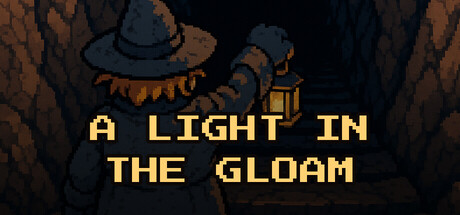
A Light in the Gloam uses pre-generated AI content. Nothing is generated while the game is running, and the game makes no network calls of any kind.
Visual art: all in-game art was generated with OpenAI's image model (gpt-image-1) from prompts written by hand, then processed by our own scripts, which downscale it, quantise it to a fixed palette and trim it before it is placed in the game. This covers 14 character portraits, 43 enemy and boss sprites, 63 item icons, 27 wall, floor and ceiling textures, 10 dungeon props, 21 achievement emblems, and 14 town and title backdrops. The store capsules and the client icons are crops of the title-screen generation rather than new images.
Music and sound: all 14 music tracks were generated with ElevenLabs' music model and all 47 sound effects with ElevenLabs' sound-effects model, both from written prompts and both post-processed by our own scripts for level and length. There is no voice acting and no synthesised speech anywhere in the game.
Writing and translation: the game's text, meaning item and monster descriptions, dialogue, menus and the story, was written with the assistance of a large language model and then edited by hand. The Brazilian Portuguese translation was produced the same way and reviewed against the English.
Some character portraits were created with generative AI. AI tools were also used to help write and translate the store page and to translate the game's text. The story and dialogue were written by our team.
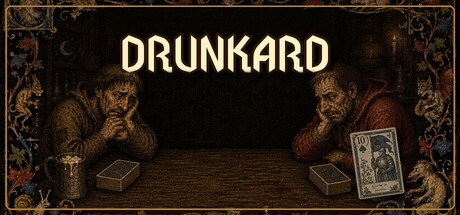
This game uses generative AI to assist in creating some of its visual assets, including card illustrations, backgrounds, and interface artwork. These assets are reviewed, edited, and integrated by the developer. All AI-assisted content is created during development; the game does not generate AI content while you play.
Generative AI tools were used during development to create pre-generated visual assets, including 2D background artwork, environment graphics, character sprites, and promotional store imagery. All AI-generated content was created prior to release, and no generative AI runs in real-time during gameplay.
This product contains pre-generated content created with the assistance of generative AI tools during development. AI-assisted content includes selected 2D artwork, character portraits, unit illustrations, decorative interface imagery, trailer and store artwork, portions of the soundtrack, and some player-facing descriptive or localization text. All AI-assisted content was reviewed and edited by the developer and is fixed before release. The game does not generate text, images, audio, or any other content using generative AI while it is running. Computer-controlled opponents and procedural simulation systems use conventional game logic, not generative AI.
ROOMKEEP includes pre-generated AI-assisted decorative artwork and AI-assisted interface text, help text, translations and marketing copy, edited and reviewed during development. AI tools were also used to assist software development. ROOMKEEP does not generate AI content while running, does not connect to an AI service, and does not upload game files to an AI service. Reported storage savings come from recorded measurements, not AI-generated estimates or invented results.
Some of this game's content was created with the help of generative AI tools during development:
- Artwork: some of the visual art in the game.
- Text: parts of the in-game writing, and the Simplified Chinese translation.
- Audio: a small number of sound effects. Most of the game's sound was made without AI.
Nothing is generated by AI while you play.
I'm a solo developer with a full-time job and a dad with two wonderful little kids. Full Count Club is a game I've wanted to make for a long time. AI tools are how I fit it into the time I have: they helped create the illustrated art, some sound effects, and some in-game writing such as newspaper headlines. I direct, select and edit all of it. The game does not generate any AI content while you play.
This game uses a mix of human and generative AI tools. AI was used in some visual art assets, code generation, and portions of the store page text. All writing in the game, voice acting, and music are fully human-created.
Dicebound uses generative AI as part of the development process for some pre-generated content. This includes certain visual assets and promotional/store materials, as well as some drafting support for interface text and localization. All AI-assisted content has been reviewed, edited, and curated by the developer before being included in the game or on the store page. Dicebound does not use live generative AI during gameplay, and players cannot generate content through AI in-game.
Generative AI tools were used during development to assist with concept development and the creation of some visual assets. AI-generated material was reviewed, edited, and integrated by the developer to fit the game’s visual style and design. Generative AI is not used during gameplay and no content is generated dynamically for players.
Atharia uses generative AI tools under the developer's constant direction. The combat animations are AI-generated video clips, converted into sprites and integrated into custom-built staging. Background environments and interface elements are also created with AI assistance. Every asset is art-directed, selected and validated by the developer before it enters the game.
Gród is designed, built and tested by a solo developer. Every rule, system and pixel of the game follows my own vision.
AI tools helped with parts of the production: the voice lines, the music and some store artwork were created with generative AI, then selected, edited and fitted into the game by me. The in-game pixel art is drawn by the game's own code, with no AI image generators.
Screenshots and GIFs show real gameplay. The game does not use generative AI while you play.
Generative AI was used to assist with the localization of some store page content. The generated translations were reviewed and edited before publication.
Generative AI assisted in creating some in-game and promotional assets. All such content was reviewed and edited by the developer. The game does not generate AI content during gameplay or connect to external AI services.
AI tools were used to help draft and edit some English text: store page copy and some in-game UI strings such as hints, item descriptions and dialogs. All text was reviewed and edited by the developer. All art, models, audio and music are human-made or licensed assets. The game does not generate any content with AI at runtime.
Generative AI tools were used to assist in the creation and refinement of some pre-rendered artwork and interface elements. AI-generated music is also used, and AI tools assisted with store-page text and localization. All AI-assisted content was selected, edited, and reviewed by the developer. The game does not generate AI content during gameplay.
The game's story, design and text were created by the developer. Generative AI was used as an assistant when writing the text of this store page and of the game, and to translate it into 12 languages; all of it was reviewed and edited by the developer. One song on the car radio ("Broken Hearts and Blue Moons", licensed from Pixabay) was produced by its author with generative AI. No content is generated while you play.
This game was made possible due to generative AI coding. It uses generative AI for the code base and procedural environmental generation but is limited to that. Models and music have been manually created.
Almost all content in our game was handcrafted, we used real photos of berries, fruits and etc. to make donuts designs. We used AI as a supportive tool: to edit a few wall paintings, upscale and edit some textures, and fix grammar in the text.
We firmly believe AI is just an assistant—the core of our game remains human creativity and attention to detail.
Generative AI tools were used as development assistance for portions of the game’s code and player-facing text. All final content was reviewed, edited, integrated, and tested by the developer. The game does not use live-generated AI or connect to any AI service during gameplay.
Some of the artworks, such as textures and illustrative elements, were created or enhanced using AI-based tools. All generated content has been reviewed, edited, and integrated to ensure consistency with the overall visual style and quality of the game.
No AI is used during gameplay.
The English localization was prepared with AI assistance and was fully reviewed and edited by the developer. Some in-game sounds were generated with AI. The capsule image on the Steam store page was generated with AI. The in-game visual and model assets were not generated with AI.
Generative AI tools were used during development to create some character, environment, and object visuals, 3D assets, and promotional materials. All AI-generated content was created in advance during development. No new content is generated by AI during gameplay, and the game does not connect to any external AI services.
AI tools were used only to assist with translating in-game text into supported languages. No AI-generated images, music, audio, or 3D models were used. The game does not generate AI content during gameplay.
Its creative direction and artistic content are rooted in human creativity and craftsmanship.
Generative AI was used to create various visual assets, character and environment designs, UI elements, promotional materials, and written content. Music was not generated using AI.
Generative AI was used to assist in the creation of some in-game images, textures, dialogue, store page text, and localization. All AI-assisted content was reviewed, edited, and implemented by the developer. No live-generated AI content is used during gameplay.
Generative AI tools were used during development to assist in the creation of some visual and 3D assets. All generated content was reviewed, edited, and integrated by the developer.
Frontier was conceived, designed, directed, and extensively play tested by a solo developer. Generative AI was used as the primary production tool to implement that vision, including programming, artwork, audio, writing, and other game assets. Every aspect of the game was developed through an iterative human-directed process, with the developer specifying requirements, reviewing results, requesting revisions, making design decisions, integrating systems, and personally testing and approving the final content. No generative AI is used during gameplay.
Peso Pena uses generative AI tools during production, under the direction and review of our team. AI was used to create pre-rendered visual assets, including character illustrations, sprites and animation frames, backgrounds, store artwork and trailer/cutscene footage, all of which were curated, edited and approved by our artists. Some in-game and store texts were drafted or translated with AI assistance and then reviewed by the team. The game does not generate any content at runtime: every image, animation, text and sound that players see is fixed and was reviewed before release.
Game text and translations were created with the help of AI tools. The public build has no AI voices; it has no voice acting yet. The art is not made with generative AI: it comes from free CC0 asset packs plus shapes and textures built in code. Sound effects are synthesized by our own scripts. Nothing is generated by AI while you play.
Some 2D art assets were created with the assistance of generative AI image tools and then heavily edited and cleaned up by hand before being used in the game. This includes the logo, some animals, the main menu background, and icon artwork. All such content is pre-generated and baked into the build; the game does not generate any content at runtime.
While every mission, achievement, perk, story beat and game mode was designed and built by hand, one at a time.
Some visual content, including parts of the backgrounds and selected graphics, was created with the assistance of generative AI and subsequently edited for the game. These elements serve as temporary placeholders during development and are intended to be replaced with custom artwork once a suitable artist joins the team.
AI-assisted tools were used to support performance optimization and to generate the player character. AI tools also contributed to enemy character assets, store artwork and translations. These uses concern content prepared during development.
A Light in the Gloam uses pre-generated AI content. Nothing is generated while the game is running, and the game makes no network calls of any kind.
Visual art: all in-game art was generated with OpenAI's image model (gpt-image-1) from prompts written by hand, then processed by our own scripts, which downscale it, quantise it to a fixed palette and trim it before it is placed in the game. This covers 14 character portraits, 43 enemy and boss sprites, 63 item icons, 27 wall, floor and ceiling textures, 10 dungeon props, 21 achievement emblems, and 14 town and title backdrops. The store capsules and the client icons are crops of the title-screen generation rather than new images.
Music and sound: all 14 music tracks were generated with ElevenLabs' music model and all 47 sound effects with ElevenLabs' sound-effects model, both from written prompts and both post-processed by our own scripts for level and length. There is no voice acting and no synthesised speech anywhere in the game.
Writing and translation: the game's text, meaning item and monster descriptions, dialogue, menus and the story, was written with the assistance of a large language model and then edited by hand. The Brazilian Portuguese translation was produced the same way and reviewed against the English.
Some character portraits were created with generative AI. AI tools were also used to help write and translate the store page and to translate the game's text. The story and dialogue were written by our team.
This game uses generative AI to assist in creating some of its visual assets, including card illustrations, backgrounds, and interface artwork. These assets are reviewed, edited, and integrated by the developer. All AI-assisted content is created during development; the game does not generate AI content while you play.
Generative AI tools were used during development to create pre-generated visual assets, including 2D background artwork, environment graphics, character sprites, and promotional store imagery. All AI-generated content was created prior to release, and no generative AI runs in real-time during gameplay.
This product contains pre-generated content created with the assistance of generative AI tools during development. AI-assisted content includes selected 2D artwork, character portraits, unit illustrations, decorative interface imagery, trailer and store artwork, portions of the soundtrack, and some player-facing descriptive or localization text. All AI-assisted content was reviewed and edited by the developer and is fixed before release. The game does not generate text, images, audio, or any other content using generative AI while it is running. Computer-controlled opponents and procedural simulation systems use conventional game logic, not generative AI.
ROOMKEEP includes pre-generated AI-assisted decorative artwork and AI-assisted interface text, help text, translations and marketing copy, edited and reviewed during development. AI tools were also used to assist software development. ROOMKEEP does not generate AI content while running, does not connect to an AI service, and does not upload game files to an AI service. Reported storage savings come from recorded measurements, not AI-generated estimates or invented results.
Some of this game's content was created with the help of generative AI tools during development:
- Artwork: some of the visual art in the game.
- Text: parts of the in-game writing, and the Simplified Chinese translation.
- Audio: a small number of sound effects. Most of the game's sound was made without AI.
Nothing is generated by AI while you play.
I'm a solo developer with a full-time job and a dad with two wonderful little kids. Full Count Club is a game I've wanted to make for a long time. AI tools are how I fit it into the time I have: they helped create the illustrated art, some sound effects, and some in-game writing such as newspaper headlines. I direct, select and edit all of it. The game does not generate any AI content while you play.
This game uses a mix of human and generative AI tools. AI was used in some visual art assets, code generation, and portions of the store page text. All writing in the game, voice acting, and music are fully human-created.
Dicebound uses generative AI as part of the development process for some pre-generated content. This includes certain visual assets and promotional/store materials, as well as some drafting support for interface text and localization. All AI-assisted content has been reviewed, edited, and curated by the developer before being included in the game or on the store page. Dicebound does not use live generative AI during gameplay, and players cannot generate content through AI in-game.
Generative AI tools were used during development to assist with concept development and the creation of some visual assets. AI-generated material was reviewed, edited, and integrated by the developer to fit the game’s visual style and design. Generative AI is not used during gameplay and no content is generated dynamically for players.
Atharia uses generative AI tools under the developer's constant direction. The combat animations are AI-generated video clips, converted into sprites and integrated into custom-built staging. Background environments and interface elements are also created with AI assistance. Every asset is art-directed, selected and validated by the developer before it enters the game.
Gród is designed, built and tested by a solo developer. Every rule, system and pixel of the game follows my own vision.
AI tools helped with parts of the production: the voice lines, the music and some store artwork were created with generative AI, then selected, edited and fitted into the game by me. The in-game pixel art is drawn by the game's own code, with no AI image generators.
Screenshots and GIFs show real gameplay. The game does not use generative AI while you play.
Generative AI was used to assist with the localization of some store page content. The generated translations were reviewed and edited before publication.
Generative AI assisted in creating some in-game and promotional assets. All such content was reviewed and edited by the developer. The game does not generate AI content during gameplay or connect to external AI services.
AI tools were used to help draft and edit some English text: store page copy and some in-game UI strings such as hints, item descriptions and dialogs. All text was reviewed and edited by the developer. All art, models, audio and music are human-made or licensed assets. The game does not generate any content with AI at runtime.
Generative AI tools were used to assist in the creation and refinement of some pre-rendered artwork and interface elements. AI-generated music is also used, and AI tools assisted with store-page text and localization. All AI-assisted content was selected, edited, and reviewed by the developer. The game does not generate AI content during gameplay.
The game's story, design and text were created by the developer. Generative AI was used as an assistant when writing the text of this store page and of the game, and to translate it into 12 languages; all of it was reviewed and edited by the developer. One song on the car radio ("Broken Hearts and Blue Moons", licensed from Pixabay) was produced by its author with generative AI. No content is generated while you play.
This game was made possible due to generative AI coding. It uses generative AI for the code base and procedural environmental generation but is limited to that. Models and music have been manually created.
Almost all content in our game was handcrafted, we used real photos of berries, fruits and etc. to make donuts designs. We used AI as a supportive tool: to edit a few wall paintings, upscale and edit some textures, and fix grammar in the text.
We firmly believe AI is just an assistant—the core of our game remains human creativity and attention to detail.
Generative AI tools were used as development assistance for portions of the game’s code and player-facing text. All final content was reviewed, edited, integrated, and tested by the developer. The game does not use live-generated AI or connect to any AI service during gameplay.
Some of the artworks, such as textures and illustrative elements, were created or enhanced using AI-based tools. All generated content has been reviewed, edited, and integrated to ensure consistency with the overall visual style and quality of the game.
No AI is used during gameplay.
The English localization was prepared with AI assistance and was fully reviewed and edited by the developer. Some in-game sounds were generated with AI. The capsule image on the Steam store page was generated with AI. The in-game visual and model assets were not generated with AI.
Generative AI tools were used during development to create some character, environment, and object visuals, 3D assets, and promotional materials. All AI-generated content was created in advance during development. No new content is generated by AI during gameplay, and the game does not connect to any external AI services.
AI tools were used only to assist with translating in-game text into supported languages. No AI-generated images, music, audio, or 3D models were used. The game does not generate AI content during gameplay.
Its creative direction and artistic content are rooted in human creativity and craftsmanship.
Generative AI was used to create various visual assets, character and environment designs, UI elements, promotional materials, and written content. Music was not generated using AI.
Generative AI was used to assist in the creation of some in-game images, textures, dialogue, store page text, and localization. All AI-assisted content was reviewed, edited, and implemented by the developer. No live-generated AI content is used during gameplay.
Generative AI tools were used during development to assist in the creation of some visual and 3D assets. All generated content was reviewed, edited, and integrated by the developer.
Frontier was conceived, designed, directed, and extensively play tested by a solo developer. Generative AI was used as the primary production tool to implement that vision, including programming, artwork, audio, writing, and other game assets. Every aspect of the game was developed through an iterative human-directed process, with the developer specifying requirements, reviewing results, requesting revisions, making design decisions, integrating systems, and personally testing and approving the final content. No generative AI is used during gameplay.
Peso Pena uses generative AI tools during production, under the direction and review of our team. AI was used to create pre-rendered visual assets, including character illustrations, sprites and animation frames, backgrounds, store artwork and trailer/cutscene footage, all of which were curated, edited and approved by our artists. Some in-game and store texts were drafted or translated with AI assistance and then reviewed by the team. The game does not generate any content at runtime: every image, animation, text and sound that players see is fixed and was reviewed before release.