Public Steam disclosure research25,497 disclosures tracked
Where do games disclose AI use?
Search developers’ Steam disclosures, compare classified AI use across
games, and follow recorded changes.
This index adds cross-game classifications and statistics to
statements published on individual store pages.
Groups reflect automatic analysis of public disclosures; mature records are excluded. These counts do not measure AI use across all of Steam.
Missing or unclear statements cannot establish whether a game uses AI.
Generative AI was used during development to assist in the creation of certain visual assets, including some textures and artwork featured in story sequences. All generated assets were reviewed, modified where necessary, and curated by the development team before inclusion in the game. No AI-generated content is created during gameplay.
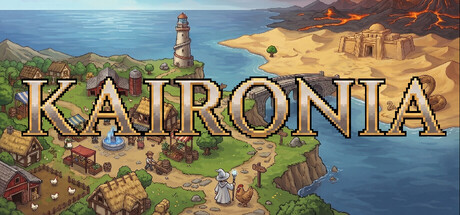
Kaironia uses generative AI tools during the development process to create pre-rendered assets. Specifically, AI-assisted tools were used to help create background music tracks, certain 2D environmental icons and images, and to assist with multi-language text localization. None of these assets are generated dynamically or live during gameplay.
Every visual asset in the game is an open-source, licensed, open-source pixel icon, or a real in-game render. no AI image production. Some of the game codes were written with AI-assisted development tools under the direct supervision of the developer, and localization was human-inspired for all sentences after machine translation initials. There is no real-time AI creation in the game
The game is hanadcrafted by very talented individuals in our team. But as a small studio that is still learning and growing, we leveraged AI to aid us in production. We used AI to generate a few textures for the game. Having said that, we assure everyone that the final game is a result of the hardwork and dedication of a very talented and passionate team.
In-Game Text Creation and Translation: We use AI to create and translate text for in-game content and store descriptions.
Program Code Generation: We use AI to create and optimize the programming code that implements the game’s features and systems.
Sound Effect Generation: We use AI to generate sound effects used in the game.
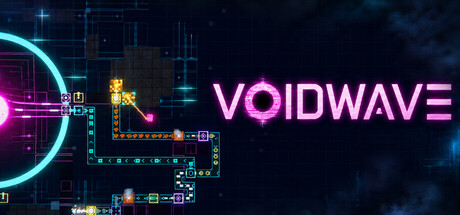
VOIDWAVE's game design, programming, and automation simulation are built by hand. Some visual assets — certain sprites, icons, and UI art — were created with the help of generative AI tools and hand-edited to fit the game's style, and the game's music is AI-generated. Sound effects use procedural synthesis (not AI). All gameplay, systems, and balancing are human-designed, and all content is finalized during development — nothing is AI-generated while you play.
This game was built in a basement by a dad of 3 with claude, gemini, grok, copilot and chat gpt, all pitched in with various parts. some of the backgrounds and icons atrwork had ai refinement in the process but were all reformatted and redrawn as conceptualized by dev
Generative artificial intelligence has been used to create store page thumbnails based on the developer's scene work.
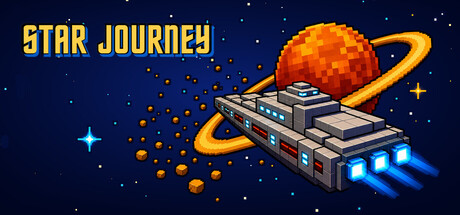
Generative artificial intelligence has been used by the developer to improve the performance of the developers code to achieve incredible in game performance with respect to voxel mesh rendering and voxel lighting calculations. Thanks to the contributions of gen ai Star Journey performs beautifully even on laptops that have no dedicated GPU.
Some images used in the game were created or assisted with the help of AI-generated content. All AI-generated assets were reviewed, edited, and integrated by the developer as part of the game's final artwork.
We did use AI generated images, but human edited and perfected images for our Steam Store and logos. Static UI elements and backgrounds were also generated using AI, but again, human edited.
The game's design, game systems, balance, and English narrative are human-developed. AI tools were used during development as a coding assistant, with any recommended code changes specified, reviewed, and tested by the developer. The Japanese localization was produced with AI assistance and hand-edited for nuances, idioms, and accuracy. AI tools were also used for grammar and spell checking. No content is AI-generated at runtime.
Some development used generative AI tools to assist with writing code, shaders, and drafting some in-game text. All content was approved by the developer.
Generative AI is used as a production support tool throughout development. It assists with localization, workflow acceleration, and the integration of assets across multiple disciplines into a consistent production pipeline. All AI-assisted content is reviewed, edited, integrated, and quality-controlled by the development team before being included in the final game.
Generative AI tools were used during development to create and manually refine some illustrations, store page artwork, and music tracks, as well as to assist with text preparation and localization. The game does not generate any AI content in real time.
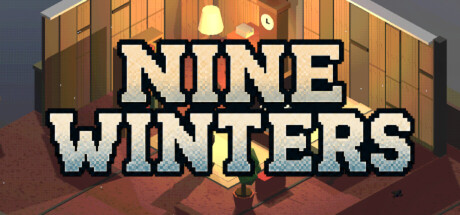
Generative AI tools were used during development to create and refine some pre-generated visual assets, including character illustrations, office environments, decorative objects, and promotional artwork. All generated materials were manually selected, edited, integrated, and reviewed by the developer. The game does not generate any AI content while running.
This game was developed based on the concept of creating a Steam game with AI and Unity. Some in-game 3D models, images/artwork, UI elements, sounds, text, and multilingual localization copy were generated or assisted by generative AI tools, then directly edited, arranged, implemented, and finalized by the developer in Unity.
The game does not generate new AI content in real time during gameplay. All AI-generated or AI-assisted elements were created, reviewed, and edited in advance before being included as part of the game content.
Audio: AI voice-generation tools, including ElevenLabs, were used to create character dialogue and narration tracks.
Visual Elements: AI image-generation tools were used to create some background textures, props, and 2D image assets used in the game’s environments.
All generated assets were personally reviewed, edited, and reworked by the developer to ensure that they align with the game’s setting and creative direction before being safely incorporated into the game.
Some artwork used in this game was created with the assistance of generative AI. All AI-assisted graphics were further edited, refined, and finalized by the developer before being included in the final game.
Generative AI tools were used during the development of this game to assist with early concept art generation, texture optimization, and fine-tuning certain visual assets. All final in-game assets have been reviewed and refined by the development team.
In EverRail, AI-generated voiceover is used only for machine characters: the train's AI board computer and robot enemies, voices that are artificial in the story itself, which also lets us offer them in multiple languages. Beyond that, our team uses generative AI as a tool to support development, with our artists, designers, and engineers refining and hand-building every asset that makes it into the game.
Generative artificial intelligence was used during the process of creating the game's graphical elements. It was used to generate concepts and 2D graphics, which were then further manually edited and adapted to the needs of the project. The modified graphics were used as backgrounds in the game's main menu.
This game uses AI-generated content in the following ways:
Images: AI tools were used to help compose the wine bottle label artwork.
Music: AI tools were used to compose the in-game radio music and sound effects.
Some artwork in this game was created using generative AI (NightCafe) from text prompts, then edited and incorporated into the final visuals. AI is not used to generate content during gameplay.
During the development of this game, generative AI technologies were utilized to assist in creating certain 3D models and character/environmental textures. All AI-assisted assets have been manually refined, optimized, and reviewed to ensure high quality and full compliance with platform copyright policies.
I've used AI for code, and to generate some 2D & 3D assets.
I know people want to boycott AI (and I can respect that opinion), but this game would be nearly impossible for a solo developer to make without it.
I cannot stress to you the amount of manual work that still has to go into something like this, even with AI tooling.
You couldn't "prompt" a game like this.
I genuinely care about creating a good game, and if my use of AI is a hard stop for you trying this game, it's your loss!
This game uses generative AI tools to assist in creating some content, including certain textures, 3D assets, and voice acting. These AI-assisted assets were reviewed, edited, and integrated by the developer as part of the game’s production process.
AI is NOT used in the graphics, sound effects, music, or code, and none of these contain any AI-generated content. AI is used ONLY to produce higher-quality text translations than standard translation tools, and for no other purpose.
Some visual assets, promotional artwork, and store graphical assets were created or assisted using generative AI tools. All assets were reviewed, edited, and integrated into the game by the developer.
AI was used to assist with the localization process.
All other core game content including game design, programming, art direction, and gameplay systems
was created by the human development team.
Generative AI was used during development to assist in the creation of certain visual assets, including some textures and artwork featured in story sequences. All generated assets were reviewed, modified where necessary, and curated by the development team before inclusion in the game. No AI-generated content is created during gameplay.
Kaironia uses generative AI tools during the development process to create pre-rendered assets. Specifically, AI-assisted tools were used to help create background music tracks, certain 2D environmental icons and images, and to assist with multi-language text localization. None of these assets are generated dynamically or live during gameplay.
Every visual asset in the game is an open-source, licensed, open-source pixel icon, or a real in-game render. no AI image production. Some of the game codes were written with AI-assisted development tools under the direct supervision of the developer, and localization was human-inspired for all sentences after machine translation initials. There is no real-time AI creation in the game
The game is hanadcrafted by very talented individuals in our team. But as a small studio that is still learning and growing, we leveraged AI to aid us in production. We used AI to generate a few textures for the game. Having said that, we assure everyone that the final game is a result of the hardwork and dedication of a very talented and passionate team.
In-Game Text Creation and Translation: We use AI to create and translate text for in-game content and store descriptions.
Program Code Generation: We use AI to create and optimize the programming code that implements the game’s features and systems.
Sound Effect Generation: We use AI to generate sound effects used in the game.
VOIDWAVE's game design, programming, and automation simulation are built by hand. Some visual assets — certain sprites, icons, and UI art — were created with the help of generative AI tools and hand-edited to fit the game's style, and the game's music is AI-generated. Sound effects use procedural synthesis (not AI). All gameplay, systems, and balancing are human-designed, and all content is finalized during development — nothing is AI-generated while you play.
This game was built in a basement by a dad of 3 with claude, gemini, grok, copilot and chat gpt, all pitched in with various parts. some of the backgrounds and icons atrwork had ai refinement in the process but were all reformatted and redrawn as conceptualized by dev
Generative artificial intelligence has been used to create store page thumbnails based on the developer's scene work.
Generative artificial intelligence has been used by the developer to improve the performance of the developers code to achieve incredible in game performance with respect to voxel mesh rendering and voxel lighting calculations. Thanks to the contributions of gen ai Star Journey performs beautifully even on laptops that have no dedicated GPU.
Some images used in the game were created or assisted with the help of AI-generated content. All AI-generated assets were reviewed, edited, and integrated by the developer as part of the game's final artwork.
We did use AI generated images, but human edited and perfected images for our Steam Store and logos. Static UI elements and backgrounds were also generated using AI, but again, human edited.
The game's design, game systems, balance, and English narrative are human-developed. AI tools were used during development as a coding assistant, with any recommended code changes specified, reviewed, and tested by the developer. The Japanese localization was produced with AI assistance and hand-edited for nuances, idioms, and accuracy. AI tools were also used for grammar and spell checking. No content is AI-generated at runtime.
Some development used generative AI tools to assist with writing code, shaders, and drafting some in-game text. All content was approved by the developer.
Generative AI is used as a production support tool throughout development. It assists with localization, workflow acceleration, and the integration of assets across multiple disciplines into a consistent production pipeline. All AI-assisted content is reviewed, edited, integrated, and quality-controlled by the development team before being included in the final game.
Generative AI tools were used during development to create and manually refine some illustrations, store page artwork, and music tracks, as well as to assist with text preparation and localization. The game does not generate any AI content in real time.
Generative AI tools were used during development to create and refine some pre-generated visual assets, including character illustrations, office environments, decorative objects, and promotional artwork. All generated materials were manually selected, edited, integrated, and reviewed by the developer. The game does not generate any AI content while running.
This game was developed based on the concept of creating a Steam game with AI and Unity. Some in-game 3D models, images/artwork, UI elements, sounds, text, and multilingual localization copy were generated or assisted by generative AI tools, then directly edited, arranged, implemented, and finalized by the developer in Unity.
The game does not generate new AI content in real time during gameplay. All AI-generated or AI-assisted elements were created, reviewed, and edited in advance before being included as part of the game content.
Audio: AI voice-generation tools, including ElevenLabs, were used to create character dialogue and narration tracks.
Visual Elements: AI image-generation tools were used to create some background textures, props, and 2D image assets used in the game’s environments.
All generated assets were personally reviewed, edited, and reworked by the developer to ensure that they align with the game’s setting and creative direction before being safely incorporated into the game.
Some artwork used in this game was created with the assistance of generative AI. All AI-assisted graphics were further edited, refined, and finalized by the developer before being included in the final game.
Generative AI tools were used during the development of this game to assist with early concept art generation, texture optimization, and fine-tuning certain visual assets. All final in-game assets have been reviewed and refined by the development team.
In EverRail, AI-generated voiceover is used only for machine characters: the train's AI board computer and robot enemies, voices that are artificial in the story itself, which also lets us offer them in multiple languages. Beyond that, our team uses generative AI as a tool to support development, with our artists, designers, and engineers refining and hand-building every asset that makes it into the game.
Generative artificial intelligence was used during the process of creating the game's graphical elements. It was used to generate concepts and 2D graphics, which were then further manually edited and adapted to the needs of the project. The modified graphics were used as backgrounds in the game's main menu.
This game uses AI-generated content in the following ways:
Images: AI tools were used to help compose the wine bottle label artwork.
Music: AI tools were used to compose the in-game radio music and sound effects.
Some artwork in this game was created using generative AI (NightCafe) from text prompts, then edited and incorporated into the final visuals. AI is not used to generate content during gameplay.
During the development of this game, generative AI technologies were utilized to assist in creating certain 3D models and character/environmental textures. All AI-assisted assets have been manually refined, optimized, and reviewed to ensure high quality and full compliance with platform copyright policies.
I've used AI for code, and to generate some 2D & 3D assets.
I know people want to boycott AI (and I can respect that opinion), but this game would be nearly impossible for a solo developer to make without it.
I cannot stress to you the amount of manual work that still has to go into something like this, even with AI tooling.
You couldn't "prompt" a game like this.
I genuinely care about creating a good game, and if my use of AI is a hard stop for you trying this game, it's your loss!
This game uses generative AI tools to assist in creating some content, including certain textures, 3D assets, and voice acting. These AI-assisted assets were reviewed, edited, and integrated by the developer as part of the game’s production process.
AI is NOT used in the graphics, sound effects, music, or code, and none of these contain any AI-generated content. AI is used ONLY to produce higher-quality text translations than standard translation tools, and for no other purpose.
Some visual assets, promotional artwork, and store graphical assets were created or assisted using generative AI tools. All assets were reviewed, edited, and integrated into the game by the developer.
AI was used to assist with the localization process.
All other core game content including game design, programming, art direction, and gameplay systems
was created by the human development team.