Public Steam disclosure research25,376 disclosures tracked
Where do games disclose AI use?
Search developers’ Steam disclosures, compare classified AI use across
games, and follow recorded changes.
This index adds cross-game classifications and statistics to
statements published on individual store pages.
Groups reflect automatic analysis of public disclosures; mature records are excluded. These counts do not measure AI use across all of Steam.
Missing or unclear statements cannot establish whether a game uses AI.
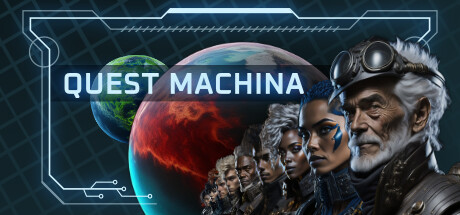
Quest Machina uses generative AI combined with your input to create a unique world just for you. Story, descriptions, and dialog are generated using OpenAI. Character portraits, planet sprites, and location art are generated using Leonardo.ai.
AI was used to assist with voice modification for certain characters.
AI was used to help with soundtrack enhancement and editing.
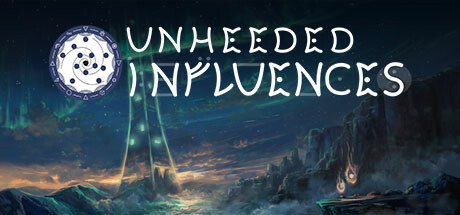
AI was used to create or refine some visual symbols and sigil designs.
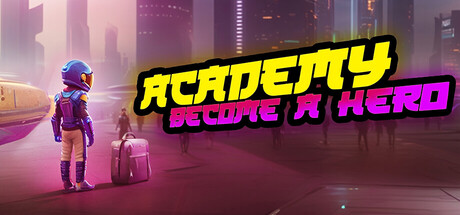
Generative AI tools were used during the development of Academy: Become a Hero to create and refine several game assets. The disclosure of its use is as follows:
2D Art and User Interface: All 2D illustrations, UI elements, icons, and menus (including upgrade screens, stage selection, and customization menus) were generated using AI tools and subsequently edited and refined for final integration.
3D Modeling: The main character (Troid) and its skeletal meshes were created using Meshy. We hold a valid commercial license for all content generated and used in the project.
Localization: Game localization and translations into all supported languages were performed with the assistance of AI large language models to ensure global accessibility.
Audio and Voiceovers: For the introductory cinematic, AI was utilized to modulate and process the developer's original voice recordings to create distinct and characterized voices for the different characters.
All AI-generated content has been manually reviewed, corrected, and finalized by the developer to ensure artistic consistency and technical quality.
All images, text, music, code, and other important parts of the game are created manually.
We have used AI for some of the translation, as well as for creating some textures (for example - wall posters). The usage is minimal, and you probably won't notice it. This is done to speed up the development process. In the future, we may replace these assets if we deem it necessary.
AI-generated story invention
AI generated audios
AI-generated translation
AI generated videos
AI generated images
This game use AI Art. Special Thanks to the following Creators of...
KLING AI (Videos)
Wonder AI (2D Graphics)
Runway AI (Trailer Voice)
Chat-GPT / OpenAI (Translation)
DALL-E (2D Graphics)
Replica AI (Voice)
Meshy.ai (3D Models)
Creator
Playbosh Games Entertainment UG (haftungsbeschränkt)
Project Electric Sheep uses generative AI to create character conversations inspired by your dream prompts, as well as to tailor dream worlds to your chosen topics. Below is some more information about which generative AI services we're using in PES, and how:
1. We use ChatGPT to generate NPC dialogue when dream worlds are created and when you reply to an NPC. We use AWS to generate voices for our NPCs.
2. We also use ChatGPT to write in-game world building details, such as graffiti and advertisements, as well as to create the dream description that displays on the dream loading screen.
3. We use DALL·E 2 to paint in-game murals inspired by your dream prompt.
4. Lastly, during the dream generation phase, we use ChatGPT to make creative decisions about world design based on the given dream prompt.
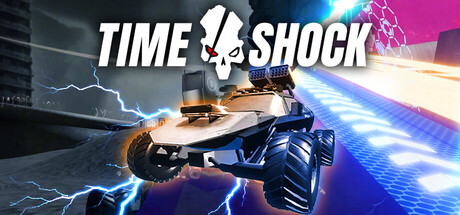
Time Shock is hand-built by a solo developer. The design, gameplay, levels, writing, and world are all made by hand. AI tools play a limited supporting role only — used to tweak character voices, assist and refine artwork, and add lip-sync to dialogue. Everything is reviewed and finished by hand before it ships.
This game uses artificial intelligence (AI) tools to help optimize code and improve development efficiency and runtime performance. Additionally, character voices in the game were recorded by the developer himself. The voice was then synthesised by AI to create different character voices. These technologies enhance the overall quality and experience of the game.
If your ingame choices are inconsistent or raise moral questions, you’ll have to justify them in writing. An AI will read your defense and decide whether it counts as a solution. Convince it — because its verdict carries real consequences in the game.
AI is used for some images and promotional materials. It also serves as a working basis for image editing. It is used anecdotally.
It has been used for some secondary elements of the game to populate the universe, such as decorative objects.
AI is not used exclusively. As a solo dev, I also work with freelance artists for main content and assets on the Unity Store.
Airtaxi Coach is an AI trained game character called Diana that is trained on the latest flight manuals, as well as the latest industry knowledge on airtaxis, flying cars and the future of mobility. You can ask her any question about the game Metapilot or flight in general, and she will help you navigate the game as well as help you to earn tokens in the game and earn cool perks! Metapilot perks include invited to events, tokens you can spend on our website, and even the chance to get training to become a real airtaxi pilot!
The game includes AI-generated images used as visual assets. Specifically, AI-generated content is utilized for stage backgrounds, cutscene backgrounds, character illustrations, and certain in-game icons.
We employ generative AI during the creation of some art assets. Usually, this will be to create basic images reference, that are then modified by hand. All generated content is reviewed and modified by the artist, and it remains a minor part of the total expression created by the artist.
Some AI tools were used to help with early ideation in the development process. AI tools were also used to assist in up-rezzing our portraits and adding facial animations. Final assets were all painted by artists. We have not replaced any developers with AI and believe that talented people lie at the heart of exciting games.
Our game contains a very limited use of AI-generated imagery. Specifically, a small number of static portrait images displayed in a hallway scene were created using AI tools. These portraits are decorative only, used to add visual variety to the champions portrayed. They do not impact gameplay, story progression, or player decisions.
Full screen pictures where made using AI during the EA / prototype of the game, we are in the process of replacing them all with our artists.
Everything else is handmade.
Used for Early Access placeholders, and is intended to be replaced with more development time. AI generation was used for some voices and some 2D images within the game. These assets are intended to be replaced with ones created by human artists.
We used generative AI to create a small number of background textures, such as book covers, graffiti, and framed wall art. All core visuals and gameplay elements were created by our team.
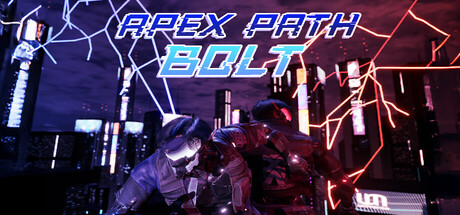
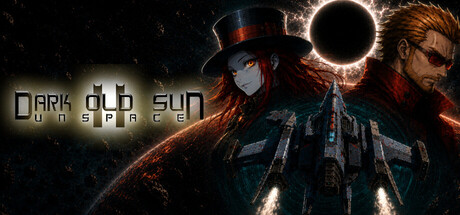
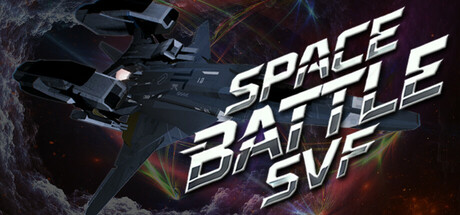
The package image of this game was created using multiple AI tools.
Part of the background image and background character: Created using Stable Diffusion and provided under the CreativeML Open RAIL-M license.
Part of the logo design: Created by Sonic-Alpha using OpenAI's generative AI, "ChatGPT," under the paid "ChatGPT Plus" plan.
No AI-generated elements are included in the main game or in-game content.
I have troubles writing long descriptions so I used ChatGPT to help me write some of the descriptions and lore in the game. It was used as a reference, nothing more.
I have used ONLY my own content and ONLY my own algorithm models to generate content from. I wrote my own to be able to use it for this purpose only. I do NOT infringe on ANY creative rights in doing so.
During the development process, we may use procedural- and AI-based tools to assist with content creation. In all such cases, the final product reflects the creativity and expression of our own development team.
I added scenes and images improved with Generative Artificial Intelligence.
They are locally generated using Stable diffusion, without resorting to paying any generative AI company. Although paying them could have given me better tools and results, I decided not to pay for their use to support the claim of artists for fair royalties. (It is not possible to discuss such a complex issue here, but I will consider opening a discussion on the topic in the game forum, follow my game to be notified if it is created)
Most of the artistic content in the game, mainly music, is compensated in various ways depending on the case to its artists.
My original content is registered, but the images generated by AI are essentially treated as 'creative commons' and I consider them fanarts of my characters.
All added scenes and backgrounds are of high quality and maintain good coherence, avoiding deformities in hands, eyes, etc., and without annoying or confusing shapes.
All AI-generated images are generated, selected, and edited exclusively by me, the creator of the game, to reflect my original vision, previously inaccessible due to high costs.
I have sought to include only select content that enriches the narrative and immersion of the game.
The package image of this game was created using multiple AI tools.
Part of the background image and background character: Created using Stable Diffusion and provided under the CreativeML Open RAIL-M license.
Part of the logo design: Created by Sonic-Alpha using OpenAI's generative AI, "ChatGPT," under the paid "ChatGPT Plus" plan.
No AI-generated elements are included in the main game or in-game content.
Quest Machina uses generative AI combined with your input to create a unique world just for you. Story, descriptions, and dialog are generated using OpenAI. Character portraits, planet sprites, and location art are generated using Leonardo.ai.
AI was used to assist with voice modification for certain characters.
AI was used to help with soundtrack enhancement and editing.
AI was used to create or refine some visual symbols and sigil designs.
Generative AI tools were used during the development of Academy: Become a Hero to create and refine several game assets. The disclosure of its use is as follows:
2D Art and User Interface: All 2D illustrations, UI elements, icons, and menus (including upgrade screens, stage selection, and customization menus) were generated using AI tools and subsequently edited and refined for final integration.
3D Modeling: The main character (Troid) and its skeletal meshes were created using Meshy. We hold a valid commercial license for all content generated and used in the project.
Localization: Game localization and translations into all supported languages were performed with the assistance of AI large language models to ensure global accessibility.
Audio and Voiceovers: For the introductory cinematic, AI was utilized to modulate and process the developer's original voice recordings to create distinct and characterized voices for the different characters.
All AI-generated content has been manually reviewed, corrected, and finalized by the developer to ensure artistic consistency and technical quality.
All images, text, music, code, and other important parts of the game are created manually.
We have used AI for some of the translation, as well as for creating some textures (for example - wall posters). The usage is minimal, and you probably won't notice it. This is done to speed up the development process. In the future, we may replace these assets if we deem it necessary.
AI-generated story invention
AI generated audios
AI-generated translation
AI generated videos
AI generated images
This game use AI Art. Special Thanks to the following Creators of...
KLING AI (Videos)
Wonder AI (2D Graphics)
Runway AI (Trailer Voice)
Chat-GPT / OpenAI (Translation)
DALL-E (2D Graphics)
Replica AI (Voice)
Meshy.ai (3D Models)
Playbosh Games Entertainment UG (haftungsbeschränkt)
Project Electric Sheep uses generative AI to create character conversations inspired by your dream prompts, as well as to tailor dream worlds to your chosen topics. Below is some more information about which generative AI services we're using in PES, and how:
1. We use ChatGPT to generate NPC dialogue when dream worlds are created and when you reply to an NPC. We use AWS to generate voices for our NPCs.
2. We also use ChatGPT to write in-game world building details, such as graffiti and advertisements, as well as to create the dream description that displays on the dream loading screen.
3. We use DALL·E 2 to paint in-game murals inspired by your dream prompt.
4. Lastly, during the dream generation phase, we use ChatGPT to make creative decisions about world design based on the given dream prompt.
Time Shock is hand-built by a solo developer. The design, gameplay, levels, writing, and world are all made by hand. AI tools play a limited supporting role only — used to tweak character voices, assist and refine artwork, and add lip-sync to dialogue. Everything is reviewed and finished by hand before it ships.
This game uses artificial intelligence (AI) tools to help optimize code and improve development efficiency and runtime performance. Additionally, character voices in the game were recorded by the developer himself. The voice was then synthesised by AI to create different character voices. These technologies enhance the overall quality and experience of the game.
If your ingame choices are inconsistent or raise moral questions, you’ll have to justify them in writing. An AI will read your defense and decide whether it counts as a solution. Convince it — because its verdict carries real consequences in the game.
AI is used for some images and promotional materials. It also serves as a working basis for image editing. It is used anecdotally.
It has been used for some secondary elements of the game to populate the universe, such as decorative objects.
AI is not used exclusively. As a solo dev, I also work with freelance artists for main content and assets on the Unity Store.
Airtaxi Coach is an AI trained game character called Diana that is trained on the latest flight manuals, as well as the latest industry knowledge on airtaxis, flying cars and the future of mobility. You can ask her any question about the game Metapilot or flight in general, and she will help you navigate the game as well as help you to earn tokens in the game and earn cool perks! Metapilot perks include invited to events, tokens you can spend on our website, and even the chance to get training to become a real airtaxi pilot!
The game includes AI-generated images used as visual assets. Specifically, AI-generated content is utilized for stage backgrounds, cutscene backgrounds, character illustrations, and certain in-game icons.
We employ generative AI during the creation of some art assets. Usually, this will be to create basic images reference, that are then modified by hand. All generated content is reviewed and modified by the artist, and it remains a minor part of the total expression created by the artist.
Some AI tools were used to help with early ideation in the development process. AI tools were also used to assist in up-rezzing our portraits and adding facial animations. Final assets were all painted by artists. We have not replaced any developers with AI and believe that talented people lie at the heart of exciting games.
Our game contains a very limited use of AI-generated imagery. Specifically, a small number of static portrait images displayed in a hallway scene were created using AI tools. These portraits are decorative only, used to add visual variety to the champions portrayed. They do not impact gameplay, story progression, or player decisions.
Full screen pictures where made using AI during the EA / prototype of the game, we are in the process of replacing them all with our artists.
Everything else is handmade.
Used for Early Access placeholders, and is intended to be replaced with more development time. AI generation was used for some voices and some 2D images within the game. These assets are intended to be replaced with ones created by human artists.
We used generative AI to create a small number of background textures, such as book covers, graffiti, and framed wall art. All core visuals and gameplay elements were created by our team.
The package image of this game was created using multiple AI tools.
Part of the background image and background character: Created using Stable Diffusion and provided under the CreativeML Open RAIL-M license.
Part of the logo design: Created by Sonic-Alpha using OpenAI's generative AI, "ChatGPT," under the paid "ChatGPT Plus" plan.
No AI-generated elements are included in the main game or in-game content.
I have troubles writing long descriptions so I used ChatGPT to help me write some of the descriptions and lore in the game. It was used as a reference, nothing more.
I have used ONLY my own content and ONLY my own algorithm models to generate content from. I wrote my own to be able to use it for this purpose only. I do NOT infringe on ANY creative rights in doing so.
During the development process, we may use procedural- and AI-based tools to assist with content creation. In all such cases, the final product reflects the creativity and expression of our own development team.
I added scenes and images improved with Generative Artificial Intelligence.
They are locally generated using Stable diffusion, without resorting to paying any generative AI company. Although paying them could have given me better tools and results, I decided not to pay for their use to support the claim of artists for fair royalties. (It is not possible to discuss such a complex issue here, but I will consider opening a discussion on the topic in the game forum, follow my game to be notified if it is created)
Most of the artistic content in the game, mainly music, is compensated in various ways depending on the case to its artists.
My original content is registered, but the images generated by AI are essentially treated as 'creative commons' and I consider them fanarts of my characters.
All added scenes and backgrounds are of high quality and maintain good coherence, avoiding deformities in hands, eyes, etc., and without annoying or confusing shapes.
All AI-generated images are generated, selected, and edited exclusively by me, the creator of the game, to reflect my original vision, previously inaccessible due to high costs.
I have sought to include only select content that enriches the narrative and immersion of the game.
The package image of this game was created using multiple AI tools.
Part of the background image and background character: Created using Stable Diffusion and provided under the CreativeML Open RAIL-M license.
Part of the logo design: Created by Sonic-Alpha using OpenAI's generative AI, "ChatGPT," under the paid "ChatGPT Plus" plan.
No AI-generated elements are included in the main game or in-game content.