Public Steam disclosure research25,508 disclosures tracked
Where do games disclose AI use?
Search developers’ Steam disclosures, compare classified AI use across
games, and follow recorded changes.
This index adds cross-game classifications and statistics to
statements published on individual store pages.
Groups reflect automatic analysis of public disclosures; mature records are excluded. These counts do not measure AI use across all of Steam.
Missing or unclear statements cannot establish whether a game uses AI.
Pre-generated AI tools were used to create some artwork, including store promotional art and in-game character portraits, and some music and audio assets. These assets are prepared before play. Pocket Dynasty does not use generative AI services to create content during gameplay; its football simulation and computer-controlled teams use programmed game systems.
Generative AI was used during development to create and refine some pre-generated artwork, character animation source material, written content, localization, and marketing scenes. All such content was reviewed, selected, and fixed before release. The game does not generate content with AI during play and does not include AI chat.
The game will connect to an open-source local large language model that is already built into the game upon first launch, and use it during gameplay to generate NPC dialogues, host responses, and reasoning review feedback. Players may also choose to access compatible third‑party large language model APIs. The text generated at runtime is based on player questions and current story data.
Some store artwork and marketing materials were created with the assistance of generative AI tools. These are pre-generated static assets; no AI content is generated in real time during gameplay.
Pre-generated AI-assisted artwork is used for selected character portraits, property and location imagery, career and education illustrations, and promotional materials. All such content is reviewed and curated by the developer before inclusion. The game does not generate AI content during gameplay.
Some visual assets and 3D assets used in this game were created with the assistance of generative AI. The generated assets were edited and adjusted by the developer as needed before being incorporated into the game. No content is generated by AI in real time during gameplay.
Parts of the content shipped with this game were made with generative AI tools and then reviewed and edited by us before release: illustrations and background artwork, sound effects, organ cues and the menu music track, the spoken goal and penalty announcements in all seven interface languages, and parts of the in-game text and its translations. The same applies to our store artwork and to the trailers, which use pre-generated AI music and narration. All of it is produced before release. No generative AI runs while you play: the game creates no content or code at runtime and connects to no external AI service. Newspaper reports are assembled from prepared text and the events of your own career.
We used AI as a “support tool” in the creation of in-store visuals and certain in-game UI elements. We use AI solely as a support tool. We never leave the entire process to AI for any task.
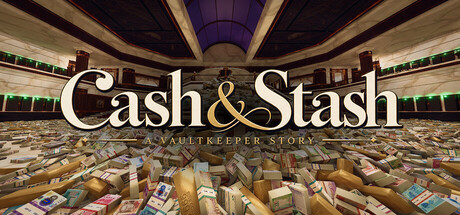
During the development of Cash & Stash: A Vaultkeeper Story, we used tools that include AI-assisted features to help streamline production. However, no game content was created using generative AI.
Pre-generated AI tools were used for in-game character voice dubbing (such as voicemails and phone calls) as well as textures for interior framed pictures and props. All assets have been thoroughly reviewed to ensure there are no copyright infringements or unlawful elements.
Some of the artwork and images in this game were created using generative AI. AI was used as a tool during development to create visual assets used in the game and its store presentation.
Pixel Metropolis is a human-designed, AI-implemented game. As its sole human creator, I am responsible for the game’s design, systems, architecture, quality assurance, extensive testing, art direction, and sound direction.
Codex, primarily using OpenAI’s GPT-5.6 Sol model, has generated all of the game’s code and has been used to direct the creation and implementation of its visual and sound assets. The only non-generated assets are a small selection of CC0 sounds.
Pocket Beasts uses generative AI tools to assist in the creation of some visual assets, including creature and character artwork, in portions of the game's text and localization, and in some of the game's sound, including background music. Not all assets are AI-generated; some artwork is sourced from purchased assets. All AI-assisted content is reviewed and edited by the development team. No content is generated live during gameplay — all assets are pre-rendered — and the game does not connect to any external AI service at runtime.
Generative AI tools (such as Gemini) were used during development to assist in creating graphic design elements for in-game parody VHS cover art and store page graphic assets. All AI-generated artwork was manually curated, edited, and formatted into final 3D texture maps for the game's assets.
Some of the text in this product was drafted with generative AI and then edited by the developer: parts of this store page description and some in-game text. Parts of the source code were also written with AI coding assistance and reviewed by hand.
The art, 3D models, animation and audio in this game are not AI-generated, and no generative AI runs while you play.
Generative AI tools were used to assist with English localization and early drafts of in-game letter content. All AI-assisted text was reviewed and edited by the developer. No AI-generated images or audio are included.
Some pre-generated 2D artwork assets were created with the assistance of generative AI tools during development. These AI-assisted drafts were used as a starting point for cat sprites, adoption box artwork, icons, capsule images, trailer visuals, and some store screenshots. All final assets were selected, edited, adjusted, and reviewed by the developer before being included in the product. The game does not generate AI content during gameplay and does not connect to external AI services.
Generating base images and materials for certain environmental textures (such as doors and labels), which are then manually edited, dithered, and color-crushed to fit the game's low-poly PSX aesthetic.
Generating video clips, audio, and visual concepts for the television broadcasts (like the in-game cooking shows) that play on CRT monitors throughout the world.
This game uses AI-assisted tools during the development process to support the solo developer's workflow:
- 2D Art & Textures: Some background textures, UI elements, and concept art references were initially drafted using AI tools, followed by extensive manual repainting, editing, and refinement. All character designs, 3D models, are fully crafted and hand-painted by human artists. The story context is designed by myself.
- Audio: Certain background music tracks and ambient prototypes were generated with AI assistance. Character voice acting in story and core themes are produced by human creators.
No real-time (live-generated) AI is used during runtime.
This game's text localization into multiple languages was assisted by AI translation tools. Three background music tracks, licensed from Pixabay, were AI-created or AI-modified by their original creators. All other artwork, audio, and game assets are human-made or sourced from licensed marketplaces — no other AI-generated content is used.
Generative AI tools were used during development to enhance and refine certain images which included improving resolution, clarity, colour. No AI-generated content is created during gameplay.
AI was used for some translations, music, and visual assets. The game does not create AI-generated content during gameplay, and AI was not used to write the game’s code.
Generative AI tools were used to assist with English localization/translation of text originally written by the developer. No AI-generated content is created dynamically during gameplay. We do our best to rely on high-quality human translations whenever possible.
Generative AI was used as a supplementary tool in the translation process for certain system languages in this title.
AI was utilized to help improve translation efficiency and quality. However, all final translations are reviewed and edited by the development team before being implemented.
All translated text is reviewed by human editors to ensure it is accurate, appropriate, and of high quality.
English: This game uses generative AI to create case stories, suspect dialogues, and investigative clues in real time during play. AI is provided by third-party services — you bring your own API key (entered in the in-game settings). No microtransactions.
I started this project completely from scratch and have spent a lot of time developing and refining it.
Claude Code AI was used to help me with certain tasks, such as implementing the save system, menus, and scoring system. However, the AI did not build the game for me. I was responsible for the overall development, design, integration, testing, debugging, and all the decisions made throughout the project.
The entire project was developed in Unreal Engine 5.8, primarily using C++ with a few Blueprints.
Despite what you may sometimes hear, using AI does not mean that the work is done for you. It can be a useful tool, but you still need to understand what you are doing, integrate the code into your project, fix issues, test everything, and spend many hours making the final result work properly.
Some of this game's assets and content were created with the help of generative AI tools during development. This includes certain graphical assets (such as store and marketing art and athlete portraits) and was also used to help generate and populate in-game content such as races, athletes and equipment. All AI-assisted content is created during development, reviewed and curated by the developer, and ships as fixed, pre-made content — the game does not generate any content with AI in real time, and does not connect to any AI service during play.
Generative AI tools were used during development to assist with portions of the game’s code and the creation or refinement of certain visual and marketing assets. All AI-assisted material was reviewed, edited, and integrated by the developer. The game does not generate AI content during gameplay.
Some game assets — including weapon/UI icons, character voice lines, and key art — were created with the
assistance of generative AI tools. All AI-generated content was reviewed and edited by the development team.
Pre-generated AI tools were used to create some artwork, including store promotional art and in-game character portraits, and some music and audio assets. These assets are prepared before play. Pocket Dynasty does not use generative AI services to create content during gameplay; its football simulation and computer-controlled teams use programmed game systems.
Generative AI was used during development to create and refine some pre-generated artwork, character animation source material, written content, localization, and marketing scenes. All such content was reviewed, selected, and fixed before release. The game does not generate content with AI during play and does not include AI chat.
The game will connect to an open-source local large language model that is already built into the game upon first launch, and use it during gameplay to generate NPC dialogues, host responses, and reasoning review feedback. Players may also choose to access compatible third‑party large language model APIs. The text generated at runtime is based on player questions and current story data.
Some store artwork and marketing materials were created with the assistance of generative AI tools. These are pre-generated static assets; no AI content is generated in real time during gameplay.
Pre-generated AI-assisted artwork is used for selected character portraits, property and location imagery, career and education illustrations, and promotional materials. All such content is reviewed and curated by the developer before inclusion. The game does not generate AI content during gameplay.
Some visual assets and 3D assets used in this game were created with the assistance of generative AI. The generated assets were edited and adjusted by the developer as needed before being incorporated into the game. No content is generated by AI in real time during gameplay.
Parts of the content shipped with this game were made with generative AI tools and then reviewed and edited by us before release: illustrations and background artwork, sound effects, organ cues and the menu music track, the spoken goal and penalty announcements in all seven interface languages, and parts of the in-game text and its translations. The same applies to our store artwork and to the trailers, which use pre-generated AI music and narration. All of it is produced before release. No generative AI runs while you play: the game creates no content or code at runtime and connects to no external AI service. Newspaper reports are assembled from prepared text and the events of your own career.
We used AI as a “support tool” in the creation of in-store visuals and certain in-game UI elements. We use AI solely as a support tool. We never leave the entire process to AI for any task.
During the development of Cash & Stash: A Vaultkeeper Story, we used tools that include AI-assisted features to help streamline production. However, no game content was created using generative AI.
Pre-generated AI tools were used for in-game character voice dubbing (such as voicemails and phone calls) as well as textures for interior framed pictures and props. All assets have been thoroughly reviewed to ensure there are no copyright infringements or unlawful elements.
Some of the artwork and images in this game were created using generative AI. AI was used as a tool during development to create visual assets used in the game and its store presentation.
Pixel Metropolis is a human-designed, AI-implemented game. As its sole human creator, I am responsible for the game’s design, systems, architecture, quality assurance, extensive testing, art direction, and sound direction.
Codex, primarily using OpenAI’s GPT-5.6 Sol model, has generated all of the game’s code and has been used to direct the creation and implementation of its visual and sound assets. The only non-generated assets are a small selection of CC0 sounds.
Pocket Beasts uses generative AI tools to assist in the creation of some visual assets, including creature and character artwork, in portions of the game's text and localization, and in some of the game's sound, including background music. Not all assets are AI-generated; some artwork is sourced from purchased assets. All AI-assisted content is reviewed and edited by the development team. No content is generated live during gameplay — all assets are pre-rendered — and the game does not connect to any external AI service at runtime.
Generative AI tools (such as Gemini) were used during development to assist in creating graphic design elements for in-game parody VHS cover art and store page graphic assets. All AI-generated artwork was manually curated, edited, and formatted into final 3D texture maps for the game's assets.
Some of the text in this product was drafted with generative AI and then edited by the developer: parts of this store page description and some in-game text. Parts of the source code were also written with AI coding assistance and reviewed by hand.
The art, 3D models, animation and audio in this game are not AI-generated, and no generative AI runs while you play.
Generative AI tools were used to assist with English localization and early drafts of in-game letter content. All AI-assisted text was reviewed and edited by the developer. No AI-generated images or audio are included.
Some pre-generated 2D artwork assets were created with the assistance of generative AI tools during development. These AI-assisted drafts were used as a starting point for cat sprites, adoption box artwork, icons, capsule images, trailer visuals, and some store screenshots. All final assets were selected, edited, adjusted, and reviewed by the developer before being included in the product. The game does not generate AI content during gameplay and does not connect to external AI services.
Generating base images and materials for certain environmental textures (such as doors and labels), which are then manually edited, dithered, and color-crushed to fit the game's low-poly PSX aesthetic.
Generating video clips, audio, and visual concepts for the television broadcasts (like the in-game cooking shows) that play on CRT monitors throughout the world.
This game uses AI-assisted tools during the development process to support the solo developer's workflow:
- 2D Art & Textures: Some background textures, UI elements, and concept art references were initially drafted using AI tools, followed by extensive manual repainting, editing, and refinement. All character designs, 3D models, are fully crafted and hand-painted by human artists. The story context is designed by myself.
- Audio: Certain background music tracks and ambient prototypes were generated with AI assistance. Character voice acting in story and core themes are produced by human creators.
No real-time (live-generated) AI is used during runtime.
This game's text localization into multiple languages was assisted by AI translation tools. Three background music tracks, licensed from Pixabay, were AI-created or AI-modified by their original creators. All other artwork, audio, and game assets are human-made or sourced from licensed marketplaces — no other AI-generated content is used.
Generative AI tools were used during development to enhance and refine certain images which included improving resolution, clarity, colour. No AI-generated content is created during gameplay.
AI was used for some translations, music, and visual assets. The game does not create AI-generated content during gameplay, and AI was not used to write the game’s code.
Generative AI tools were used to assist with English localization/translation of text originally written by the developer. No AI-generated content is created dynamically during gameplay. We do our best to rely on high-quality human translations whenever possible.
Generative AI was used as a supplementary tool in the translation process for certain system languages in this title.
AI was utilized to help improve translation efficiency and quality. However, all final translations are reviewed and edited by the development team before being implemented.
All translated text is reviewed by human editors to ensure it is accurate, appropriate, and of high quality.
English: This game uses generative AI to create case stories, suspect dialogues, and investigative clues in real time during play. AI is provided by third-party services — you bring your own API key (entered in the in-game settings). No microtransactions.
I started this project completely from scratch and have spent a lot of time developing and refining it.
Claude Code AI was used to help me with certain tasks, such as implementing the save system, menus, and scoring system. However, the AI did not build the game for me. I was responsible for the overall development, design, integration, testing, debugging, and all the decisions made throughout the project.
The entire project was developed in Unreal Engine 5.8, primarily using C++ with a few Blueprints.
Despite what you may sometimes hear, using AI does not mean that the work is done for you. It can be a useful tool, but you still need to understand what you are doing, integrate the code into your project, fix issues, test everything, and spend many hours making the final result work properly.
Some of this game's assets and content were created with the help of generative AI tools during development. This includes certain graphical assets (such as store and marketing art and athlete portraits) and was also used to help generate and populate in-game content such as races, athletes and equipment. All AI-assisted content is created during development, reviewed and curated by the developer, and ships as fixed, pre-made content — the game does not generate any content with AI in real time, and does not connect to any AI service during play.
Generative AI tools were used during development to assist with portions of the game’s code and the creation or refinement of certain visual and marketing assets. All AI-assisted material was reviewed, edited, and integrated by the developer. The game does not generate AI content during gameplay.
Some game assets — including weapon/UI icons, character voice lines, and key art — were created with the
assistance of generative AI tools. All AI-generated content was reviewed and edited by the development team.