Public Steam disclosure research25,376 disclosures tracked
Where do games disclose AI use?
Search developers’ Steam disclosures, compare classified AI use across
games, and follow recorded changes.
This index adds cross-game classifications and statistics to
statements published on individual store pages.
Groups reflect automatic analysis of public disclosures; mature records are excluded. These counts do not measure AI use across all of Steam.
Missing or unclear statements cannot establish whether a game uses AI.
In order to create an experimental mystery game that focuses on interactive conversations with characters, I also used generative AI to create the visuals, as I don't have an artistic background or the funds to hire a professional artist.
Some of the background art in this game was initially generated using AI, then extensively modified and improved by our human artist to fit the style and vision of the game. The characters, inventory, interface, and other art assets were created directly by human artists without AI.
AI tools were utilized sparingly to assist in early development of some background images. All AI-assisted content has been heavily refined and painted over by the artist.
All the graphics in the game were created with AI, so backgrounds, portraits and inventory objects are all part of it. Text and music are done in the traditional way.
The backgrounds were generated using neural networks such as NijiJourney, LeonardoAI, and PlaygroundAI with some minor post-processing. The characters and storyline art were drawn by artists.
The game uses backgrounds (and a handful of characters) that were made using images generated from a Public Domain scraped data set. The background images have been altered very little but the character images are used as a basis and edited in a powerful editing suite called Microsoft Paint.
The main uses of AI in the creation of this game were for minor coding problems, such as what sorting algorithm to use and detecting bugs occasionally. The second main use was the art. The majority of art in the game is ai generated, but there are no influences on the generation based off of real images. All generated images are random and pre-generated.
Keep in mind none of the names in the game are ai generated.
In some of the game's cutscenes, we have used AI tools to generate several images to help present the story. These images have been edited and refined to enhance the player's visual experience.
We are committed to providing rich content for our players and will continue to leverage innovative technologies to improve the overall game experience.
Due to our team having only one artist and one engineer, using AI assistance during the development process is crucial. This technology saves a significant amount of time and resources, helping us maintain momentum in our development efforts. We primarily apply AI technology during the drafting stage to expedite the design process and improve efficiency. Specifically, we only utilize AI assistance for certain game scenes and objects, with final adjustments made manually to complete the final drafts. As for character illustrations within the game, they are entirely designed and finalized by the artist from start to finish.
Artificial intelligence was used to speed up the process of drawing rough versions of characters and some backgrounds for illustrations. The initial images and subsequent processing were made by a human. All the final images have been reworked and modified by several artists.
This game and associated materials uses AI generated audio and visual graphics content. All AI generated content is commercially licensed from the industries leading AI generation platforms.
This is a SPOILER, actually, but your arch enemy in this game is an Evil Generative A. I. It must look accordingly. Big part of it is A. I. generated, and it's made as obvious as possible.
The game is a research project into how the use of AI would affect game production, so AI has been used for images, voiceovers, code, dialogue and other areas as much as possible. Just to see what sort of results it provides.
The images in the game are collages and/or modified parts of images created by AI.
Each image was processed and animated manually by a human.
Parts of the images have been redrawn by humans.
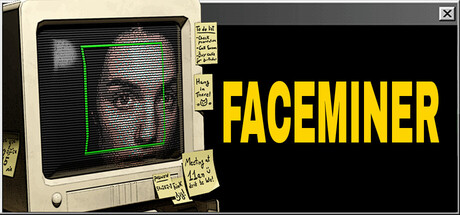
FACEMINER is a concept-driven game that directly engages with the ethics of AI. For thematic purposes, the game features faces which have been generated by a GAN (Generative Adversarial Network) trained on the FFHQ dataset, a research dataset released by NVIDIA that is the backbone of many real-world facial recognition applications. Per NVIDIA, only images under permissive licenses were collected.
The 'AI training' in this game is fictional and has been simulated for entertainment purposes. The game can be interpreted as a critique of AI specifically relating to the ecological impact of mass data hoarding, surveillance concerns, and way it is used to compound corporate power.
Generative AI was utilized during development to create Steam capsule designs, in-game UI assets, and the trailer music. All assets produced using AI are fully owned and licensed for commercial use by us.
If your ingame choices are inconsistent or raise moral questions, you’ll have to justify them in writing. An AI will read your defense and decide whether it counts as a solution. Convince it — because its verdict carries real consequences in the game.
In order to create an experimental mystery game that focuses on interactive conversations with characters, I also used generative AI to create the visuals, as I don't have an artistic background or the funds to hire a professional artist.
Some of the background art in this game was initially generated using AI, then extensively modified and improved by our human artist to fit the style and vision of the game. The characters, inventory, interface, and other art assets were created directly by human artists without AI.
AI tools were utilized sparingly to assist in early development of some background images. All AI-assisted content has been heavily refined and painted over by the artist.
All the graphics in the game were created with AI, so backgrounds, portraits and inventory objects are all part of it. Text and music are done in the traditional way.
The backgrounds were generated using neural networks such as NijiJourney, LeonardoAI, and PlaygroundAI with some minor post-processing. The characters and storyline art were drawn by artists.
The game uses backgrounds (and a handful of characters) that were made using images generated from a Public Domain scraped data set. The background images have been altered very little but the character images are used as a basis and edited in a powerful editing suite called Microsoft Paint.
The main uses of AI in the creation of this game were for minor coding problems, such as what sorting algorithm to use and detecting bugs occasionally. The second main use was the art. The majority of art in the game is ai generated, but there are no influences on the generation based off of real images. All generated images are random and pre-generated.
Keep in mind none of the names in the game are ai generated.
In some of the game's cutscenes, we have used AI tools to generate several images to help present the story. These images have been edited and refined to enhance the player's visual experience.
We are committed to providing rich content for our players and will continue to leverage innovative technologies to improve the overall game experience.
Due to our team having only one artist and one engineer, using AI assistance during the development process is crucial. This technology saves a significant amount of time and resources, helping us maintain momentum in our development efforts. We primarily apply AI technology during the drafting stage to expedite the design process and improve efficiency. Specifically, we only utilize AI assistance for certain game scenes and objects, with final adjustments made manually to complete the final drafts. As for character illustrations within the game, they are entirely designed and finalized by the artist from start to finish.
Artificial intelligence was used to speed up the process of drawing rough versions of characters and some backgrounds for illustrations. The initial images and subsequent processing were made by a human. All the final images have been reworked and modified by several artists.
This game and associated materials uses AI generated audio and visual graphics content. All AI generated content is commercially licensed from the industries leading AI generation platforms.
This is a SPOILER, actually, but your arch enemy in this game is an Evil Generative A. I. It must look accordingly. Big part of it is A. I. generated, and it's made as obvious as possible.
The game is a research project into how the use of AI would affect game production, so AI has been used for images, voiceovers, code, dialogue and other areas as much as possible. Just to see what sort of results it provides.
The images in the game are collages and/or modified parts of images created by AI.
Each image was processed and animated manually by a human.
Parts of the images have been redrawn by humans.
FACEMINER is a concept-driven game that directly engages with the ethics of AI. For thematic purposes, the game features faces which have been generated by a GAN (Generative Adversarial Network) trained on the FFHQ dataset, a research dataset released by NVIDIA that is the backbone of many real-world facial recognition applications. Per NVIDIA, only images under permissive licenses were collected.
The 'AI training' in this game is fictional and has been simulated for entertainment purposes. The game can be interpreted as a critique of AI specifically relating to the ecological impact of mass data hoarding, surveillance concerns, and way it is used to compound corporate power.
Generative AI was utilized during development to create Steam capsule designs, in-game UI assets, and the trailer music. All assets produced using AI are fully owned and licensed for commercial use by us.
If your ingame choices are inconsistent or raise moral questions, you’ll have to justify them in writing. An AI will read your defense and decide whether it counts as a solution. Convince it — because its verdict carries real consequences in the game.