Public Steam disclosure research25,497 disclosures tracked
Where do games disclose AI use?
Search developers’ Steam disclosures, compare classified AI use across
games, and follow recorded changes.
This index adds cross-game classifications and statistics to
statements published on individual store pages.
Groups reflect automatic analysis of public disclosures; mature records are excluded. These counts do not measure AI use across all of Steam.
Missing or unclear statements cannot establish whether a game uses AI.
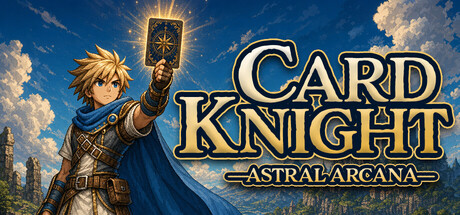
In order to realize my childhood dream of building this game, I have leveraged AI in every step of the development process, augmenting my capabilities as an engineer and visual designer by having AI generate some of the sprites, music, sound effects, voices, and code used to build this game.
I pledge that if Card Knight: Astral Arcana is successful, the sequel title will be brought to life by a team of human artists, composers, and programmers.
We use generative AI tools to assist with:- Machine translation (MT) of interface and data text, reviewed before release.- Drafts of store page text and marketing materials.All content is reviewed by a human before publication.Art, creatures, and music [adjust to reflect reality] do not use generative AI / use AI for [X].
This game uses generative AI to assist with the creation of some visual, audio, text, and localization assets. All AI-assisted content is reviewed and edited by the development team before being included in the game.
Most art has been hand-crafted but some art has been assisted by generative AI. Art assisted by generative AI includes UI Icons, monsters, items and marketing promotional art. All ingame art has been finalized by hand.
Pre-generated AI tools were used to create some visual assets and promotional artwork, including UI concepts, store page artwork, icons, and environmental illustrations. These assets are reviewed and curated by the developer before inclusion. The game does not use live-generated AI content during gameplay.
Generative AI was used as an assistive tool for proofreading in-game text and store page text, as well as for English and Korean localization. All final content was reviewed and edited by the developer.
No AI-generated images, audio, or 3D models are used. The game does not use generative AI to create content in real time during gameplay.
AI tools were used strictly as a minor supplementary aid for light editing of select images and textures. Additionally, AI was partially utilized to generate specific ambient sound effects and assist with voiceover processing. All core game mechanics, 3D models, and primary assets were created manually by the developer.
This game includes pre-generated content created with the assistance of generative AI during development. Generative AI was used to help create some in-game image assets and translations. All AI-assisted content, including AI-generated translations, was reviewed, edited, and approved by the development team before being included in the final game.
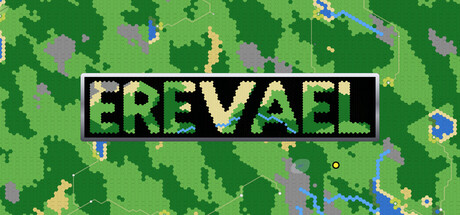
Erevael is made by a solo developer who uses generative AI as part of the development process. The following player-facing content is created with AI and reviewed by the developer before release:
- Visual art, including assets used in the procedurally generated world.
- Localization: translations are machine-generated and have not yet been professionally reviewed.
Music and sound effects are sourced from licensed, human-made libraries and are not AI-generated. AI coding assistants are also used during development.
The AI-generated art is a starting point. If the game finds an audience, the plan is to replace it with work from human artists in a free update for everyone, while keeping the original art available as an optional mod.
Utilizing artificial intelligence, we enhanced vintage photographs and photographs of the development team to align with the game’s aesthetic for paintings in game.
This game uses images created with AI generation tools — including NPC photos and portraits, and some store and promotional artwork. All such content has been reviewed by the developer to ensure it contains no illegal or infringing material.
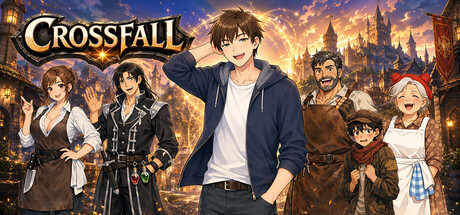
During the development of Crossfall, generative AI is used as an auxiliary tool for creating game content. The following materials have been created or prepared with its help:
Images. Some of the game’s visual content has been created using generative AI, including character images, as well as some sprites and icons. Other parts of the artwork were made manually.
Text. AI helps me prepare some of the text content, including drafts of item names and descriptions, text for certain in-game events, as well as translation and localization of texts into other languages.
Music. The game’s musical soundtrack was created using generative AI.
All content generated with the help of AI is reviewed, selected, and, if necessary, refined by me before being added to the game.
The game itself does not use generative AI during gameplay: no content is generated in real time on the player’s side, and the game does not require an internet connection or access to any AI services.
100% human made code, art, design, and audio!
AI assistance was only used for a tiny fraction of the text localizations to fill small gaps in our community made translations and for translating the Steam store page descriptions to non English languages.
Some portions of the game's source code were developed with the assistance of generative AI tools. All gameplay design, story, puzzles, dialogue, creative direction, and final implementation decisions were created, reviewed, and controlled by the developer.
Some promotional artwork and marketing materials may also have been created with the assistance of generative AI tools and subsequently reviewed and edited by the developer.
No generative AI is used during gameplay, and no content is generated dynamically for players.
Some store page marketing images, capsule assets, and promotional screenshots were created or edited with generative AI and then reviewed and adjusted for layout, sizing, and text. The game does not use live generative AI during gameplay, and it does not connect to any third-party AI service while players are playing.
Some promotional art assets and in-game
artwork were created with the assistance of AI image generation tools.
All AI-generated output was reviewed, edited, and curated by the development
team before inclusion.
This game actively supports human creativity, notably musicians and programmers - but uses AI in the design of marketing materials and some aspects of software development. Neither the game itself - nor the procedural generation techniques used to create the world, music, or audio - use AI or AI-generated art.
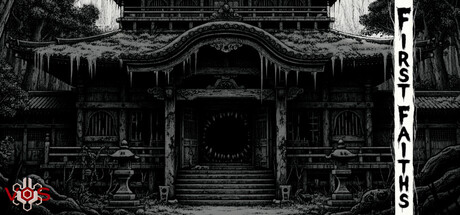
As a solo independent project, generative AI tools were used as a foundation for the initial creation of visual and audio assets. Please note that every asset has been systematically retouched, edited, and hand-refined to ensure unique artistic consistency and to bring the raw vision of First Faiths to life.
This game uses generative AI to help create some assets, including audio/voice and visual content. All outputs are reviewed and edited by the developers before being used.
Because I am a dev team of 1, yes, I have used AI specifically for working on multiplayer code - that's an area of coding I'm just not up to speed on. The in-game code is all me though. As for art, having 10 years experience in game-dev GFX, that's me - 99% of it. I'm highly proficient in using the tools of the trade )Pshop, Blender, 3d MAx etc), but yes, I have used some highly modified bits and pieces for the landing screen and outros, but everything in-game (100%) is me. The SFX, music and voice acting, me too... for my sins. I'm no Mozart or Lawrence Olivier, but, yakknow... it's passable :)
This game was developed with the assistance of generative AI (Claude) in the following ways:
- Authoring and editing C# scripts for game systems
- Translation of in-game text into English and Chinese
- Debugging and optimization assistance
No AI runs at runtime within the game itself.
Generative artificial intelligence has been used to create and assist with pre-rendered graphic assets included in the final product. Specifically, it was employed to generate loading screen illustrations, the cover art design (acting as a filter), and sprites for certain enemies and minor environmental elements. All content was reviewed, edited, and statically packaged prior to distribution and use in the game.
English (AI Disclosure)
This game includes AI-assisted NPC dialogue and text generation to create dynamic conversations and world events. AI-generated text is reviewed and integrated by the developer before release.
The game does not generate images, audio, or code on the player's device. AI is used to enhance dialogue variety and immersive world interactions while core gameplay, progression, and game systems are designed by the developer.
Solvizz was designed, written, and hand-crafted by a small team, but generative AI played a supporting role in parts of production. Specifically, some placeholder art (achievement icons, region glyph references) and placeholder audio (background music tracks and sound effects) were generated with AI tooling to prototype the game's mood before final assets. AI was also used as a coding assistant during development. All puzzle design, game mechanics, story, level content, and code decisions were authored and reviewed by humans. No player-submitted data is sent to any AI system at runtime — the game is fully offline.
(This text was also generated with the help of AI)
Some of the games text was drafted with the assistance of generative AI and then edited by hand by developers before inclusion.
The game's audio is procedurally synthesized in-engine (algorithmic DSP) and layered with real & recorded audio by the developers. not produced by a generative AI model.
Some of the games 3D model primitive shapes were drafted with the assistance of generative AI, but finalized by hand.
EVE Vanguard uses AI-generated text-to-speech (TTS) for certain voice-over content, including character barks and narration. These assets are created under the direction of the development team to support the game's production and player experience. All writing, gameplay, worldbuilding, and overall creative vision are authored and curated by the game’s developers.
In order to realize my childhood dream of building this game, I have leveraged AI in every step of the development process, augmenting my capabilities as an engineer and visual designer by having AI generate some of the sprites, music, sound effects, voices, and code used to build this game.
I pledge that if Card Knight: Astral Arcana is successful, the sequel title will be brought to life by a team of human artists, composers, and programmers.
We use generative AI tools to assist with:- Machine translation (MT) of interface and data text, reviewed before release.- Drafts of store page text and marketing materials.All content is reviewed by a human before publication.Art, creatures, and music [adjust to reflect reality] do not use generative AI / use AI for [X].
This game uses generative AI to assist with the creation of some visual, audio, text, and localization assets. All AI-assisted content is reviewed and edited by the development team before being included in the game.
Most art has been hand-crafted but some art has been assisted by generative AI. Art assisted by generative AI includes UI Icons, monsters, items and marketing promotional art. All ingame art has been finalized by hand.
Pre-generated AI tools were used to create some visual assets and promotional artwork, including UI concepts, store page artwork, icons, and environmental illustrations. These assets are reviewed and curated by the developer before inclusion. The game does not use live-generated AI content during gameplay.
Generative AI was used as an assistive tool for proofreading in-game text and store page text, as well as for English and Korean localization. All final content was reviewed and edited by the developer.
No AI-generated images, audio, or 3D models are used. The game does not use generative AI to create content in real time during gameplay.
AI tools were used strictly as a minor supplementary aid for light editing of select images and textures. Additionally, AI was partially utilized to generate specific ambient sound effects and assist with voiceover processing. All core game mechanics, 3D models, and primary assets were created manually by the developer.
This game includes pre-generated content created with the assistance of generative AI during development. Generative AI was used to help create some in-game image assets and translations. All AI-assisted content, including AI-generated translations, was reviewed, edited, and approved by the development team before being included in the final game.
Erevael is made by a solo developer who uses generative AI as part of the development process. The following player-facing content is created with AI and reviewed by the developer before release:
- Visual art, including assets used in the procedurally generated world.
- Localization: translations are machine-generated and have not yet been professionally reviewed.
Music and sound effects are sourced from licensed, human-made libraries and are not AI-generated. AI coding assistants are also used during development.
The AI-generated art is a starting point. If the game finds an audience, the plan is to replace it with work from human artists in a free update for everyone, while keeping the original art available as an optional mod.
Utilizing artificial intelligence, we enhanced vintage photographs and photographs of the development team to align with the game’s aesthetic for paintings in game.
This game uses images created with AI generation tools — including NPC photos and portraits, and some store and promotional artwork. All such content has been reviewed by the developer to ensure it contains no illegal or infringing material.
During the development of Crossfall, generative AI is used as an auxiliary tool for creating game content. The following materials have been created or prepared with its help:
Images. Some of the game’s visual content has been created using generative AI, including character images, as well as some sprites and icons. Other parts of the artwork were made manually.
Text. AI helps me prepare some of the text content, including drafts of item names and descriptions, text for certain in-game events, as well as translation and localization of texts into other languages.
Music. The game’s musical soundtrack was created using generative AI.
All content generated with the help of AI is reviewed, selected, and, if necessary, refined by me before being added to the game.
The game itself does not use generative AI during gameplay: no content is generated in real time on the player’s side, and the game does not require an internet connection or access to any AI services.
100% human made code, art, design, and audio!
AI assistance was only used for a tiny fraction of the text localizations to fill small gaps in our community made translations and for translating the Steam store page descriptions to non English languages.
Some portions of the game's source code were developed with the assistance of generative AI tools. All gameplay design, story, puzzles, dialogue, creative direction, and final implementation decisions were created, reviewed, and controlled by the developer.
Some promotional artwork and marketing materials may also have been created with the assistance of generative AI tools and subsequently reviewed and edited by the developer.
No generative AI is used during gameplay, and no content is generated dynamically for players.
Some store page marketing images, capsule assets, and promotional screenshots were created or edited with generative AI and then reviewed and adjusted for layout, sizing, and text. The game does not use live generative AI during gameplay, and it does not connect to any third-party AI service while players are playing.
Some promotional art assets and in-game
artwork were created with the assistance of AI image generation tools.
All AI-generated output was reviewed, edited, and curated by the development
team before inclusion.
This game actively supports human creativity, notably musicians and programmers - but uses AI in the design of marketing materials and some aspects of software development. Neither the game itself - nor the procedural generation techniques used to create the world, music, or audio - use AI or AI-generated art.
As a solo independent project, generative AI tools were used as a foundation for the initial creation of visual and audio assets. Please note that every asset has been systematically retouched, edited, and hand-refined to ensure unique artistic consistency and to bring the raw vision of First Faiths to life.
This game uses generative AI to help create some assets, including audio/voice and visual content. All outputs are reviewed and edited by the developers before being used.
Because I am a dev team of 1, yes, I have used AI specifically for working on multiplayer code - that's an area of coding I'm just not up to speed on. The in-game code is all me though. As for art, having 10 years experience in game-dev GFX, that's me - 99% of it. I'm highly proficient in using the tools of the trade )Pshop, Blender, 3d MAx etc), but yes, I have used some highly modified bits and pieces for the landing screen and outros, but everything in-game (100%) is me. The SFX, music and voice acting, me too... for my sins. I'm no Mozart or Lawrence Olivier, but, yakknow... it's passable :)
This game was developed with the assistance of generative AI (Claude) in the following ways:
- Authoring and editing C# scripts for game systems
- Translation of in-game text into English and Chinese
- Debugging and optimization assistance
No AI runs at runtime within the game itself.
Generative artificial intelligence has been used to create and assist with pre-rendered graphic assets included in the final product. Specifically, it was employed to generate loading screen illustrations, the cover art design (acting as a filter), and sprites for certain enemies and minor environmental elements. All content was reviewed, edited, and statically packaged prior to distribution and use in the game.
English (AI Disclosure)
This game includes AI-assisted NPC dialogue and text generation to create dynamic conversations and world events. AI-generated text is reviewed and integrated by the developer before release.
The game does not generate images, audio, or code on the player's device. AI is used to enhance dialogue variety and immersive world interactions while core gameplay, progression, and game systems are designed by the developer.
Solvizz was designed, written, and hand-crafted by a small team, but generative AI played a supporting role in parts of production. Specifically, some placeholder art (achievement icons, region glyph references) and placeholder audio (background music tracks and sound effects) were generated with AI tooling to prototype the game's mood before final assets. AI was also used as a coding assistant during development. All puzzle design, game mechanics, story, level content, and code decisions were authored and reviewed by humans. No player-submitted data is sent to any AI system at runtime — the game is fully offline.
(This text was also generated with the help of AI)
Some of the games text was drafted with the assistance of generative AI and then edited by hand by developers before inclusion.
The game's audio is procedurally synthesized in-engine (algorithmic DSP) and layered with real & recorded audio by the developers. not produced by a generative AI model.
Some of the games 3D model primitive shapes were drafted with the assistance of generative AI, but finalized by hand.
EVE Vanguard uses AI-generated text-to-speech (TTS) for certain voice-over content, including character barks and narration. These assets are created under the direction of the development team to support the game's production and player experience. All writing, gameplay, worldbuilding, and overall creative vision are authored and curated by the game’s developers.