Public Steam disclosure research25,497 disclosures tracked
Where do games disclose AI use?
Search developers’ Steam disclosures, compare classified AI use across
games, and follow recorded changes.
This index adds cross-game classifications and statistics to
statements published on individual store pages.
Groups reflect automatic analysis of public disclosures; mature records are excluded. These counts do not measure AI use across all of Steam.
Missing or unclear statements cannot establish whether a game uses AI.
No Witnesses is developed by a two-man team, therefore generative AI has been used to assist in the creation of marketing assets and other player facing interfaces. All generated content is reviewed and perfected by a human before use.No Witnesses utilises third-party assets, of which we cannot attest to the creation of.
Generative AI tools were used to assist in the creation of selected promotional and store artwork. During gameplay, players can also optionally use generative AI to create custom word sets and hints.
Generative AI was used to create artwork for the title screen, lobby background, and some UI decorations. The generated images were selected, edited, and sliced by the development team before being integrated into the game. Generative AI was also used to assist with drafting and editing some mini-game prompts. The game does not use generative AI at runtime and does not connect to external AI services during play.
I use generative AI tools in the development of OXYTOPIA. All AI output is directed, reviewed, and edited by me before it ships.
What AI is used for:
Branding art — the game's logo and app/store icons were designed with the help of AI models and are rendered in-engine as original vector/code artwork.
Source code — parts of the game's code were written with AI coding assistants.
What is not AI-generated: the in-game gameplay art (tiles, characters, buildings, items, plants) and all audio are hand-made or licensed from human creators.
At runtime: OXYTOPIA generates no content with AI while you play, and no player data is ever sent to any AI service during gameplay.
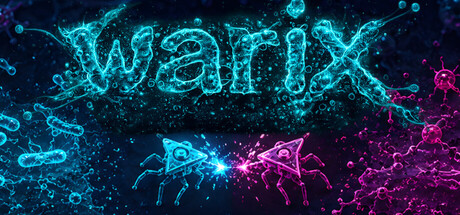
Generative AI tools were utilized to create some base visual and audio assets for Warix. AI was used to generate background textures, character sprites, and promotional store art. All AI-generated imagery was subsequently edited, composited, and polished by hand to fit the game's final aesthetic.
This game uses content created with the assistance of generative AI. Some of the game's artwork and visual assets, along with its store page and marketing text, were produced with generative AI tools. The core gameplay — levels, mechanics, and the real-time 3D visuals rendered by the game engine — is hand-designed and code-generated by the developer. No generative AI content is created in real time during gameplay; all assets are finalized and reviewed before release.
Some of the sound effects in this game were created using generative AI tools. AI-generated audio is edited and mixed by the development team before being used in the game.
Some visual assets — character art/portraits, sprite artwork, and store/marketing
capsule images — were created with the help of generative AI image tools, then
edited, composited, and curated by the developer. All such assets are PRE-GENERATED
during development; the shipped game performs NO live/runtime AI generation. No
generative AI produces text, dialogue, or any player-facing content at runtime.
All generated assets were reviewed by the developer to ensure they contain no
infringing or inappropriate material.
Some store and marketing artwork (capsule/header images) was created with AI image
tools and then reviewed and edited by the developer. Some in-game commander avatars
were also AI-assisted. The game does not generate any AI content live during play.
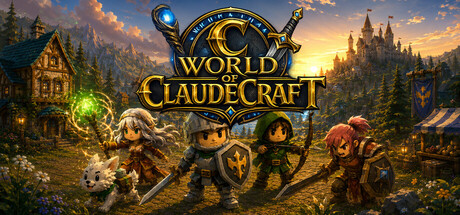
World of ClaudeCraft is, unapologetically, a game built with AI — the name is a hint. We used AI in two ways, and we want to be clear about both.
During development, the game's code was written with an AI coding assistant, and we used AI generation tools to create some of the assets that ship in the game as ordinary, fixed files:
Sound: Most in-game sound effects and all spoken NPC voice lines were generated with ElevenLabs' AI audio and text-to-speech models. The written dialogue itself is authored by us; AI produced the spoken audio.
3D models: A small number of creature models (the "Drowned Litany") were generated with Meshy AI (text-to-3D).
Everything else is either created by the game's own code (the world, towns, terrain, water, weather, and the music soundtrack are all generated procedurally at runtime) or is licensed third-party art — CC0 model, texture, and HDRI packs plus a purchased commercial icon set. That content is not AI-generated.
Critically: no generative AI runs while you play. Every AI-made asset was generated once, offline, during development and baked into the game as a static file. The running game makes no AI or LLM calls, and none of your gameplay or personal data is ever sent to an AI system. The simulation is fully deterministic — the same inputs always produce the same result.
We’re currently using AI-generated images for our Steam page as temporary placeholders. We plan to replace them with original artwork as soon as possible.
Our team uses generative AI tools to help develop some in game & marketing assets.
We don't use AI to replace artists and developers, but to improve our teams' productivity and offer you a more complete game at an affordable price.
Generative AI tools were used during development to assist with the creation of some 3D assets, music, and draft visual materials. Character concepts were based on human-made sketches, and AI was used only for early draft exploration; the final in-game characters were created by humans. All AI-assisted materials were reviewed, edited, and integrated into the game by the developer. AI is not used to generate content during gameplay.
Generative AI was used during development to create a limited number of in-game images and to generate translations for multiple languages. All AI-generated content was reviewed and edited as needed by the development team.
AI tools were used to assist with pre-created text content: the localization of the game's UI text into 8 languages (reviewed by the developer) and the store page texts. All artwork, 3D models, animations and audio are human-made licensed assets; no AI-generated imagery or audio ships with the game. The game does not generate any AI content at runtime.
We use AI to assist with game development, including code, translations, and the creation of background assets. The game does not use any real-time AI systems.
Store Page Description
Please enter a message to players describing how this game uses generative artificial intelligence.
Note: The Steam Store will display this message under the 'About This Game' section on the game's store page. You can return to this survey at any time to update this message or its localizations.
The development of Mind Against Fate utilized Artificial Intelligence (AI) tools to assist in the creation of specific pre-generated assets and coding workflows:
- Visual Assets: The portraits for heroes and in-game item icons were initially generated using Kling.AI and Google generative tools, and were subsequently refined, detailed, and polished using graphic design software.
- 3D Models: Certain 3D asset bases and models in the game were created with the assistance of Meshy.AI before being finalized and integrated into the game engine.
- Coding Assistance: Development and implementation speed were enhanced using AI-assisted coding tools (Cursor AI utilizing Google Gemini and Anthropic Claude versions).
We ensure that all generated content has been thoroughly reviewed and edited to meet quality standards, and contains no copyrighted or infringing materials.
Generative AI (Anthropic Claude) was used during development to write game code, to create the BGM (note data transcribed from a public-domain piece by Debussy and procedurally generated music), and to compose store artwork from in-game assets. No content is generated by AI at runtime.
AI was used to generate background images, music, and audio.
Converting player drawings into AI renderings is optional and requires the host to have a Gemini API key.
Artificial intelligence was used to generate the base concepts for the characters and planets in the game. All generated assets were then significantly edited, refined, and finalized manually to fit the game's unique art style.
Generative AI tools are used to create some background images and marketing materials, as well as to assist with the animation production process. The final assets are adjusted by the development team.
This game uses generative AI in the following ways:
- Some of the in-game and store page artwork was created using AI image generation tools.
- Some localization (translations) was assisted by AI tools.
All AI-generated content is reviewed and edited by the developer before release.
Background music uses royalty-free tracks and is not AI-generated.
Parts of the game's code were written with the assistance of AI coding tools.
Some of Tapis's visual assets were created with the help of generative AI tools. These elements are produced ahead of time, then art-directed, selected and reworked by the studio to fit the game's world. No AI generates any content while you play: the gameplay, rules, balancing and all systems are entirely designed and hand-validated.
Yes – The game contains AI-generated visuals, including card illustrations, background artwork, UI panels, and store page assets (capsules, icons, screenshots), created using AI image generation tools and curated by the developer.
Topological Board Game used generative AI tools during development to assist with programming, documentation, store-page text, localization drafts, and design iteration. All AI-assisted material is reviewed and edited by the developer before being included in the game or store page.
The game does not use generative AI to create live player-facing content during gameplay. It does not connect to external third-party AI services during normal gameplay. Local robot opponents, rule-based analysis, search, simulation, and self-play/research tools may be included, but these are gameplay/strategy systems rather than live generative AI content systems.
The announcer voice audio is generated using text-to-speech technology. The game's phrase pool was written with AI assistance and human review.
Some commissioned store and library artwork may include AI-generated elements.
Some card and background illustrations were initially generated using generative AI and then reviewed and edited by the developer before being included in the game.
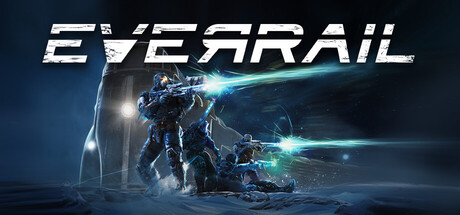
In EverRail, AI-generated voiceover is used only for machine characters: the train's AI board computer and robot enemies, voices that are artificial in the story itself, which also lets us offer them in multiple languages. Beyond that, our team uses generative AI as a tool to support development, with our artists, designers, and engineers refining and hand-building every asset that makes it into the game.
This game makes use of AI for localization of the following languages: Ukrainian, Spanish, Japanese, Korean, Polish, Portugese (Brasil), Russian, Simplified Chinese, Traditional Chinese, Turkish, Hindi. We're working with native translators, so expect this list to become shorter with time.
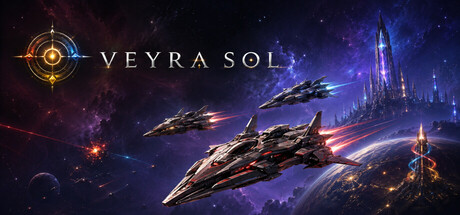
Veyrasol uses generative AI tools as part of its art pipeline. Both 3D models and 2D artwork used in the game (illustrations, backgrounds, UI and unit icons), as well as store page and marketing graphics such as capsule images and banners, were created with the help of generative AI tools and then reviewed, edited and assembled by the developer. Generative AI tools were also used to help write parts of the marketing website and store page copy. The core game (engine, server logic, real-time combat, and systems) is hand-coded by the developer, and no content is generated by AI at runtime during play.
Some pre-made assets (3D models, sound effects, portraits, and some textures) were created with generative AI tools and then curated and integrated by hand. Music is human-composed and licensed. No AI content is generated while you play.
No Witnesses is developed by a two-man team, therefore generative AI has been used to assist in the creation of marketing assets and other player facing interfaces. All generated content is reviewed and perfected by a human before use.No Witnesses utilises third-party assets, of which we cannot attest to the creation of.
Generative AI tools were used to assist in the creation of selected promotional and store artwork. During gameplay, players can also optionally use generative AI to create custom word sets and hints.
Generative AI was used to create artwork for the title screen, lobby background, and some UI decorations. The generated images were selected, edited, and sliced by the development team before being integrated into the game. Generative AI was also used to assist with drafting and editing some mini-game prompts. The game does not use generative AI at runtime and does not connect to external AI services during play.
I use generative AI tools in the development of OXYTOPIA. All AI output is directed, reviewed, and edited by me before it ships.
What AI is used for:
Branding art — the game's logo and app/store icons were designed with the help of AI models and are rendered in-engine as original vector/code artwork.
Source code — parts of the game's code were written with AI coding assistants.
What is not AI-generated: the in-game gameplay art (tiles, characters, buildings, items, plants) and all audio are hand-made or licensed from human creators.
At runtime: OXYTOPIA generates no content with AI while you play, and no player data is ever sent to any AI service during gameplay.
Generative AI tools were utilized to create some base visual and audio assets for Warix. AI was used to generate background textures, character sprites, and promotional store art. All AI-generated imagery was subsequently edited, composited, and polished by hand to fit the game's final aesthetic.
This game uses content created with the assistance of generative AI. Some of the game's artwork and visual assets, along with its store page and marketing text, were produced with generative AI tools. The core gameplay — levels, mechanics, and the real-time 3D visuals rendered by the game engine — is hand-designed and code-generated by the developer. No generative AI content is created in real time during gameplay; all assets are finalized and reviewed before release.
Some of the sound effects in this game were created using generative AI tools. AI-generated audio is edited and mixed by the development team before being used in the game.
Some visual assets — character art/portraits, sprite artwork, and store/marketing
capsule images — were created with the help of generative AI image tools, then
edited, composited, and curated by the developer. All such assets are PRE-GENERATED
during development; the shipped game performs NO live/runtime AI generation. No
generative AI produces text, dialogue, or any player-facing content at runtime.
All generated assets were reviewed by the developer to ensure they contain no
infringing or inappropriate material.
Some store and marketing artwork (capsule/header images) was created with AI image
tools and then reviewed and edited by the developer. Some in-game commander avatars
were also AI-assisted. The game does not generate any AI content live during play.
World of ClaudeCraft is, unapologetically, a game built with AI — the name is a hint. We used AI in two ways, and we want to be clear about both.
During development, the game's code was written with an AI coding assistant, and we used AI generation tools to create some of the assets that ship in the game as ordinary, fixed files:
Sound: Most in-game sound effects and all spoken NPC voice lines were generated with ElevenLabs' AI audio and text-to-speech models. The written dialogue itself is authored by us; AI produced the spoken audio.
3D models: A small number of creature models (the "Drowned Litany") were generated with Meshy AI (text-to-3D).
Everything else is either created by the game's own code (the world, towns, terrain, water, weather, and the music soundtrack are all generated procedurally at runtime) or is licensed third-party art — CC0 model, texture, and HDRI packs plus a purchased commercial icon set. That content is not AI-generated.
Critically: no generative AI runs while you play. Every AI-made asset was generated once, offline, during development and baked into the game as a static file. The running game makes no AI or LLM calls, and none of your gameplay or personal data is ever sent to an AI system. The simulation is fully deterministic — the same inputs always produce the same result.
We’re currently using AI-generated images for our Steam page as temporary placeholders. We plan to replace them with original artwork as soon as possible.
Our team uses generative AI tools to help develop some in game & marketing assets.
We don't use AI to replace artists and developers, but to improve our teams' productivity and offer you a more complete game at an affordable price.
Generative AI tools were used during development to assist with the creation of some 3D assets, music, and draft visual materials. Character concepts were based on human-made sketches, and AI was used only for early draft exploration; the final in-game characters were created by humans. All AI-assisted materials were reviewed, edited, and integrated into the game by the developer. AI is not used to generate content during gameplay.
Generative AI was used during development to create a limited number of in-game images and to generate translations for multiple languages. All AI-generated content was reviewed and edited as needed by the development team.
AI tools were used to assist with pre-created text content: the localization of the game's UI text into 8 languages (reviewed by the developer) and the store page texts. All artwork, 3D models, animations and audio are human-made licensed assets; no AI-generated imagery or audio ships with the game. The game does not generate any AI content at runtime.
We use AI to assist with game development, including code, translations, and the creation of background assets. The game does not use any real-time AI systems.
Store Page Description
Please enter a message to players describing how this game uses generative artificial intelligence.
Note: The Steam Store will display this message under the 'About This Game' section on the game's store page. You can return to this survey at any time to update this message or its localizations.
The development of Mind Against Fate utilized Artificial Intelligence (AI) tools to assist in the creation of specific pre-generated assets and coding workflows:
- Visual Assets: The portraits for heroes and in-game item icons were initially generated using Kling.AI and Google generative tools, and were subsequently refined, detailed, and polished using graphic design software.
- 3D Models: Certain 3D asset bases and models in the game were created with the assistance of Meshy.AI before being finalized and integrated into the game engine.
- Coding Assistance: Development and implementation speed were enhanced using AI-assisted coding tools (Cursor AI utilizing Google Gemini and Anthropic Claude versions).
We ensure that all generated content has been thoroughly reviewed and edited to meet quality standards, and contains no copyrighted or infringing materials.
Generative AI (Anthropic Claude) was used during development to write game code, to create the BGM (note data transcribed from a public-domain piece by Debussy and procedurally generated music), and to compose store artwork from in-game assets. No content is generated by AI at runtime.
AI was used to generate background images, music, and audio.
Converting player drawings into AI renderings is optional and requires the host to have a Gemini API key.
Artificial intelligence was used to generate the base concepts for the characters and planets in the game. All generated assets were then significantly edited, refined, and finalized manually to fit the game's unique art style.
Generative AI tools are used to create some background images and marketing materials, as well as to assist with the animation production process. The final assets are adjusted by the development team.
This game uses generative AI in the following ways:
- Some of the in-game and store page artwork was created using AI image generation tools.
- Some localization (translations) was assisted by AI tools.
All AI-generated content is reviewed and edited by the developer before release.
Background music uses royalty-free tracks and is not AI-generated.
Parts of the game's code were written with the assistance of AI coding tools.
Some of Tapis's visual assets were created with the help of generative AI tools. These elements are produced ahead of time, then art-directed, selected and reworked by the studio to fit the game's world. No AI generates any content while you play: the gameplay, rules, balancing and all systems are entirely designed and hand-validated.
Yes – The game contains AI-generated visuals, including card illustrations, background artwork, UI panels, and store page assets (capsules, icons, screenshots), created using AI image generation tools and curated by the developer.
Topological Board Game used generative AI tools during development to assist with programming, documentation, store-page text, localization drafts, and design iteration. All AI-assisted material is reviewed and edited by the developer before being included in the game or store page.
The game does not use generative AI to create live player-facing content during gameplay. It does not connect to external third-party AI services during normal gameplay. Local robot opponents, rule-based analysis, search, simulation, and self-play/research tools may be included, but these are gameplay/strategy systems rather than live generative AI content systems.
The announcer voice audio is generated using text-to-speech technology. The game's phrase pool was written with AI assistance and human review.
Some commissioned store and library artwork may include AI-generated elements.
Some card and background illustrations were initially generated using generative AI and then reviewed and edited by the developer before being included in the game.
In EverRail, AI-generated voiceover is used only for machine characters: the train's AI board computer and robot enemies, voices that are artificial in the story itself, which also lets us offer them in multiple languages. Beyond that, our team uses generative AI as a tool to support development, with our artists, designers, and engineers refining and hand-building every asset that makes it into the game.
This game makes use of AI for localization of the following languages: Ukrainian, Spanish, Japanese, Korean, Polish, Portugese (Brasil), Russian, Simplified Chinese, Traditional Chinese, Turkish, Hindi. We're working with native translators, so expect this list to become shorter with time.
Veyrasol uses generative AI tools as part of its art pipeline. Both 3D models and 2D artwork used in the game (illustrations, backgrounds, UI and unit icons), as well as store page and marketing graphics such as capsule images and banners, were created with the help of generative AI tools and then reviewed, edited and assembled by the developer. Generative AI tools were also used to help write parts of the marketing website and store page copy. The core game (engine, server logic, real-time combat, and systems) is hand-coded by the developer, and no content is generated by AI at runtime during play.
Some pre-made assets (3D models, sound effects, portraits, and some textures) were created with generative AI tools and then curated and integrated by hand. Music is human-composed and licensed. No AI content is generated while you play.