Public Steam disclosure research25,394 disclosures tracked
Where do games disclose AI use?
Search developers’ Steam disclosures, compare classified AI use across
games, and follow recorded changes.
This index adds cross-game classifications and statistics to
statements published on individual store pages.
Groups reflect automatic analysis of public disclosures; mature records are excluded. These counts do not measure AI use across all of Steam.
Missing or unclear statements cannot establish whether a game uses AI.
This game uses generative artificial intelligence to create dynamic narrative descriptions and battle outcomes during gameplay.
Player-provided words and choices are processed by an AI system to generate contextual text that reflects in-game actions, abilities, and events. All AI output is constrained by predefined game rules and moderation systems, and no AI is used to generate artwork, audio, or other visual assets.
Generative AI in this game is used strictly as a gameplay and narrative logic component, not as a chat system or content creation tool.
Artificial Intelligence was used during the development process in the following ways :
• Writing and optimizing some of the game's scripts and code logic
• Generating some of the graphical assets used for the Steam Store page and the Steam Library (capsules, banners, and backgrounds) and 2 assets in game.
We have utilized AI-assisted design for the store materials and some 2D background images within the game. However, these are not purely AI-generated; they are based on our original photographs that were enhanced using AI technology, and subsequently refined manually to ensure quality.
In our game, we use AI to generate textures dynamically, allowing for more diverse and detailed environments. This AI-driven approach enables the creation of unique visual assets without relying entirely on manual design, saving time while enhancing the game's aesthetic.
Some of the visuals were generated with the help of Sora AI and then edited by me in Photoshop. Everything else — the music, the text, the story, and the characters — was made by a human. The AI was only used to help with the graphics."
Some of the user interface (UI) visuals in the game were created with the help of AI-powered tools. These elements have been carefully refined and adapted to enhance the overall atmosphere and visual experience of the game.
Generative AI was used to assist in the early creation stages of a small portion of the game's 2D images. These assets were subsequently refined and heavily edited by hand to match the game's final artistic style and quality standards.
Some images used within the puzzles were generated using artificial intelligence.
Interface texts and subtitles were translated with the help of artificial intelligence.
Some UI elements in this game (e.g., board visuals, evidence images, etc.) were created using AI tools.
These elements are used solely as visual aids in gameplay, and no AI-generated content was used for the game's main story or text.
Some artwork and assets (like images) were made with generative AI during development. No AI generates live content — all gameplay is static, hand-curated, and fixed at release.
This game uses AI to enable real-time conversations and interactions with a desktop companion. It features speech recognition powered by Kyutai ASR, language understanding and generation using Meta’s LLaMA model, and expressive voice responses through Sesame CSM’s text-to-speech system. All AI runs locally on your device, with no internet connection required.
Some visual and textual elements in this game were created with the assistance of generative tools and were then edited, curated, and integrated as part of the overall artistic development process.
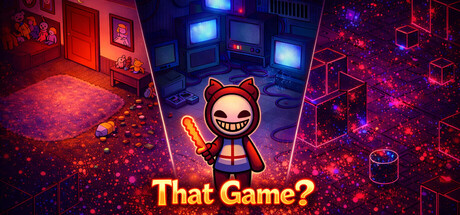
Yes. That Game? uses generative AI (for example ElevenLabs) to create some of the
voice-over lines used in the game. All AI-generated audio is pre-recorded during
development, not generated live while the game is running, and every line is
reviewed and approved by the developer. The game does not allow users to create
their own AI-generated content.
I used AI as a creative assistant during the development of this game — to generate ideas, speed up workflows, and support visual and textual content creation.
Examples include:
– Generating concept art for locations, equipment and magical symbols
– Creating stylized icons and background illustrations in an anime-fantasy style
– Drafting and refining text content (including English descriptions)
– Structuring design ideas
All in-game assets used in the build (models, animations, UI, gameplay systems) were assembled manually using UE5 and legally sourced content.
AI supported the creative process, but did not replace core development work.
Parts of the game's code and design were created with the assistance of generative AI tools (ChatGPT) during development. No AI-generated content is created in real time during gameplay.
We have utilized AI-assisted design for the store materials and some 2D background images within the game. However, these are not purely AI-generated; they are based on our original photographs that were enhanced using AI technology, and subsequently refined manually to ensure quality.
This game uses artificial intelligence to generate certain visual assets, such as promotional images and demo artwork. These assets are used solely for prototyping and early-stage presentation purposes. In the future, all visuals will be replaced with hand-drawn illustrations and original artwork created by human artists. No AI is used during gameplay or to generate content in real-time.
A few art reference and images were generated using AI tools. All core gameplay, environments, concept art, 2D and 3D animations, paintings and the rest of the game content are fully handcrafted and developed by our team.
This game uses generative artificial intelligence to create dynamic narrative descriptions and battle outcomes during gameplay.
Player-provided words and choices are processed by an AI system to generate contextual text that reflects in-game actions, abilities, and events. All AI output is constrained by predefined game rules and moderation systems, and no AI is used to generate artwork, audio, or other visual assets.
Generative AI in this game is used strictly as a gameplay and narrative logic component, not as a chat system or content creation tool.
Artificial Intelligence was used during the development process in the following ways :
• Writing and optimizing some of the game's scripts and code logic
• Generating some of the graphical assets used for the Steam Store page and the Steam Library (capsules, banners, and backgrounds) and 2 assets in game.
We have utilized AI-assisted design for the store materials and some 2D background images within the game. However, these are not purely AI-generated; they are based on our original photographs that were enhanced using AI technology, and subsequently refined manually to ensure quality.
In our game, we use AI to generate textures dynamically, allowing for more diverse and detailed environments. This AI-driven approach enables the creation of unique visual assets without relying entirely on manual design, saving time while enhancing the game's aesthetic.
Some of the visuals were generated with the help of Sora AI and then edited by me in Photoshop. Everything else — the music, the text, the story, and the characters — was made by a human. The AI was only used to help with the graphics."
Some of the user interface (UI) visuals in the game were created with the help of AI-powered tools. These elements have been carefully refined and adapted to enhance the overall atmosphere and visual experience of the game.
Generative AI was used to assist in the early creation stages of a small portion of the game's 2D images. These assets were subsequently refined and heavily edited by hand to match the game's final artistic style and quality standards.
Some images used within the puzzles were generated using artificial intelligence.
Interface texts and subtitles were translated with the help of artificial intelligence.
Some UI elements in this game (e.g., board visuals, evidence images, etc.) were created using AI tools.
These elements are used solely as visual aids in gameplay, and no AI-generated content was used for the game's main story or text.
Some artwork and assets (like images) were made with generative AI during development. No AI generates live content — all gameplay is static, hand-curated, and fixed at release.
This game uses AI to enable real-time conversations and interactions with a desktop companion. It features speech recognition powered by Kyutai ASR, language understanding and generation using Meta’s LLaMA model, and expressive voice responses through Sesame CSM’s text-to-speech system. All AI runs locally on your device, with no internet connection required.
Some visual and textual elements in this game were created with the assistance of generative tools and were then edited, curated, and integrated as part of the overall artistic development process.
Yes. That Game? uses generative AI (for example ElevenLabs) to create some of the
voice-over lines used in the game. All AI-generated audio is pre-recorded during
development, not generated live while the game is running, and every line is
reviewed and approved by the developer. The game does not allow users to create
their own AI-generated content.
I used AI as a creative assistant during the development of this game — to generate ideas, speed up workflows, and support visual and textual content creation.
Examples include:
– Generating concept art for locations, equipment and magical symbols
– Creating stylized icons and background illustrations in an anime-fantasy style
– Drafting and refining text content (including English descriptions)
– Structuring design ideas
All in-game assets used in the build (models, animations, UI, gameplay systems) were assembled manually using UE5 and legally sourced content.
AI supported the creative process, but did not replace core development work.
Parts of the game's code and design were created with the assistance of generative AI tools (ChatGPT) during development. No AI-generated content is created in real time during gameplay.
We have utilized AI-assisted design for the store materials and some 2D background images within the game. However, these are not purely AI-generated; they are based on our original photographs that were enhanced using AI technology, and subsequently refined manually to ensure quality.
This game uses artificial intelligence to generate certain visual assets, such as promotional images and demo artwork. These assets are used solely for prototyping and early-stage presentation purposes. In the future, all visuals will be replaced with hand-drawn illustrations and original artwork created by human artists. No AI is used during gameplay or to generate content in real-time.
A few art reference and images were generated using AI tools. All core gameplay, environments, concept art, 2D and 3D animations, paintings and the rest of the game content are fully handcrafted and developed by our team.