Public Steam disclosure research25,706 disclosures tracked
Where do games disclose AI use?
Search developers’ Steam disclosures, compare classified AI use across
games, and follow recorded changes.
This index adds cross-game classifications and statistics to
statements published on individual store pages.
Groups reflect automatic analysis of public disclosures; mature records are excluded. These counts do not measure AI use across all of Steam.
Missing or unclear statements cannot establish whether a game uses AI.
Some of the game's visual elements were created using AI tools during the development stage (for example, the design of Albums). Artists manually refined all such materials. Generative AI is not used in the gameplay and does not generate any content during the game.
1. Generative AI acts as your virtual Game Master: Classic lateral thinking puzzles rely on a human host's flexible judgment. We use AI to fulfill this role, instantly interpreting your open-ended questions in real-time to provide accurate "Yes," "No," or "Irrelevant" responses. This replaces rigid scripts with human-like judgment, allowing you to enjoy the full deduction experience solo.
2. AI empowers the Creation Mode: The AI can transform your simple prompts, scenarios, or endings into complete puzzle sets, allowing you to instantly generate fresh mysteries to play or share with others.
3. Visual assets are pre-generated by AI: To support the game's detective atmosphere, visual assets were generated with AI assistance, then carefully curated and integrated into the game.
This game uses AI-powered NPCs that respond to the player in real time using the OpenAI ChatGPT API.
Each NPC has a unique persona and provides dynamic, one-sentence dialogue based on the player's questions, enhancing immersion and interactivity in the investigation.
This game was built by a solo dev experimenting with GenAI. GenAI tools were used to help draft character portraits, reward videos, and icons (Jokers, Mods, Stagecoaches, Trinkets) along with background variations and some marketing materials. Every asset that made it into the final game was reviewed, refined, and approved by hand.
No GenAI systems interact with players during gameplay and no visual content is live-generated.
The game also does not collect or use player data for AI training or adaptive behavior.
In our game, artificial intelligence is used to enhance the visual and audio experience. AI-driven techniques are employed to improve image quality, adding fine details and creating more realistic textures. Additionally, AI is utilized for audio enhancement, refining sound effects and background music to provide a more immersive and dynamic sound environment. These improvements ensure a smoother, more visually appealing, and sonically enriched experience for players.
The vast majority of the artwork in the game was created by our team of artists, hired freelancers or purchased on market places. In some cases, AI was used to generate reference images to assist with the creative process, but all final assets were either fully redrawn or significantly refined by human artists to ensure quality and originality.
AI Use in Final Fall for Players:
In Final Fall, AI is used to generate the main menu background music and soundtrack. Additionally, AI was used as a writing assistant for some dialogue.
Only this store page uses generative AI (Google Translate) to translate from English into other languages. No generative AI is used in the game or any other materials.
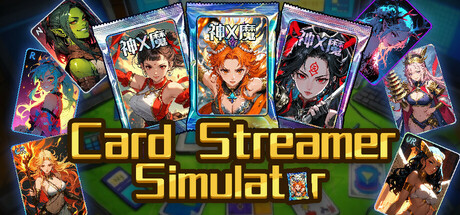
Some non-VTuber-related cards use AI-generated assets.
Card illustrations and avatars were generated using Midjourney, serving as placeholders for this engine.
All code is 100% human-made, and every other element in the game—including UI, icons, card frames, card backs, animations, and particle effects—was also manually crafted.
We used generative AI tools during development to enhance visual and audio quality. Specifically, textures were created using Stable Diffusion, and in-game voiceovers and sound effects were generated and improved using ElevenLabs. No AI is used during gameplay.
The game's visual design, including the banner, thumbnail, logo, and in-game graphic elements, was generated using artificial intelligence (AI) with respect for copyright laws.
We use AI as a tool to aid in the development of some code elements and marketing assets, but any content generated is edited and revised by real humans. We DO NOT use AI for the creation of in-game art, music or game design ideation. Creatively, this is a human project.
This game uses generative AI for some content. Specifically:
Image generation AI is used for some illustrations such as backgrounds. After use, the development team makes modifications and adjustments.
The card image resources in this game are generated by AI.
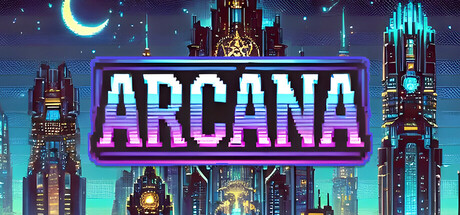
The game features a cyberpunk art style and includes cards with demon imagery, which might be perceived as unsuitable for children. However, these are merely anthropomorphic illustrations and are based on common, traditional tarot card designs. The main purpose of the game is to explain the inner meanings of the cards through text and images.
Some of the game's visual elements were created using AI tools during the development stage (for example, the design of Albums). Artists manually refined all such materials. Generative AI is not used in the gameplay and does not generate any content during the game.
1. Generative AI acts as your virtual Game Master: Classic lateral thinking puzzles rely on a human host's flexible judgment. We use AI to fulfill this role, instantly interpreting your open-ended questions in real-time to provide accurate "Yes," "No," or "Irrelevant" responses. This replaces rigid scripts with human-like judgment, allowing you to enjoy the full deduction experience solo.
2. AI empowers the Creation Mode: The AI can transform your simple prompts, scenarios, or endings into complete puzzle sets, allowing you to instantly generate fresh mysteries to play or share with others.
3. Visual assets are pre-generated by AI: To support the game's detective atmosphere, visual assets were generated with AI assistance, then carefully curated and integrated into the game.
This game uses AI-powered NPCs that respond to the player in real time using the OpenAI ChatGPT API.
Each NPC has a unique persona and provides dynamic, one-sentence dialogue based on the player's questions, enhancing immersion and interactivity in the investigation.
This game was built by a solo dev experimenting with GenAI. GenAI tools were used to help draft character portraits, reward videos, and icons (Jokers, Mods, Stagecoaches, Trinkets) along with background variations and some marketing materials. Every asset that made it into the final game was reviewed, refined, and approved by hand.
No GenAI systems interact with players during gameplay and no visual content is live-generated.
The game also does not collect or use player data for AI training or adaptive behavior.
In our game, artificial intelligence is used to enhance the visual and audio experience. AI-driven techniques are employed to improve image quality, adding fine details and creating more realistic textures. Additionally, AI is utilized for audio enhancement, refining sound effects and background music to provide a more immersive and dynamic sound environment. These improvements ensure a smoother, more visually appealing, and sonically enriched experience for players.
The vast majority of the artwork in the game was created by our team of artists, hired freelancers or purchased on market places. In some cases, AI was used to generate reference images to assist with the creative process, but all final assets were either fully redrawn or significantly refined by human artists to ensure quality and originality.
AI Use in Final Fall for Players:
In Final Fall, AI is used to generate the main menu background music and soundtrack. Additionally, AI was used as a writing assistant for some dialogue.
Only this store page uses generative AI (Google Translate) to translate from English into other languages. No generative AI is used in the game or any other materials.
Some non-VTuber-related cards use AI-generated assets.
Card illustrations and avatars were generated using Midjourney, serving as placeholders for this engine.
All code is 100% human-made, and every other element in the game—including UI, icons, card frames, card backs, animations, and particle effects—was also manually crafted.
We used generative AI tools during development to enhance visual and audio quality. Specifically, textures were created using Stable Diffusion, and in-game voiceovers and sound effects were generated and improved using ElevenLabs. No AI is used during gameplay.
The game's visual design, including the banner, thumbnail, logo, and in-game graphic elements, was generated using artificial intelligence (AI) with respect for copyright laws.
We use AI as a tool to aid in the development of some code elements and marketing assets, but any content generated is edited and revised by real humans. We DO NOT use AI for the creation of in-game art, music or game design ideation. Creatively, this is a human project.
This game uses generative AI for some content. Specifically:
Image generation AI is used for some illustrations such as backgrounds. After use, the development team makes modifications and adjustments.
The card image resources in this game are generated by AI.
The game features a cyberpunk art style and includes cards with demon imagery, which might be perceived as unsuitable for children. However, these are merely anthropomorphic illustrations and are based on common, traditional tarot card designs. The main purpose of the game is to explain the inner meanings of the cards through text and images.