Public Steam disclosure research27,951 disclosures tracked
Where do games disclose AI use?
Search developers’ Steam disclosures, compare classified AI use across
games, and follow recorded changes.
This index adds cross-game classifications and statistics to
statements published on individual store pages.
Groups reflect automatic analysis of public disclosures; mature records are excluded. These counts do not measure AI use across all of Steam.
Missing or unclear statements cannot establish whether a game uses AI.
Some of the game’s word lists were filtered and generated with the help of generative AI (e.g., compiling candidate words and removing unsuitable entries). We then manually review and refine the results to ensure quality and a consistent gameplay experience. Other core game content is not generated by AI.
This game does not use generative AI for gameplay, dialogue, environments, or player-facing content. A generative AI tool was used to create small pieces of non-interactive promotional artwork. All in-game assets, systems, and content are created by the developer or licensed from third-party creators.
This game uses generative AI only to create a player character’s 3D head. The AI uses a fixed set of pre-approved traits and does not allow text prompts, user uploads, copyrighted references, brands, or trademarked characters.
All outputs are controlled and reviewed to ensure they follow Steam’s guidelines.
As a small Indie studio, we can't afford a composer and voice actors, so for the moment we decided to use AI. Ideally, for the release, we will be using real voices actors and music composed by a real composer.
Generative AI is used only during the initial creation of 2D marketing assets, UI icons, and loading screens, which are later manually refined and finalized by the development team.
There is no AI-generated content in the game itself, but there is on the store page; the photos of the store's resources and the library resources were generated by AI, as were the promotional materials.
Some store and in-game artworks were created using generative AI tools. All assets have been reviewed and edited to meet the game's artistic direction and quality standards.
AI tools were used during the development of Game Lens primarily for code assistance and content generation. Specifically, ChatGPT and Cursor were used for reviewing and editing Python/PySide6 code, suggesting improvements, and helping with bug fixing and feature planning. No AI-generated assets (such as voice, music, or character content) are present in the current public version. All visual interface elements and icons were also created using ChatGPT image generation tools and are original.
We integrate artificial intelligence solely as a creative assistance tool during pre-production and artistic exploration phases.
Specifically, we use image generators to produce preliminary concept art, explore different visual directions, and accelerate iteration on our graphic ideas.
AI serves only as a source of inspiration, while the entire final content is fully created, curated, and refined by our human team.
Generated images are never used as-is in the final product.
Every visual element in the game (textures, characters, environments, illustrations, etc.) is recreated, retouched, painted, recomposed, or manually validated by our artists to ensure:
originality of the content,
respect for copyright,
artistic consistency,
and compliance with Steam/Valve guidelines.
AI does not contribute to the generation of final assets, 3D models, animations, sounds, or any other elements directly integrated into the game.
Its role is strictly limited to providing visual references, aesthetic guidance, and starting points to help our team work more efficiently.
This approach allows us to maintain a strong and authentic artistic identity while benefiting from a more fluid, inspiring, and innovative creation process — directly reflected in the quality, coherence, and originality of our game.
Our game uses AI primarily to support functions that would traditionally require a larger development team. Due to our limited resources, we integrated AI tools to streamline content generation and support game balancing.
As a very small indie team, we embrace artificial intelligence as a supportive tool in our creative process, while carefully respecting artists and their work. We use AI only as reference material to inspire and inform our designs, never as a replacement for human creativity. This thoughtful approach to AI assistance helps our indie studio deliver quality game design despite limited resources, allowing us to focus our passion where it matters most. Without the large teams or budgets of major studios, this balanced collaboration between human artistry and responsible AI use enables us to refine our distinctive style and solve design challenges efficiently. The result is a lovingly crafted experience that maintains our unique creative vision while honoring the artistic community that inspires us.
AI used for store page
AI used for descriptions
AI used for some logos
AI used for some background and text visuals
AI used for Code Debugging
AI used for Code development
Artificial Intelligence was used to create the content of the game page in the store, and specifically to create images and logos of the library and also title's menu
We have utilized AI-assisted design for the store materials and some 2D background images within the game. However, these are not purely AI-generated; they are based on our original photographs that were enhanced using AI technology, and subsequently refined manually to ensure quality.
I am currently using AI to remove backgrounds and for any art placeholders. Nothing In game is AI generated and everything done by AI is done as a tool, not for final art or content.
"We used generative AI tools to assist in creating some visual elements and layout concepts for the store page design. All final assets were reviewed and edited to ensure they meet quality and content standards."
A-Genro is an AI-powered rover that learns from the way you play. Whether it’s your strategy, movement, or combat style, it picks up on your habits and adapts to help you play smarter. Over time, it becomes a personal assistant in the game, giving you support when things get tough and even taking over in auto-pilot mode when needed.
The more you play, the better A-Genro gets—becoming a powerful ally that matches your skills and helps you level up your game. Train it, trust it, and let it take your gameplay to the next level!
We have integrated various AI tools to enhance different aspects of the experience:
ChatGPT has been utilized to make in-game bots smarter, improving their responsiveness and creating more engaging AI interactions for players.
Perplexity AI assisted us with certain coding tasks, helping us optimize and refine complex systems efficiently.
Rosebud AI was used to generate high-quality skyboxes, enhancing the visual depth and atmosphere of our environments, ensuring an immersive experience.
By leveraging these AI-driven solutions, we've streamlined development while maintaining high-quality visuals, smarter AI, and optimized performance.
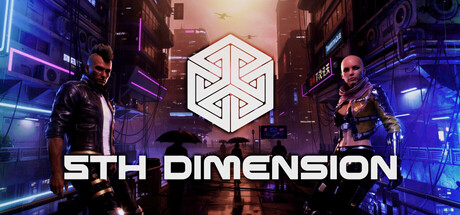
The current iteration of the game (the 5th Dimension World Builder application) does not utilize A.I. technology.
However the beta release of the game following the end of early access in 2026, will empower players to create in-game companions called Mechs that will utilize large language model technology to produce humanlike conversational responses to questions and comments from players during the course of gameplay user experience
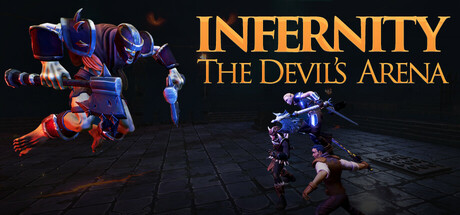
Infernity: The Devil's Arena utilizes artificial intelligence solely for the creation of the game's music. These AI-generated tracks are designed to enhance the dark and gothic atmosphere of the game. All other content is crafted using pre-made assets and manual design processes.