Public Steam disclosure research25,376 disclosures tracked
Where do games disclose AI use?
Search developers’ Steam disclosures, compare classified AI use across
games, and follow recorded changes.
This index adds cross-game classifications and statistics to
statements published on individual store pages.
Groups reflect automatic analysis of public disclosures; mature records are excluded. These counts do not measure AI use across all of Steam.
Missing or unclear statements cannot establish whether a game uses AI.
Pre-generated AI tools were used to assist in creating portions of the game's music, narration, character assets, and localization. All resulting content was reviewed and edited before being included as fixed game content. The game does not generate content with AI during gameplay or connect to an external AI service while running.
Generative AI tools were used during development as part of the early creative and production process, including generating mood boards, visual references, and some base meshes.
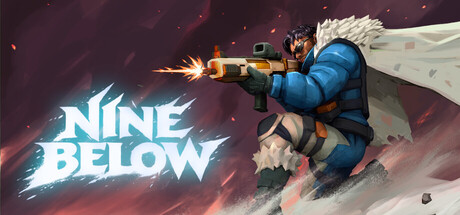
These materials were used as starting points rather than finished game content. Any AI-assisted assets included in Nine Below were substantially reworked, modified, refined, and polished by hand before being included in the final game.
AI was used to support iteration and production, while the final game was designed, built, and finished by the developer. No AI-generated content is created during gameplay.
We are team of two with a design and development background. We have a combined decades experience shipping production-quality code and art. We use AI along with our other tools, like Blender, Substance, etc. to help us build our vision. We use AI in the early stage of concept development and prototyping, coding assistance, but everything that makes it in-game is hand-crafted and authored by us. The music is played by hand real instruments. All screen captures are 100% in-game with no alterations.
This game uses generative AI tools during development for some pre-rendered assets, including store capsules and key art, character sprites, backgrounds, CGs, and certain audio. AI-assisted assets are selected and edited before inclusion. Story and game systems are human-authored.
Some of this game's assets were made with the help of generative AI tools and then edited by hand: the in-game notebook UI sprites, a few background props and set-dressing models, some texture work, and the English localization, which was drafted from our Korean original and reviewed by us.
The original Korean writing, the characters, the level design, and all gameplay systems were made without generative AI. Nothing is generated while you play.
Generative AI tools were used to assist with the localization of this game into English, Simplified Chinese, Traditional Chinese, and Korean. 本作は、英語、簡体字中国語、繁体字中国語、韓国語へのローカライズの補助として生成AIツールを使用しました。
We used generative AI on fighter portraits for deeper immersion and as a pre-production tool for early concept layouts. From there, all character assets and visual elements were extensively edited and manually hand-painted by human artists to ensure high visual quality and artistic control.
Generative AI tools were used during development to assist in creating some pre-generated 2D visual assets, including character imagery and certain promotional and store page artwork.
All AI-assisted content is pre-generated, reviewed, selected, and edited by the developer before being included in the game or its marketing materials.
The game does not use live generative AI and no content is generated by AI during gameplay.
Generative AI tools were used during development to assist with certain pre-generated visual elements and sequences in the game. All such materials were reviewed, selected, edited, and integrated into the final video content by the Dev team. The game’s narrative, interactive structure, gameplay logic, and final presentation are created and controlled by the Dev team.
No generative AI is used during gameplay, and no content is generated dynamically for players.
AI-assisted translation tools are used to help localize this game's text for international audiences, including English and any additional languages added in the future.
No AI-generated content is used for graphics, sound, or narrative/story content.
Generative AI was used in the development of this game. The background art and character illustrations were created with an image generation model; all images were selected, edited, and processed by the developer. The story text and game logic were drafted and implemented with a large language model, with the developer directing the story and scene design, reviewing and approving all content, and requesting revisions. No generative AI runs at runtime during gameplay.
Parts of the written text on this store page were drafted with the help of an AI assistant and then reviewed and edited by us before publishing.
No generative AI is used inside the game itself. The artwork, audio and video in Dubbed are made by us or performed by the players, and nothing is generated at runtime.
Ward 9 uses developer-curated generative AI tools during production for selected marketing/community artwork, narrative drafting support, and voice/audio asset creation. All AI-assisted content is reviewed, edited, and approved by the developer before inclusion. The game does not use live generative AI to create player-facing content during gameplay.
Artificial intelligence was used to assist with interface localization and adaptation of in-game textures.
There was a time when people used Google Translate, and terrible localization for many languages was common. Times have changed, progress does not stand still. Today, new and more advanced tools have emerged, and people now use them instead of outdated ones.
AI tools were used as part of the game's visual production and post-production workflow.
The game's 3D assets, environments, characters, animations, and scenes are created and rendered by the developer. AI is primarily used to upscale lower-resolution renders to higher resolutions, helping reduce rendering time while maintaining the desired visual quality.
In some cinematic sequences, AI-assisted tools are also used as part of the production process. Additionally, AI may be used for certain visual corrections, modifications, or minor fixes to rendered images instead of re-rendering an entire scene.
AI is therefore used as a supporting tool in the development and post-production process, while the overall artistic direction, 3D production, scene creation, rendering, and final implementation are handled by the developer.
As a solo developer, I made use of AI for generation of models and music to act as base components. These typically went through much manual editing afterwards.
Some AI was used for testing & improvements to code in some areas
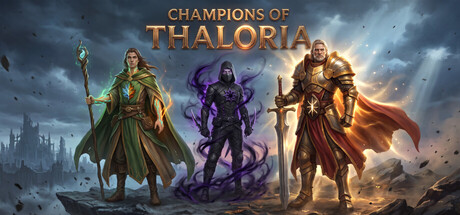
Some of the visual assets in Champions of Thaloria were created with the help
of generative AI tools during development. This includes parts of the store
page artwork and trailer, along with a portion of the in-game 2D art such as
item icons, avatar frames and class emblems.
Every AI-assisted asset was selected, edited and assembled by hand before it
went into the game, and all of it was reviewed by the developer.
The game does not generate anything while you play. No content is created at
runtime and no AI service is contacted during gameplay — everything ships
with the game.
Some sound effects in this game were created with the help of generative AI tools, and edited by hand afterwards. All other assets — art, models, animation and design — were made or licensed by the developer without generative AI.
Some graphic and sound assets included in the game were created using generative AI tools during development. The game does not use real-time generative AI and does not connect to external AI services during gameplay.
Generative AI tools were used as an assistive tool to draft and localize portions of the game's text and Steam store marketing copy. All outputs were reviewed, edited, and approved by the developer before inclusion. The game does not generate AI content while running.
All in-game video footage (including characters, scenes, cutscenes,music) is generated using AI tools.
Dialogue writing, choice design, stat system, UI design, programming are hand-crafted by the development team.
We are committed to the ethical use of AI. As such, limited assistance with some text, spoken dialogue, narrative, localization, and store/marketing copy may have been utilized.
It is not used to generate artwork or live gameplay content, and all final content is reviewed by the team.
Some ambient audio in this game — background crowd voices and station announcements — is generated using neural text-to-speech. All visual art, music, and narrative writing are human-authored or made with traditional, non-generative tools.
Quarter Mile contains no AI-generated art, music, voice or in-game text.
Every visual in the game is rendered in real time from geometry and materials authored by hand in code — there are no image assets. Every sound is synthesized by the game while you play, from a physical model of the engine; no audio files ship with the game. All car data and track layouts are hand-authored.
The store page capsule art and screenshots are rendered by the game itself, using the same renderer that draws the game — they are not concept art, not painted, and not AI-generated.
The game description and other store page text were written with the assistance of an AI writing assistant, and portions of the game's source code were written with the assistance of an AI coding assistant. All of it was reviewed and edited by the developer.
The game does not use generative AI at runtime. Nothing is generated while you play, there is no network connection of any kind, and the game is fully playable offline.
This game was made by a two-person team specializing in storytelling. The entire narrative, all gameplay systems, UI, animations, core sound and game design were built entirely by our team. AI was used to generate some of audio and graphical assets due to the limited resources. Scenario was originally written in Ukrainian language, so translations might have minor mistakes. Thank you for your understanding.
Selected pre-generated visual materials used for the Steam store page, capsule artwork, promotional assets, and presentation screenshots were created or refined with the assistance of generative AI tools.
The game does not use live generative AI during gameplay. No gameplay content, dialogue, images, audio, or missions are generated in real time by AI, and the game does not connect to external AI services during play.
All video, voice and music content in this game was pre-generated using AI tools under full human direction. The story, characters, dialogue, game design, editing and code are original work by a solo developer. No content is generated while the game is running; players only ever see pre-produced, human-reviewed material.
Generative AI tools were used during development to assist with the creation of selected pre-generated assets, including visual artwork, character assets, music, and sound effects. These tools were used as part of the development workflow, while the game's design, direction, gameplay systems, implementation, level design, and final integration were created and curated by the developer. No generative AI is used to create new content during gameplay.
Generative AI tools were used during development to assist with pre-generated content only.
AI-assisted content includes one promotional artwork asset used in the Steam store capsule and library assets, AI-generated imagery used in the game's story description, some in-game sound assets, localization and translation, and portions of certain 3D models.
All AI-assisted outputs were reviewed, selected, edited where necessary, and integrated by the developer before being included in the game or on the Steam store page.
The game does not generate content using AI while it is running, does not connect players to any generative AI service, and does not send player input to an AI service.
Some visual assets and promotional images were created with generative AI tools and later reviewed, modified, and integrated by the developer. No generative AI content is created during gameplay.
Cigar Tycoon includes pre-generated AI-assisted content created during development, including some promotional artwork, store capsule and library artwork, and a small amount of magazine-style written content. The developer reviewed and edited this content before release. The game does not generate new content with AI during gameplay, does not connect to an external AI service, and does not send player data to an AI service.
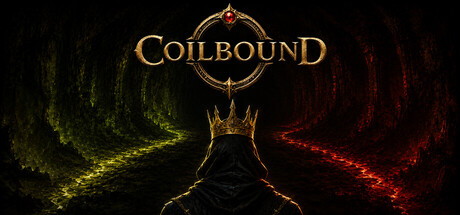
Some of the visual artwork in Coilbound — including character and card illustrations, environment art, and store assets — was created with the assistance of generative AI image tools during development. All generated content was reviewed, edited, and curated by the developer. Coilbound does not use any AI-generated content in real time during gameplay.
Pre-generated AI tools were used to assist in creating portions of the game's music, narration, character assets, and localization. All resulting content was reviewed and edited before being included as fixed game content. The game does not generate content with AI during gameplay or connect to an external AI service while running.
Generative AI tools were used during development as part of the early creative and production process, including generating mood boards, visual references, and some base meshes.
These materials were used as starting points rather than finished game content. Any AI-assisted assets included in Nine Below were substantially reworked, modified, refined, and polished by hand before being included in the final game.
AI was used to support iteration and production, while the final game was designed, built, and finished by the developer. No AI-generated content is created during gameplay.
We are team of two with a design and development background. We have a combined decades experience shipping production-quality code and art. We use AI along with our other tools, like Blender, Substance, etc. to help us build our vision. We use AI in the early stage of concept development and prototyping, coding assistance, but everything that makes it in-game is hand-crafted and authored by us. The music is played by hand real instruments. All screen captures are 100% in-game with no alterations.
This game uses generative AI tools during development for some pre-rendered assets, including store capsules and key art, character sprites, backgrounds, CGs, and certain audio. AI-assisted assets are selected and edited before inclusion. Story and game systems are human-authored.
Some of this game's assets were made with the help of generative AI tools and then edited by hand: the in-game notebook UI sprites, a few background props and set-dressing models, some texture work, and the English localization, which was drafted from our Korean original and reviewed by us.
The original Korean writing, the characters, the level design, and all gameplay systems were made without generative AI. Nothing is generated while you play.
Generative AI tools were used to assist with the localization of this game into English, Simplified Chinese, Traditional Chinese, and Korean. 本作は、英語、簡体字中国語、繁体字中国語、韓国語へのローカライズの補助として生成AIツールを使用しました。
We used generative AI on fighter portraits for deeper immersion and as a pre-production tool for early concept layouts. From there, all character assets and visual elements were extensively edited and manually hand-painted by human artists to ensure high visual quality and artistic control.
Generative AI tools were used during development to assist in creating some pre-generated 2D visual assets, including character imagery and certain promotional and store page artwork.
All AI-assisted content is pre-generated, reviewed, selected, and edited by the developer before being included in the game or its marketing materials.
The game does not use live generative AI and no content is generated by AI during gameplay.
Generative AI tools were used during development to assist with certain pre-generated visual elements and sequences in the game. All such materials were reviewed, selected, edited, and integrated into the final video content by the Dev team. The game’s narrative, interactive structure, gameplay logic, and final presentation are created and controlled by the Dev team.
No generative AI is used during gameplay, and no content is generated dynamically for players.
AI-assisted translation tools are used to help localize this game's text for international audiences, including English and any additional languages added in the future.
No AI-generated content is used for graphics, sound, or narrative/story content.
Generative AI was used in the development of this game. The background art and character illustrations were created with an image generation model; all images were selected, edited, and processed by the developer. The story text and game logic were drafted and implemented with a large language model, with the developer directing the story and scene design, reviewing and approving all content, and requesting revisions. No generative AI runs at runtime during gameplay.
Parts of the written text on this store page were drafted with the help of an AI assistant and then reviewed and edited by us before publishing.
No generative AI is used inside the game itself. The artwork, audio and video in Dubbed are made by us or performed by the players, and nothing is generated at runtime.
Ward 9 uses developer-curated generative AI tools during production for selected marketing/community artwork, narrative drafting support, and voice/audio asset creation. All AI-assisted content is reviewed, edited, and approved by the developer before inclusion. The game does not use live generative AI to create player-facing content during gameplay.
Artificial intelligence was used to assist with interface localization and adaptation of in-game textures.
There was a time when people used Google Translate, and terrible localization for many languages was common. Times have changed, progress does not stand still. Today, new and more advanced tools have emerged, and people now use them instead of outdated ones.
AI tools were used as part of the game's visual production and post-production workflow.
The game's 3D assets, environments, characters, animations, and scenes are created and rendered by the developer. AI is primarily used to upscale lower-resolution renders to higher resolutions, helping reduce rendering time while maintaining the desired visual quality.
In some cinematic sequences, AI-assisted tools are also used as part of the production process. Additionally, AI may be used for certain visual corrections, modifications, or minor fixes to rendered images instead of re-rendering an entire scene.
AI is therefore used as a supporting tool in the development and post-production process, while the overall artistic direction, 3D production, scene creation, rendering, and final implementation are handled by the developer.
As a solo developer, I made use of AI for generation of models and music to act as base components. These typically went through much manual editing afterwards.
Some AI was used for testing & improvements to code in some areas
Some of the visual assets in Champions of Thaloria were created with the help
of generative AI tools during development. This includes parts of the store
page artwork and trailer, along with a portion of the in-game 2D art such as
item icons, avatar frames and class emblems.
Every AI-assisted asset was selected, edited and assembled by hand before it
went into the game, and all of it was reviewed by the developer.
The game does not generate anything while you play. No content is created at
runtime and no AI service is contacted during gameplay — everything ships
with the game.
Some sound effects in this game were created with the help of generative AI tools, and edited by hand afterwards. All other assets — art, models, animation and design — were made or licensed by the developer without generative AI.
Some graphic and sound assets included in the game were created using generative AI tools during development. The game does not use real-time generative AI and does not connect to external AI services during gameplay.
Generative AI tools were used as an assistive tool to draft and localize portions of the game's text and Steam store marketing copy. All outputs were reviewed, edited, and approved by the developer before inclusion. The game does not generate AI content while running.
All in-game video footage (including characters, scenes, cutscenes,music) is generated using AI tools.
Dialogue writing, choice design, stat system, UI design, programming are hand-crafted by the development team.
We are committed to the ethical use of AI. As such, limited assistance with some text, spoken dialogue, narrative, localization, and store/marketing copy may have been utilized.
It is not used to generate artwork or live gameplay content, and all final content is reviewed by the team.
Some ambient audio in this game — background crowd voices and station announcements — is generated using neural text-to-speech. All visual art, music, and narrative writing are human-authored or made with traditional, non-generative tools.
Quarter Mile contains no AI-generated art, music, voice or in-game text.
Every visual in the game is rendered in real time from geometry and materials authored by hand in code — there are no image assets. Every sound is synthesized by the game while you play, from a physical model of the engine; no audio files ship with the game. All car data and track layouts are hand-authored.
The store page capsule art and screenshots are rendered by the game itself, using the same renderer that draws the game — they are not concept art, not painted, and not AI-generated.
The game description and other store page text were written with the assistance of an AI writing assistant, and portions of the game's source code were written with the assistance of an AI coding assistant. All of it was reviewed and edited by the developer.
The game does not use generative AI at runtime. Nothing is generated while you play, there is no network connection of any kind, and the game is fully playable offline.
This game was made by a two-person team specializing in storytelling. The entire narrative, all gameplay systems, UI, animations, core sound and game design were built entirely by our team. AI was used to generate some of audio and graphical assets due to the limited resources. Scenario was originally written in Ukrainian language, so translations might have minor mistakes. Thank you for your understanding.
Selected pre-generated visual materials used for the Steam store page, capsule artwork, promotional assets, and presentation screenshots were created or refined with the assistance of generative AI tools.
The game does not use live generative AI during gameplay. No gameplay content, dialogue, images, audio, or missions are generated in real time by AI, and the game does not connect to external AI services during play.
All video, voice and music content in this game was pre-generated using AI tools under full human direction. The story, characters, dialogue, game design, editing and code are original work by a solo developer. No content is generated while the game is running; players only ever see pre-produced, human-reviewed material.
Generative AI tools were used during development to assist with the creation of selected pre-generated assets, including visual artwork, character assets, music, and sound effects. These tools were used as part of the development workflow, while the game's design, direction, gameplay systems, implementation, level design, and final integration were created and curated by the developer. No generative AI is used to create new content during gameplay.
Generative AI tools were used during development to assist with pre-generated content only.
AI-assisted content includes one promotional artwork asset used in the Steam store capsule and library assets, AI-generated imagery used in the game's story description, some in-game sound assets, localization and translation, and portions of certain 3D models.
All AI-assisted outputs were reviewed, selected, edited where necessary, and integrated by the developer before being included in the game or on the Steam store page.
The game does not generate content using AI while it is running, does not connect players to any generative AI service, and does not send player input to an AI service.
Some visual assets and promotional images were created with generative AI tools and later reviewed, modified, and integrated by the developer. No generative AI content is created during gameplay.
Cigar Tycoon includes pre-generated AI-assisted content created during development, including some promotional artwork, store capsule and library artwork, and a small amount of magazine-style written content. The developer reviewed and edited this content before release. The game does not generate new content with AI during gameplay, does not connect to an external AI service, and does not send player data to an AI service.
Some of the visual artwork in Coilbound — including character and card illustrations, environment art, and store assets — was created with the assistance of generative AI image tools during development. All generated content was reviewed, edited, and curated by the developer. Coilbound does not use any AI-generated content in real time during gameplay.