Public Steam disclosure research25,376 disclosures tracked
Where do games disclose AI use?
Search developers’ Steam disclosures, compare classified AI use across
games, and follow recorded changes.
This index adds cross-game classifications and statistics to
statements published on individual store pages.
Groups reflect automatic analysis of public disclosures; mature records are excluded. These counts do not measure AI use across all of Steam.
Missing or unclear statements cannot establish whether a game uses AI.
Some sound effects and the in-game text localization were created with the help of AI tools during development. All AI-generated audio and translated text was reviewed and edited by a human before shipping.
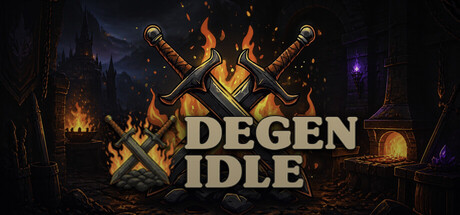
Degen Idle uses AI-assisted customer support. When you submit a support ticket, AI may use the ticket, attachments, and relevant account and gameplay information to provide a short, private reply. It does not generate live gameplay content or public chat messages, change player data, grant items, or issue refunds. Sensitive or unresolved cases are escalated for human review. AI-assisted support has no additional charge.
Generative AI was used to create some visual assets included in the game, as well as artwork for the Steam store page and marketing materials. These assets were created before release. The game does not generate AI content during gameplay or connect to external AI services.
Generative AI was used during development to create some store page artwork and in-game icons. All generated content was reviewed before being included in the final product.
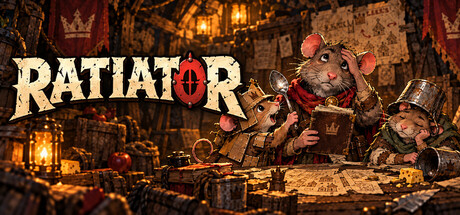
Ratiator is made by a small independent studio, and generative AI is one of the tools that lets a tiny team build a world this big. Every piece of AI-assisted content was directed, selected and refined by us to match our own art direction and design.
Artwork: backgrounds, UI elements, event illustrations, icons and key art were created with AI image tools from our concepts and art direction, then curated, edited and assembled by hand.
3D models: our rats and their household-junk weapons and armour started as AI-generated 3D models built from our concept art. We then rigged, fitted, animated and tuned them with our own tools, so every rat moves and fights the way we designed it.
Animation: a few short cinematic clips and the living light in some backgrounds (flickering lanterns, flowing water) were made with AI video tools and blended into our original paintings.
Writing: story and event texts were drafted with the help of an AI writing assistant, then edited and shaped by us to fit the world and its humour.
Nothing in the game is generated by AI while you play. Every fight, rat and story event is driven by the game's own systems, and no player data is sent to any AI service.
Some of the game's pre-rendered assets were created with generative AI tools during development and then reviewed, edited and integrated by the developer: parts of the pixel art, parts of the sound effects, and the translations from the English original. Nothing is generated while you play: the game uses no AI at runtime and collects no player data for AI training.
We use generative AI as a reference and supporting tool during game development, while final creative decisions and implementation are made by our team.
Bringing together, refining, reviewing and coordinating the different disciplines into a functional complete game. All content was integrated into the development process, tested and aligned with the overall project before becoming part of the released version.
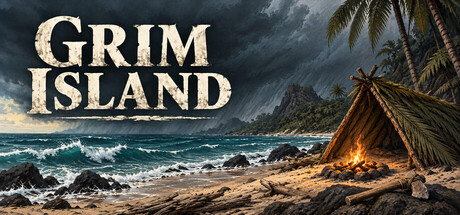
Some of Grim Island's artwork was created using generative AI image tools, working from original artwork hand-drawn by the developer and then curated and edited by the developer. No other content is AI-generated.
We use our own created small local generative AI models to create Artworks in realtime. Local LLM's are used to interact with the NPC's Text based (Input / Output) in realtime.
Be aware that realtime AI can make mistakes. We put a lot of effort into to make it work properly, but there can still be issues. No external AI models needed so your data stays on your own Computer!
We generally used AI assistance to create Assets in the game, most Assets where highly edited from Human Authoring.
The game was created by strong directed human vision, so everything is unique and my own idea!
Generative AI was used to assist with the localization of some store page content. The generated translations were reviewed and edited before publication.
This game was made possible due to generative AI coding. It uses generative AI for the code base and procedural environmental generation but is limited to that. Models and music have been manually created.
Some of the artworks, such as textures and illustrative elements, were created or enhanced using AI-based tools. All generated content has been reviewed, edited, and integrated to ensure consistency with the overall visual style and quality of the game.
No AI is used during gameplay.
The English localization was prepared with AI assistance and was fully reviewed and edited by the developer. Some in-game sounds were generated with AI. The capsule image on the Steam store page was generated with AI. The in-game visual and model assets were not generated with AI.
Generative AI has been used to help work with coding.
All Assets (art, models, animations, sprites/textures, sounds and music have been made by myself or have been bought)
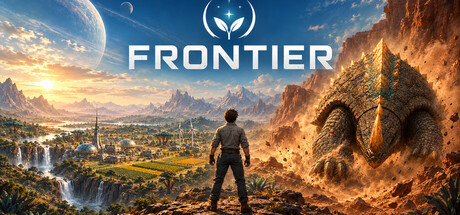
Frontier was conceived, designed, directed, and extensively play tested by a solo developer. Generative AI was used as the primary production tool to implement that vision, including programming, artwork, audio, writing, and other game assets. Every aspect of the game was developed through an iterative human-directed process, with the developer specifying requirements, reviewing results, requesting revisions, making design decisions, integrating systems, and personally testing and approving the final content. No generative AI is used during gameplay.
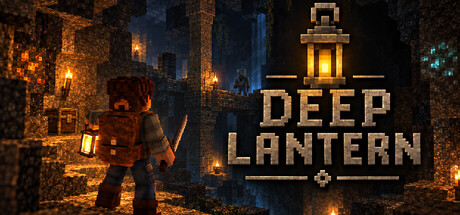
Deep Lantern contains some pre-generated visual assets created or assisted with generative AI, including certain textures, interface or illustrative visual elements, which were then reviewed, edited, and integrated manually by the developer.
The game does not use live generative AI during gameplay, and players cannot generate content in-game using AI.
Some promotional artwork on this store page was created using generative AI tools. All in-game assets (characters, environments, effects) are original or licensed third-party content.
As a solo developer with a very limited budget, the character voices were temporarily generated using AI voice synthesis (ElevenLabs).
Our goal is to replace all generated voices with performances by human voice actors as soon as the project secures sufficient funding (through sales, crowdfunding, or community support). Thank you for your understanding and for supporting indie game development!
No generative AI content is created in real time while the game is running.
Some of PAIMT ARENA's 3D weapon models started as AI-generated meshes (Tripo) that were then hand-edited, retopologized, textured and rigged by the team. Some store and library artwork was produced with AI image tools and then edited by hand. No content is generated during play; gameplay, code, level design and UI are human-authored.
All of the game's art, music and sound effects were made by human artists (commercially licensed packs, credited in the game). AI tools were used to assist with programming and with writing and translating the game's text; all content was reviewed and edited by the developer. The game does not generate any AI content while you play.
Pre-generated content: the pixel art (characters, animations, tiles, props, UI frames) and the store capsule art were made with the help of an AI pixel-art tool, then selected, edited and assembled by the developer. Store page texts and their translations were drafted with AI assistance and reviewed by the developer. The game does not generate any content with AI while you play. Music, sound effects and fonts are licensed assets made by people.
Portraits of characters and creatures are generated using Stable Diffusion. They appear in-game and in store page materials. I plan to replace all generated portraits with hand-drawn art.
Some in-game labels and text descriptions are placeholders generated by an LLM. I am gradually rewriting them by hand.
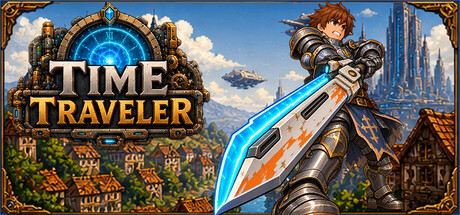
Time Traveler: Divergence uses locally running generative AI to enable dynamic NPC conversations. AI-generated dialogue is constrained by the game's predefined rules, characters, world knowledge, and simulation state. AI is also used locally to generate voice-over for these dynamic conversations. No external AI service is required during gameplay.
I use AI to assist in coding, and some skill icons for combat/talent trees; however all character sprites/animations are hand animated. Using AI allows me to make a game with all of the ideas I have and transform them into something tangible, and viewable. The goal is simple, create a fun game that people enjoy playing.
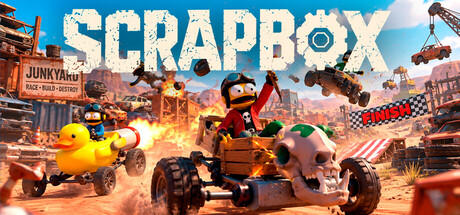
Generative AI tools were used during the development of SCRAPBOX to assist with programming, UI design, voice acting, music, and the creation of some 3D models and other game assets. The game does not generate AI content during gameplay.
As a solo developer with a big dream and limited resources, I want to be entirely upfront how this game was built. The vast majority of this game is completely human-made: I crafted the pixel characters, animations, code, and story over the past 10 years. I also utilized incredible royalty-free and purchased assets from human creators like gyvr, Eunity, RafaelMatos, penusbmic, Winlu, Geoff Harvey.
The use of generative AI was for touching up and refining the marketing capsule images using Adobe Photoshop tools.
Some of the game's artwork, including characters, monsters, items and backgrounds, was created with the help of generative AI tools and then edited and refined by our team; none of it is used as raw AI output. Parts of the in-game text and translations were also produced with AI assistance. No AI content is generated during gameplay.
AI tools were used during development to create pre-generated character art and animations, backgrounds, interface artwork, and sound effects, as well as Steam store descriptions and promotional artwork, including the animated store banner. Assets were selected, reviewed, processed or edited as needed, and integrated into the game or its Steam presentation. Music was composed and synthesized with AI-assisted development tools. The shipped game uses these prepared assets; it does not generate AI content or connect to AI services during gameplay.
Generative AI was used during development to create visual assets, including illustrations and backgrounds, produce background music, and translate in-game text. Images created using generative AI are also used on the Steam store page and in promotional materials. No content is generated using AI during gameplay.
Generative AI was used during development to assist in the creation of some 3D models and visual assets. These assets are used alongside content created manually by the developer.
Generative AI was used as a development tool while making this game, for code assistance only. All dialogue and in-game text was written by hand.
No AI-generated images, audio or text are included, and no content is generated by AI while the game is running.
Some sound effects and the in-game text localization were created with the help of AI tools during development. All AI-generated audio and translated text was reviewed and edited by a human before shipping.
Degen Idle uses AI-assisted customer support. When you submit a support ticket, AI may use the ticket, attachments, and relevant account and gameplay information to provide a short, private reply. It does not generate live gameplay content or public chat messages, change player data, grant items, or issue refunds. Sensitive or unresolved cases are escalated for human review. AI-assisted support has no additional charge.
Generative AI was used to create some visual assets included in the game, as well as artwork for the Steam store page and marketing materials. These assets were created before release. The game does not generate AI content during gameplay or connect to external AI services.
Generative AI was used during development to create some store page artwork and in-game icons. All generated content was reviewed before being included in the final product.
Ratiator is made by a small independent studio, and generative AI is one of the tools that lets a tiny team build a world this big. Every piece of AI-assisted content was directed, selected and refined by us to match our own art direction and design.
Artwork: backgrounds, UI elements, event illustrations, icons and key art were created with AI image tools from our concepts and art direction, then curated, edited and assembled by hand.
3D models: our rats and their household-junk weapons and armour started as AI-generated 3D models built from our concept art. We then rigged, fitted, animated and tuned them with our own tools, so every rat moves and fights the way we designed it.
Animation: a few short cinematic clips and the living light in some backgrounds (flickering lanterns, flowing water) were made with AI video tools and blended into our original paintings.
Writing: story and event texts were drafted with the help of an AI writing assistant, then edited and shaped by us to fit the world and its humour.
Nothing in the game is generated by AI while you play. Every fight, rat and story event is driven by the game's own systems, and no player data is sent to any AI service.
Some of the game's pre-rendered assets were created with generative AI tools during development and then reviewed, edited and integrated by the developer: parts of the pixel art, parts of the sound effects, and the translations from the English original. Nothing is generated while you play: the game uses no AI at runtime and collects no player data for AI training.
We use generative AI as a reference and supporting tool during game development, while final creative decisions and implementation are made by our team.
Bringing together, refining, reviewing and coordinating the different disciplines into a functional complete game. All content was integrated into the development process, tested and aligned with the overall project before becoming part of the released version.
Some of Grim Island's artwork was created using generative AI image tools, working from original artwork hand-drawn by the developer and then curated and edited by the developer. No other content is AI-generated.
We use our own created small local generative AI models to create Artworks in realtime. Local LLM's are used to interact with the NPC's Text based (Input / Output) in realtime.
Be aware that realtime AI can make mistakes. We put a lot of effort into to make it work properly, but there can still be issues. No external AI models needed so your data stays on your own Computer!
We generally used AI assistance to create Assets in the game, most Assets where highly edited from Human Authoring.
The game was created by strong directed human vision, so everything is unique and my own idea!
Generative AI was used to assist with the localization of some store page content. The generated translations were reviewed and edited before publication.
This game was made possible due to generative AI coding. It uses generative AI for the code base and procedural environmental generation but is limited to that. Models and music have been manually created.
Some of the artworks, such as textures and illustrative elements, were created or enhanced using AI-based tools. All generated content has been reviewed, edited, and integrated to ensure consistency with the overall visual style and quality of the game.
No AI is used during gameplay.
The English localization was prepared with AI assistance and was fully reviewed and edited by the developer. Some in-game sounds were generated with AI. The capsule image on the Steam store page was generated with AI. The in-game visual and model assets were not generated with AI.
Generative AI has been used to help work with coding.
All Assets (art, models, animations, sprites/textures, sounds and music have been made by myself or have been bought)
Frontier was conceived, designed, directed, and extensively play tested by a solo developer. Generative AI was used as the primary production tool to implement that vision, including programming, artwork, audio, writing, and other game assets. Every aspect of the game was developed through an iterative human-directed process, with the developer specifying requirements, reviewing results, requesting revisions, making design decisions, integrating systems, and personally testing and approving the final content. No generative AI is used during gameplay.
Deep Lantern contains some pre-generated visual assets created or assisted with generative AI, including certain textures, interface or illustrative visual elements, which were then reviewed, edited, and integrated manually by the developer.
The game does not use live generative AI during gameplay, and players cannot generate content in-game using AI.
Some promotional artwork on this store page was created using generative AI tools. All in-game assets (characters, environments, effects) are original or licensed third-party content.
As a solo developer with a very limited budget, the character voices were temporarily generated using AI voice synthesis (ElevenLabs).
Our goal is to replace all generated voices with performances by human voice actors as soon as the project secures sufficient funding (through sales, crowdfunding, or community support). Thank you for your understanding and for supporting indie game development!
No generative AI content is created in real time while the game is running.
Some of PAIMT ARENA's 3D weapon models started as AI-generated meshes (Tripo) that were then hand-edited, retopologized, textured and rigged by the team. Some store and library artwork was produced with AI image tools and then edited by hand. No content is generated during play; gameplay, code, level design and UI are human-authored.
All of the game's art, music and sound effects were made by human artists (commercially licensed packs, credited in the game). AI tools were used to assist with programming and with writing and translating the game's text; all content was reviewed and edited by the developer. The game does not generate any AI content while you play.
Pre-generated content: the pixel art (characters, animations, tiles, props, UI frames) and the store capsule art were made with the help of an AI pixel-art tool, then selected, edited and assembled by the developer. Store page texts and their translations were drafted with AI assistance and reviewed by the developer. The game does not generate any content with AI while you play. Music, sound effects and fonts are licensed assets made by people.
Portraits of characters and creatures are generated using Stable Diffusion. They appear in-game and in store page materials. I plan to replace all generated portraits with hand-drawn art.
Some in-game labels and text descriptions are placeholders generated by an LLM. I am gradually rewriting them by hand.
Time Traveler: Divergence uses locally running generative AI to enable dynamic NPC conversations. AI-generated dialogue is constrained by the game's predefined rules, characters, world knowledge, and simulation state. AI is also used locally to generate voice-over for these dynamic conversations. No external AI service is required during gameplay.
I use AI to assist in coding, and some skill icons for combat/talent trees; however all character sprites/animations are hand animated. Using AI allows me to make a game with all of the ideas I have and transform them into something tangible, and viewable. The goal is simple, create a fun game that people enjoy playing.
Generative AI tools were used during the development of SCRAPBOX to assist with programming, UI design, voice acting, music, and the creation of some 3D models and other game assets. The game does not generate AI content during gameplay.
As a solo developer with a big dream and limited resources, I want to be entirely upfront how this game was built. The vast majority of this game is completely human-made: I crafted the pixel characters, animations, code, and story over the past 10 years. I also utilized incredible royalty-free and purchased assets from human creators like gyvr, Eunity, RafaelMatos, penusbmic, Winlu, Geoff Harvey.
The use of generative AI was for touching up and refining the marketing capsule images using Adobe Photoshop tools.
Some of the game's artwork, including characters, monsters, items and backgrounds, was created with the help of generative AI tools and then edited and refined by our team; none of it is used as raw AI output. Parts of the in-game text and translations were also produced with AI assistance. No AI content is generated during gameplay.
AI tools were used during development to create pre-generated character art and animations, backgrounds, interface artwork, and sound effects, as well as Steam store descriptions and promotional artwork, including the animated store banner. Assets were selected, reviewed, processed or edited as needed, and integrated into the game or its Steam presentation. Music was composed and synthesized with AI-assisted development tools. The shipped game uses these prepared assets; it does not generate AI content or connect to AI services during gameplay.
Generative AI was used during development to create visual assets, including illustrations and backgrounds, produce background music, and translate in-game text. Images created using generative AI are also used on the Steam store page and in promotional materials. No content is generated using AI during gameplay.
Generative AI was used during development to assist in the creation of some 3D models and visual assets. These assets are used alongside content created manually by the developer.
Generative AI was used as a development tool while making this game, for code assistance only. All dialogue and in-game text was written by hand.
No AI-generated images, audio or text are included, and no content is generated by AI while the game is running.