Public Steam disclosure research27,221 disclosures tracked
Where do games disclose AI use?
Search developers’ Steam disclosures, compare classified AI use across
games, and follow recorded changes.
This index adds cross-game classifications and statistics to
statements published on individual store pages.
Groups reflect automatic analysis of public disclosures; mature records are excluded. These counts do not measure AI use across all of Steam.
Missing or unclear statements cannot establish whether a game uses AI.
Generative AI tools were used during development to create some visual assets, including character skins and store artwork. These assets were reviewed and edited by the developer. The game does not generate AI content during gameplay or connect to a third-party AI service during gameplay.
Generative AI assisted with programming. The game artwork, music, and sound effects were human made. The game does not generate AI content during gameplay or connect to an AI service.
Desktop Companion uses generative AI: your companion's replies are generated live by a large language model that runs entirely on your own PC. The app ships with its own safety-tuned model; nothing is sent to an external AI service. Built-in, application-level safeguards screen generated content to block prohibited output.
Generative AI tools were used during development to assist with the creation and iteration of certain visual assets, artwork, and promotional/store materials for Magic Cursor. AI tools were also used as development assistance for portions of the code. All final content was reviewed, selected, edited where necessary, and integrated by the developer. No AI-generated content is created while the application is running.
Generative AI was used to create base images for some visual assets. These images were subsequently selected, edited, refined, and integrated into the game and store materials by the developer. The game does not use generative AI at runtime.
Q-Rely uses locally running artificial intelligence to provide interactive AI-generated responses during use. The AI can generate text responses based on the user's input and, depending on the user's configuration, can also generate voice output using locally installed Text-to-Speech (TTS) engines.
Generative AI was used during development to assist in creating the application's logo. The logo is a fixed visual asset and is not generated or modified by generative AI during use of the application.
Q-Rely does not use generative AI to create the application's default character artwork, backgrounds, or other visual assets during use. The application's AI-generated content is primarily conversational text and, when voice output is enabled, synthesized speech.
Q-Rely is designed to allow users to run AI models locally on their own computer. Users can select and install compatible AI models and configure the application's AI and voice settings according to their preferences.
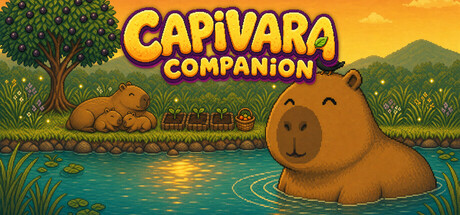
Art assets (backgrounds, capybara and object sprites, capsules, icon), the store trailer footage, sound effects, ambience and music were generated with AI tools (image and video generation, PixelLab, ElevenLabs) from the developer's own references and direction, then cropped, scaled, palette-snapped and composed by hand-written code. The translations of the game and store texts into languages other than Portuguese and English were produced with AI and reviewed by the developer. All code, game design, writing and the original Portuguese and English texts are human-made. The game does not generate any content at runtime.
Some art assets and marketing images were created or assisted with generative AI during development, then curated and edited for the final game. The game does not generate AI content in real time during play.
Some in-game models and music were created with generative AI. Our original cover illustrations and title lettering are handmade; selected store-art adaptations and the app icon used AI tools. Optional chat uses a lightweight AI model running entirely on your computer to answer small everyday questions. You can turn chat off at any time.
Generative AI was used during development to assist in creating some pre-generated visual assets and marketing materials. All AI-assisted content was reviewed, selected, and adjusted by the developer before being included in the game or on its Steam store page. The game does not use generative AI to create content during gameplay.
Some assets in Keepwatch were created with the assistance of generative AI
tools. This includes portions of the icon set, UI elements, a number of sound
effects, and some character animations.
All AI-assisted output is reviewed, edited and integrated by hand to match the
game's hand-painted art direction, and none of it ships in the state it was
generated in.
Game code, systems design, economy balance and all written content are
authored entirely by hand.
Keepwatch does not use any AI systems at runtime. Nothing is generated on the
player's machine while the game is running.
AI-generated content is used during development as temporary placeholder material. Nearly all of it has already been replaced, and the final game will contain only original artwork created by human artists.
Generative AI tools were used to assist with certain code, UI elements, and visual effect assets. All AI-assisted content was reviewed and ultimately approved by actual humans on the development team. The game’s environments, NPCs, and related artwork were handcrafted by our artist. All gameplay design, creative direction, and final content decisions were made by the development team.
Lumi uses generative AI while the game is running. Her conversation replies are written by a language model, spoken aloud with speech synthesis, and your voice input is transcribed by speech recognition. If you turn on screen viewing, a vision model looks at your screen so she can react to the game you play or the video you watch.
All of this runs locally on your PC. The default language model, voice and speech recognition are included with the game. Optional larger models and voices are downloaded from third-party hosts only if you select them. Your conversations, voice, screen images and Lumi's replies are not sent to any external AI service.
Screen viewing, microphone input, system-audio sensing and desktop actions are off until you enable them. AI replies can be inaccurate and are not professional advice.
Asiden uses generative AI to create companion conversations, custom personality text and spoken responses during use. When screen awareness is enabled, AI can interpret screen content to inform its responses. Local AI features run on your computer. Optional cloud features send the information needed for the selected feature through Asiden’s managed service to external AI providers. Generated responses may be inaccurate and can include mature language, humour and non-explicit flirtation.
Dashdoce was created and directed by a single independent developer. AI-assisted tools were used to help implement, debug and test the software and to draft or polish portions of interface text, localization and store copy. All concepts, feature ideas, visual and interaction design decisions, behavior specifications and final approvals were conceived, directed and carefully curated by the developer. AI served as an implementation tool, not as the source of the product's ideas. Dashdoce does not generate content with AI while running.
Elya uses generative AI to provide optional real-time character conversations, voice interactions, and other AI-assisted companion features. Users may connect supported third-party AI services or configure their own compatible providers. AI-generated content is produced dynamically based on user input and character settings.
Pocket Adventurer is a solo-developed game that uses AI tools as part of its production pipeline. Character and monster artwork is originally hand-drawn, then processed with AI animation tools and converted into animated sprite sheets for use in the game. Code was written with AI coding assistance under direct human design, testing, and review. All content is pre-rendered; the game contains no live AI generation.
Some AI generation for promotional imagery
This app uses AI tools during the development process, for example to configure some behavior algorithms. All dog sprite art consists of hand-drawn works by human artists, purchased under a commercial license. No generative AI is used during gameplay.
AI dialogue is run locally on the user's hardware via a local LLM engine. Content is strictly filtered via system prompt safeguards to prevent generation of illegal, infringing, or inappropriate text.
Some of the game's visual assets (character art, animation frames, and store/marketing images) were created with the assistance of generative AI tools. Every AI-assisted asset is reviewed, curated, and edited by a human before inclusion. The game does not use AI to generate any content at runtime — everything players see ships as pre-made, human-reviewed assets.
All visual art in SagoCat — characters, animation, and visual design — is hand-crafted, with no AI used.
Generative AI is used as follows: the pet's conversational replies are generated in real time by a third-party AI service and require an internet connection (use the built-in free quota or your own API key); during development, AI tools also assisted with parts of the code, some in-app text, and some sound effects.
Generative AI tools were used during development to assist with creating some visual assets. These assets were manually reviewed, edited, and finalized before being included in the game. AI tools were also used as a programming assistant during development. The game does not use generative AI during gameplay.
No generative AI was used to create the game's visual art or artwork. Generative AI was used to create the initial versions of some music tracks, which were then manually edited and adapted into loopable versions for use in the game. AI was also used to assist with drafting and editing some store page descriptions.
Generative AI was used to translate (localize) the original Korean text into other languages. The original text was written by the development team, and the AI translations were reviewed before use.
Generative AI tools were used during development to assist with creating and refining some pre-generated visual assets and promotional artwork. All AI-assisted content was reviewed before inclusion. The game does not generate AI content during gameplay and does not connect to external AI services.
The pixel art in this game was created with an AI image generation tool (Pixellab).
Generated art is never used as-is: the style, proportions and palette standards are set by a human,
every sprite is reviewed by eye, and anything off-standard is rejected and redone. Grounding,
animation continuity and color consistency are likewise human-checked before adoption.
Game design, balance and specification decisions are made by a human. AI-assisted tools are also
used in the development process.
Nothing is generated by AI at runtime (pre-generated content only).
This game supports optional third‑party AI tool integration. Players may choose to use AI tools such as Claude Code via interfaces provided by the game to assist with in‑game actions, for example balloon‑shooting and feeding. These AI tools are not built‑in features of the game. The game itself does not connect to or call any generative‑AI services, and no story, dialogue, artwork, music or other in‑game content is generated by AI within the game.
During development, generative AI tools were used to assist with programming and the creation of some pre‑generated text. All AI‑assisted text contained in the game was reviewed, manually edited and approved by the development team before use.
No AI was used to generate the game’s artwork or music. All artwork and music were created by human artists and musicians.
This game uses an open-source language model (Qwen2.5) bundled with the game to generate real-time NPC dialogue and ambient chatter entirely offline on the player's own machine via llama.cpp. No external server, no third-party API, and no internet connection are required. Players can toggle this feature on or off. The model runs locally using the player's CPU — no data is uploaded, collected, stored, or used for training.