Public Steam disclosure research25,376 disclosures tracked
Where do games disclose AI use?
Search developers’ Steam disclosures, compare classified AI use across
games, and follow recorded changes.
This index adds cross-game classifications and statistics to
statements published on individual store pages.
Groups reflect automatic analysis of public disclosures; mature records are excluded. These counts do not measure AI use across all of Steam.
Missing or unclear statements cannot establish whether a game uses AI.
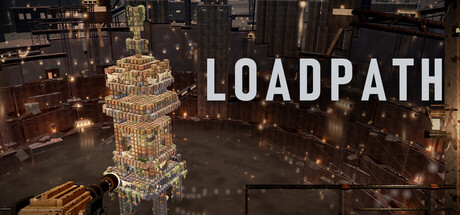
Generative AI tools assisted with LOADPATH’s development and the creation of game content, under the developer’s creative direction. The game was shaped through extensive iteration, selection and hands-on playtesting. The promotional trailer also uses AI-generated narration and music. All AI-generated content is prepared in advance; no generative AI runs during gameplay.
Software engineering is primarily by hand in C# and python, with local SLM's, run via Ollama, and occasional cloud-based LLM's used to research knowledge deficits and prototype code snippets for specific systems that map to those deficits. Any AI-generated code was reviewed line-by-line, hand-integrated and heavily modified.
The application requires local file access to files selected by the player from a standard operating system folder browser with permissions. It scans the user's system via the psutil and gputil standard python packages to ascertain the specifications of the user's system to select a model that will match their system's performance profile.
Pinocchio and Hunyuan were used to generate 3D models of mushrooms from 19th century public domain botanical illustrations, and the integrated SLM model is used to generate text labels and summaries at runtime.
The application has absolutely no chat interface. An SLM is integrated locally as a black-box system with robust system prompts to generate structured output in the form of JSON based on the player's file inputs. The JSON is consumed by the game to generate maps and levels.
Additional Specifications & Technical Notes:
- A localhost python server is back-compiled to a C executable and deployed with the main executable and invoked from its application domain to host the local model.
- The local model is downloaded from the Internet via Ollama.
- The end-user needs to have the Ollama client installed to run the model locally.
- The python server has robust internal system prompts to prevent violation of the Terms of Service on the Steam and Itch platforms regarding disallowed content.
- The python server is run from the main executable's application domain, in the same directory structure.
- The python server and main executable communicate via a local socket connection via IANA-approved port numbers according to RFC 6335. Ports are tested and iterated to ensure that they are available on the local system. If an IANA-approved port listed in RFC 6335 is not available, the application will not run.
Heaps adheres to the ARTS standard for AI labeling. A full accounting of our use of AI in this game can be found at:
droidknot.com/ARTS/Heaps_SIS_082726.pdf
Generative AI was used to assist with the creation of the game logo and some promotional assets for the Steam store. The generated materials were selected, edited, and further processed by the developer before use.
Generative AI was also used during development to assist with programming and debugging.
No generative AI is used to generate content during gameplay.
Generative AI tools were used during development to assist with the creation and editing of some text content and graphical materials used in the game and its related assets.
Pre-generated AI content:
Some promotional artwork used on the Steam store page was created with generative AI and subsequently edited by the developer
Generative AI tools were used to assist with the creation of some game and promotional content. All final content was reviewed and approved by the developer.
AI Generated Content Disclosure
AI tools were used to assist in drafting the written text of this game (in-game explanations, codex entries, the four language versions of the interface, and store page descriptions); all such text was reviewed and edited by the developer. All artwork is procedurally rendered by shaders written by the developer, the store capsule artwork was commissioned from a human artist, and all sound is synthesised by the developer's own code. The game does not use AI to generate any content at runtime.
Void Runners was developed with the help of AI coding tools. The game's art, music and sound effects are generated procedurally by code written with those tools; no AI model runs in the game, and no content is generated live while you play.
Glyphtrip is made by a studio of three: one human and two silicon genius-toddlers. The soundtrack stems were generated with AI and mixed and mastered by hand. The translations and custom font were made with AI.
AI tools assisted with a small number of icon images and most text localization. Localized text may be replaced in future updates with higher-quality, human-translated versions.
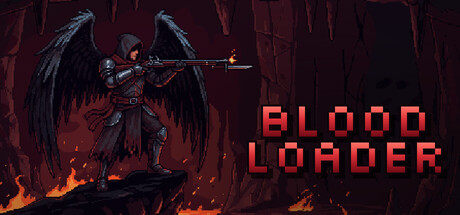
Bloodloader was made by one developer with generative AI tools in the pipeline. Character, enemy and item sprites, tiles, icons and the store key art began as AI generations (PixelLab) and were selected, cleaned up, recoloured and assembled by the developer. Sound effects and music were generated with ElevenLabs and edited into final effects and seamless loops. Some in-game text was drafted with AI assistance and edited by the developer. Nothing is generated while you play.
The store capsule artwork (and the app/shortcut icons cropped from it) was created with AI image generation tools. All in-game content — art, models, audio, writing — was not AI generated.
Generative AI was used during development to create some promotional artwork, including Steam store capsule images and logo variations. Generative AI is not used during gameplay, and no AI-generated content is created in real time.
LUMENKEEP was built by a solo developer working with AI development tools. AI assisted in generating the game's code, procedural geometry, shaders, and audio during development, under direct human direction and review; there is no hand-drawn art, hand-animation, or human-recorded audio in the game. LUMENKEEP does not use AI to generate content live during gameplay, and does not connect to any third-party AI service while you play.
Some 3D models in this game, with their textures, were generated with an AI 3D-modeling tool from our own designs and then rigged and edited for the game: the Harvester, the Halloway family, the two playable co-op characters, the scarecrows and the wax effigy.
The translations of this game into English, Spanish, Portuguese, Russian and Chinese were produced with the help of a large language model, working from the German original. The Spanish, Portuguese, Russian and Chinese versions are machine-made and are marked as beta inside the game. The text of this store page and the captions in the trailer were written the same way.
No image, no sound and no music in this game is AI-generated. The symbols come from historical alchemical plates, the witches from the Wellcome Collection, the cauldron from the Smithsonian, the reeds from an 1885 plant atlas.
Some 3D models in this game - the cleaning tool heads - were created with an AI 3D model generation tool and then edited by hand. Everything else was made without generative AI: the simulation and code, the sound effects (real recordings), the carpet photographs and all store page artwork. No content is generated by AI while you play.
Parts of Howling Woods were made with generative AI during development: its music and sound effects, its interface icons and store art, some of its set-piece models, and parts of its code. All of it was reviewed and reworked by hand, and nothing is generated while you play.
Some visual assets and the music in Roadweave were created with the help of generative AI tools during development: the key art, logo, store and library artwork, icons and achievement badges were made with image tools, and the soundtrack with a music tool. Every asset was selected and edited by the developer before release.
Generative AI is not used while you play. Maps are built by the game's own procedural generator from a seed — ordinary game code, not AI.
The game's art assets (tile, monster and item sprite atlases) were produced during development using OpenAI's image generation service. We then processed the output ourselves into transparent PNGs and assembled them into atlases, which ship as static assets inside the build. The game does not call any AI service at runtime and contains no live-generated content. Every generated image was manually reviewed and corrected before being added to the atlas. Apart from the art, the code, game design, balance and text involve no AI-generated content.
Some sound effects included in the game were generated using generative AI tools. The game's non-English translations were machine-generated. The game contains no live-generated AI content. Visual assets and UI are generated procedurally by conventional game code.
Generative AI tools were used during development to create and assist with some pre-generated visual and audio assets. All AI-assisted content included in the game is reviewed, selected, and integrated by the developer. No generative AI content is created in real time during gameplay.
Some of the in-game and store page text was written with the help of AI tools and edited by the developer. No AI image, music or voice generators were used.
The audio in the game is not produced by machine learning models. The game images are divided into two categories: ① The vast majority are generated programmatically and not by machine learning models; ② The character illustrations are generated by machine learning and then selected, cropped, and post-processed by humans. The game text (environmental narration, entry descriptions, achievement descriptions) is drafted by AI with assistance and then revised by humans before being included; developers conduct fact and expression reviews of all game images and text before release. The game does not have an AI system for real-time generation of content, and player input will not be used for training or content generation.
Generative AI tools were used during development, and every output was reviewed, edited and integrated by the developer. AI contributed to: parts of the code, the English translation and store copy, some tower and enemy 3D models and textures, UI icons, co-op stickers, title and loading screen illustrations, the opening and ending cinematics, the store key art, the promotional mascot, and the background music and some sound effects. Game design, levels, balance and overall direction were decided by the developer. Nothing is generated by AI while you play.
We use our own created small local generative AI models to create Artworks in realtime. Local LLM's are used to interact with the NPC's Text based (Input / Output) in realtime.
Be aware that realtime AI can make mistakes. We put a lot of effort into to make it work properly, but there can still be issues. No external AI models needed so your data stays on your own Computer!
We generally used AI assistance to create Assets in the game, most Assets where highly edited from Human Authoring.
The game was created by strong directed human vision, so everything is unique and my own idea!
Twisted Survivors was designed and made by Six. Some of its art (including the store artwork), music, voice-over and the opening cinematic were created with the help of AI tools, then curated and edited by Six; nothing is generated while you play.
The in-game text and the store page text, including the Korean, Japanese and Simplified Chinese translations, were written with the help of AI. Nothing is generated by AI while you play.
Generative AI tools assisted with LOADPATH’s development and the creation of game content, under the developer’s creative direction. The game was shaped through extensive iteration, selection and hands-on playtesting. The promotional trailer also uses AI-generated narration and music. All AI-generated content is prepared in advance; no generative AI runs during gameplay.
Software engineering is primarily by hand in C# and python, with local SLM's, run via Ollama, and occasional cloud-based LLM's used to research knowledge deficits and prototype code snippets for specific systems that map to those deficits. Any AI-generated code was reviewed line-by-line, hand-integrated and heavily modified.
The application requires local file access to files selected by the player from a standard operating system folder browser with permissions. It scans the user's system via the psutil and gputil standard python packages to ascertain the specifications of the user's system to select a model that will match their system's performance profile.
Pinocchio and Hunyuan were used to generate 3D models of mushrooms from 19th century public domain botanical illustrations, and the integrated SLM model is used to generate text labels and summaries at runtime.
The application has absolutely no chat interface. An SLM is integrated locally as a black-box system with robust system prompts to generate structured output in the form of JSON based on the player's file inputs. The JSON is consumed by the game to generate maps and levels.
Additional Specifications & Technical Notes:
- A localhost python server is back-compiled to a C executable and deployed with the main executable and invoked from its application domain to host the local model.
- The local model is downloaded from the Internet via Ollama.
- The end-user needs to have the Ollama client installed to run the model locally.
- The python server has robust internal system prompts to prevent violation of the Terms of Service on the Steam and Itch platforms regarding disallowed content.
- The python server is run from the main executable's application domain, in the same directory structure.
- The python server and main executable communicate via a local socket connection via IANA-approved port numbers according to RFC 6335. Ports are tested and iterated to ensure that they are available on the local system. If an IANA-approved port listed in RFC 6335 is not available, the application will not run.
Heaps adheres to the ARTS standard for AI labeling. A full accounting of our use of AI in this game can be found at:
droidknot.com/ARTS/Heaps_SIS_082726.pdf
Generative AI was used to assist with the creation of the game logo and some promotional assets for the Steam store. The generated materials were selected, edited, and further processed by the developer before use.
Generative AI was also used during development to assist with programming and debugging.
No generative AI is used to generate content during gameplay.
Generative AI tools were used during development to assist with the creation and editing of some text content and graphical materials used in the game and its related assets.
Pre-generated AI content:
Some promotional artwork used on the Steam store page was created with generative AI and subsequently edited by the developer
Generative AI tools were used to assist with the creation of some game and promotional content. All final content was reviewed and approved by the developer.
AI Generated Content Disclosure
AI tools were used to assist in drafting the written text of this game (in-game explanations, codex entries, the four language versions of the interface, and store page descriptions); all such text was reviewed and edited by the developer. All artwork is procedurally rendered by shaders written by the developer, the store capsule artwork was commissioned from a human artist, and all sound is synthesised by the developer's own code. The game does not use AI to generate any content at runtime.
Void Runners was developed with the help of AI coding tools. The game's art, music and sound effects are generated procedurally by code written with those tools; no AI model runs in the game, and no content is generated live while you play.
Glyphtrip is made by a studio of three: one human and two silicon genius-toddlers. The soundtrack stems were generated with AI and mixed and mastered by hand. The translations and custom font were made with AI.
AI tools assisted with a small number of icon images and most text localization. Localized text may be replaced in future updates with higher-quality, human-translated versions.
Bloodloader was made by one developer with generative AI tools in the pipeline. Character, enemy and item sprites, tiles, icons and the store key art began as AI generations (PixelLab) and were selected, cleaned up, recoloured and assembled by the developer. Sound effects and music were generated with ElevenLabs and edited into final effects and seamless loops. Some in-game text was drafted with AI assistance and edited by the developer. Nothing is generated while you play.
The store capsule artwork (and the app/shortcut icons cropped from it) was created with AI image generation tools. All in-game content — art, models, audio, writing — was not AI generated.
Generative AI was used during development to create some promotional artwork, including Steam store capsule images and logo variations. Generative AI is not used during gameplay, and no AI-generated content is created in real time.
LUMENKEEP was built by a solo developer working with AI development tools. AI assisted in generating the game's code, procedural geometry, shaders, and audio during development, under direct human direction and review; there is no hand-drawn art, hand-animation, or human-recorded audio in the game. LUMENKEEP does not use AI to generate content live during gameplay, and does not connect to any third-party AI service while you play.
Some 3D models in this game, with their textures, were generated with an AI 3D-modeling tool from our own designs and then rigged and edited for the game: the Harvester, the Halloway family, the two playable co-op characters, the scarecrows and the wax effigy.
The translations of this game into English, Spanish, Portuguese, Russian and Chinese were produced with the help of a large language model, working from the German original. The Spanish, Portuguese, Russian and Chinese versions are machine-made and are marked as beta inside the game. The text of this store page and the captions in the trailer were written the same way.
No image, no sound and no music in this game is AI-generated. The symbols come from historical alchemical plates, the witches from the Wellcome Collection, the cauldron from the Smithsonian, the reeds from an 1885 plant atlas.
Some 3D models in this game - the cleaning tool heads - were created with an AI 3D model generation tool and then edited by hand. Everything else was made without generative AI: the simulation and code, the sound effects (real recordings), the carpet photographs and all store page artwork. No content is generated by AI while you play.
Parts of Howling Woods were made with generative AI during development: its music and sound effects, its interface icons and store art, some of its set-piece models, and parts of its code. All of it was reviewed and reworked by hand, and nothing is generated while you play.
Some visual assets and the music in Roadweave were created with the help of generative AI tools during development: the key art, logo, store and library artwork, icons and achievement badges were made with image tools, and the soundtrack with a music tool. Every asset was selected and edited by the developer before release.
Generative AI is not used while you play. Maps are built by the game's own procedural generator from a seed — ordinary game code, not AI.
The game's art assets (tile, monster and item sprite atlases) were produced during development using OpenAI's image generation service. We then processed the output ourselves into transparent PNGs and assembled them into atlases, which ship as static assets inside the build. The game does not call any AI service at runtime and contains no live-generated content. Every generated image was manually reviewed and corrected before being added to the atlas. Apart from the art, the code, game design, balance and text involve no AI-generated content.
Some sound effects included in the game were generated using generative AI tools. The game's non-English translations were machine-generated. The game contains no live-generated AI content. Visual assets and UI are generated procedurally by conventional game code.
Generative AI tools were used during development to create and assist with some pre-generated visual and audio assets. All AI-assisted content included in the game is reviewed, selected, and integrated by the developer. No generative AI content is created in real time during gameplay.
Some of the in-game and store page text was written with the help of AI tools and edited by the developer. No AI image, music or voice generators were used.
The audio in the game is not produced by machine learning models. The game images are divided into two categories: ① The vast majority are generated programmatically and not by machine learning models; ② The character illustrations are generated by machine learning and then selected, cropped, and post-processed by humans. The game text (environmental narration, entry descriptions, achievement descriptions) is drafted by AI with assistance and then revised by humans before being included; developers conduct fact and expression reviews of all game images and text before release. The game does not have an AI system for real-time generation of content, and player input will not be used for training or content generation.
Generative AI tools were used during development, and every output was reviewed, edited and integrated by the developer. AI contributed to: parts of the code, the English translation and store copy, some tower and enemy 3D models and textures, UI icons, co-op stickers, title and loading screen illustrations, the opening and ending cinematics, the store key art, the promotional mascot, and the background music and some sound effects. Game design, levels, balance and overall direction were decided by the developer. Nothing is generated by AI while you play.
We use our own created small local generative AI models to create Artworks in realtime. Local LLM's are used to interact with the NPC's Text based (Input / Output) in realtime.
Be aware that realtime AI can make mistakes. We put a lot of effort into to make it work properly, but there can still be issues. No external AI models needed so your data stays on your own Computer!
We generally used AI assistance to create Assets in the game, most Assets where highly edited from Human Authoring.
The game was created by strong directed human vision, so everything is unique and my own idea!
Twisted Survivors was designed and made by Six. Some of its art (including the store artwork), music, voice-over and the opening cinematic were created with the help of AI tools, then curated and edited by Six; nothing is generated while you play.
The in-game text and the store page text, including the Korean, Japanese and Simplified Chinese translations, were written with the help of AI. Nothing is generated by AI while you play.